

 Send Email
 whatsapp


In automotive detailing, the difference between a flawless finish and fine swirl marks often comes down to the cloth in your hand. Modern microfiber is not just a soft towel; it is an engineered synthetic textile with fibers fine enough to reach into clear coat pores, capture debris, and manage liquids with precision. Specifications such as fiber blend, GSM, pile height, weave structure, and edge design directly affect safety and performance on paint, glass, interiors, and coatings. This guide explains how to choose the right Microfiber Cleaning cloth for each detailing stage, from streak-free glass work to high-absorption drying and final paint-safe buffing.
Defining Professional-Grade Automotive Microfiber Cloths
The foundation of professional automotive detailing relies heavily on the physical properties of synthetic textiles. A premium microfiber cleaning cloth is engineered from microscopic synthetic fibers, typically measuring a fraction of a denier in thickness. Industry-standard ranges suggest they often fall around 0.1 to 0.2 denier, which manufacturers frequently compare to roughly one-hundredth the diameter of a human hair, yielding approximately 90,000 to 220,000 fibers per square inch. This microscopic scale allows the material to penetrate the smallest pores and imperfections in automotive clear coats, lifting and trapping particulate matter rather than simply pushing it across the surface.
During the manufacturing phase, these textiles undergo a chemical and mechanical splitting process that creates microscopic voids within the fiber structure. It is within these wedge-shaped spaces that dirt, moisture, and excess automotive chemicals are securely trapped, making high-grade microfiber an indispensable tool for paint correction, coating application, and final finishing operations.
Fiber Blend, GSM, Pile Height, and Edge Construction
The performance baseline of these textiles is heavily dictated by the polymer blend, conventionally a ratio of polyester to polyamide. Standard commercial cloths utilize an 80/20 blend, offering adequate durability and cost-effectiveness (typically $0.80 to $1.50 per standard 16"x16" towel at wholesale MOQs of 500–1,000 units) for general shop tasks. However, professional-grade variants often feature a 70/30 blend (averaging $2.00 to $4.00 per unit), where the higher polyamide content significantly increases the material's softness, elasticity, and liquid absorption capacity. This softer blend is highly recommended for delicate surfaces, such as easily marred clear coats.
Grams per Square Meter (GSM) serves as another critical specification metric. Lower GSM cloths, ranging from 200 to 300 GSM, are relatively thin and ideal for streak-free tasks where tactile feedback is necessary. Conversely, ultra-plush variants measuring between 800 and 1200 GSM provide the deep pile necessary for heavy liquid absorption and safe waterless washing. Edge construction also plays a vital role in preventing clear coat marring; premium cloths utilize ultrasonic-cut edgeless designs, silk banding, or micro-suede borders to eliminate the abrasive scratch points commonly found on overlock-stitched towels.
Microfiber Types for Paint, Glass, Interior, and Drying
Different detailing phases require highly specialized weave structures to maximize efficiency and safety.
| Weave Type | Typical GSM Range | Optimal Detailing Application |
|---|---|---|
| Waffle Weave | 250 – 400 GSM | Glass cleaning, initial water removal |
| Pearl / Tight-Terry | 250 – 350 GSM | Ceramic coating leveling, wax removal |
| Plush / Coral Fleece | 400 – 600 GSM | Final buffing, quick detailer application |
| Twisted-Loop | 800 – 1,200+ GSM | Heavy liquid absorption, safe waterless washing |
Waffle weave cloths feature a recessed grid-like pattern that minimizes surface friction. However, it is important to match the GSM to the task: lower-GSM waffle weaves (around 250–350 GSM) are the industry standard for streak-free glass cleaning, while larger, heavier waffle weaves are designed for initial water removal on paint. A single towel rarely serves both roles equally, as a towel saturated from drying paint will leave streaks on glass. High-GSM plush towels, by contrast, are generally not ideal for glass as they can leave lint and streaks. Pearl or tight-terry weaves present a short, dense, and rigid pile that excels at leveling high-solids ceramic coatings and removing cured carnauba waxes without absorbing excess product from the applicator.
On the opposite end of the spectrum, coral fleece and twisted-loop deep-pile designs are optimized for final buffing and quick-detailer application. Their extended fibers draw dust and abrasive debris deep into the cloth's core, isolating the contaminants away from the delicate clear coat. Using the correct weave for the specific task is just as critical as the chemical being applied to the vehicle.
Key Performance Factors for Detailing Use
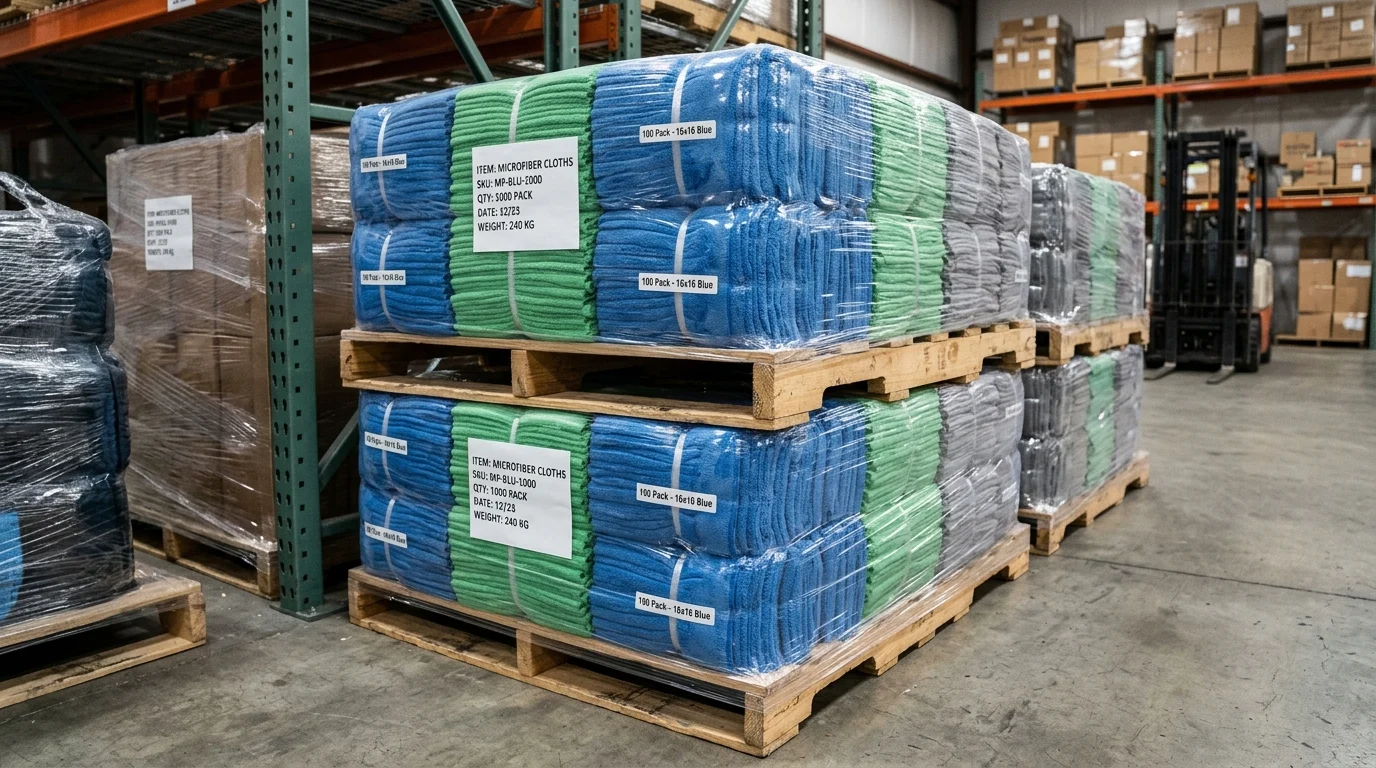
Operational efficiency in a high-volume detailing environment hinges on the reliable performance of surface-contact textiles over an extended lifespan. The structural integrity of the split fibers must be maintained over time to ensure that the cloth continues to trap contaminants and absorb automotive chemicals without degrading or releasing particulate matter back onto the vehicle. It is crucial to note that a dirty microfiber cloth can easily scratch paint; trapped debris turns the cloth into an abrasive pad. To maximize safety and efficiency, detailers should fold standard 16"x16" towels into quarters—providing eight clean 8"x8" sections to work with—and flip to a clean side frequently. Additionally, users should be aware of environmental concerns, as washing synthetic textiles releases microplastics into wastewater systems. To mitigate this environmental impact, detailers are encouraged to use dedicated microfiber wash bags, install Guppyfriend-style inline washing machine filters (which capture up to 90% of shed fibers), or participate in supplier take-back recycling programs.
Absorbency, Lint Control, Scratch Risk, and Durability
A high-quality microfiber cloth for car detailing utilizes capillary action to absorb 7 to 10 times its own weight in liquid, a critical factor during the drying phase that prevents water spotting. When used dry, the friction generates a positive static charge that attracts negatively charged dust particles, functioning as an electrostatic magnet rather than a traditional duster.
Lint control is equally important, particularly during glass cleaning and final wipe-downs; closed-loop weaves and continuous-filament yarns are engineered specifically to minimize linting. Scratch risk is mitigated not only by the softness of the polyamide but also by the cloth's ability to encapsulate dirt within its voids. Durability in a commercial setting is measured by the textile's lifespan under rigorous conditions. Commercial suppliers typically target a defect rate of <2% for premium lines to ensure consistent edge stitching and fiber density. While manufacturers estimate that premium variants can withstand 300 to 500 wash cycles depending on use, towels should be immediately demoted to non-paint tasks or replaced once the micro-filaments fuse, flatten, or mat.
Laundering, Contamination Control, and Color Coding
Maintaining these performance metrics requires strict adherence to specialized laundering protocols.
Choosing the Right Microfiber Cleaning Cloth Solution
Sourcing Quality, Packaging, and Private Label Options
When procuring a microfiber cleaning cloth for commercialautomotive detailing, buyers must evaluate the manufacturer's quality control and customization capabilities. High-performance Detailing Cloths typically require a specific polyester-to-polyamide blend—usually 70/30 or 80/20—and strict GSM (grams per square meter) tolerances. For instance, a 300 GSM cloth suits general interior wiping, while a 500+ GSM edgeless towel is critical for paint correction and sealant leveling without inducing micro-marring on clear coats.
Sourcing partners frequently offer private label options, allowing distributors to integrate custom branding via heat stamping or ultrasonic cutting, which eliminates the need for abrasive physical tags. Packaging formats also vary significantly based on the target market, ranging from bulk vacuum-sealed bales designed for high-volume commercial operations to retail-ready, moisture-resistant blister packs for direct-to-consumer sales.
Balancing Cost per Use, Performance, and Workflow Needs
Optimizing a detailing workflow requires balancing the initial unit cost of a microfiber cleaning cloth against its lifecycle durability. Commercial detailing facilities generally categorize textiles using strict color-coding systems to prevent cross-contamination between harsh wheel acids and sensitive painted surfaces.
Evaluating the true cost per use involves tracking commercial wash cycles. A premium split-microfiber textile can withstand hundreds of washes before polyamide degradation compromises its capillary action, whereas lower-grade alternatives lose absorbency and pile integrity rapidly.
| Cloth Grade | Typical GSM | Ideal Application | Estimated Wash Lifecycle |
|---|---|---|---|
| Utility / Low-Grade | 200 - 250 | Engine bays, door jambs | 30 - 50 cycles |
| Standard Commercial | 300 - 400 | Interiors, glass, wheels | 100 - 200 cycles |
| Premium Detailing | 500+ | Paint correction, waxes | 300 - 500 cycles |
Procurement managers must weigh whether investing in higher-GSM, durable textiles yields a better long-term return on investment than purchasing semi-disposable bulk towels for high-attrition, heavy-degreasing tasks.
Key Takeaways
- Choose 70/30 microfiber towels for delicate automotive paint because the higher polyamide content improves softness, elasticity, and absorption.
- Use 200–300 GSM cloths for low-lint, streak-free work where control and surface feedback matter.
- Select 800–1200 GSM twisted-loop or ultra-plush towels for heavy drying, waterless washing, and high-absorption detailing tasks.
- Match the weave to the job: waffle weave for glass, tight-terry or pearl weave for coating leveling, and plush microfiber for final buffing.
- Prioritize edgeless, ultrasonic-cut, silk-banded, or micro-suede-bordered towels to reduce the risk of clear coat marring.
Frequently Asked Questions
What makes a microfiber cloth suitable for automotive detailing?
A suitable detailing cloth uses ultra-fine split fibers that lift and trap dirt, moisture, and chemicals instead of dragging them across paint. Look for the right blend, GSM, weave, and soft edge construction for each task.
Is a 70/30 microfiber blend better than an 80/20 blend?
A 70/30 polyester-polyamide blend is generally softer and more absorbent, making it better for delicate clear coats and finishing work. An 80/20 blend is still useful for general cleaning and offers good durability at a lower cost.
What GSM microfiber towel should I use for car paint?
For paint, use 400–600 GSM plush microfiber for buffing and quick detailer work. For safer waterless washing or heavy absorption, choose 800–1200 GSM twisted-loop or ultra-plush towels.
Which microfiber cloth is best for automotive glass?
Waffle weave microfiber in the 250–400 GSM range is ideal for glass because its textured grid reduces friction, absorbs moisture efficiently, and helps leave windows streak-free.
Why do edgeless microfiber towels matter?
Edgeless, ultrasonic-cut, silk-banded, or micro-suede-bordered towels reduce the risk of scratching paint. Traditional overlock stitching can create abrasive contact points on soft or recently corrected clear coats.