

 Send Email
 whatsapp


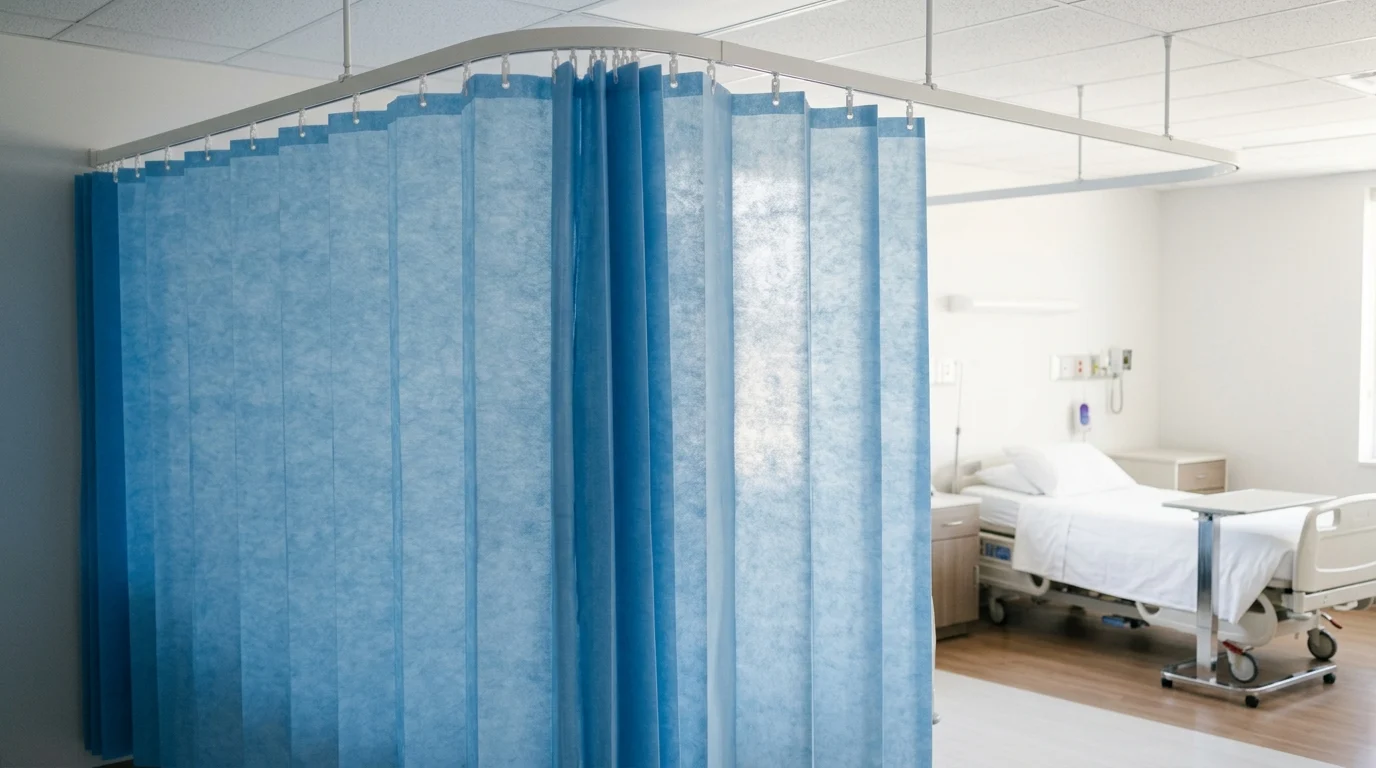
Privacy Curtains are often treated as background fixtures, yet in hospitals and controlled environments they can become silent reservoirs for bioburden, particles, and workflow risk.Disposable hospital curtains offer a practical alternative to laundered textiles by combining short-use cycles, engineered non-woven materials, and predictable replacement protocols. For infection prevention teams, facilities managers, and cleanroom operators, the decision is not simply about curtain cost; it involves contamination control, sprinkler compatibility, disposal rules, and total operating impact. This article explains how disposable curtains function in acute care and cleanroom settings, what specifications matter, and how buyers can evaluate safety, hygiene, and lifecycle cost with greater confidence.
Disposable Hospital Curtains in Infection Control
Healthcare-associated infections (HAIs) represent a critical challenge in acute care and cleanroom environments, necessitating stringent environmental hygiene protocols. In cleanroom settings, utilizing low-linting materials to control particle shedding and ensuring ISO-class compatibility—particularly in gowning areas—are paramount. The transition from traditional woven textiles to engineered non-woven barriers serves as a valuable adjunct to proper hand hygiene and routine surface cleaning in breaking the chain of pathogen transmission. By stabilizing environmental bioburdens through predictable replacement schedules, clinical and controlled facilities can significantly mitigate the cross-contamination risks inherent to high-traffic zones.
Definition and Use in Acute Care
Medical curtains manufactured from synthetic polymers are designed for short-term use, reducing the inherent risks associated with prolonged fabric exposure. In high-acuity settings such as intensive care units, burn wards, isolation rooms, and ISO-class controlled environments, these barriers act as an important physical defense against multidrug-resistant organisms and particulate contamination. Furthermore, the inclusion of a specialized upper mesh—requiring a specific open-area percentage (often cited as 70% or greater, though exact sprinkler-obstruction rules vary by jurisdiction and installation type) to meet commercial fire codes—allows unobstructed water penetration in the event of an emergency. This structural requirement highlights the dual-purpose nature of modern disposable barriers: infection mitigation and life safety across both acute care and cleanroom gowning areas.
Risk, Cost, and Operational Factors
The operational shift to single-use materials alters facility economics and risk profiles. Traditional woven curtains demand rigorous thermal laundering, yet clinical observations indicate recontamination can occur shortly after re-hanging. Conversely, deploying specialized disposable hospital curtains for infection control shifts the maintenance model. Facilities typically establish strict replacement protocols ranging from facility-defined intervals for general wards to immediately following patient discharge in contact-isolation units.
It is important to note that while many non-woven curtains are technically recyclable, real-world disposal practices are often limited by local medical waste regulations, meaning disposable curtains can increase overall facility waste. Instead of focusing solely on unit price, buyers should evaluate the total cost of ownership (TCO) using a targeted checklist:
- Acquisition Costs: Unit price, freight, and minimum order quantities.
- Operational Savings: Elimination of thermal laundering, specialized transport, and excess water consumption associated with woven textiles.
- Disposal Logistics: Waste management fees, especially when curtains are regulated as medical waste.
- Replacement Frequency: Protocol-driven changeout rates versus traditional laundering cycles.
| Feature | Traditional Woven Curtains | Disposable Non-Woven Curtains |
|---|---|---|
| Material Base | Polyester / Cotton Blends | 100% Polypropylene (PP) |
| Maintenance Requirement | Thermal laundering | None (Single-use; recycling often limited by medical waste rules) |
| Recontamination Risk | Susceptible to recolonization | Reduced (Active antimicrobial matrix in treated models) |
| Typical Replacement Cycle | Facility-dependent (often prolonged) | Protocol-driven (short-term) |
Key Specifications for Disposable Hospital Curtains
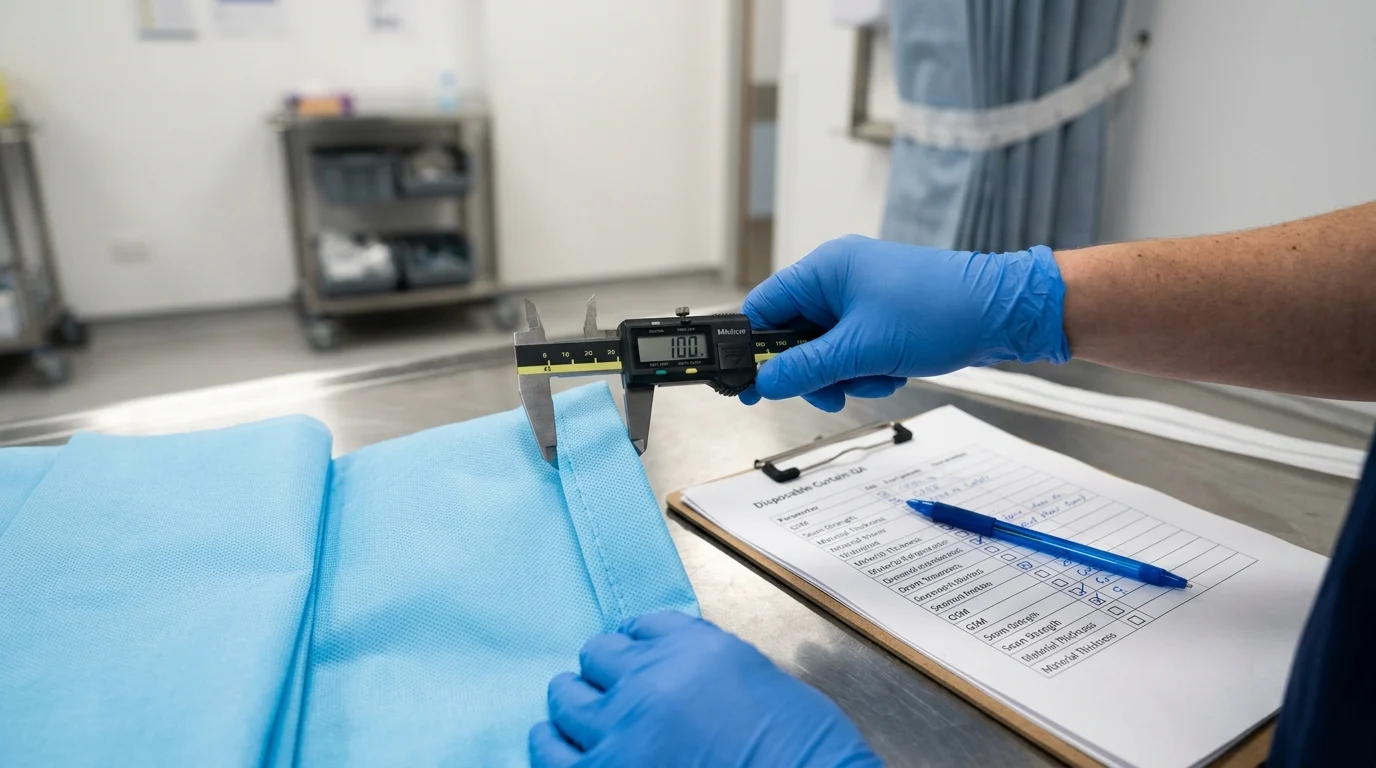
Defining the technical parameters of disposable barriers ensures they meet clinical efficacy and facility safety mandates. A thorough evaluation of material composition, active chemical treatments, and regulatory compliance frameworks is essential before standardizing a product line across a healthcare network.
Material, Antimicrobial, and Fire Performance
High-grade anti-microbial hospital curtains are primarily constructed from recyclable spunbond polypropylene. To balance opacity, drape, and tensile strength, manufacturers utilize specific fabric weights (typically measured in g/m², with exact ranges varying by manufacturer and facility needs). While standard non-woven curtains provide a basic physical barrier, treated antimicrobial versions integrate active chemistries—such as silver-ion technology—directly into the polymer matrix during extrusion. This active treatment aims to demonstrate a measurable reduction against critical pathogens, including MRSA and VRE. However, antimicrobial efficacy depends heavily on the specific chemistry used, the test method applied, and regulatory approval; such claims are strictly regulated as pesticides or biocides in many regions. Strict adherence to fire safety is also essential; acceptable products must pass rigorous flammability tests such as NFPA 701 in the United States or BS 5867 Part 2 Type C in the United Kingdom, ensuring the material melts rather than propagates a flame.
Compliance and Quality Verification
Quality verification extends beyond initial technical data sheets to active batch testing and comprehensive factory audits focusing on raw material traceability, clean-manufacturing practices, and worker safety. Laboratory methodologies such as AATCC 100 or ISO 20743 provide the quantitative framework for validating overarching antimicrobial claims. While disposable privacy curtains are typically not classified as medical devices, reputable manufacturers operate under stringent quality management systems, conforming to ISO 9001, and ISO 13485 where applicable. Lot traceability ensures that any deviations in antimicrobial concentration or tensile strength are rapidly isolated and contained. In commercial mass production, standard Acceptable Quality Limits (e.g., AQL 1.5 or 2.5) for major defects guarantee that structural elements like the reinforced mesh headers and ultrasonic seams maintain integrity under daily operational stress.
Choosing a Disposable Hospital Curtains Manufacturer
Identifying a capable manufacturing partner requires evaluating supply chain resilience, production scalability, and rigorous quality control infrastructures. As a neutral sourcing guide for buyers, this section outlines how to align supplier capabilities with the specific volume, logistical constraints, and compliance demands of a purchasing healthcare network.
Practical Sourcing Steps
The initial phase of sourcing single-use hospital curtains involves analyzing production logistics and capacity. Buyers must establish clear Minimum Order Quantities (MOQs), which vary widely by manufacturer, custom sizing, specific mesh requirements, and departmental color-coding protocols. Standard lead times for international freight also fluctuate significantly based on production schedules, regional origin, and shipping routes. During the vital sampling phase, buyers should conduct specific physical stress tests: evaluating the tear resistance of embedded eyelets, verifying the integrity of ultrasonic or heat-sealed seams under repetitive pulling forces, and checking the opacity of the fabric to ensure patient privacy.
Final Supplier Selection Criteria
Final vendor selection hinges on total cost of ownership and the manufacturer's operational maturity. A reliable hospital privacy curtains manufacturer will utilize fully automated cutting and folding lines to optimize production efficiency and consistency prior to vacuum packaging.
Key Takeaways
- Choose low-linting non-woven polypropylene curtains for cleanroom gowning areas and healthcare zones where particle control and infection prevention are both priorities.
- Set replacement protocols by risk level, with immediate changeout after contact-isolation discharge or visible contamination.
- Verify upper mesh design and open-area requirements with local fire codes before specifying disposable cubicle curtains for clinical spaces.
- Compare total cost of ownership rather than unit price by including laundering elimination, freight, disposal fees, and protocol-driven replacement rates.
- Confirm local medical waste rules before assuming disposable curtains can be recycled, since contamination status may restrict recycling in practice.
Frequently Asked Questions
What are disposable hospital curtains made from?
Most disposable hospital curtains are made from non-woven synthetic polymers, commonly 100% polypropylene, designed for short-term use, low maintenance, and reduced contamination risk compared with reusable woven curtains.
How do disposable curtains support infection control?
They reduce prolonged fabric exposure and allow protocol-driven replacement, such as after patient discharge in isolation areas, helping limit cross-contamination from high-touch, high-traffic clinical environments.
Are disposable privacy curtains suitable for cleanroom use?
They can be suitable when made from low-linting materials and selected for ISO-class compatibility, especially in gowning areas where particle shedding and environmental bioburden must be controlled.
How often should disposable hospital curtains be replaced?
Replacement depends on facility policy and risk level. General wards may use fixed intervals, while contact-isolation rooms often require immediate replacement after patient discharge or contamination events.
Do disposable cubicle curtains need a mesh top?
In many healthcare installations, an upper mesh is used to support sprinkler water penetration and fire-code compliance. Open-area requirements are often cited at 70% or more, but local rules vary.