

 Send Email
 whatsapp


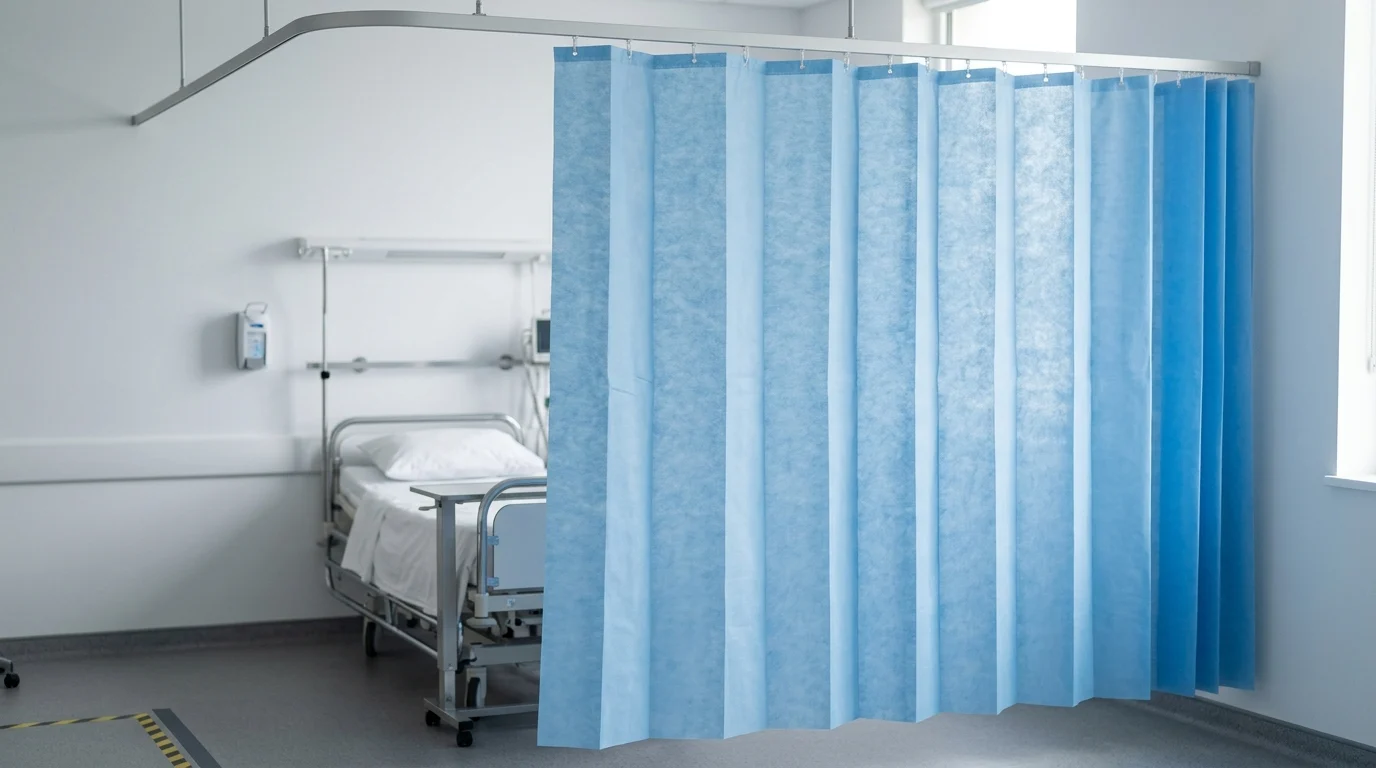
Healthcare facilities are entering 2026 under mounting pressure to reduce healthcare-associated infections, accelerate bed turnover, and control labor costs without ignoring sustainability mandates. Disposable hospital curtains have moved from a niche infection-control product to a strategic procurement category, especially in high-acuity and high-turnover departments. Traditional woven curtains can harbor pathogens for extended periods, while single-use non-woven alternatives offer faster replacement and baseline sterility at installation. This article examines the demand drivers, clinical use cases, operational trade-offs, material criteria, and purchasing considerations that administrators should weigh as they update privacy curtain policies for a more regulated, data-driven healthcare environment.
Why Disposable Hospital Curtains Matter
The shift toward rigorous infection control protocols has fundamentally redefined textile management within clinical environments. Traditional woven fabrics present documented risks for fomite transmission. As healthcare facilities prioritize zero-tolerance policies for healthcare-associated infections (HAIs), the transition to engineered, non-woven alternatives has become a critical operational mandate.
Administrators evaluating their 2026 supply chain strategies must balance infection prevention imperatives with labor optimization and environmental sustainability. Key 2026 trends shaping this transition include the adoption of smart tracking technologies, adaptation to new sustainability regulations, supply-chain regionalization, and the integration of advanced antimicrobial coatings.
Key 2026 Demand Drivers
Clinical studies indicate that high-risk pathogens, such as Methicillin-resistant Staphylococcus aureus (MRSA) and Vancomycin-resistant Enterococci (VRE), can survive on traditional woven fabric surfaces for up to 90 days, though exact durations depend heavily on environmental conditions and fabric types. This prolonged viability drives the escalating adoption of disposable hospital curtains as a primary defense mechanism. Looking toward 2026, regulatory bodies forecast stricter scrutiny on environmental cleaning efficacy, while new sustainability regulations push hospitals to evaluate the lifecycle of single-use items. Facilities with high HAI rates increasingly face reduced reimbursement penalties under value-based care models.
Furthermore, severe labor shortages within Environmental Services (EVS) departments compel administrators to seek measurable efficiency gains. Single-use models guarantee baseline sterility upon installation, supporting mandates that require frequent barrier replacements without the thermal and chemical degradation associated with traditional laundry cycles.
Common Healthcare Use Cases
High-turnover and high-acuity departments derive the most immediate clinical value from disposable privacy curtains. Intensive Care Units (ICUs), emergency departments, oncology wards, and burn centers require sterile isolation barriers that can be replaced rapidly after patient discharge, airborne pathogen exposure, or visible fluid contamination.
In these critical settings, single-use textiles reduce room turnover time significantly. While traditional curtain removal, bagging, transport, and re-hanging can consume upward of 20 minutes per bed space, disposable track systems allow EVS personnel to complete the changeover in under 3 minutes. Manufacturer specifications indicate this potential labor reduction—often cited as up to 85%, depending on the facility's baseline processes—directly optimizes bed throughput metrics.
However, practical implementation requires caveats. Disposable curtains are an adjunct to rigorous hand hygiene and surface disinfection protocols. Additionally, administrators must consider patient privacy concerns in low-acuity wards, where thinner disposable materials might cause silhouette shadowing. Replacement frequencies and costs also vary drastically; high-acuity environments dictate immediate replacement upon discharge or visible soiling, regardless of the curtain's remaining antimicrobial lifespan.
How to Compare Disposable Hospital Curtains
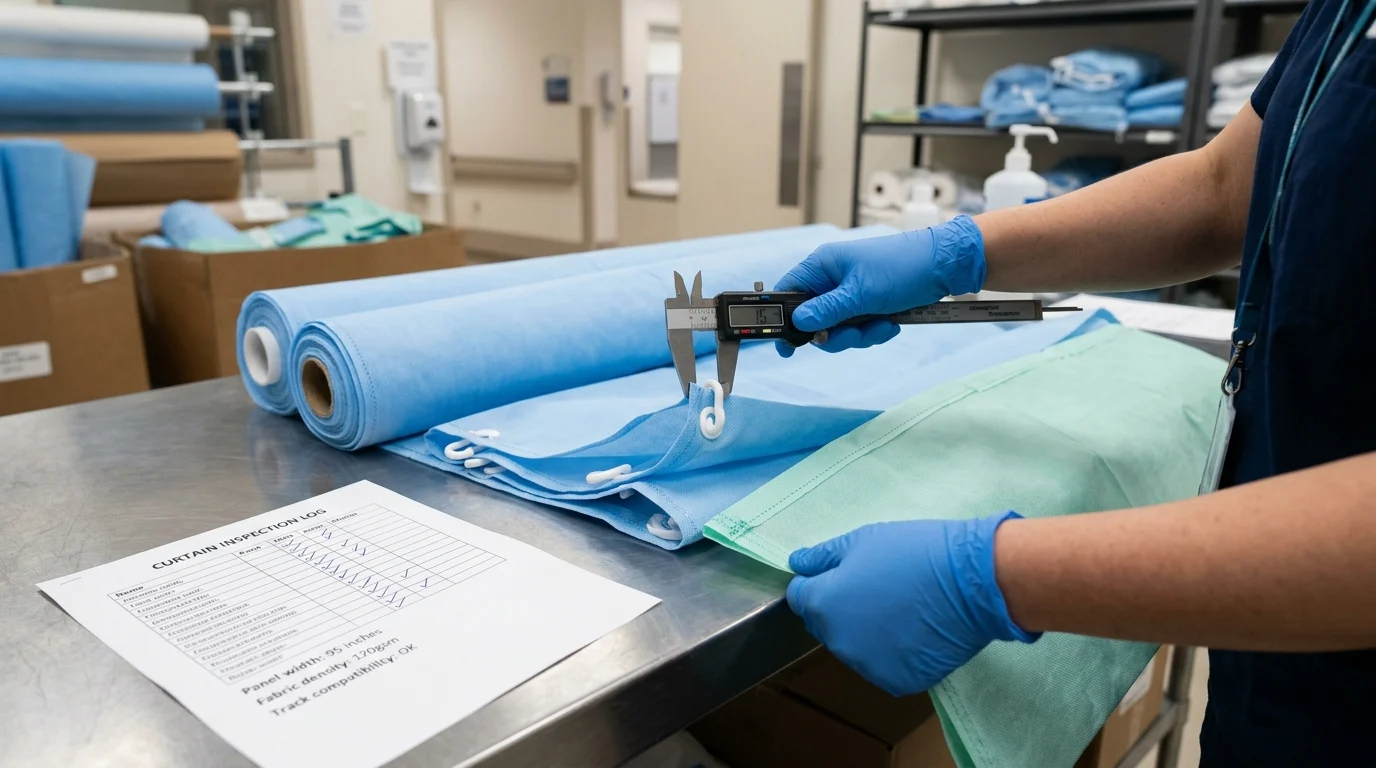
Evaluating non-woven privacy solutions requires a comprehensive analysis of material engineering, regulatory compliance, and lifecycle costs. Procurement teams must balance immediate financial outlays against long-term operational efficiencies, ensuring that the chosen product aligns with clinical safety standards, institutional budget constraints, and emerging 2026 sustainability targets.
Material, Safety, and Compliance Criteria
The industry standard for premium single-use hospital curtains centers on 100% recyclable non-woven polypropylene. Optimal opacity and tensile strength are typically achieved within a density range of 100 to 120 grams per square meter (GSM), though these values depend on the supplier and specific regional requirements. Materials falling below the 90 GSM threshold often compromise patient privacy and are highly susceptible to tearing at the mesh transition line during rapid deployment.
Safety compliance is non-negotiable in clinical environments. Products must carry certified flame retardant properties, meeting stringent international standards such as NFPA 701 in the United States or BS 5867 Part 2 Type C in Europe. Additionally, a major 2026 trend is the use of advanced antimicrobial coatings, such as embedded silver-ion or quaternary ammonium treatments. While manufacturers often claim these treatments provide a continuous 99.9% reduction in surface bacterial load over a 3-to-6-month cycle, buyers should view these metrics with caution; real-world efficacy depends heavily on environmental factors, handling, and adherence to broader cleaning regimens.
Cost, Waste, and Labor Trade-Offs
Transitioning from launderable to disposable systems alters the financial model from capital expenditure (CapEx) to operational expenditure (OpEx). A true Total Cost of Ownership (TCO) analysis must account for replacement frequency and waste management over an annual lifecycle.
| Metric | Traditional Woven Curtains | Disposable Polypropylene Curtains |
|---|---|---|
| Initial Acquisition Cost | $45.00 - $75.00 per unit | $8.00 - $15.00 per unit |
| Processing / Laundry Cost | $3.50 - $5.00 per cycle | $0.00 (Single-use) |
| EVS Change-Out Labor Time | 15 - 20 minutes | 2 - 3 minutes |
| Estimated Annual Replacements | 2 - 4 washes/changes per year | 4 - 12 changes per year (acuity dependent) |
| End-of-Life Disposal | Landfill after 2-3 years | Recyclable (Requires specialized streams) |
(Note: Values in the table above are estimates; actual pricing, laundering costs, and lifespans vary significantly by region, supplier, and required change frequency.)
A curtain replaced twelve times annually in an ICU yields a vastly different cost profile than one replaced biannually in a general ward. Despite higher replacement volumes, labor cost reductions and the elimination of commercial laundry contracts frequently offset the continuous procurement cycle.
On the sustainability front, standardizing on recyclable polypropylene only delivers environmental benefits if the facility partners with specialized medical-plastics recycling contractors. Because these specialized waste streams are not widely available, many facilities must route these plastics to standard landfills. Procurement teams must weigh the true landfill and carbon-footprint trade-offs of single-use plastics versus the heavy water and energy consumption of laundering reusable textiles—a critical calculation for meeting 2026 ESG (Environmental, Social, and Governance) goals.
Procurement and Implementation
Successful integration of disposable privacy barriers relies on rigorous supplier vetting and methodical deployment strategies. Procurement teams must establish resilient supply chains capable of sustaining continuous inventory replenishment without disrupting clinical workflows.
Supplier and Product Validation
Validating a supplier for healthcare curtains necessitates auditing their manufacturing quality management systems. Concrete steps include requesting ISO 13485 certificates, demanding independent flame-retardant test reports, and conducting physical sample audits.
Key Takeaways
- Prioritize disposable hospital curtains in ICUs, emergency departments, oncology wards, and burn centers where rapid replacement after discharge or contamination has the highest clinical value.
- Use lifecycle cost analysis rather than unit price alone because disposable systems can reduce curtain changeover from more than 20 minutes to under 3 minutes in some workflows.
- Evaluate 2026 procurement options for recyclable non-woven polypropylene, antimicrobial performance, privacy opacity, regulatory compliance, and compatibility with existing track systems.
- Treat Disposable curtains as one layer of infection prevention and maintain strict hand hygiene, surface disinfection, and environmental cleaning protocols.
- Plan replacement policies around clinical risk, visible soiling, discharge events, and pathogen exposure instead of relying only on stated antimicrobial lifespan.
- Monitor emerging sustainability rules and regional supply-chain options to reduce compliance risk and improve product availability.
Frequently Asked Questions
Why are healthcare facilities switching to disposable hospital curtains?
Facilities are adopting disposable curtains to reduce fomite transmission risk, improve room turnover, and support stricter infection-control protocols. They provide a sterile barrier at installation and avoid repeated laundering that can degrade traditional textiles.
Which departments benefit most from disposable privacy curtains?
ICUs, emergency departments, oncology wards, burn centers, and other high-turnover or high-acuity areas benefit most because curtains can be replaced quickly after discharge, contamination, or pathogen exposure.
How much time can disposable curtain systems save?
Traditional curtain removal and re-hanging can take upward of 20 minutes per bed space, while disposable track systems may allow changeover in under 3 minutes, depending on facility processes.
Do disposable hospital curtains replace routine cleaning and hand hygiene?
No. Disposable curtains are an infection-control adjunct, not a replacement for hand hygiene, surface disinfection, isolation protocols, and proper environmental cleaning practices.
What materials should procurement teams look for?
Many premium single-use hospital curtains use 100% recyclable non-woven polypropylene. Procurement teams should also evaluate safety, regulatory compliance, antimicrobial features, privacy performance, and total lifecycle cost.