

 Send Email
 whatsapp


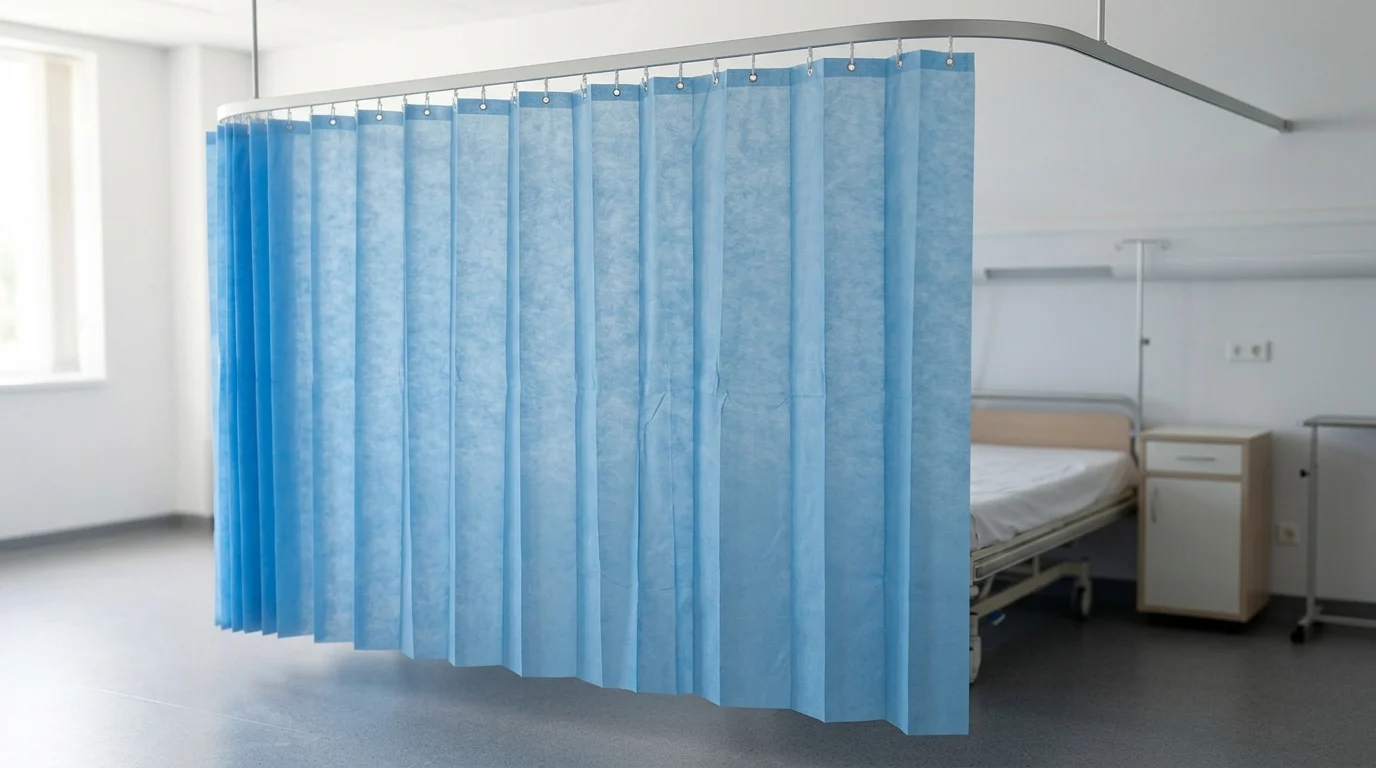
Hospital Privacy Curtains are touched often, changed inconsistently, and frequently overlooked in infection-control planning. For healthcare buyers,Single-use curtain systemsoffer a way to standardize hygiene protocols while making replacement schedules, inventory, and costs more predictable. The challenge is choosing products that meet clinical, operational, and regulatory expectations without creating avoidable waste or compatibility problems. This guide explains how to assess materials, gsm, sizing, mesh-top requirements, track fit, antimicrobial claims, and OEM supplier documentation through a practical procurement lens. It also highlights why total cost of ownership—not unit price alone—should drive decisions when comparing Disposable curtains with traditional laundered textiles.
Why Healthcare Buyers Need Disposable Hospital Curtains
The transition from traditional laundered textiles to disposable privacy solutions has become a strategic priority for modern healthcare facilities. Managing infection control protocols while simultaneously optimizing operational budgets requires procurement teams to evaluate modern alternatives to reusable fabrics through a total cost-of-ownership (TCO) lens. TCO calculations must factor in the initial purchase price, freight, storage, and disposal costs, offset against the elimination of continuous commercial laundering, chemical treatments, and inevitable fabric degradation associated with traditional linen curtains. In contrast, disposable solutions offer a systematic method for maintaining hygienic patient environments, converting a volatile operational expense into a predictable supply chain metric. However, buyers must balance this convenience against environmental trade-offs, factoring in local disposal obligations such as clinical waste incineration, landfill requirements, or specialized recycling programs.
What Defines Disposable Hospital Curtains
At their core, medical curtains designed for single use are engineered barriers that provide patient privacy while actively interrupting the transmission of healthcare-associated infections (HAIs). While they serve a critical clinical function, disposable curtains are typically classified as environmental controls rather than medical devices, unless explicitly marketed with specific medical claims. Unlike traditional woven fabrics that can harbor dangerous pathogens for weeks, these disposable variants are purpose-built for scheduled, rapid changeouts. Facilities typically implement replacement cycles ranging from every 3 to 6 months in general wards, or immediately following contamination by blood or bodily fluids. In high-risk environments like Intensive Care Units (ICUs) or burn wards, protocols often dictate more frequent replacements. This predictable lifecycle entirely eliminates the hidden costs of industrial laundry systems, though it shifts the operational focus toward managing the resulting plastic waste lifecycle.
Key Materials, Sizes, Track Compatibility, and Antimicrobial Options
The primary material utilized in manufacturing anti-microbial hospital curtains is 100% non-woven polypropylene. For optimal durability, tear resistance, and visual drape, buyers typically target a fabric weight range between 100 and 120 grams per square meter (gsm). However, it is important to note that fabric weights, sizes, and mesh heights can vary significantly by manufacturer and local jurisdiction. Standard sizing often features a drop length of 200 cm (approximately 78.7 inches), with widths scaling in multiples of 2.5 meters to accommodate various cubicle dimensions. Crucially, most building codes require a 50 to 60 cm fire-retardant mesh top to ensure ceiling sprinkler systems remain unobstructed. Track compatibility is achieved through universal eyelets or integrated hooks designed to seamlessly fit standard C-track and U-track systems. Furthermore, some premium OEM suppliers incorporate silver-ion antimicrobial additives directly into the polymer melt. Antimicrobial claims may fall under specific regional regulations, such as EPA/FIFRA in the United States or the EU Biocidal Products Regulation (BPR). It is critical to remember that 99.9% pathogen-reduction claims are product-specific features, not universal defaults for all disposable curtains, and must always be verified via third-party lab reports.
How to Compare Disposable Hospital Curtains for Compliance

Securing reliable disposable privacy barriers extends beyond basic material specifications; it requires rigorous validation of safety and regulatory compliance. Healthcare buyers must navigate a complex landscape of international fire safety codes and infection control standards to ensure institutional compliance and mitigate liability. Procuring non-compliant products not only jeopardizes patient safety but can also result in severe financial penalties during facility audits.
Required Regulatory Documents, Test Reports, and Quality Controls
Procurement teams must request specific, verifiable documentation before onboarding any new OEM supplier of hospital privacy curtains. Foremost among these are fire retardancy certifications, which vary significantly by jurisdiction. In US markets, products must typically pass the NFPA 701 standard for flame propagation. European facilities often require EN 13773, while UK facilities mandate BS 5867 Part 2 Type C, and other regions may rely on local ASTM or healthcare codes. These rigorous tests ensure the non-woven polypropylene will safely melt and self-extinguish rather than aggressively combusting. Additionally, buyers should demand third-party laboratory reports from recognized entities like SGS or Intertek to validate antimicrobial efficacy claims. Evaluating a supplier's quality management is also critical; buyers should look for concrete vetting criteria such as factory audits, raw material traceability, change-control processes, and relevant certifications like ISO 9001 (general quality). ISO 13485 (medical devices) is generally only relevant if a supplier explicitly positions their curtains as regulated medical devices.
Buyer Comparison Checklist for Product Evaluation
Evaluating multiple vendors requires a standardized approach to ensure objective, apples-to-apples comparisons. A comprehensive buyer checklist should weigh technical specifications against logistical realities to identify the most capable manufacturing partners.
| Evaluation Criterion | Illustrative Standard Benchmark | Illustrative Premium Indicator |
|---|---|---|
| Fabric Weight | ~100 gsm | ~120 gsm with reinforced hems |
| Fire Retardancy | NFPA 701, EN 13773, or local equivalent | BS 5867 Type C (or regional equivalent) |
| Antimicrobial Efficacy | Verified reduction (e.g., 99% surface treated) | Verified reduction (e.g., 99.9% embedded silver-ion) |
| Mesh Top Dimension | 50 cm standard drop | Custom sizing for specific sprinkler codes |
| Defect Rate (per inspected lot) | Example: < 2% | Example: < 0.5% |
By applying this matrix, hospital administrators can confidently filter out non-compliant products that might compromise ward safety. Curtains lacking appropriate fire-retardant documentation, or those demonstrating irregular fabric density and poor tensile strength during sample testing, should be immediately disqualified from the procurement process.
How to Source and Implement Disposable Hospital Curtains
Transitioning a hospital network to single-use barriers requires strategic sourcing and a robust implementation plan that covers storage, installation, staff training, and disposal workflows. Establishing a direct relationship with a qualified OEM manufacturer allows healthcare networks to customize curtain specifications, secure volume pricing, and stabilize their supply chains against regional disruptions. Effective procurement balances upfront unit costs with long-term reliability, production capacity, and scalability.
OEM Sourcing Steps from Inquiry to Delivery
The sourcing lifecycle for single-use hospital curtains begins with a detailed request for quotation (RFQ) specifying exact dimensions, mesh requirements, and preferred hook types.
Key Takeaways
- Evaluate disposable hospital curtains using total cost of ownership, including purchase price, freight, storage, disposal, labor, and avoided laundering costs.
- Specify 100% non-woven polypropylene in the 100–120 gsm range when durability, privacy, tear resistance, and practical drape are key buying criteria.
- Plan general-ward curtain changeouts every 3 to 6 months, and require immediate replacement after contamination with blood or bodily fluids.
- Confirm that curtain sizes, hook systems, and universal eyelets match the facility’s existing C-track or U-track before approving an OEM order.
- Require a 50–60 cm fire-retardant mesh top where sprinkler clearance and airflow are required by local building or fire codes.
- Verify antimicrobial performance with third-party lab reports and check whether claims comply with regulations such as EPA/FIFRA or EU BPR.
Frequently Asked Questions
How often should disposable hospital curtains be replaced?
Many facilities use a 3- to 6-month replacement cycle in general wards, with immediate changeout after visible contamination. ICUs, burn units, and isolation areas may require more frequent replacement based on infection-control protocols.
What material is commonly used for disposable hospital curtains?
Most disposable hospital curtains are made from 100% non-woven polypropylene. Healthcare buyers often look for 100–120 gsm fabric for a practical balance of durability, tear resistance, privacy, and drape.
Do disposable hospital curtains fit existing hospital tracks?
Many OEM curtains are designed with universal eyelets or integrated hooks for common C-track and U-track systems. Buyers should confirm hook style, spacing, curtain width, and drop length before ordering.
Are antimicrobial disposable curtains always 99.9% effective?
No. A 99.9% pathogen-reduction claim is product-specific, not automatic. Buyers should request third-party lab reports and confirm whether antimicrobial claims comply with applicable rules such as EPA/FIFRA or EU BPR.
Why do hospital curtains need a mesh top?
A fire-retardant mesh top helps maintain airflow and keeps ceiling sprinkler systems unobstructed. Many facilities specify a 50–60 cm mesh height, but final requirements depend on local building and fire codes.