

 Send Email
 whatsapp


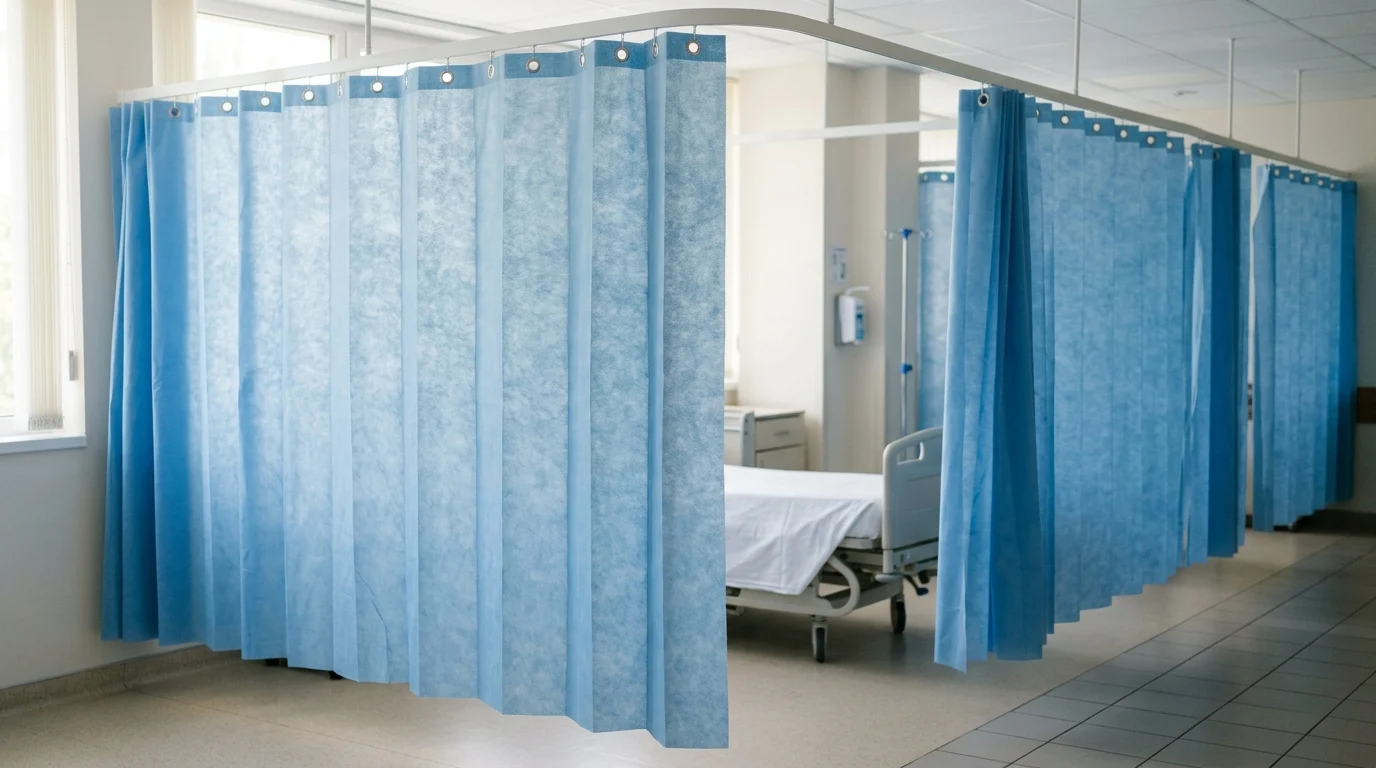
Healthcare facilities are under constant pressure to reduce infection risk while controlling labor, laundry, and replacement costs. Single-use Cubicle Curtains offer a practical answer, but only when procurement teams understand the details behind fabric weight, flame resistance, track compatibility, antimicrobial claims, and waste handling. For hospitals and distributors sourcing from Chinese OEM manufacturers, small specification errors can create expensive operational problems, from poor bay coverage to non-compliant fire performance. This guide explains what to verify before ordering, how to compare standard and heavy-duty options, and why lifecycle planning matters just as much as unit price.
Define Disposable Hospital Curtains for Clinical Use
The transition from traditional woven fabrics to disposable hospital curtains represents a practical shift in clinical infection control protocols. Eliminating the logistical overhead and thermal energy costs of continuous laundering, these single-use synthetic non-woven options help mitigate the risk of healthcare-associated infections (HAIs). However, healthcare networks must balance these benefits against environmental realities. While polypropylene (PP) non-wovens are technically recyclable, clinical PP non-wovens are rarely recycled due to strict infection-control protocols and waste-stream separation challenges. Facilities should budget for appropriate disposal pathways, such as clinical incineration or specialized landfill, rather than assuming recycling is viable. Specifying the correct non-woven architecture is critical for balancing pathogen resistance with structural integrity over the product's operational lifespan.
Key Product Specifications
Modern clinical environments demand strict dimensional and material tolerances to ensure seamless integration with existing track systems. While configurations vary, one illustrative example features a 7.5-meter fabric width paired with a 2.0-meter drop. It is important to distinguish clearly between track length and fabric width: the curtain fabric width must generally be 20% to 30% wider than the overall track or bay length it is intended to cover to allow for proper gathering and full enclosure. Procurement teams must also verify track compatibility; curtains should feature standardized reinforced eyelets that accommodate existing C-hooks, glide hooks, or roller systems without requiring costly rail modifications.
The fabric is predominantly manufactured from polypropylene (PP) non-woven spunbond material, often specified at a density of 100 to 120 grams per square meter (gsm) to prevent tearing during rapid deployment. To satisfy fire safety regulations, these curtains frequently integrate a flame-retardant mesh top. This mesh allows ceiling sprinkler systems to penetrate the curtain barrier unobstructed during a fire event, while the fabric itself must meet flammability standards like NFPA 701 or BS 5867. Furthermore, some curtains incorporate embedded silver-ion technologies intended to provide continuous antimicrobial properties. Crucially, percentage-reduction claims are laboratory-based and can be significantly undermined by organic soiling, real-world abrasion, and surface contamination. These treatments must never replace scheduled curtain replacement. Buyers should also note that antimicrobial or biocidal claims require proper EPA, EU BPR, or equivalent registration depending on the jurisdiction.
Specification Table Comparison Points
When evaluating OEM suppliers, procurement teams must benchmark product specifications to align with specific ward requirements. The following matrix outlines illustrative differentials between standard and heavy-duty medical curtains sourced from Chinese manufacturers. Note: These dimensional and performance figures are purely illustrative examples, not guaranteed industry-standard metrics. Precise antimicrobial efficacy percentages and lifespans are not universally applicable and will vary by supplier, environmental conditions, and physical wear.
| Specification | Standard Clinical Curtain | Heavy-Duty ICU Curtain |
|---|---|---|
| Fabric Density | 100 gsm | 120 - 150 gsm |
| Tensile Strength (MD/CD) | > 45 N / > 35 N | > 60 N / > 50 N |
| Anti-Microbial Efficacy | ~99.9% (illustrative) | ~99.99% (illustrative) |
| Fire Standard Compliance | NFPA 701 / BS 5867 | NFPA 701 / AS/NZS 1530.3 |
| Typical Replacement Cycle | 3 to 6 months | 6 to 12 months |
Assess Sourcing and Compliance Requirements
Importing medical-grade textiles from China requires rigorous validation of both the physical product and the manufacturing facility. Before proceeding, buyers should verify local product classification and consult regulatory counsel, especially if any biocidal or antimicrobial claims are made. In the US, EU/UK, and Australia, disposable curtains are typically treated as general medical textiles rather than Class I medical devices, unless specific biocidal claims elevate them to regulated biocidal products. Because these products serve as primary barriers in dynamic clinical environments, OEM suppliers should demonstrate strict adherence to relevant quality management systems and environmental safety directives. Failing to secure documented, verifiable compliance exposes healthcare networks to operational, financial, and legal risks.
Material Composition and Test Report Checks
The core material composition must be validated through accredited third-party laboratories before mass production commences. Suppliers should provide recent SGS or Intertek test reports confirming flame retardancy according to applicable standards like NFPA 701 or BS 5867 Part 2 Type C, which specifically address fabric flammability and burn rates. Equally critical is the validation of biocidal claims for antimicrobial hospital curtains. Facilities should request standardized test results (such as ISO 20743 or AATCC 100) proving reductions in bacterial colony-forming units (CFUs) over a specified duration. Additionally, the polypropylene substrate and its chemical additives should comply with regional directives such as REACH and RoHS to ensure heavy metal concentrations remain below safe thresholds.
To avoid fraudulent documentation, buyers should implement a strict verification checklist:
- Verify Certificate Scope:Ensure the ISO 13485 or CE certificate specifically lists "Disposable curtains" or "non-woven medical textiles," rather than just general PPE.
- Check Report Authenticity: Cross-reference test report numbers directly with the issuing laboratory's online database to identify forged documents.
- Review Dates: Reject outdated fire or antimicrobial efficacy reports, as chemical formulations and manufacturing standards evolve.
OEM Supplier Risk Reduction Steps
Mitigating supply chain risk necessitates a structured approach to supplier auditing and pre-shipment verification. While ISO 13485 certification is not universally mandatory for all curtain manufacturers, preferring vendors holding such credentials ensures comprehensive quality management. Beyond checking certificates, buyers should implement practical audit steps, including third-party factory inspections, mandatory pre-production sample sign-offs, and during-production monitoring. Implementing Acceptable Quality Limit (AQL) inspections prior to final shipment is also vital for maintaining batch consistency; standard thresholds typically monitor for major defects (such as torn mesh or incompatible eyelets) and minor defects (like slight color variations).
Evaluate Cost, Logistics, and Supplier Selection
Sourcing disposable hospital curtains from Chinese OEMs requires a rigorous analysis of total landed costs, shipping logistics, and manufacturing capabilities. Buyers must look beyond the base unit price to optimize the entire international supply chain.
Key Cost Drivers to Model
Procurement teams evaluating disposable hospital curtains must account for several overlapping cost variables:
- Raw Material Volatility: The primary material, spunbond polypropylene (PP), fluctuates with global petrochemical indices.
- Antimicrobial Treatments: Incorporating EPA-registered or BPR-compliant (Biocidal Products Regulation) silver-ion additives increases unit costs but remains mandatory for strict infection control.
- Volumetric Shipping: Because non-woven textiles are lightweight but bulky, ocean freight costs depend heavily on container utilization. Advanced packing methods, such as vacuum-compression, maximize the cubic meter (CBM) capacity of a 40-foot High Cube container. Buyers should monitor global shipping benchmarks, such as the Freightos Baltic Index (FBX), to forecast logistics expenses accurately.
- Import Duties: Tariff classifications (typically under HS code 6303.92 for synthetic curtains) vary by destination country and significantly impact the final landed cost.
Standard vs Custom Disposable Curtain Decisions
Choosing between off-the-shelf specifications and custom OEM production impacts both lead times and Minimum Order Quantities (MOQs). Standardized dimensions generally align with universal cubicle tracks, whereas custom orders accommodate specific facility requirements, such as tailored mesh tops for ceiling fire sprinkler compliance under NFPA 13 standards.
| Decision Factor | Standard Disposable Curtains | Custom OEM Curtains |
|---|---|---|
| Typical MOQ | 500 – 1,000 pieces | 3,000 – 5,000+ pieces |
| Production Lead Time | 14 – 21 days | 30 – 45 days |
| Design Specifications | Universal sizing, standard medical colors | Custom mesh drops, embedded RFID tags, bespoke branding |
| Cost Efficiency | High for low-volume or urgent procurement | High at scale, optimized for distinct ward layouts |
Selecting the right manufacturing partner requires balancing these custom structural requirements against inventory turnaround targets and capital constraints.
Key Takeaways
- Specify curtain fabric 20% to 30% wider than the track length to ensure proper gathering and complete patient-bay coverage.
- Choose polypropylene non-woven fabric around 100–120 gsm when tear resistance and rapid deployment durability are procurement priorities.
- Verify compatibility with existing C-hooks, glide hooks, or roller systems before ordering to avoid costly rail modifications.
- Require flame-retardant performance and mesh tops that support sprinkler penetration, with documentation for standards such as NFPA 701 or BS 5867.
- Treat antimicrobial claims as supplemental only, and maintain scheduled curtain replacement because soiling, abrasion, and contamination can reduce real-world efficacy.
- Budget for approved clinical disposal methods rather than assuming polypropylene curtains can be recycled after hospital use.
Frequently Asked Questions
What are disposable hospital curtains made from?
Most are made from polypropylene non-woven spunbond fabric, often specified around 100–120 gsm for tear resistance. Many include reinforced eyelets and a flame-retardant mesh top for sprinkler compatibility.
How wide should disposable cubicle curtains be?
Curtain fabric should typically be 20% to 30% wider than the track or bay length to allow proper gathering, privacy coverage, and full enclosure.
Do disposable hospital curtains eliminate infection risk?
No. They reduce laundering logistics and help support infection-control protocols, but they still require scheduled replacement and correct disposal. Antimicrobial treatments should not replace routine change-out policies.
Can polypropylene hospital curtains be recycled?
Polypropylene is technically recyclable, but clinical non-wovens are rarely recycled because of infection-control rules and waste-stream separation issues. Facilities should plan for approved disposal routes.
What fire safety features should buyers specify?
Buyers should request flame-retardant materials, mesh tops that allow sprinkler penetration, and compliance with relevant standards such as NFPA 701, BS 5867, or local equivalents.