

 Send Email
 whatsapp


Beyond Reusable The Rise of Disposable Mops

Modern cleaning demands advanced solutions to meet stringent hygiene standards. Traditional methods often fall short. Disposable mops offer a superior alternative. They prevent cross-contamination, a critical advantage in high-risk settings.Medical disposable mops ensure each cleaning task begins with a fresh, uncontaminated tool. High-quality disposable mop pads, such as disposable microfiber mop pads, capture microbes effectively. Mop disposable pads provide consistent cleaning performance and enhance overall sanitation.
Key Takeaways
- Disposable mops stop germs from spreading. Each mop is new for every cleaning job. This keeps places like hospitals safer.
- Disposable mops make cleaning easier and faster. Workers do not wash mops. This saves time and money for businesses.
- Disposable mops save water and energy. They also help use cleaning chemicals better. This is good for the environment.
Enhancing Infection Control with Disposable Mops
Eliminating Cross-Contamination Risks
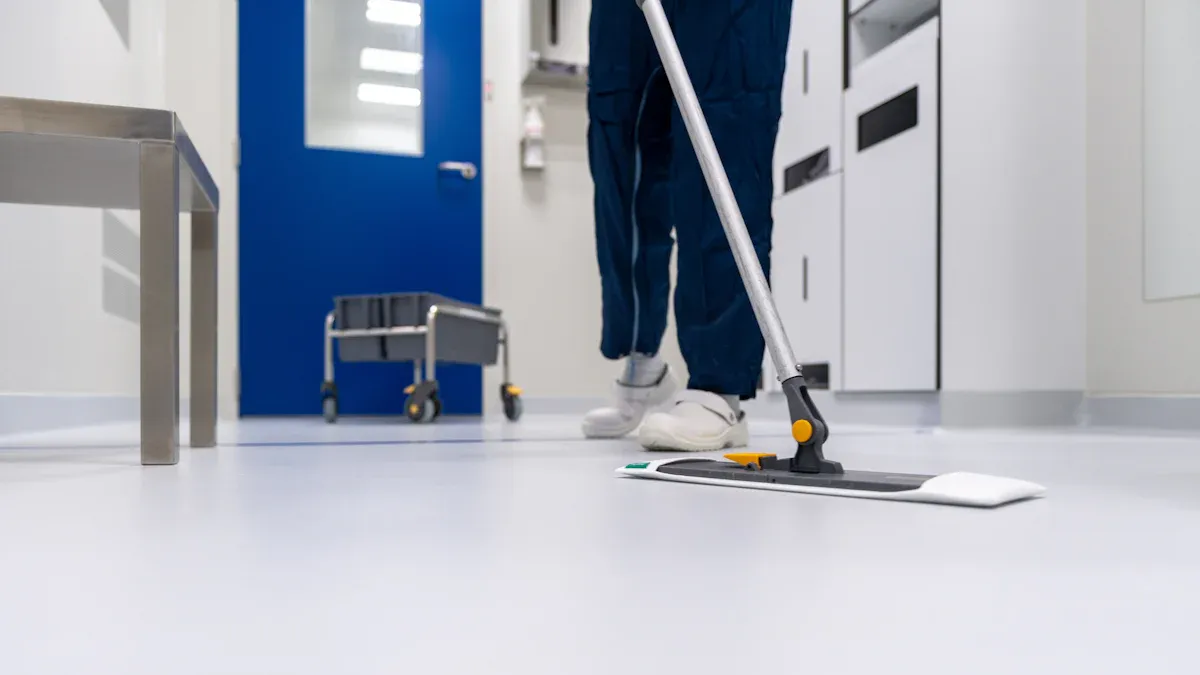
Disposable mops significantly advance infection control by directly addressing the critical issue of cross-contamination. Traditional reusable mops, even after laundering, can harbor pathogens and inadvertently spread them from one area to another. This poses a substantial risk, particularly in healthcare settings and other environments requiring stringent hygiene. Disposable solutions ensure a fresh, clean Mop Head for each cleaning task or area. This practice prevents the transfer of bacteria, viruses, and other microorganisms between rooms or surfaces.
Mop heads should be single use or removable for daily laundering and changed between rooms (including bathrooms).
This guideline underscores the necessity of single-use applications to maintain a high standard of cleanliness and prevent the spread of infectious agents. By using a new mop head for each distinct area, facilities effectively break the chain of contamination.
Superior Pathogen Removal Capabilities
The design and materials of disposable mops contribute to their effectiveness in pathogen removal. Many disposable options, including disposable microfiber mop pads, are engineered to capture and retain microorganisms more efficiently than conventional materials. This capability is crucial for reducing the microbial load on surfaces.
- Disposable disinfectant wipes significantly reduce the risks of cross-contamination, as demonstrated by early studies comparing them to reusable wipes.
- Disinfectant wipe methods can effectively eliminate viruses like adenovirus 8 from medical instruments, and are often more convenient than soaking methods.
- Pre-moistened germicidal wipes have been shown to consistently reduce C. difficile spores to undetectable levels at the inoculum site, preventing transfer to clean surfaces.
- The efficacy of disinfectant-impregnated wipes is influenced by several factors including the disinfectant type and concentration, the wipe material and construction, the application method, and the wiping strategy (e.g., pressure, number of passes).
While disinfectant-impregnated disposable wipes show strong efficacy, a study evaluating various cleaning cloths, including disposable microfiber, found that the performance of disposable microfiber cloth was notably worse than other tested cloths for removing MRSA, C. difficile (spore form), and E. coli on first and single use. This highlights the importance of selecting the right type of disposable product and understanding its specific performance characteristics for different pathogens.
Maintaining Sterile Environments Effectively
Maintaining sterile environments, especially in cleanrooms and healthcare facilities, demands rigorous protocols and specialized equipment. Disposable mops play a vital role in these settings by meeting strict cleanliness and contamination control standards.
Facilities must select mop materials that shed very low particles, such as microfiber or knitted polyester, and ensure compatibility with disinfectants. For higher ISO cleanroom classes, facilities use mops with heat-sealed edges and double-bagged laundering processes. Pre-wetting mop heads with disinfectant solutions reduces particle generation. Employing double-bucket systems prevents cross-contamination between cleaning and rinsing solutions.
- Mop materials must shed minimal particles, resist chemicals, and meet cleanroom standards.
- Materials like microfiber or polyester are recommended for compliance and contamination control.
- Mop materials must be compatible with flooring and withstand sterilization or laundering without losing integrity.
- Disposable mop solutions should meet ISO 14644-1 and GMP standards.
- Microfiber, knitted polyester, and nonwoven fabrics are ideal for controlled environments due to low particle shedding.
- Mop covers made from sterile quilted polyester or micro denier material provide ultra-low particle shedding and meet USP 797 standards.
- Microfiber mops with heat-sealed edges are suitable for ISO 1-5 cleanrooms, while knitted polyester works for ISO 7-8 environments.
- Static dissipative materials help prevent electrostatic discharge.
- Mop materials must resist degradation from common cleanroom disinfectants like isopropyl alcohol, hydrogen peroxide, bleach, quats, and phenolics.
- Polyester-based mop covers and heads maintain integrity with these disinfectants.
- Mop hardware (stainless steel, aluminum, plastic) must withstand repeated sterilization and chemical exposure.
- Gamma-irradiated and individually packaged mop covers help maintain sterility.
Operational procedures also contribute significantly to maintaining sterility. Facilities must regularly rotate and replace mops based on contamination and saturation levels. For ISO 1-5 cleanrooms, replacement occurs after every use. For ISO 6-8, replacement happens daily or when soiled. Thorough training for cleaning personnel on proper mop selection, use, and disposal is essential. Facilities also employ directional mopping patterns for thorough floor coverage and to prevent spreading contaminants.
- Flat mop heads ensure better contact with floor surfaces.
- Microfiber and polyester materials enhance particle removal.
- Ultrasonic welding secures fabric layers to prevent fiber contamination.
- Foam core layers improve soil and residue removal.
- Adjustable handle lengths reduce operator strain.
- 360-degree swivel mop heads allow access to tight spaces.
- Lightweight, telescoping handles improve cleaning efficiency.
- Mop heads are often gamma irradiated and double-bagged for aseptic processing.
- Stainless steel frames offer durability, autoclavability, and disinfectant resistance.
- Aluminum frames provide a lightweight, ergonomic option.
- Plastic frames are suitable for less stringent cleanrooms due to abrasion resistance and chemical compatibility.
- Modular and tool-free quick-change systems enhance contamination control.
These features and protocols ensure that disposable mops effectively support the stringent requirements of sterile environments.
Operational Efficiencies of Disposable Mops
Streamlined Cleaning Processes
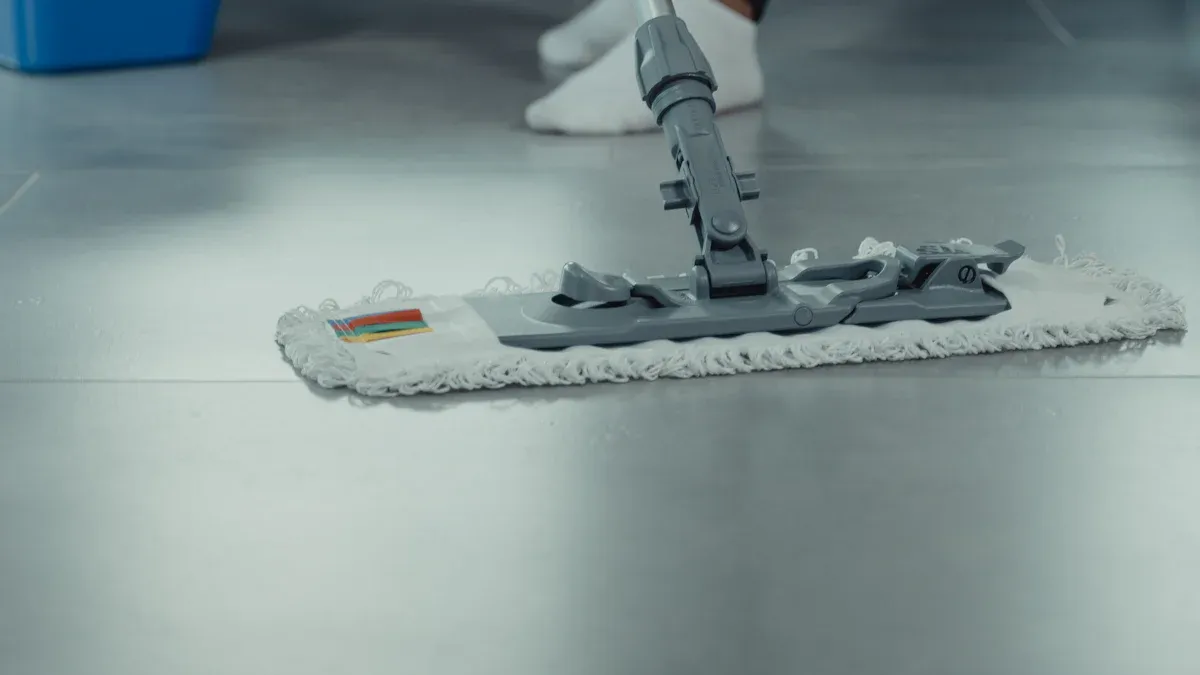
Disposable mops significantly simplify daily cleaning routines. Facilities eliminate the need for sorting, washing, and drying reusable mop heads. This saves considerable time and effort for cleaning staff. Workers can quickly grab a fresh mop head, use it, and then dispose of it. This process reduces setup and cleanup times, allowing staff to focus more on actual cleaning tasks. The straightforward nature of disposable systems enhances overall workflow efficiency.
Reduced Labor and Training Needs
The simplicity of disposable mop systems also reduces labor and training requirements. Staff do not need extensive instruction on proper laundering techniques or complex mop assembly. This makes training new employees faster and easier.
Proper training for staff can be challenging, but disposable mops provide a reliable option that reduces the likelihood of cross-contamination due to rushed cleaning or inadequate training.
This reliability ensures consistent cleaning outcomes, even with varying levels of staff experience. It minimizes errors associated with improper mop maintenance.
Consistent Cleaning Performance
Disposable microfiber mop pads consistently deliver effective cleaning across various environments. Their single-use design prevents the accumulation of dirt and bacteria after each cleaning. This ensures reliable hygiene and eliminates the risk of pathogen transfer.
| Aspect | Traditional Cotton Mops | Disposable Microfiber Mops |
|---|---|---|
| Microbe Removal Rate | Approximately 67% (33% re-deposited) | Up to 99.54% (using water alone) |
| Cross-Contamination Risk | Higher due to reuse and bucket water | Reduced by using fresh pad per room |
| Consistency in Cleaning Results | Contaminated after laundering | Reliable performance with every use |
| Residual Level | Higher (not specified) | Averages 0.020 ± 0.012 gm2 |
| Disinfectant Efficacy | 20% decrease within the first minute | Remained stable |
This consistent performance is crucial for maintaining high hygiene standards. It ensures every cleaning task starts with a fresh, highly effective tool.
The Economic Advantage of Disposable Mops
Analyzing Long-Term Cost Savings
Disposable mops offer significant long-term cost savings for commercial facilities. While reusable cleaning supplies often have a higher initial purchase price, their long-term costs can be lower due to longevity. Conversely, disposable cleaning supplies feature a lower initial purchase price but higher long-term costs due to repeated purchases. However, this perspective often overlooks the substantial operational expenses associated with reusable systems. For example, microfiber flat mops, whether reusable or disposable, are lighter and easier to use. This leads to reduced labor costs and improved cleaning quality. By eliminating the need for laundering and maintenance, disposable systems prevent numerous hidden costs. Proper floor cleaning with these systems can also prevent the need for more expensive long-term maintenance tasks like stripping and refinishing. These avoided expenses contribute to a more favorable overall economic outcome.
Reducing Laundry and Maintenance Expenses
A major economic benefit of disposable systems comes from eliminating laundry and maintenance expenses. Facilities no longer need to invest in industrial washing machines, dryers, or the utilities required to operate them. This includes significant savings on water, electricity, and laundry detergents. Furthermore, staff do not spend time sorting, washing, drying, and folding mop heads. This frees up valuable labor hours for other critical tasks. The constant wear and tear on reusable mops also necessitates frequent repairs or replacements. Disposable options completely bypass these ongoing maintenance burdens, leading to direct and measurable cost reductions.
Minimizing Equipment Investment
Adopting disposable mops also minimizes the need for substantial equipment investment. Facilities avoid the capital expenditure for commercial laundry equipment, which can be very costly. They also reduce the need for large storage areas dedicated to dirty mops awaiting laundering or clean mops ready for use. This streamlined approach means less upfront investment in specialized cleaning infrastructure. It allows facilities to allocate resources more efficiently to other operational needs.
Sustainability and Environmental Impact of Disposable Mops
Decreased Water and Energy Consumption
Disposable mop systems significantly reduce water and energy consumption. They eliminate the need for laundering. Users discard the mop pad after a single use. This practice bypasses the entire washing and drying cycle. It substantially cuts down on water usage. It also saves the electrical energy typically expended on heating water and operating dryers. This reduction in operational water and energy can be substantial, especially in large-scale cleaning operations. It also streamlines cleaning protocols, contributing to overall efficiency.
Optimized Chemical Usage
Disposable microfiber mops optimize chemical usage in cleaning operations. They ensure cleaning solutions are applied uniformly across surfaces. These mops offer superior absorbency and coverage. This helps maximize worker efficiency and ensures effective application of cleaning solutions. Premira® Disposable Microfiber Mop Pads can be saturated by pouring the chosen cleaning chemistry directly over the dry pads in their resealable pouch. This eliminates the need for buckets. These single-use microfiber products work effectively with a wide range of cleaning agents and disinfectants. They avoid chemical buildup or degradation, which can occur with laundered textiles.
Responsible Waste Management Practices
Facilities implement responsible disposal practices to minimize environmental impact. They participate in recycling programs for used microfiber pads. Organizations engage in waste reduction strategies. They select products with minimal packaging. Choosing suppliers who adhere to environmentally friendly practices is also important. These actions ensure that the environmental footprint of Disposable Mops remains as low as possible.
Practical Benefits for Facility Managers with Disposable Mops
Ease of Use and Disposal
Disposable mops offer significant advantages for cleaning staff. Their single-use design simplifies the cleaning process. Staff do not need to wash or condition mops, which saves time and effort. Mops are ready for immediate peak performance, requiring no break-in period. The non-woven material reduces shedding and linting, leading to a cleaner result. This material also enhances disinfectant efficacy by reducing QUAT binding, ensuring more effective cleaning with less effort.
Adaptability to Various Surfaces
Facility managers appreciate the versatility of disposable mops. These mops adapt well to a wide range of surfaces, from smooth tile to textured concrete. Their design ensures effective cleaning on different floor types without compromising performance. This adaptability means facilities do not need multiple types of mops for different areas. This simplifies inventory management and staff training.
Improved Worker Safety and Productivity
Disposable microfiber mop pads significantly enhance worker safety. They prevent cross-contamination, especially in critical environments like hospitals. This ensures pathogens do not spread from one area to another. This single-use approach reduces the risk of transferring infectious agents. In terms of productivity, these mops streamline cleaning processes. Staff quickly replace used pads with fresh ones, minimizing downtime. This ensures consistent use of clean tools. This not only boosts efficiency but also improves staff morale by reducing workload and exposure to harmful pathogens.
Disposable mops represent the future of commercial and healthcare cleaning. They offer superior infection control, crucial for reducing cross-contamination and trapping bacteria. Facilities adopt them for stringent contamination control in cleanrooms and for their sustainable innovations. These mops are a best practice for modern hygiene standards. They reduce bacteria on floors by 99%, ensuring pristine surfaces and preserving disinfectant integrity. This eliminates cross-contamination risks and helps facilities exceed compliance.
FAQ
How do disposable mops enhance infection control?
Disposable mops eliminate cross-contamination risks. Each cleaning task uses a fresh mop head. This prevents pathogen transfer between different areas. 🦠
Do disposable mops offer long-term cost savings?
Yes, they reduce laundry, maintenance, and equipment costs. Facilities save on water, energy, and labor associated with reusable systems. This provides significant economic advantages. 💰
What is the environmental impact of disposable mops?
They decrease water and energy consumption from laundering. Optimized chemical usage and responsible waste management practices further minimize their environmental footprint. 🌍
