

 Send Email
 whatsapp


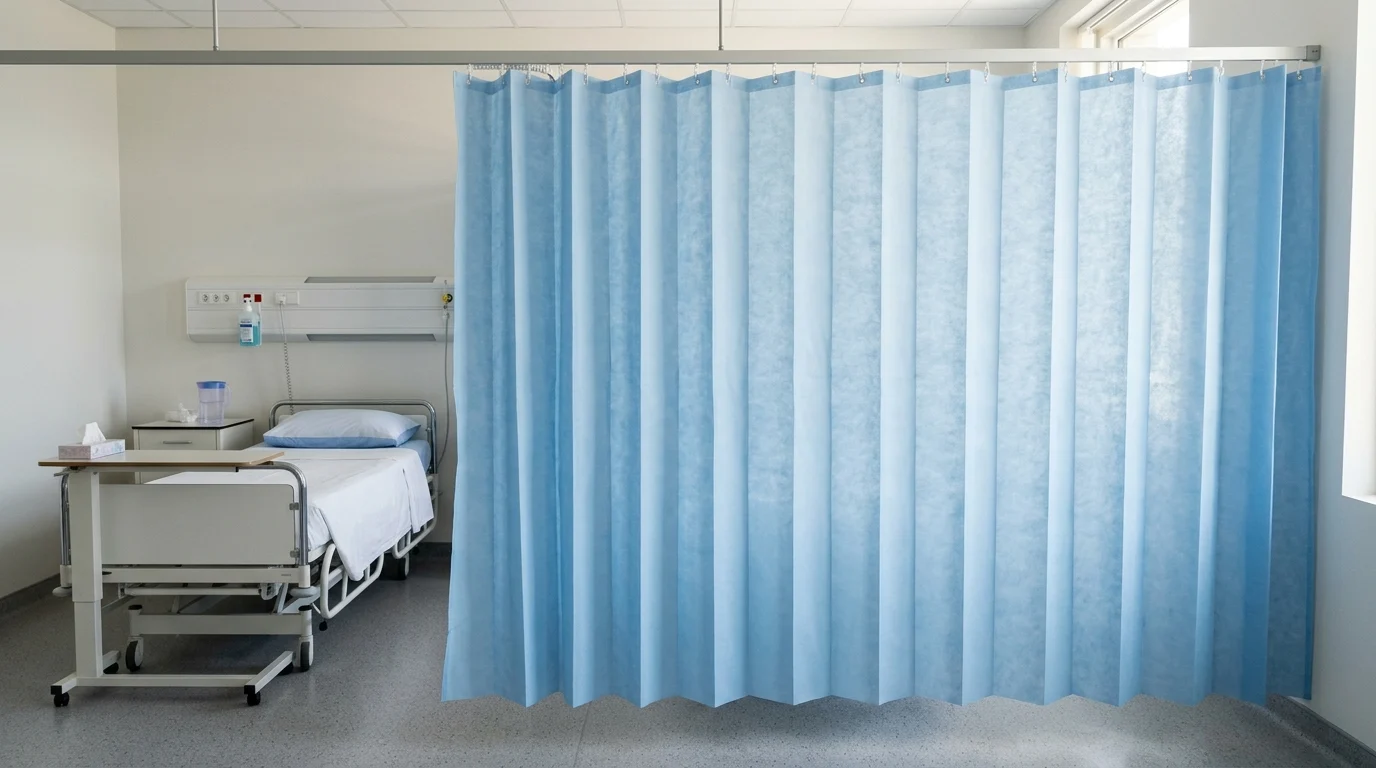
Hospital Privacy Curtains are touched frequently, changed under pressure, and often overlooked until they become a bottleneck for cleaning teams or a concern for infection prevention. As facilities balance patient throughput, HAI reduction, labor constraints, and sustainability goals,single-use Cubicle Curtains offer a practical alternative to laundered textiles in the right settings. Their value depends on more than unit price: material weight, fire-safety certification, antimicrobial claims, installation hardware, changeout schedules, and waste handling all influence performance and cost. This guide explains how hospitals can evaluate, install, and maintain disposable curtain systems with a focus on safety, compliance, and operational efficiency.
Why Disposable Hospital Curtains Matter
The transition from traditional woven textiles to single-use hospital curtains represents a notable shift in healthcare facility management. As hospitals face mounting pressure to optimize patient throughput, mitigate environmental contamination, and manage constrained operational budgets, facility directors are increasingly considering disposable alternatives to streamline daily operations and support clinical safety protocols.
Clinical Definition and Use Cases
Manufactured primarily from non-woven polypropylene (Type 5 plastic), disposable barriers provide immediate privacy without the logistical burden of industrial laundering. Standard specifications often benchmark a material weight between 100 and 120 grams per square meter (gsm) to ensure adequate opacity and tensile strength.
These curtains are frequently deployed in intensive care units (ICUs), emergency departments, and isolation wards, where rapid room turnover is necessary. The hydrophobic nature of non-woven polypropylene repels bodily fluids, protecting staff during aerosol-generating procedures. However, facilities must weigh environmental impacts: polypropylene medical curtains are often not recyclable in standard waste streams. Consequently, transitioning to single-use options can significantly increase a facility's total waste volume if specialized local recycling programs are unavailable. In lower-acuity settings or facilities with highly efficient, sustainable laundering infrastructure, traditional reusable curtains may still be preferable to minimize plastic waste and ongoing procurement costs.
Infection Control and Commercial Drivers
A primary driver for adopting disposable privacy solutions is the mitigation of healthcare-associated infections (HAIs). Pathogens such as Clostridioides difficile and Methicillin-resistant Staphylococcus aureus (MRSA) can survive on traditional fabrics for extended periods. By implementing hospital curtains for patient safety, facilities can reduce risks associated with incomplete laundering and the transport of soiled linens.
Financially, the transition shifts expenses from recurring laundering to continuous procurement and waste disposal. While quick-load hooks can reduce terminal cleaning downtime and yield labor savings, supply chain directors must carefully audit these variables. Single-use options do not automatically reduce the total cost of ownership compared to reusable textiles.
How to Compare Disposable Hospital Curtains
Selecting the appropriate partition system requires an evaluation of material science, regulatory compliance, and lifecycle costs. Procurement teams must look beyond initial unit pricing to assess the holistic value, environmental impact, and safety profile of the product.
Fabric, Antimicrobial, and Fire-Safety Criteria
Depending on regional regulations, medical curtains must adhere to specific fire-safety standards, such as passing the NFPA 701 or BS 5867 Part 2 Type C flammability tests. It is critical to verify these certifications, as compliance varies significantly by region and product. Buyers should always request independent, third-party test reports rather than assuming universal compliance. Unlike traditional fabrics that may lose flame-retardant properties after repeated washing, quality synthetic options are often treated during extrusion to maintain permanent fire resistance.
Additionally, some variants incorporate antimicrobial technology, such as silver-ion treatments, designed to reduce bacterial load. Crucially, these treatments do not replace scheduled changeouts or routine surface disinfection. Buyers should confirm that any efficacy claims are supported by product-specific data and comply with EPA or equivalent regional registration requirements.
Hospital Procurement Comparison Checklist
To standardize purchasing decisions, procurement committees should utilize a comparative matrix evaluating operational metrics against traditional woven options. The following checklist highlights potential differences in lifecycle management and resource allocation, though exact figures will vary by facility and product.
| Procurement Metric | Traditional Fabric Curtains | Disposable Non-Woven Curtains |
|---|---|---|
| Average Changeout Time | Generally longer (requires track removal) | Often faster (quick-load hooks) |
| Antimicrobial Efficacy | May degrade after multiple washes | Dependent on specific product treatment |
| Fire Retardancy | May require periodic retreating | Often permanent for the product's lifecycle |
| Water & Chemical Usage | Requires laundering resources | Requires disposal/recycling management |
| Tracking Mechanism | RFID chips or manual laundry logs | Built-in visual date audit labels (on some models) |
By auditing these parameters, supply chain directors can more accurately forecast the total cost of ownership. Facilities must balance the higher initial capital and laundering costs of traditional curtains against the continuous purchasing and waste management demands of disposable options.
Installation and Maintenance Best Practices
The operational success of disposable partitions relies heavily on standardized installation protocols and seamless coordination between environmental services (EVS) and infection prevention departments. Establishing clear, repeatable workflows ensures that the clinical benefits of the product are fully realized.
Fast Installation Standards for Facilities Teams
Many modern hospital privacy curtains are designed for rapid deployment, utilizing glide hooks or U-hook systems intended to integrate with existing ceiling track infrastructure. However, "universal" hooks may not fit all track systems, and some reusable curtains also offer quick-change hardware; therefore, a comprehensive track audit should precede any purchase. Facilities teams should train EVS personnel on the following step-by-step guide to ensure proper deployment:
- Inspect: Verify track stability and ensure the correct hook type is selected for the existing rail.
- Align: Unpack the curtain and align the quick-load hooks with the track insertion point.
- Mount: Slide the hooks into the track sequentially, ensuring the curtain glides smoothly without catching.
- Verify: Confirm the curtain clears the floor to prevent tripping hazards while providing full privacy coverage for the patient.
Under optimized protocols, technicians can replace contaminated curtains swiftly. This efficient changeover capability is highly beneficial during winter surge periods or localized outbreak scenarios, ensuring bed availability is not delayed by privacy barrier maintenance.
Procurement and Infection Prevention Coordination
Effective lifecycle management necessitates robust coordination between supply chain managers and infection control specialists. Facilities must implement strict replacement schedules based on ward acuity, patient turnover rates, and manufacturer guidelines. For instance, single-use curtains for clinics and wards in general inpatient areas are often scheduled for replacement every few months, whereas those deployed in burn units, oncology wards, or contact-precaution isolation rooms typically require immediate disposal upon patient discharge.
To enforce these protocols, maintenance teams can utilize the integrated audit labels printed on many curtain headers.
Key Takeaways
- Choose non-woven polypropylene curtains around 100–120 gsm when opacity, strength, and rapid deployment are required in clinical areas.
- Prioritize disposable curtains in ICUs, emergency departments, and isolation wards where fast turnover and contamination control are operational priorities.
- Request independent fire-safety test reports, such as NFPA 701 or BS 5867 compliance, before approving any curtain product for hospital use.
- Treat antimicrobial claims as a supplement to infection-control protocols, not a replacement for scheduled curtain changes and surface disinfection.
- Calculate total cost of ownership by including procurement, labor savings, laundering avoidance, storage, waste disposal, and environmental impact.
- Assess local recycling or disposal options before large-scale adoption because polypropylene curtains can increase medical waste volumes.
Frequently Asked Questions
What are disposable hospital curtains made from?
Most are made from non-woven polypropylene, often around 100–120 gsm, to provide privacy, opacity, and sufficient tensile strength for clinical use.
Where are disposable privacy curtains most useful?
They are especially useful in ICUs, emergency departments, isolation wards, and other high-turnover areas where fast room changes and contamination control are priorities.
Do disposable curtains help reduce infection risk?
They can support infection-control protocols by eliminating laundering gaps and reducing contact with contaminated textiles, especially where pathogens such as MRSA or C. difficile are concerns.
Are antimicrobial disposable curtains maintenance-free?
No. Antimicrobial treatments may reduce bacterial load, but they do not replace scheduled changeouts, routine cleaning, or documented infection-control procedures.
What fire-safety standards should hospitals check?
Facilities should request third-party test reports for applicable standards such as NFPA 701 or BS 5867 Part 2 Type C, depending on regional requirements.