

 Send Email
 whatsapp


Introduction
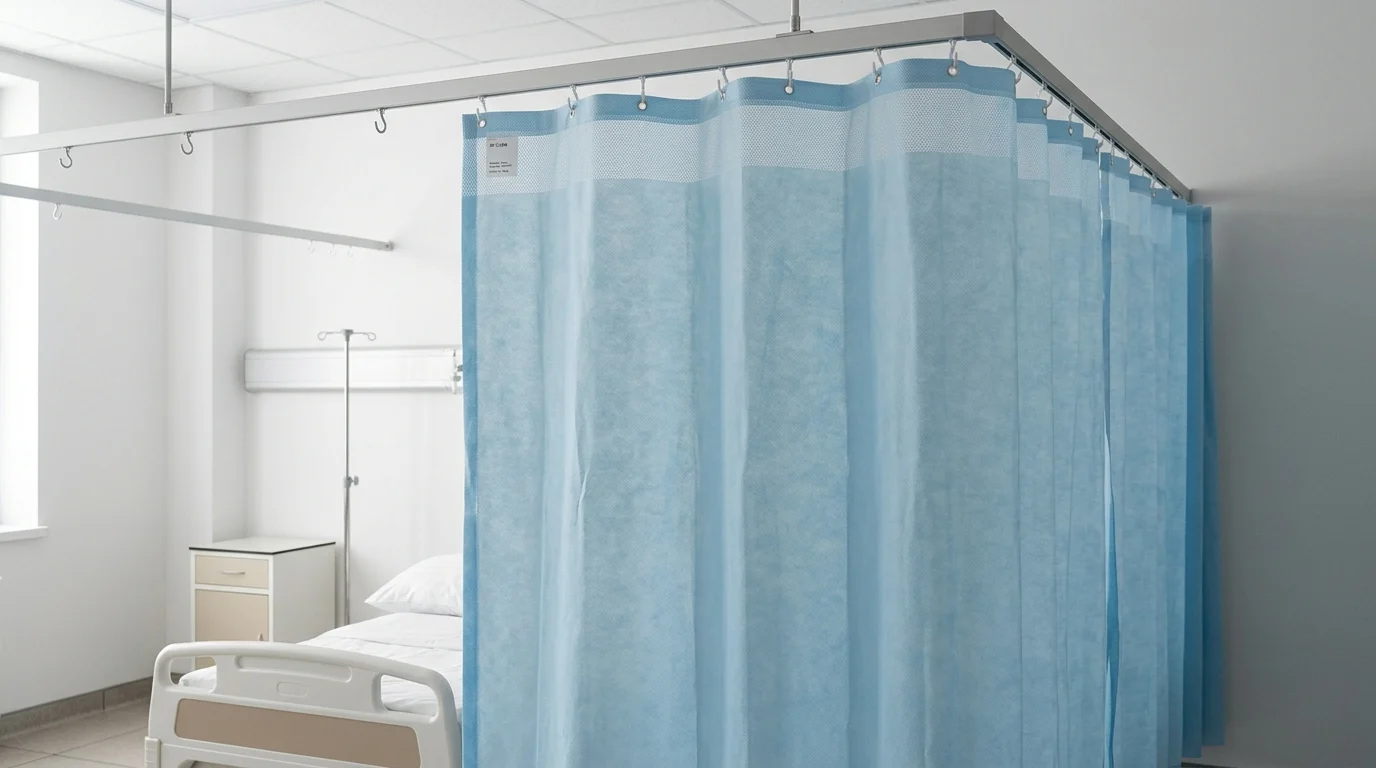
In clinical spaces, Privacy Curtains are touched often, moved frequently, and positioned close to patients, making their installation more than a maintenance task. Disposable hospital curtains can support faster room turnover and clearer infection-control routines, but only when the right materials, track systems, labeling, and replacement workflows are planned in advance. This article outlines the practical decisions facility teams need to make before deployment, from confirming fire-safety compliance and curtain dimensions to reducing handling errors during changeouts. It also explains how installation choices affect patient privacy, staff efficiency, waste management, and long-term operating consistency across wards, emergency areas, and isolation rooms.
Why Disposable Hospital Curtains Change Installation Strategy
The transition from traditional laundered textiles to disposable alternatives represents a fundamental shift in facility management. Facility directors must rigorously reevaluate their deployment strategies, as single-use variants demand different handling, tracking, and attachment methodologies compared to their woven predecessors. Optimizing this transition requires a granular understanding of material specifications and the vulnerabilities associated with dynamic clinical environments.
How to define disposable hospital curtains
Disposable hospital curtains are single-use privacy barriers predominantly engineered from non-woven polypropylene. These Medical Curtains typically feature a material density of 100 to 120 grams per square meter (GSM), balancing opacity for patient dignity with lightweight maneuverability. While theoretically recyclable, clinical waste streams and strict infection-control protocols often necessitate alternative disposal methods.
Many premium variants include embedded antimicrobial treatments, such as silver ion technology, to actively inhibit bacterial colonization. Crucially for installation, these materials must meet stringent fire safety standards, such as the NFPA 701 fire retardant test method, ensuring the fabric limits flame propagation rather than acting as a combustible accelerant. Facility managers must verify local fire code certifications prior to deployment.
Key risks for infection control and privacy
Traditional privacy barriers are notorious environmental reservoirs for healthcare-associated infections (HAIs). Clinical studies indicate that resilient pathogens, including Methicillin-resistant Staphylococcus aureus (MRSA) and Clostridioides difficile spores, can survive on untreated textiles for periods extending up to 14 days. Eliminating the commercial laundering cycle drastically reduces these cross-contamination vectors.
However, mitigating infection risk must not compromise spatial functionality. Installation protocols must strictly account for proper curtain overlap. Standard architectural practice dictates that privacy installations require a width allowance of at least 15% greater than the physical track length. This deliberate over-sizing prevents visual gaps when the fabric is fully drawn closed, ensuring complete visual isolation during sensitive clinical procedures.
Installation Best Practices for Disposable Hospital Curtains
Executing a flawless rollout of single-use barriers requires operational protocols that address both hardware constraints and environmental safety mandates. Installation teams must bridge the gap between existing architectural infrastructure and modern disposable specifications to ensure seamless deployment.
How to verify track compatibility and curtain sizing
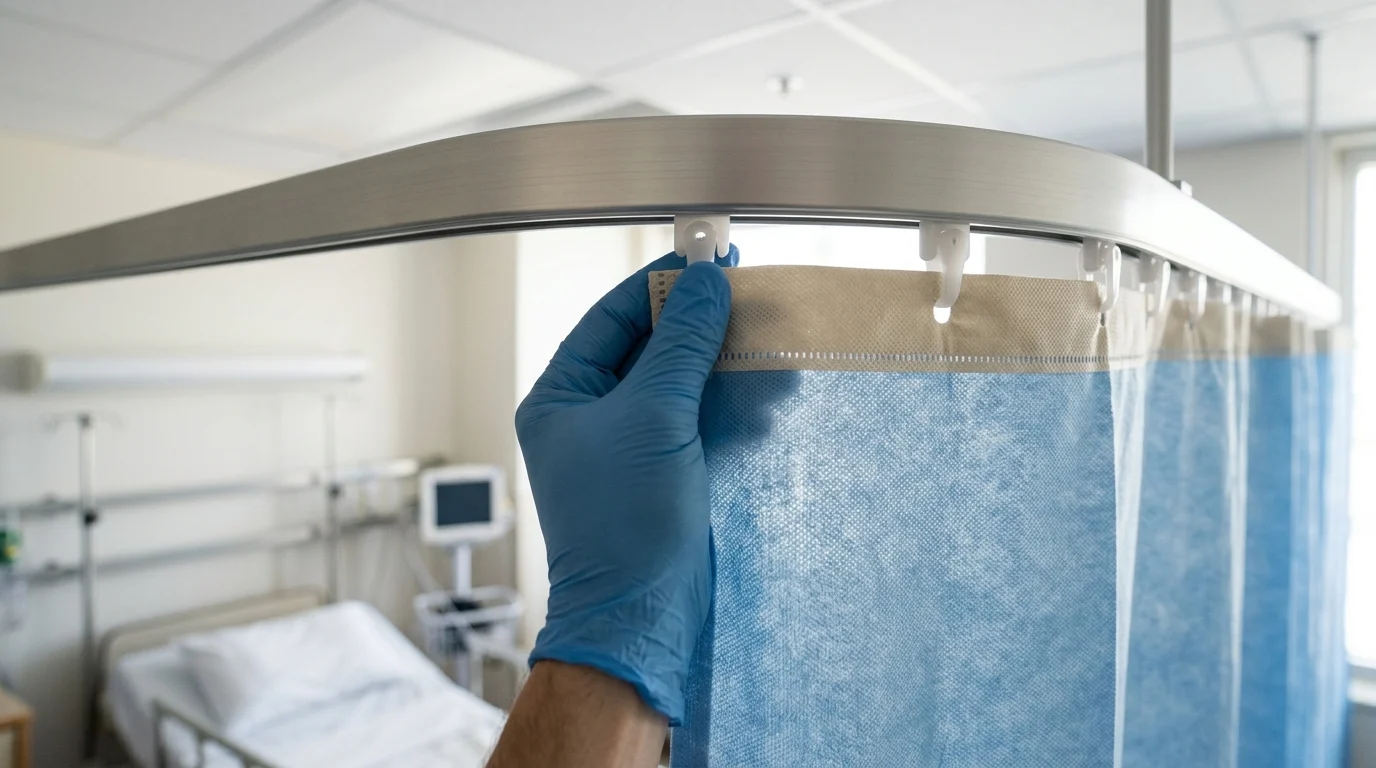
Before mounting Healthcare Curtains, environmental technicians must systematically audit ceiling tracks for structural integrity. Most modern single-use options feature universal eyelets or integrated glide hooks designed to interface with standard U-tracks and I-tracks. However, hook spacing—typically set at 6-inch intervals—must align perfectly with ceiling carrier mechanisms to prevent binding.
| Dimension Parameter | Standard Specification | Clinical Rationale |
|---|---|---|
| Track Allowance | Track length + 15% | Ensures adequate fabric overlap and eliminates visual gaps |
| Floor Clearance | 10 to 15 inches | Prevents fabric contamination from floor mopping and chemical spills |
| Mesh Header | Minimum 20 inches (subject to local fire codes) | Complies with strict fire codes for overhead sprinkler penetration |
In specialized departments such as behavioral health, compatibility checks must also verify the integration of anti-ligature breakaway gliders. These are calibrated to release under a specific weight threshold—industry benchmarks suggest facilities often set this between 5 and 10 lbs depending on local policy—to ensure patient safety.
Steps for safe, consistent, and auditable installation
A standardized mounting procedure minimizes labor expenditure and ensures strict compliance with hospital auditing standards. Technicians should first don appropriate personal protective equipment (PPE), including gloves and masks, and ensure standard ladder safety protocols are followed. When installing in occupied patient rooms, technicians must coordinate with nursing staff to perform changeovers during low-traffic periods, minimizing clinical disruption.
The installation process begins with the aseptic removal of the previous barrier. Installers must carefully unhook the old curtain, rolling it inward to contain potential pathogens, and immediately place it in a designated biohazard bag for proper disposal. Next, installers should verify hook-spacing compatibility and attach the new panels sequentially. Fastening each hook securely from one end to the other prevents track jamming. Technicians must ensure the correct mesh-header orientation, keeping the mesh section at the top to comply with fire codes. Post-installation, a visual verification of overhead sprinkler clearance is mandatory to guarantee unobstructed water distribution in an emergency.
Crucially, an auditable installation requires precise documentation. Technicians must affix a highly visible, tamper-evident date label to the leading edge of the fabric. Industry benchmarks suggest establishing a hard replacement threshold—often 3 to 6 months for general medical-surgical wards, or immediately upon patient discharge in high-acuity units like the ICU—to maintain the verified efficacy of the barrier.
How to Compare and Replace Disposable Hospital Curtains
Procurement teams and environmental services departments must collaboratively assess the operational and financial impacts of phasing out reusable textiles. Establishing a sustainable replacement program requires analyzing the total cost of ownership alongside clinical efficacy and supply chain resilience to ensure installations remain cost-effective over time.
Disposable vs reusable curtain comparison points
The financial calculus between traditional textiles and Single-Use Hospital Curtains extends far beyond the initial purchase price. Reusable curtains generate continuous operational expenses, including removal labor, commercial laundering, thermal disinfection, and complex return logistics. Industry benchmarks suggest laundering a single traditional curtain can cost $10 to $15 per cycle, factoring in high-temperature water, chemical agents, and specialized labor.
In contrast, disposable variants carry an upfront unit cost that typically ranges from $15 to $25 but completely eliminate secondary laundering and transport expenses. The labor required for changeovers is significantly reduced; a lightweight disposable panel can often be installed in just a few minutes.
However, this cost-comparison must account for critical caveats. Facilities must factor in regulated biohazard waste disposal fees, which can offset initial savings when single-use curtains are discarded as infectious waste. Additionally, administrators must weigh the environmental impact of accumulating single-use plastics against the high water and energy consumption of commercial laundry facilities. Despite these trade-offs, the defect rate associated with reusable fabrics—such as torn mesh headers after multiple wash cycles—is entirely eradicated with disposables, providing administrators with a predictable, fixed cost per installation.
Key Takeaways
- The most important conclusions and rationale for Disposable Hospital Curtains
- Specs, compliance, and risk checks worth validating before you commit
- Practical next steps and caveats readers can apply immediately
Frequently Asked Questions
How much wider should disposable hospital curtains be than the track?
Specify curtain width at least 15% greater than the track length. This creates proper overlap, prevents visual gaps, and maintains patient privacy when the curtain is fully closed.
What floor clearance is recommended during installation?
Install disposable hospital curtains with 10 to 15 inches of floor clearance. This helps prevent contamination from mopping, spills, and floor contact.
How should old disposable or contaminated curtains be removed?
Wear PPE, unhook the curtain carefully, roll it inward to contain contaminants, and place it directly into the designated biohazard or clinical waste bag.
What should be checked before fitting curtains to an existing track?
Confirm the track type, carrier condition, hook or eyelet spacing, and smooth movement. Most curtains fit standard U-tracks or I-tracks, but spacing mismatches can cause binding.
Why must the mesh header stay at the top?
The mesh header supports sprinkler water flow and fire-code compliance. Install it at the top and verify overhead sprinkler clearance after the curtain is fitted.