

 Send Email
 whatsapp


Introduction
Choosing between disposable and traditional hospital curtains affects more than room privacy: it shapes infection control, staff workload, turnaround time, and ongoing operating costs. In clinical settings where high-touch surfaces can quickly become contaminated, curtain material and replacement processes matter. This article compares disposable hospital curtains with reusable fabric options across hygiene performance, labor demands, compliance, and practical day-to-day use. By the end, readers will have a clear framework for evaluating which curtain system best supports safer patient environments and more efficient facility operations.
Why Disposable Hospital Curtains Matter
The transition toward disposable hospital curtains represents a critical evolution in healthcare environmental hygiene. As facilities increasingly target zero hospital-acquired infections (HAIs), the role of the patient privacy curtain has come under intense scrutiny by regulatory bodies and accreditation agencies. Clinical audits have consistently demonstrated that up to 92% of traditional fabric curtains become colonized with dangerous pathogens, such as Methicillin-resistant Staphylococcus aureus (MRSA) or Vancomycin-resistant Enterococci (VRE), within just one week of laundering.
Mitigating this vector for cross-contamination requires interventions that eliminate the complex logistics of continuous laundering. By shifting from woven textiles to engineered non-woven materials, facility managers can establish predictable, standardized infection control protocols that bypass the vulnerabilities inherent in traditional laundry supply chains. This shift aligns directly with modern environmental hygiene mandates, ensuring that patient perimeters remain consistently secure.
Operational drivers
The primary catalyst for adopting disposable variants is the dramatic reduction in facility labor and turnaround time. Removing, bagging, transporting, laundering, and re-hanging traditional curtains demands approximately 30 to 45 minutes of labor per bed. In contrast, changing out a Disposable curtain typically requires only 3 to 5 minutes. This accelerated turnaround directly increases bed availability, a critical metric during high-capacity periods or emergency department surges.
Furthermore, eliminating the commercial laundry cycle removes the variable costs associated with thermal disinfection, chemical treatments, and massive water consumption. Facilities no longer need to maintain dedicated staging areas for contaminated textiles, which inherently reduces the risk of cross-contamination during transit and stabilizes the environmental services budget.
How they differ from traditional curtains
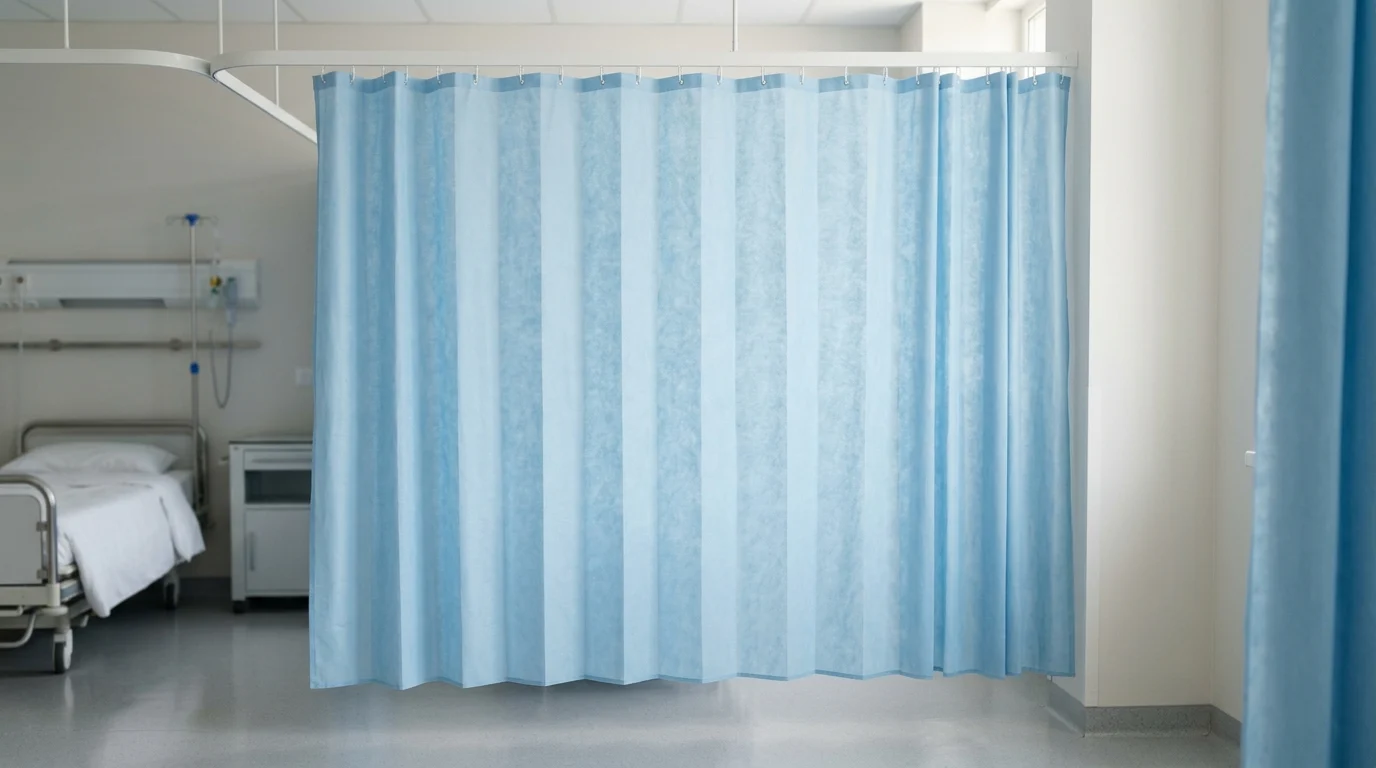
Traditional curtains are predominantly manufactured from woven polyester or cotton blends, which inherently feature microscopic gaps where dust, skin squames, and organic matter accumulate. Conversely, modern disposable alternatives are constructed from 100% polypropylene non-woven fabric, usually weighing between 100 and 120 grams per square meter (gsm). This continuous synthetic matrix is highly hydrophobic, actively resisting fluid penetration from blood splashes or aerosolized droplets.
Many of these advanced solutions function as Anti-Microbial Hospital Curtains, incorporating silver-ion or quaternary ammonium treatments directly into the polymer melt. This manufacturing technique ensures the fabric actively neutralizes surface pathogens over its entire operational lifespan, transforming the curtain from a passive physical barrier into an active component of the room's infection control infrastructure.
Disposable vs Traditional Hospital Curtains
Evaluating the transition between disposable and traditional curtain systems requires a comprehensive total cost of ownership (TCO) analysis. While the upfront unit economics may appear to favor laundering existing assets, a holistic view incorporates labor, specialized transport protocols for contaminated textiles, and replacement rates due to fabric degradation.
Traditional curtains often require an initial capital expenditure of $40 to $80 per panel, alongside the hidden cost of inventory bloat—facilities typically must purchase three sets per bed to account for items in use, in transit, and in storage. Disposables shift this financial model from a capital expense to a predictable operating expense, generally costing between $15 and $25 per unit, with zero downstream laundering liabilities.
Key comparison criteria
Procurement teams must weigh several intersecting factors beyond unit cost. Environmental impact is a primary consideration; while disposables generate solid waste, traditional laundering consumes massive volumes of heated water and harsh chemical detergents. Many facilities now partner with specialized recycling programs that repurpose clinical polypropylene, effectively offsetting the solid waste footprint.
Compliance tracking is another critical differentiator. Modern Single-Use Hospital Curtains frequently feature integrated, highly visible compliance labels. This allows infection control teams to visually verify the installation date and schedule replacements without referencing external database logs. Furthermore, aesthetic consistency is guaranteed with disposables, whereas traditional textiles suffer from fading, pilling, and permanent staining over repeated high-temperature wash cycles.
What a comparison table should include
A robust comparative analysis should synthesize the primary operational and financial metrics. The following table outlines the foundational data points facilities should use when benchmarking these two modalities:
| Metric | Traditional Curtains | Disposable Curtains |
|---|---|---|
| Initial Unit Cost | $40.00 – $80.00 | $15.00 – $25.00 |
| Maintenance / Wash Cost | $10.00 – $15.00 per cycle | $0.00 (No washing required) |
| Labor to Swap | 30 – 45 minutes | 3 – 5 minutes |
| Material Composition | Woven polyester/cotton blend | 100-120 gsm non-woven polypropylene |
| Pathogen Resistance | Low (unless freshly laundered) | High (antimicrobial treated) |
| Tracking Mechanism | RFID tags or manual logs | Integrated visual date labels |
How Hospitals Should Choose
Selecting the appropriate privacy curtain strategy is rarely a monolithic decision for an entire healthcare network. Administrators must align their procurement strategies with specific departmental acuity levels, patient turnover rates, and existing architectural track infrastructure.
A hybrid approach is often the most pragmatic initial step, allowing facilities to deploy advanced non-woven solutions in high-risk zones while phasing out legacy textiles in lower-acuity areas. Implementing this requires structured evaluation frameworks managed by multidisciplinary committees—comprising Infection Control, Environmental Services, and Procurement—to ensure seamless integration and compliance with national healthcare accreditation standards.
Practical evaluation steps
The evaluation process must begin with a rigorous baseline audit of current curtain exchange frequencies and associated labor expenditures over a trailing 12-month period. Next, facilities must verify physical compatibility. While most Disposable Hospital Curtains for Infection Control are engineered with universal eyelets designed to fit standard C-track or straight-track gliders, proprietary track systems may require specific adapter hooks.
Finally, pilot programs should be initiated in a controlled environment, such as a single 20-bed ward. During this pilot phase, administrators should measure actual swap times, conduct staff satisfaction surveys, and track HAI rates. Validating the durability of the non-woven material under standard clinical use before executing a hospital-wide contract ensures the selected product meets both clinical and operational thresholds.
Decision guidance by care setting
Clinical environments characterized by high patient vulnerability and rapid turnover demand the stringent hygiene profiles of Single-Use Curtains.
Key Takeaways
- The most important conclusions and rationale for Disposable Hospital Curtains
- Specs, compliance, and risk checks worth validating before you commit
- Practical next steps and caveats readers can apply immediately
Frequently Asked Questions
Why are disposable hospital curtains better for infection control?
They reduce cross-contamination by replacing contaminated curtains quickly instead of sending fabric through laundry cycles. Many polypropylene options also resist fluid penetration and may include antimicrobial treatments.
How much time can staff save by using disposable hospital curtains?
A traditional curtain change can take about 30–45 minutes per bed, while a disposable change typically takes 3–5 minutes. That helps speed room turnover and improve bed availability.
Are disposable hospital curtains more cost-effective than traditional curtains?
Often yes, when you include labor, laundry, transport, storage, and replacement. Disposable curtains usually shift costs to a more predictable operating expense with fewer hidden handling costs.
What material are disposable hospital curtains usually made from?
They are commonly made from 100% polypropylene non-woven fabric, often around 100–120 gsm. This material is lightweight, hydrophobic, and practical for single-use healthcare environments.
How do facilities track replacement schedules for disposable curtains?
Many single-use curtains include visible compliance labels showing the installation date. Infection control teams can check replacement timing at a glance without relying on separate logs.