

 Send Email
 whatsapp


Disposable Microfiber Mop Heads or Reusable: Your 2025 Cleaning Guide

The optimal choice between reusable and disposable microfiber mop heads depends entirely on specific cleaning priorities. Factors like hygiene, environmental impact, and convenience guide this decision. Some situations benefit from disposable floor cleaning pads. Other contexts require a microfiber mop disposable solution. Selecting the right disposable mop pads aligns with individual needs.
Key Takeaways
- Choose between reusable and disposable mop heads based on your cleaning needs. Think about cost, hygiene, and how it affects the environment.
- Reusable Mop heads save money over time. They are good for home cleaning. Disposable mop heads are better for places like hospitals. They stop germs from spreading.
- A mix of both mop types works best. Use reusable mops for daily cleaning. Use disposable mops for dirty areas or quick clean-ups.
Cost-Effectiveness: Reusable vs. Disposable Microfiber Mop Heads
Initial Investment and Long-Term Savings with Reusable Mops
Reusable microfiber mop heads typically demand a higher initial investment compared to their disposable counterparts. However, their robust construction and ability to withstand repeated use translate into substantial long-term savings. These durable mops endure numerous wash cycles, significantly extending their operational life. For instance, various sources highlight their impressive longevity:
| Source | Wash Cycles/Observations |
|---|---|
| CleanCo Solutions | Up to 100 washes |
| E-SUN (Proper care) | Over 200 washes |
| E-SUN (Washable Microfiber Floor Cleaning Mops) | Up to 500 times |
| Cleanlink (Experts Analyze Mopping Options) | Many mops show great durability even after more than 300 laundering cycles. |
This extended durability means users do not need to purchase replacements frequently. The initial cost, spread over hundreds of uses, becomes very economical, offering a clear financial advantage over time.
Recurring Expenses of Disposable Microfiber Mop Heads
Conversely, disposable microfiber mop heads present a different financial model. While each individual unit has a low purchase price, their single-use design necessitates constant repurchasing. Every cleaning session requires a fresh head, leading to continuous recurring expenses. Over time, the cumulative cost of regularly buying new disposable microfiber mop heads can quickly exceed the initial outlay for a set of reusable mops. This ongoing expenditure significantly impacts a cleaning budget, especially for high-frequency cleaning environments. The convenience of disposal comes with a consistent financial commitment that adds up considerably.
Cleaning Performance and Hygiene: Which Mop Excels?
Cleaning Efficacy and Consistency
Microfiber technology inherently offers superior cleaning capabilities. Both reusable and disposable microfiber mop heads effectively capture dust, dirt, and microscopic particles. Reusable mop heads maintain high cleaning efficacy over many uses. Proper washing procedures restore their absorbent and electrostatic properties. This ensures consistent performance throughout their lifespan. Disposable mop heads provide consistent cleaning performance with each new unit. Users always start with a fresh, uncontaminated surface. This guarantees optimal dirt and germ removal for every cleaning task.
Cross-Contamination Risks and Hygiene Standards
Cross-contamination poses a significant concern in many cleaning environments. Disposable microfiber mop heads offer a distinct advantage in this area. Their single-use nature eliminates the risk of spreading pathogens from one area to another. Cleaners simply discard the head after each use. This practice significantly enhances hygiene standards, especially in healthcare or food service settings. Reusable mop heads require rigorous laundering protocols to prevent cross-contamination. Facilities must implement strict washing and sanitization procedures. Without proper processing, reusable mops can inadvertently transfer bacteria and viruses. Many operations designate specific reusable mops for different zones to mitigate this risk.
Environmental Impact: Sustainability of Mop Head Choices

Waste Generation from Disposable Microfiber Mop Heads
Disposable microfiber mop heads contribute significantly to landfill waste. Their single-use design means users discard them after each cleaning task. This constant disposal creates a continuous stream of non-biodegradable material. Manufacturers produce these items for convenience, but their environmental footprint grows with every discarded unit. However, disposable mops offer an advantage in one area: they reduce water and energy consumption by eliminating the need for laundering. This aspect contrasts with the resource demands of reusable options.
Resource Consumption for Reusable Mop Heads
Reusable mop heads present a different set of environmental considerations. While they do not contribute to landfill waste as frequently, their maintenance phase demands substantial resources. The energy-intensive laundering process for reusable mop pads contributes over twice the amount of greenhouse gases compared to disposable ones, based on 100 uses. This includes electricity and thermal energy for washing and drying. The maintenance phase also increases their Acidification Potential (AP) due to emissions of sulfur dioxide and nitrogen oxide. Furthermore, laundering reusable mop pads contributes more to smog production than all life phases of disposable microfiber mop heads combined. Therefore, reusable microfiber mop pads have a greater environmental impact across multiple categories, including global warming potential and smog production, primarily due to the energy and resources required for repeated laundering.
Convenience and Maintenance: Ease of Use and Care

Maintenance Requirements for Reusable Mop Heads
Reusable mop heads demand specific care to maintain their cleaning efficacy and extend their lifespan. Users must follow proper washing protocols diligently. They should use cold or lukewarm water for washing. Mild liquid detergents, such as delicate wash detergents or those labeled "free and clear," are ideal choices. Conversely, users must avoid fabric softeners, harsh detergents containing dyes, fragrances, or brighteners, oil-based soaps, and bleach. These substances can damage the microfiber structure and significantly reduce its effectiveness over time. For healthcare environments, CDC guidelines recommend washing machine water temperatures of 160 degrees Fahrenheit for a minimum of 25 minutes. This high temperature effectively kills bacteria, preventing germ transfer if contaminants remain after the wash cycle. Adhering to these maintenance requirements ensures reusable mops continue to perform optimally and hygienically.
Simplicity and Disposal of Disposable Microfiber Mop Heads
Disposable microfiber mop heads offer unparalleled convenience and simplicity in cleaning operations. Their design prioritizes ease of use and quick disposal. Mop pads should securely and easily attach to existing mopping systems and handles. This prevents slippage or bunching during use, ensuring consistent cleaning. Compatibility with specialized hardware, like Contec's ZeroGravity® Mopping System, ensures maximum surface area contact and prevents debris buildup. Packaging also plays a crucial role in efficiency. It should facilitate easy dispensing and protect pads from contamination. The way pads are folded or layered in the package significantly impacts how quickly and easily users can load them onto mop frames, especially in high-demand situations. After each cleaning task, users simply discard the disposable microfiber mop heads. This eliminates the need for laundering and associated maintenance, streamlining the cleaning process considerably.
Choosing Your Ideal Mop Head: A Practical Guide
Best Fit for Home Cleaning
Home cleaning involves a diverse range of surfaces and varying cleaning frequencies. Homeowners encounter hard, non-porous surfaces like kitchen counters, dining tables, and bathroom tiles. They also clean soft or porous surfaces such as carpets, rugs, and upholstered furniture. Additionally, miscellaneous items like children's toys, remote controls, and keyboards require attention.
- Hard, Non-Porous Surfaces: These solid surfaces do not absorb liquids. Examples include kitchen counters, dining tables, bathroom tiles, door handles, and high-traffic floors.
- Soft or Porous Surfaces and Fabrics: These surfaces absorb spills, dust, and odors. Examples include carpets, rugs, curtains, upholstered furniture, fabric toys, bedding, and pillows.
- Miscellaneous Household Items and Equipment: These objects are frequently touched and act as hotspots for germ buildup. Examples include children's toys, remote controls, keyboards, kitchen tools, baby bottles, and changing tables.
Cleaning tasks occur at different intervals. The following table outlines recommended frequencies for various areas:
| Area/Task | Recommended Frequency | Reason for Frequency |
|---|---|---|
| Kitchen counters | Daily | High-touch, food prep area; prevents bacteria buildup |
| Bathroom surfaces | At least twice weekly | Moisture and germ-prone, reduces health risks |
| Floors in high-traffic zones | Weekly | Accumulates dirt quickly, maintains cleanliness |
| Bedroom linens | Weekly | Reduces allergens and maintains freshness |
| Refrigerator interior | Monthly | Controls odors and prevents mold/spoilage |
| High-touch surfaces | Daily | Prevents transmission of germs and illness |
This chart further illustrates the cleaning frequency: 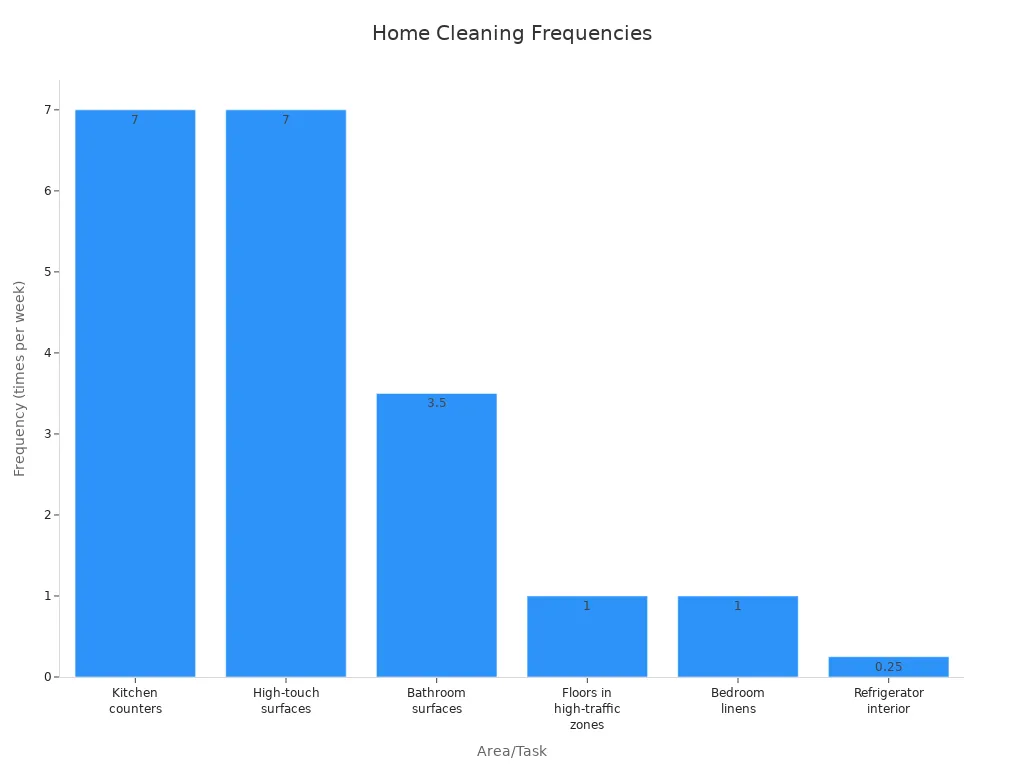
For these varied tasks and frequencies, reusable mop heads often present the best solution for home cleaning. They offer versatility and cost-effectiveness over time. Homeowners can use one set of reusable mops for multiple tasks, washing them as needed. This approach efficiently handles the routine cleaning of various surfaces.
Prioritizing Hygiene in Commercial and Healthcare Settings
Commercial and healthcare environments demand stringent hygiene standards. These settings prioritize preventing cross-contamination. Commercial kitchens, for example, establish effective cleaning routines with daily, weekly, and monthly tasks. They use color-coded cleaning tools to prevent cross-contamination between raw meat, produce, and general surfaces. Staff receive thorough training on cleaning procedures and agents. High-touch areas like doorknobs and equipment controls receive special attention.
- Establishing Effective Cleaning Routines and Guidelines:
- Create a Cleaning Schedule: Develop daily, weekly, and monthly tasks, assign responsibilities, and display the schedule.
- Use Color-Coding: Implement color-coded cleaning tools to prevent cross-contamination.
- Train Your Staff: Provide thorough training on cleaning procedures, cleaning agents, and equipment handling.
- Effective Sanitization:
- Choose the Right Cleaning Agents: Use commercial-grade, approved cleaners suitable for different surfaces.
- Focus on High-Touch Areas: Pay special attention to doorknobs, light switches, faucet handles, and equipment controls.
Healthcare facilities follow strict guidelines from organizations like the CDC and OSHA. These guidelines mandate routine cleaning and disinfection of surfaces, especially high-touch areas. Staff must use appropriate personal protective equipment (PPE) and receive training in proper techniques. Cleaning audits ensure compliance. Patient rooms require daily cleaning and disinfection, with deeper cleaning between patient admissions. Operating rooms undergo thorough cleaning after each procedure.
- CDC Guidelines for Cleaning in Healthcare Settings:
- Routine Cleaning: Regular cleaning of surfaces and high-touch areas.
- Disinfection: Use of EPA-registered disinfectants on surfaces after cleaning.
- Staff Training: Ensuring cleaning personnel are trained in proper techniques.
- Use of Personal Protective Equipment (PPE): Staff must wear appropriate PPE.
- OSHA Regulations Influencing Cleaning Practices:
- Hazard Communication: Clear information on hazardous cleaning materials.
- Bloodborne Pathogens Standard: Specific cleaning protocols for contaminated areas.
In these high-risk environments, disposable microfiber mop heads offer significant advantages. They reduce cross-contamination because users discard them after each use. This eliminates the risk of spreading pathogens. Disposable options also remove 99.99% of microbes, including bacterial and viral infections, often with water alone. They improve efficiency by eliminating laundering and enhance staff safety with lightweight systems. Color-coding for disposable mop pads further reduces cross-contamination across different areas or tasks.
- Disposable pads significantly reduce cross-contamination as they are single-use.
- They can decrease water and chemical usage by up to 95%, leading to faster drying times and fewer slip-and-fall risks.
- Disposable options improve efficiency by eliminating laundering, saving staff time, and enhancing staff safety with lightweight, ergonomically designed systems.
However, reusable mop heads still play a role in general commercial settings. They offer long-lasting durability and superior absorbency for general cleaning tasks. High-quality commercial reusable mops can last up to eight times longer than alternatives. They effectively capture microscopic particles and support safer, healthier environments by quickly handling spills and improving indoor air quality. Reusable mops are cost-effective and environmentally friendly over their lifespan for routine, lower-risk cleaning.
- Long-lasting Durability: High-quality commercial mops are strong, washable, and can last up to eight times longer than cut-end or low-end alternatives.
- Superior Absorbency: Industrial mop heads offer excellent absorbency, allowing them to pick up and hold significant liquid.
- Enhanced Efficiency: Mop heads with good release properties allow for complete wringing and efficient application of cleaning solutions.
Considering a Hybrid Cleaning Approach
A hybrid cleaning approach combines the strengths of both reusable and disposable mop heads. This strategy offers optimal cleaning solutions for diverse scenarios. Users deploy reusable mop heads for daily cleaning tasks in low-risk areas. These tasks include general floor maintenance in offices or common areas where the risk of pathogen transmission is lower. Reusable mops provide cost-effectiveness and durability for these routine cleanings.
Conversely, disposable mop heads are reserved for high-germ areas or quick clean-ups. This includes restrooms, patient rooms in healthcare facilities, or areas with biohazardous spills. Their single-use nature ensures maximum hygiene and prevents cross-contamination in critical zones. This approach leverages the infection control benefits of disposables where they are most needed. It also capitalizes on the economic and environmental benefits of reusables for less critical tasks. A hybrid model allows organizations to balance budget, hygiene requirements, and environmental concerns effectively.
- Reusable mop heads are effective for daily cleaning tasks.
- Disposable mop heads are suitable for high-germ areas or quick clean-ups.
No single "best" option exists for all cleaning situations. The ideal choice aligns with specific needs and priorities. Users must evaluate their budget, hygiene requirements, environmental concerns, and convenience preferences. A combination of both mop head types often offers optimal cleaning solutions for diverse scenarios.
FAQ
What is the main factor when choosing between disposable and reusable mop heads?
The main factor is specific cleaning priorities. Users consider budget, hygiene needs, environmental concerns, and convenience preferences to make an informed decision.
Do reusable mop heads have a lower environmental impact than disposable ones?
Reusable mop heads reduce landfill waste. However, their laundering process consumes significant energy and water, contributing to greenhouse gases and smog production.
When should facilities prioritize disposable microfiber mop heads?
Facilities should prioritize disposable mop heads in high-risk environments. These include healthcare settings or commercial kitchens where preventing cross-contamination is critical for hygiene standards.
