

 Send Email
 whatsapp


Introduction
Hospital floor care affects far more than appearance; it plays a direct role in infection prevention, workflow efficiency, and compliance with cleaning protocols. Disposable microfiber mop pads have become a practical option for healthcare settings because they provide a fresh cleaning surface for each room while avoiding the performance loss and contamination risks associated with reused textiles. This article explains how these pads support hospital hygiene programs, where they fit into Environmental Services routines, and which performance factors matter most when evaluating them for patient rooms, corridors, and high-risk clinical areas.
Why Disposable Microfiber Mop Pads Matter in Hospitals
Environmental Services (EVS) in healthcare facilities face stringent protocols to minimize Healthcare-Associated Infections (HAIs). Floor hygiene is a critical vector in these protocols, prompting a widespread industry transition from traditional laundered mops to engineered disposable alternatives. Regulatory guidelines increasingly emphasize the environmental surface's role in pathogen transmission, making the reliability of cleaning tools paramount. The adoption of Single-use Microfiber Mop Pads eliminates the inherent risks associated with inadequate laundering and chemical degradation, providing a consistent, uncontaminated cleaning surface for every patient room and clinical space.
Infection prevention benefits
The primary driver for adopting single-use textilesis the definitive eradication of cross-contamination. Reusable Mop Heads frequently suffer from quat-binding, a phenomenon where positively charged quaternary ammonium compounds bind to negatively charged textiles. This chemical reaction can reduce active disinfectant efficacy by up to 50% after prolonged use. Furthermore, commercial laundering cycles inherently degrade microfiber structures. Industry studies indicate that after 75 to 100 high-temperature wash cycles, reusable pads lose their vital electrostatic properties and structural integrity. Disposable variants entirely circumvent this degradation. When properly saturated, they consistently demonstrate up to 99.9% mechanical removal of microbes, including resilient pathogens like C. difficile spores, ensuring baseline sterility is maintained across cleaning shifts.
Key use cases and performance claims
EVS managers deploy these advanced pads primarily in high-acuity environments such as operating theaters, intensive care units (ICUs), and isolation wards where pathogen loads must be strictly controlled. Performance claims hinge on the material's structural density and fluid retention capabilities. Premium Medical Grade Mop Pads feature ultra-fine split microfibers measuring less than 1 denier in thickness. This microscopic, star-shaped structure allows the pad to capture micro-debris while retaining 5 to 7 times its dry weight in chemical solutions. This high-capacity retention ensures an even, sustained release of disinfectants across a standard 250-square-foot patient room without requiring EVS personnel to repeatedly re-dip the mop, thereby maintaining a closed-loop, highly efficient cleaning process that minimizes airborne droplet dispersion.
How Hospitals Should Compare Disposable Microfiber Mop Pads
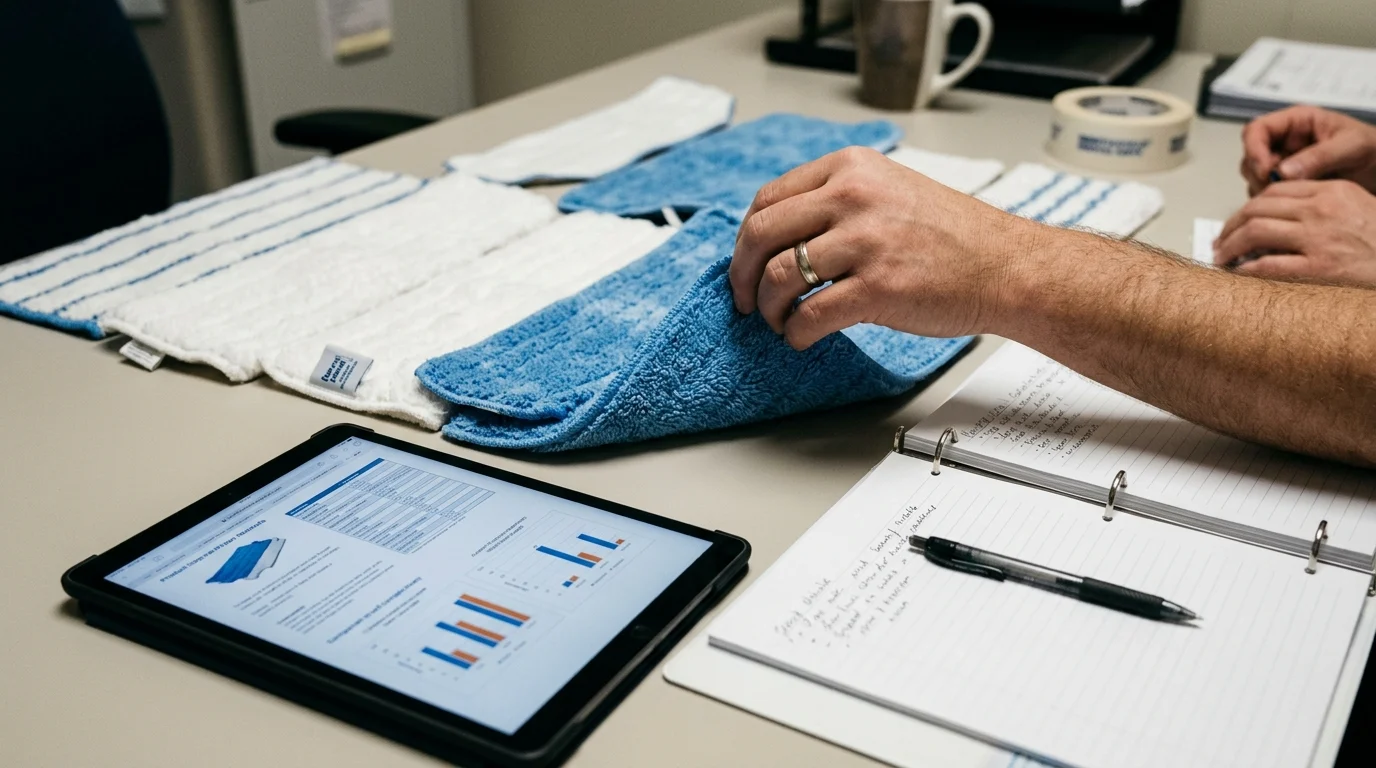
Selecting the optimal disposable mop requires rigorous evaluation of material specifications against daily operational demands. Hospitals must balance fluid dynamics, tensile strength, and long-term economic viability to ensure the chosen product aligns with strict infection control mandates. Relying solely on visual inspection is inadequate; procurement teams must analyze empirical data and lifecycle costs.
Technical and compliance criteria
Technical evaluation begins with material composition and density, typically measured in grams per square meter (GSM). The specific ratio of polyester to polyamide dictates both the scrubbing friction required to dislodge biofilm and the capillary action needed to absorb biofluids. Facilities must verify that High Absorbency Mop Pads meet the precise chemical compatibility requirements of their preferred hospital-grade disinfectants, ensuring the synthetic fibers do not degrade upon contact with harsh bleaches or peroxides.
| Pad Weight / Type | Typical GSM Range | Fluid Absorption Capacity | Ideal Hospital Application |
|---|---|---|---|
| Light Duty | 40 - 60 GSM | 100 - 150 mL | General corridors, administrative offices, waiting areas |
| Medium Duty | 70 - 90 GSM | 200 - 250 mL | Standard patient rooms, outpatient clinics, restrooms |
| Heavy Duty | 100 - 130 GSM | 300+ mL | Operating rooms, trauma centers, biohazard spills |
Cost and value comparison
Financial modeling for disposable textiles extends significantly beyond the initial unit price. While standard Hospital Cleaning Mop Pads generally range from $0.15 to $0.45 per unit depending on GSM specifications and order volume, administrators must calculate the comprehensive total cost of ownership (TCO). Reusable systems incur heavy, often untracked indirect costs. These include commercial laundering fees, massive water consumption, thermal energy for high-heat sanitization, and the labor required for sorting, bagging, and transporting soiled textiles. Additionally, reusable mops suffer an attrition rate of 10% to 15% per month due to shrinkage and tearing. By eliminating laundering logistics and replacement unpredictability, healthcare facilities frequently report a 15% to 20% reduction in overall floor maintenance costs, alongside a measurable decrease in EVS operational downtime.
How to Source and Standardize Disposable Microfiber Mop Pads
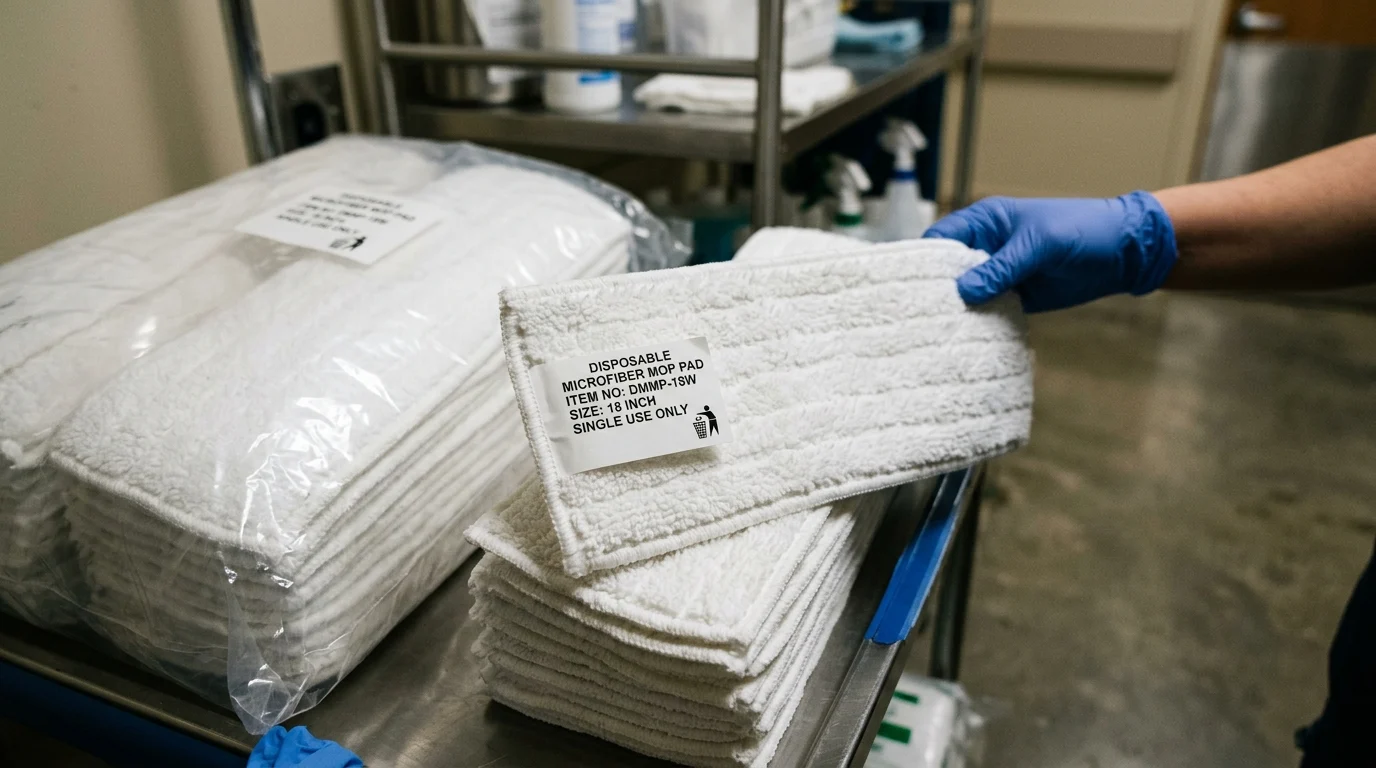
Transitioning an entire hospital network to a single-use microfiber system requires strategic procurement and stringent quality assurance. Successful integration relies on identifying capable manufacturing partners and establishing clear, repeatable standard operating procedures (SOPs) for the EVS staff to guarantee compliance.
Supplier qualification and product trials
Procurement executives must rigorously audit potential suppliers for manufacturing consistency, material traceability, and production scalability. Engaging a reputable OEM Disposable Mop Pads Manufacturer involves verifying ISO 9001 certifications to ensure robust quality management systems are in place. Product trials are critical before executing long-term contracts; hospitals should conduct a 30-day pilot program across multiple high-traffic wards to assess tear resistance, linting levels, and floor friction under real-world conditions. Supply chain resilience is equally paramount. Contracts require clear negotiations on Minimum Order Quantities (MOQs)—which typically range from 10,000 to 50,000 units per shipment for custom GSMs—and the establishment of safety stock thresholds of at least 60 days to prevent critical stockouts during sudden admission surges or localized outbreaks.
Implementation and standardization steps
Effective standardization necessitates comprehensive workforce training and workflow adjustment. EVS personnel must be instructed on the precise attachment, saturation, and disposal protocols to maximize the clinical efficacy of the new pads. Key implementation steps include calibrating janitorial chemical dosing systems to match the specific fluid absorption rates of the chosen disposable pad, preventing both chemical waste and inadequate floor coverage. Furthermore, facilities must define clear disposal pathways, segregating pads used in standard rooms into general waste while routing those used in isolation units into designated biohazard streams. Quality control metrics should be established immediately post-implementation, targeting a structural defect rate of less than 0.5% during active use. Continuous feedback loops between EVS supervisors and the procurement team ensure long-term clinical compliance and sustained infection prevention outcomes.
Key Takeaways
- The most important conclusions and rationale for Disposable Microfiber Mop Pads
- Specs, compliance, and risk checks worth validating before you commit
- Practical next steps and caveats readers can apply immediately
Frequently Asked Questions
Why are disposable microfiber mop pads preferred in hospitals?
They help prevent cross-contamination by providing a clean pad for each room and avoiding performance loss from repeated laundering.
Which hospital areas need heavier disposable microfiber mop pads?
Use heavy-duty pads in operating rooms, ICUs, isolation wards, trauma areas, and for biohazard spill response.
How do I choose the right GSM for a hospital floor area?
Light duty suits corridors, medium duty fits patient rooms and restrooms, and heavy duty is best for high-risk clinical spaces.
Are disposable microfiber mop pads compatible with hospital disinfectants?
They should be tested with your bleach, peroxide, or quat-based products to confirm absorption, release, and fiber stability.
Can disposable microfiber mop pads reduce cleaning costs?
Yes. They can lower total costs by removing laundering, reducing labor handling, and minimizing pad loss from shrinkage or tearing.