

 Send Email
 whatsapp


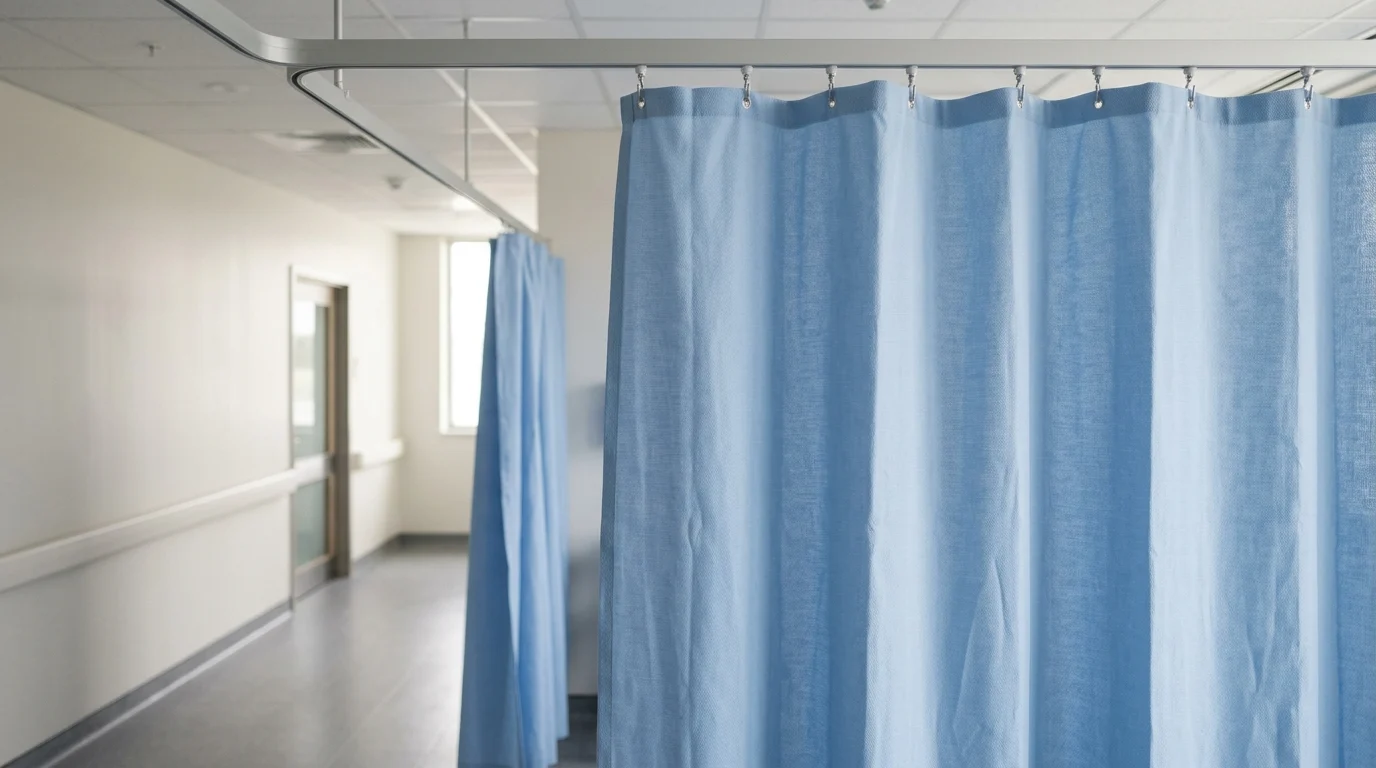
Hospital Privacy Curtains are touched frequently, cleaned inconsistently, and positioned close to vulnerable patients—making them more than a simple furnishing decision. For administrators, infection prevention teams, and procurement managers, the choice between disposable and reusable curtains affectspatient safety, operating costs, compliance, and sustainability. Reusable woven fabrics can offer long service life when laundering systems are reliable, while disposable non-woven curtains reduce turnaround time in high-risk clinical areas. This article compares both options through the lens of infection control, fire-safety standards, lifecycle cost, environmental impact, and day-to-day workflow so healthcare facilities can make a practical, evidence-aware decision.
Disposable vs Reusable Hospital Curtains
Choosing privacy curtains in healthcare environments impacts patient dignity, facility economics, and infection control. While traditional woven fabrics historically dominated clinical spaces, the focus on preventing hospital-acquired infections (HAIs)—which affect approximately 1 in 31 hospital patients daily—has introduced alternative materials. Facility administrators must now weigh long-term sustainability against immediate hygiene needs when deciding between disposable and reusable options.
Key Definitions and Use Cases
Reusable curtains are typically manufactured from durable, woven polyester blends (often weighing 200–300 grams per square meter, or GSM) designed to withstand 50 to 100 commercial laundering cycles. These traditional assets are deployed across general wards where pathogen exposure is moderate. Conversely, medical curtains engineered for disposable applications are predominantly non-woven polypropylene (typically 100–120 GSM). While the base material is technically recyclable, medical waste processing and contamination protocols often limit downstream recycling. Disposable variants are strategically utilized in high-acuity environments, such as intensive care units (ICUs), burn centers, and isolation wards. In these settings, rapid patient turnover and severe cross-contamination risks require immediate curtain replacement without the 24- to 48-hour logistical delays of laundering.
Performance and Compliance Standards
Regardless of the material, all clinical curtains must adhere to strict safety and performance criteria. Fire retardancy is a non-negotiable baseline; materials must pass flammability assessments such as the NFPA 701 standard in the United States or the BS 5867 Part 2 Type C standard in the United Kingdom. Traditional woven fabrics with chemical coatings often require periodic re-treatment after 10 to 15 wash cycles to maintain compliance, though inherently flame-retardant (IFR) woven materials bypass this requirement. In contrast, non-woven polypropylene variants use flame-retardant additives embedded during manufacturing, ensuring consistent compliance throughout their 3- to 6-month lifespan without re-treatment.
Cost, Hygiene, and Operational Differences

Evaluating hospital curtains requires analyzing maintenance protocols, cross-contamination risks, and total cost of ownership. The operational differences between laundering durable textiles and managing disposable supply chains significantly impact environmental services (EVS) workflows.
Furthermore, the environmental impact of each system requires careful evaluation. Disposable curtains contribute 1 to 2 pounds of material per panel to landfill burden and medical waste volumes, whereas reusable laundering systems consume substantial water (typically 2 to 3 gallons per pound of laundry), energy, and chemical detergents. Facilities should evaluate their local infrastructure—such as the availability of waste-to-energy processing for disposables versus commercial laundry water-recycling capabilities—to make an informed ecological decision.
Infection Control and Cleaning Requirements
Pathogen retention on privacy fabrics is a documented vector for transmitting methicillin-resistant Staphylococcus aureus (MRSA) and vancomycin-resistant Enterococcus (VRE). Reusable textiles demand strict thermal and chemical disinfection to mitigate these risks. Guidelines from organizations such as the CDC, NHS, and AORN stipulate that durable clinical fabrics must be laundered at high thermal thresholds (e.g., 160°F or 71°C for a minimum of 25 minutes), often with chlorine-based bleach, to achieve necessary microbial reduction.
Single-use hospital curtains bypass this complex decontamination workflow. By disposing of the curtain after an isolation discharge or at a scheduled interval, facilities reduce the risk of laundering failures and recontamination during transport. However, disposables are not zero-risk; they can still become contaminated during use through frequent handling, requiring strict hand hygiene and routine replacement. This shift moves the operational burden from laundry logistics to waste management.
Purchase, Laundry, and Replacement Costs
Financial modeling for privacy curtains extends beyond the initial invoice. Reusable fabrics carry a higher capital acquisition cost, augmented by recurring laundering, transport, and tracking expenses. Facilities must also maintain a rotational surplus inventory (often 3x par level) to cover panels actively in the laundering loop. Disposables present an inverted economic model: lower initial acquisition costs and no laundering expenses, but they require perpetual replenishment and incur operational costs like continuous supply chain handling, storage, and disposal fees.
| Metric | Reusable Woven Fabric | Disposable Non-Woven Polypropylene |
|---|---|---|
| Initial Cost per Panel | Higher capital cost ($30–$80 typical) | Lower initial cost ($10–$25 typical) |
| Maintenance Cost | Recurring laundering ($1.50–$3.00 per wash) | Disposal and waste management fees ($0.10–$0.50 per lb) |
| Inventory Requirement | High (~3x par level for rotation) | Moderate (~1.5x par level for continuous stock) |
| Cross-Contamination Risk | Moderate (Depends on wash protocol success) | Low to Moderate (New panel per deployment, but can contaminate during use) |
| Lifespan | Multi-year (50–100 wash cycles) | Event-based (per-patient discharge) or time-limited (3–6 months) |
How to Choose the Right Curtain Type
Selecting the optimal curtain system is rarely a binary decision for an entire healthcare network. Effective procurement strategies employ a hybrid approach, deploying specific material types based on departmental throughput, risk assessments, and epidemiological objectives.
Assess Ward Risk and Patient Turnover
Facility managers must conduct risk stratification across different clinical zones. In high-turnover environments like emergency departments or high-risk zones like oncology units, the rapid deployment of disposables ensures a fresh barrier for new admissions. It is important to distinguish between event-based and time-based replacement: in isolation settings (where patient stays may average 3 to 7 days), disposables function as single-patient-use items that are discarded upon patient discharge. In general wards with lower immediate risk, they serve as time-limited barriers, with industry guidelines often recommending replacement every 3 to 6 months as the material ages. Conversely, long-term care facilities or low-acuity outpatient clinics—where patient stays are longer or direct physical contact with curtains is minimal—often realize a better long-term return on investment (ROI) by maintaining durable, washable textiles.
Match Procurement to Infection Prevention Goals
Procurement decisions must directly align with a facility's infection prevention mandates. If a hospital is targeting a reduction in contact-transmitted HAIs, transitioning to anti-microbial hospital curtains equipped with silver-ion or quaternary ammonium treatments (which typically target a 99.9% bioburden reduction within 24 hours) is an option. However, these biocidal surface treatments are strictly regulated by bodies such as the EPA and FDA.
Key Takeaways
- Use disposable curtains in high-risk areas such as ICUs, burn centers, and isolation wards where immediate replacement can reduce cross-contamination risk.
- Choose reusable woven curtains for moderate-risk wards only if the facility can reliably manage laundering, tracking, storage, and reinstallation workflows.
- Verify that every curtain option meets relevant flame-retardancy standards, such as NFPA 701 or BS 5867 Part 2 Type C, before procurement.
- Account for lifecycle costs because reusable curtains may require 50 to 100 laundry cycles, while disposable panels typically last 3 to 6 months.
- Compare environmental impact locally, including landfill burden from 1 to 2 pounds per disposable panel versus water, energy, and detergent use in laundering.
Frequently Asked Questions
Which hospital curtains are better for infection control?
Disposable curtains are often preferred in ICUs, isolation rooms, and high-turnover areas because they can be replaced immediately and avoid laundering delays. Reusable curtains can be safe, but only with strict cleaning, handling, and tracking protocols.
How often should disposable hospital curtains be replaced?
Many disposable curtains are designed for a 3- to 6-month service life, but they should be changed sooner after contamination, isolation discharge, visible soiling, or according to facility infection-control policy.
What are reusable hospital curtains typically made from?
Reusable curtains are commonly made from durable woven polyester blends, often around 200–300 GSM, and are designed to withstand roughly 50 to 100 commercial laundering cycles.
Do hospital curtains need to meet fire safety standards?
Yes. Both disposable and reusable clinical curtains should meet applicable flame-retardancy standards, such as NFPA 701 in the United States or BS 5867 Part 2 Type C in the United Kingdom.
Are disposable hospital curtains recyclable?
Some disposable curtains use recyclable polypropylene, but contamination rules, medical waste handling, and local processing limits often prevent practical recycling after clinical use.