

 Send Email
 whatsapp


Elevating Standards The Indispensable Role of Cleanroom Mops Today
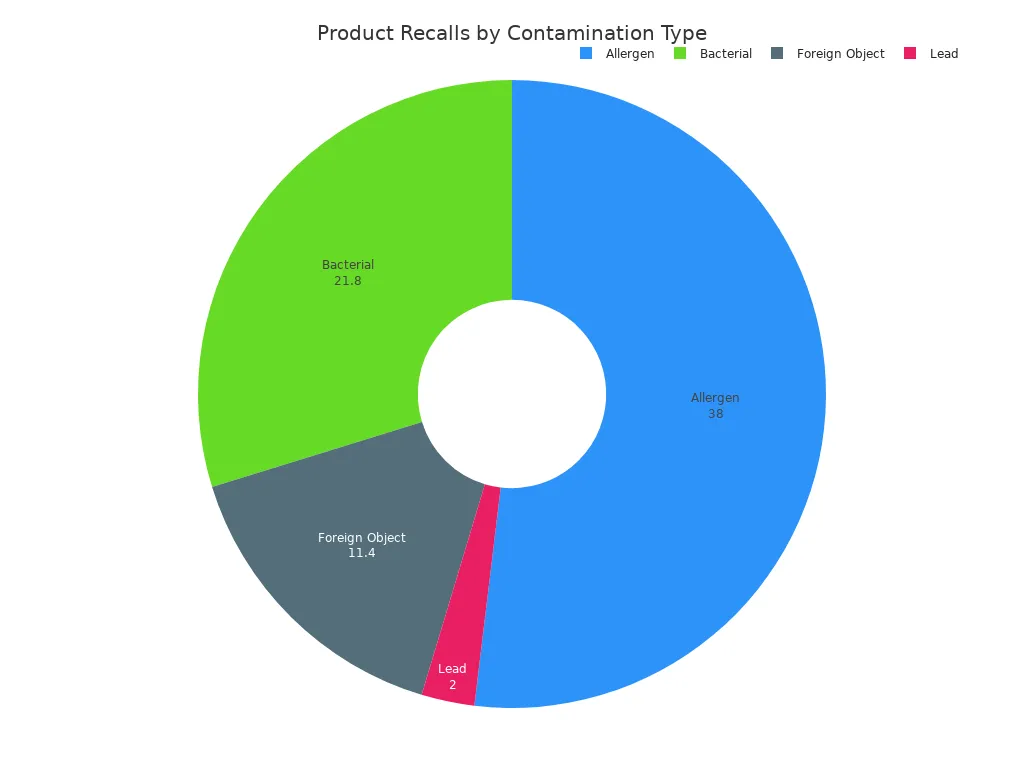
Cleanroom mops are critical for preventing contamination in sensitive environments. Industries face significant challenges with contamination, as evidenced by product recalls. For example, allergen contamination accounts for 38% of recalls, while bacterial contamination causes 21.8%.
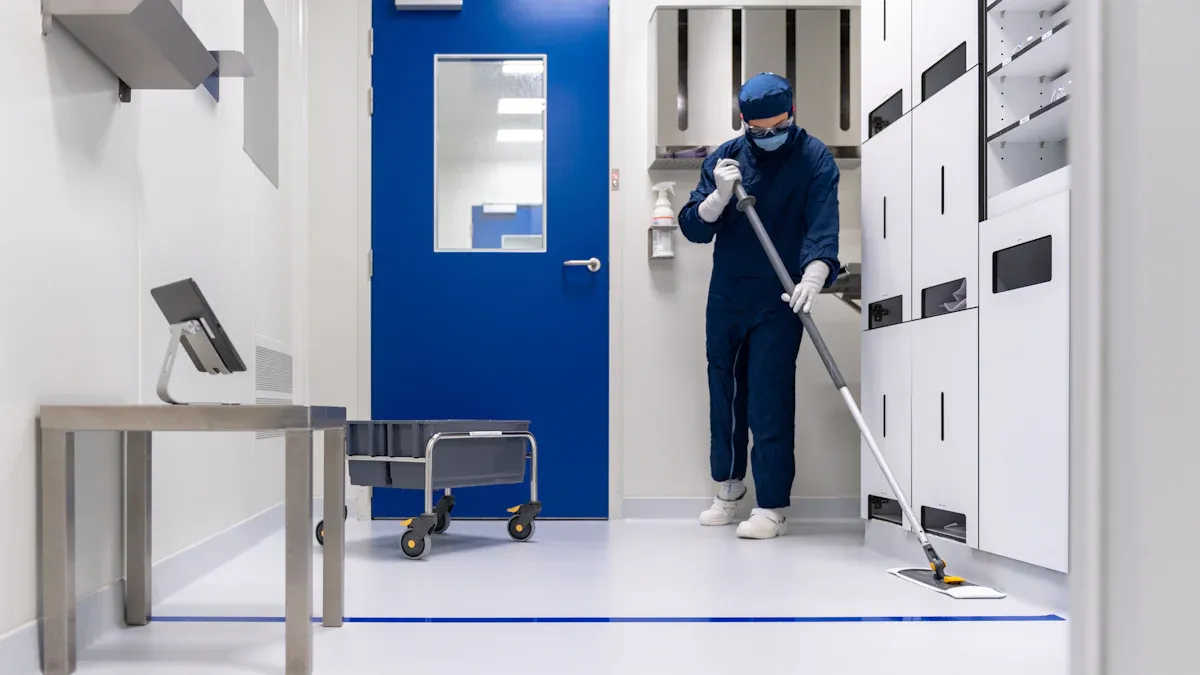
Specialized cleanroom mops, includingmedical cleanroom mops and sterile cleanroom mops, are indispensable for maintaining stringent cleanliness standards. Modern cleaning protocols demand advanced tools like non woven cleanroom mops with a superior cleanroom mop head. These tools are essential for effective contamination control.
Key Takeaways
- Cleanroom mops are very important. They stop contamination in sensitive places. This helps avoid problems like product recalls.
- These special mops have advanced features. They capture tiny particles well. They also work with strong cleaning chemicals without breaking down.
- Choosing the right cleanroom mop is key. It helps meet strict rules. It also makes cleaning more effective and keeps things very clean.
The Unseen Threat and the Need for Specialized Cleanroom Mops
The Pervasive Challenge of Contamination
Contamination poses a constant, significant threat in sensitive environments. Numerous sources introduce unwanted particles and microorganisms. Personnel, for instance, shed skin flakes, clothing fibers, and hair. They also introduce bacteria. Air carries dust, microorganisms, pollen, and mold spores if filtration is inadequate. Production process water, if not sufficiently filtered, becomes a source of contamination. Chemicals and gases used in processes also contribute. Static electric charges attract and hold particles. Poorly cleaned equipment spreads particles throughout the cleanroom. Raw materials and their packaging can carry dust, microbes, hair, or dirt. Environmental factors like high humidity and insufficient airflow, often due to HVAC system failures, also lead to contamination.
Why Traditional Cleaning Fails in Cleanrooms
Traditional cleaning methods prove inadequate for cleanroom environments. Everyday items like regular mops and dusters introduce contaminants. These traditional mops are a significant source of contamination. They shed fibers, generating particulates. They also fail to capture and retain particles effectively, leading to the redistribution of contaminants. Furthermore, their degradation with aggressive disinfectants introduces new risks. This makes them unsuitable for maintaining the stringent cleanliness levels required.
The Imperative for Precision Cleaning with Cleanroom Mops
Precision cleaning is essential to mitigate contamination risks. Microbial contamination in sterile manufacturing presents specific dangers. Personnel generate microbial contamination during handling, sampling, cleaning, and disinfection. Ineffective manual disinfection during component transfer also poses a risk. Manual cleaning and disinfection processes for tools are prone to human variability, leading to incomplete microorganism removal. Poorly designed processes that do not account for personnel interfaces and interventions are major sources of microbial contamination. Specialized tools, such as cleanroom mops, are therefore critical. They address these challenges by providing superior particle capture and retention without introducing new contaminants.
Engineered for Purity: Advanced Features of Cleanroom Mops
Superior Particle Capture and Retention
Modern cleanroom environments demand cleaning tools that effectively remove contaminants without introducing new ones. Cleanroom mops excel in this area through specialized design. They focus on particulate (non-viable) control. Effective particle capture and uniform disinfectant application are crucial for cleaning efficacy. High liquid absorption capacity is a key indicator for critical cleaning applications. This measures a mop's ability to absorb and retain liquids or particles before saturation. A higher capacity increases cleaning efficiency. Strong fluid retention also prevents cross-contamination. It effectively manages liquids and prevents the re-release of captured contaminants.
Cleanroom mop systems contribute to ISO 14644-1 standards by effectively removing surface contamination. This prevents particles from becoming airborne. Mop materials must be low-shedding to avoid introducing new particles. ISO 14644-18 details how to assess cleanliness attributes like particles for mops. Mops are crafted from lint-free, non-abrasive materials. This minimizes particle and fiber release, which is crucial for contamination control. Heat-sealed edges prevent fraying and fiber release. This design feature contributes to a 'dust-free' environment.
Chemical Compatibility and Residue-Free Cleaning
Cleanroom mops must withstand exposure to harsh chemicals without degrading. Polyester and nylon fabrics generally resist common cleanroom chemicals. High-quality cleaning consumables must withstand aggressive disinfectants and solvents. These include 70% isopropyl alcohol, hydrogen peroxide, and sporicidal agents. They must do this without degrading. Low-quality materials may break down and generate contaminants when exposed to chemicals. Cleaners and solvents must be compatible with the mop fabric. Using improper solvents can cause degradation when mixed with fabric substrates. It is essential to ensure proper application. This avoids degradation when mop covers contact chemicals. Obtain spec sheets and compare different types of cleanroom mop covers with current cleaning products. This ensures proper function.
Synthetic fibers, especially polyester and nylon, are standard in demanding environments. This is due to their chemical inertness. Mops must withstand exposure to agents such as 70% isopropyl alcohol, hydrogen peroxide, peracetic acid, and quaternary ammonium compounds. They must do this without degrading, discoloring, or releasing additional contaminants. Chemical inertness is crucial for both cleanliness and longevity in cleanroom operations.
Non-volatile residue (NVR) is another critical consideration. NVR refers to any material remaining after a solvent evaporates. It can leave behind unwanted films or particles. ASTM E1560-18 is a standard test method for gravimetric determination of nonvolatile residue from cleanroom wipers. ASTM F331 also provides a standard test method for NVR. ASTM E1235 is a common reference standard for gravimetric determination of NVR. The process for measuring NVR involves several steps:
- Extract particulates from the component.
- Remove insoluble particles.
- Evaporate the solvent using a flash evaporator.
- Measure the remaining residue gravimetrically using an extremely accurate balance. This often requires readability to five or six decimal places.
Sterilization and Aseptic Processing Capabilities
Cleanroom mops designed for aseptic processing undergo rigorous sterilization. Manufacturers often use gamma irradiation or autoclaving. These processes eliminate microorganisms. The materials used in these mops must withstand high temperatures and radiation. They must not degrade or shed particles after sterilization. This ensures the mops remain sterile and effective for use in the most critical environments, such as pharmaceutical manufacturing or biotechnology labs. Their construction prevents microbial growth and facilitates thorough decontamination.
Ergonomics and Hands-Free Operation for Cleanroom Mops
Ergonomic design significantly reduces operator fatigue and improves cleaning efficiency. Lightweight hardware ensures tasks are completed efficiently with minimal strain on the operator. Maneuverability allows for easier cleaning of hard-to-reach areas. This includes under and around equipment, reducing awkward postures. Extendable handles prevent the user from needing to stretch excessively. This reaches distant corners, minimizing back and shoulder strain. Many modern systems also feature hands-free Mop Head attachment and removal. This minimizes direct contact with contaminated surfaces. It further reduces the risk of cross-contamination and enhances worker safety.
Strategic Selection and Operational Impact of Cleanroom Mops
Matching Cleanroom Mops to Classification and Application
Selecting the correct cleanroom mop is crucial for maintaining environmental integrity. Different cleanroom classifications and applications demand specific mop characteristics. For instance, pharmaceutical compounding and semiconductor manufacturing both rely on specialized cleanroom mop systems. These systems feature designs for strict contamination control. Manufacturers use sterile, lint-free, and non-shedding materials like 100% knit polyester or microfiber. Mop heads undergo gamma irradiation and individual packaging for sterility. Hardware, including handles and frames, consists of autoclavable materials such as stainless steel or static dissipative plastic. This supports repeated sterilization and ensures GMP compliance. Matching the mop to the specific environment prevents contamination and optimizes cleaning effectiveness.
Ensuring Regulatory Compliance with Cleanroom Mops
Regulatory bodies impose strict guidelines for cleaning tools in sensitive environments. The FDA, for example, inspects pharmaceutical manufacturers for compliance with Section 211.67 (Equipment Cleaning and Maintenance). This section mandates protecting clean equipment from contamination before use. Equipment must undergo inspection for cleanliness immediately before use. Manufacturers must keep records of maintenance, cleaning, sanitizing, and inspection. The FDA expects equipment cleaning at necessary frequencies to prevent drug adulteration, as per Section 211.67a. Written procedures for cleaning and maintenance of equipment used in drug manufacturing are required by Section 211.67b. The FDA defines cleaning validation as demonstrating that a cleaning process consistently cleans equipment to a predetermined standard. In the United States, Title 21, Part 211 of the Code of Federal Regulations (CFR) governs compliance for cleaning validation in pharmaceutical products.
EU GMP Annex 1 also outlines stringent requirements for cleaning and disinfection. Disinfectants and detergents used in Grades A and B areas must be sterile before use. Manufacturers should also consider sterilizing those used in Grade C and D areas, based on risk assessment. The disinfection process itself must undergo validation. This demonstrates the suitability and effectiveness of disinfectants for their specific use and on the types of surfaces encountered. Validation studies need to support the in-use expiry periods of prepared solutions. This includes dilutions, ready-to-use sprays, and presaturated wipes. Environmental monitoring is required to assess the effectiveness of the disinfection program. It also detects changes in microbial flora, with microorganisms in Grade A and B areas identified to species level. Selecting the appropriate mopping system is crucial for an effective cleanroom cleaning and disinfection strategy. Advances in materials and hardware offer a wider array of choices, including specialized mop heads for various applications. Even with automated systems, manual mopping remains vital for thorough soil and residue removal.
Maximizing Efficiency and Contamination Control with Cleanroom Mops
A well-designed cleanroom mopping protocol significantly reduces particle counts on surfaces. Proper mopping techniques are essential. Operators utilize specialized cleanroom mops made from materials like microfiber or non-woven polyester. This minimizes particle generation and effectively captures contaminants. They follow a specific S-shaped mopping pattern, avoiding re-contamination by not going over the same area twice. They implement a multi-bucket system: one for cleaning solution, one for rinsing the mop, and one for wringing out dirty water. This maintains solution cleanliness. Specialized cleaning agents are also critical. Operators select EPA-approved, low-residue cleaning agents specifically designed for cleanroom use, free from contaminants. They consider green cleaners that are biodegradable, non-toxic, and renewable for effective contaminant removal and sustainability. They adhere to manufacturer instructions for dilution and application of all cleaning agents. These practices ensure maximum efficiency and contamination control.
Cleanroom mops are fundamental to modern contamination control strategies. They ensure purity in sensitive environments. Investing in high-quality cleanroom mops elevates operational standards significantly. The future of cleanroom integrity relies on these advanced cleaning solutions. They maintain stringent cleanliness and compliance.
FAQ
What distinguishes cleanroom mops from standard mops?
Cleanroom mops use low-shedding materials. They capture particles effectively. They also withstand harsh chemicals. Standard mops introduce contaminants.
Why is chemical compatibility crucial for cleanroom mops?
Mops must resist degradation from disinfectants. This prevents new contaminants. It also ensures mop longevity. Incompatible materials break down.
How do cleanroom mops support regulatory compliance?
They help meet strict cleanliness standards. This includes FDA and EU GMP guidelines. Proper mops ensure equipment protection. They prevent drug adulteration.
