

 Send Email
 whatsapp


Expert Tips for Enhanced Hospital Cleaning Efficiency

Clean hospitals save lives. Every surface, corner, and tool must meet the highest hygiene standards to protect patients from infections. But cleaning hospitals isn’t easy. It requires tools that are precise and effective. That’s why a hospital Cleaning Mop pad is essential. It tackles tough messes while reducing contamination risks.
Key Takeaways
- Clean hospitals protect lives. Use special tools like hospital mop pads to lower germ risks and improve cleanliness.
- Use smart cleaning methods. Pre-prepared cleaning and simple practices save time and help patients.
- Train staff well. Good training makes cleaning better and cuts infection risks, keeping patients safer.
Key Challenges in Hospital Cleaning
Cleaning hospitals is no small task. It’s a process that demands precision, efficiency, and adherence to strict hygiene standards. Here are the key challenges hospitals face when maintaining cleanliness.
Preventing Cross-Contamination
Cross-contamination is one of the biggest threats in hospital environments. When germs spread from one surface to another, they can lead to healthcare-associated infections (HAIs). Hospitals use various strategies to combat this issue.
- Surveillance systems play a critical role. They identify at-risk patients, analyze infection trends, and provide feedback to caregivers. These systems have proven effective in reducing surgical site infections, pneumonia, urinary tract infections, and bacteremia.
- Specialized tools, like hospital cleaning mop pads, help minimize contamination risks. Their design ensures thorough cleaning while reducing the chance of spreading germs.
The SENIC study demonstrated that infection control practices, combined with effective surveillance, significantly reduce nosocomial infections.
By using advanced cleaning tools and monitoring systems, hospitals can create safer environments for patients and staff.
Managing Time-Intensive Cleaning Processes
Cleaning a hospital isn’t just about thoroughness—it’s also about speed. Time-intensive cleaning processes can delay patient care and increase operational costs. Hospitals have adopted innovative methods to address this challenge.
- Lean practices and value-stream analysis help identify inefficiencies in cleaning workflows. Crestwood Medical Center, for example, implemented a Lean OR throughput project that reduced room turnover time by five minutes and tripled cleaning thoroughness.
- Optimized cleaning protocols, including the use of hospital cleaning mop pads, streamline processes. These mop pads are designed for quick and effective cleaning, saving time without compromising hygiene.
Hospitals that invest in efficient cleaning methods not only improve patient satisfaction but also enhance overall productivity.
Ensuring Compliance with Hygiene Standards
Hospitals must meet strict hygiene standards to protect patients and staff. However, compliance can be challenging due to infrastructure issues and resource limitations.
- Common obstacles include overcrowding, insufficient waste management facilities, and poorly maintained buildings. A head nurse in sub-Saharan Africa shared, “We have structural issues in the sense that the pavements are not flat, and it’s difficult to clean them and keep them clean.”
- To measure cleaning effectiveness, hospitals use methods like microbiological testing, reflective surface markers, and adenosine triphosphate analysis. These techniques ensure surfaces are properly decontaminated.
| Method Type | Description |
|---|---|
| Microbiological methods | Used in consultation with the Infection Prevention and Control (IPC) team during outbreak investigations. |
| Visual assessment | Commonly used in low- and middle-income countries, but no longer recommended. |
| Non-microbiological methods | Includes reflective surface markers and adenosine triphosphate analysis for reliable surface decontamination assessment. |
By combining advanced cleaning tools, like hospital cleaning mop pads, with rigorous testing methods, hospitals can maintain compliance and ensure patient safety.
Why Hospital Cleaning Mop Pads Are Essential
Hospital cleaning mop pads are more than just cleaning tools—they are game-changers in maintaining hygiene and efficiency in healthcare settings. Their unique features, infection control benefits, and cost-effectiveness make them indispensable for hospitals.
Features That Enhance Cleaning Efficiency
Hospital cleaning mop pads are designed with advanced features that boost cleaning efficiency. Unlike traditional cotton mops, these pads are made from microfiber, which offers superior cleaning performance.
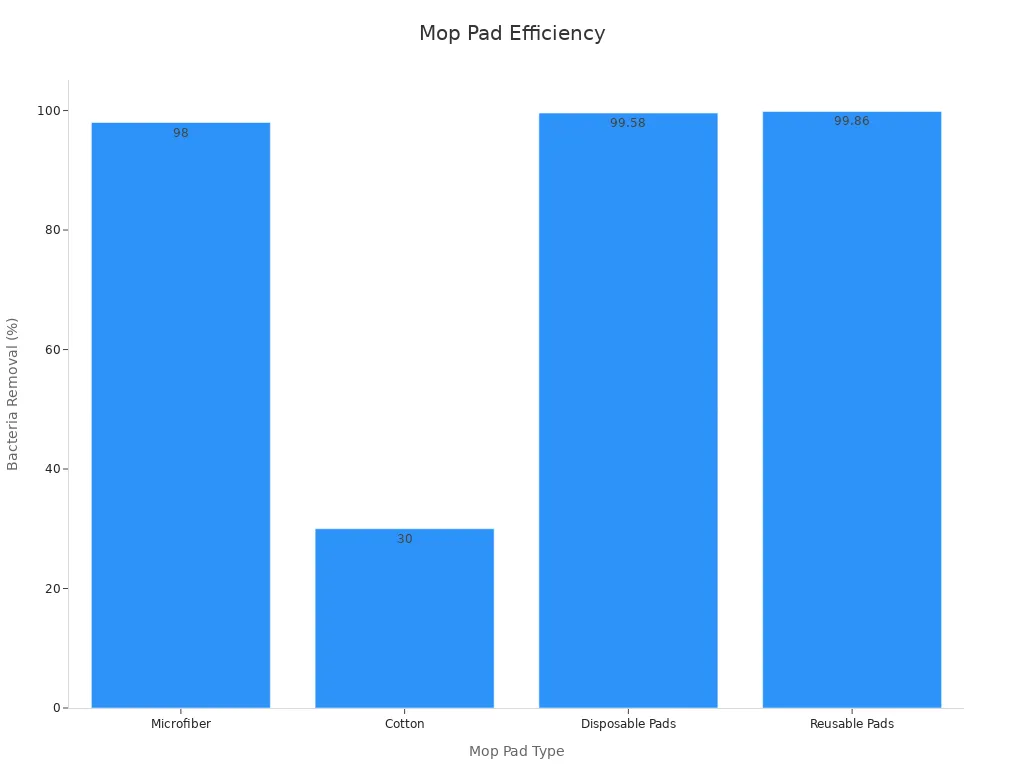
- Microfiber mop pads can remove up to 98% of bacteria and 93% of viruses using only water. In contrast, cotton mops remove just 30% of bacteria and 23% of viruses.
- They require significantly less water—just 1-2 gallons per session compared to 21 gallons for cotton mops. This reduces water usage and environmental impact.
- Many mop pads include color-coding to prevent cross-contamination and antimicrobial properties for better pathogen control.
| Mop Pad Type | Bacteria Removal | Virus Removal |
|---|---|---|
| Microfiber | Up to 98% | 93% |
| Cotton | 30% | 23% |
| Disposable Pads | 99.58% | N/A |
| Reusable Pads | 99.86% | N/A |
Benefits for Infection Control
Infection control is a top priority in hospitals, and mop pads play a vital role in achieving it. Disposable microfiber mop pads, for instance, reduce microbial contamination by 32.5% and MRSA infections by 26.6%. They also eliminate the risk of microbial accumulation, which can occur with repeated use of traditional mops. By switching to these innovative tools, hospitals can significantly lower cross-contamination risks and improve cleaning outcomes.
| Evidence Point | Description |
|---|---|
| Damage to Microfiber | Laundry processes can irreversibly damage microfiber structures. |
| Microbial Accumulation | Repeated use can lead to retention of microbes, increasing contamination. |
| Cleaning Outcomes | Disposable microfiber products improve cleaning outcomes and reduce risks. |
Cost-Effectiveness in Long-Term Use
Hospital cleaning mop pads are not only effective but also cost-efficient. They last longer and require fewer resources compared to traditional cleaning supplies.
| Category | Cotton Damp Mops | Microfiber Damp Mops |
|---|---|---|
| Washings Per Mop w/out Bleach | 50 | 500 |
| Chemical Costs | $1.32/day | $0.055/day |
| Water Costs | $0.48/day | $0.02/day |
| Labor Efficiency (sq ft/hour) | 5,000 | 23,000 |
| Overall Cleanliness | 67.75% | 99.9% |
Switching to microfiber mop pads can save hospitals thousands of dollars annually while ensuring superior cleanliness. Their durability and efficiency make them a smart investment for any healthcare facility.
Expert Tips for Using Hospital Cleaning Mop Pads
Choosing the Right Mop Pads
Selecting the right mop pads is crucial for maintaining hospital hygiene. Not all mop pads are created equal, and choosing the wrong one can compromise cleaning efficiency. Hospitals should consider several factors when making their selection.
- Durability: High-quality microfiber mop pads can withstand over 100 launderings, making them a cost-effective choice for long-term use.
- Material Quality: Microfiber materials excel at removing tough soils and bacteria, ensuring thorough cleaning.
- Compatibility: Mop pads must fit cleaning equipment properly to prevent slippage and ensure effective performance.
- Cost-Effectiveness: While initial costs may vary, evaluating long-term savings through reduced replacements is essential.
- Maintenance Requirements: Machine-washable options simplify upkeep and maintain their cleaning power over time.
| Criteria | Description |
|---|---|
| Durability | Microfiber mop pads can last through 100+ launderings, ensuring long-term use. |
| Material Quality | High-quality materials like microfiber excel at removing difficult soils, enhancing cleaning. |
| Compatibility | Proper fit with cleaning equipment prevents slippage and ensures effective cleaning performance. |
| Cost-Effectiveness | Evaluating long-term value over initial cost can lead to savings through reduced replacements. |
| Maintenance Requirements | Machine-washable options simplify upkeep and maintain effectiveness over time. |
Advances in mop head technology have also provided better options for various cleaning applications. For example, Premira microfiber mops are designed to reduce cross-contamination and improve cleaning efficiency. By carefully evaluating these factors, hospitals can ensure they choose the best mop pads for their needs.
Implementing Pre-Prepared Cleaning Methods
Pre-prepared cleaning methods are a game-changer for hospital cleaning. These methods involve pre-saturating mop pads with cleaning solutions, which eliminates the need for dipping or wringing. This approach offers several advantages:
- Ergonomic Design: Light and ergonomic mop pads are safer and easier to use, reducing strain on cleaning staff.
- Injury Prevention: Pre-prepared methods lower the risk of injuries by eliminating manual wringing.
- Cross-Contamination Prevention: Swapping out mop pads between rooms prevents the spread of germs.
- Reduced Waste: Pre-saturating mop pads minimizes chemical and water usage, making it an eco-friendly option.
| Advantage | Description |
|---|---|
| Ergonomic Products | Light and ergonomic products are safer and easier to use. |
| Reduced Injury Risk | Reduces the risk of injuries by eliminating the need for dipping or wringing. |
| Cross-Contamination Prevention | Easily avoid cross-contamination by swapping out mop pads between rooms. |
| Reduced Waste and Chemical Use | Reduces waste and chemical use through the pre-saturating process. |
Independent analysis has shown that single-use mop pads waste less water and energy compared to laundered options. This makes pre-prepared cleaning methods not only efficient but also environmentally friendly. Hospitals that adopt this approach can enhance cleaning outcomes while promoting sustainability.
Optimizing Mop Pad Maintenance and Replacement
Proper maintenance and timely replacement of mop pads are essential for ensuring effective cleaning. Reusing contaminated mop pads can lead to microbial accumulation, which compromises hygiene. To avoid this, hospitals should follow these best practices:
- Regular Maintenance: Machine-wash mop pads after each use to maintain their cleaning power.
- Timely Replacement: Replace mop pads that show signs of wear or damage to prevent contamination.
- Safe Handling: Handle used mop pads carefully to minimize the risk of spreading germs.
| Evidence Description | Importance |
|---|---|
| Specialized cleaning mops and pads are essential in hospitals to prevent contamination. | Ensures effective disinfection and hygiene standards. |
| Handling used mop covers poses a risk of contamination. | Highlights the need for regular maintenance and timely replacement. |
| Reusing contaminated mops is discouraged. | Reinforces the necessity of using clean tools for safety. |
| Sterile mops are made from non-shedding materials. | Prevents contamination in critical environments. |
| Mop heads are gamma-irradiated and individually packaged. | Ensures safe entry into facilities and maintains hygiene. |
Hospitals should also consider using sterile mop pads made from non-shedding materials. These pads are often gamma-irradiated and individually packaged, ensuring they meet the highest hygiene standards. By prioritizing maintenance and replacement, hospitals can maintain a clean and safe environment for patients and staff.
Training Staff for Optimal Use
Importance of Proper Training
Proper training is the backbone of effective hospital cleaning. When staff members understand how to use cleaning tools correctly, they can achieve better results and reduce infection risks. Training also boosts confidence, ensuring employees feel prepared to handle challenging cleaning tasks.
- Hospitals with a training completion rate above 90% experience fewer compliance issues—up to 25% less compared to facilities with lower rates.
- Higher training rates lead to better adherence to cleaning protocols, improving cleaning effectiveness and lowering infection rates.
In Australia, healthcare-associated infections (HAIs) affect 200,000 patients annually, diverting 1.9 million hospital bed days to treat them. Proper training equips staff with the skills to combat HAIs, making hospitals safer for everyone.
Techniques for Effective Staff Education
Teaching cleaning staff requires creative approaches that simplify complex procedures. Hospitals can use innovative techniques to ensure employees retain knowledge and apply it effectively.
| Technique | Description | Benefit |
|---|---|---|
| Detailed Cleaning Checklists | Specific checklists for different areas. | Reduces oversight and ensures thoroughness. |
| QR Codes for Instructions | Instant access to cleaning protocols. | Eliminates confusion and ensures proper procedures. |
| Visual Aids and Instructional Videos | Demonstrates cleaning techniques. | Enhances understanding and retention. |
| Regular Staff Training | Ongoing education on techniques and safety. | Improves work quality and satisfaction. |
| Performance Metrics | KPIs for cleaning efforts. | Drives improvement and recognizes good performance. |
Using tools like QR codes and instructional videos makes learning more interactive. Regular training sessions keep staff updated on best practices, while performance metrics encourage continuous growth.
Monitoring and Feedback for Continuous Improvement
Monitoring cleaning practices and providing feedback are essential for maintaining high standards. Hospitals can use data-driven methods to track progress and identify areas for improvement.
- Weekly email reports comparing individual compliance with peers have shown significant improvements in hand hygiene practices.
- Continuous exposure to personalized feedback leads to better adherence to cleaning protocols.
| Monitoring Mechanism | Description |
|---|---|
| Hand Hygiene Evaluation | Tracks changes in hygiene practices. |
| Data-Driven Feedback | Personalized feedback via email improves compliance. |
By combining monitoring systems with regular feedback, hospitals can create a culture of accountability. These strategies ensure cleaning staff stay motivated and consistently deliver excellent results.
E-sun’s Commitment to Quality and Innovation
E-sun stands out as a leader in hospital cleaning solutions, combining innovation with a strong focus on quality. Their products are designed to meet the unique challenges of healthcare environments while promoting sustainability and hygiene.
Disposable Microfiber Mop Pads for Enhanced Hygiene
Disposable microfiber mop pads are a cornerstone of E-sun’s product lineup. These single-use pads ensure contaminants don’t spread from one area to another. Hospitals can rely on fresh mop pads for every cleaning session, especially in critical spaces like operating rooms.
| Evidence Description | Key Benefit |
|---|---|
| Disposable microfiber mop pads are used once and discarded, preventing cross-contamination. | Ensures that contaminants are not transferred from one area to another, maintaining hygiene. |
| Fresh mop pads are utilized for each cleaning session in critical areas. | Maintains the highest standards of hygiene in sensitive environments like operating rooms. |
| Single-use pads provide better cleaning effectiveness compared to relaundered options. | Guarantees optimal cleanliness and effectiveness with each use, enhancing overall hygiene. |
These pads deliver superior cleaning results while reducing the risk of microbial accumulation. Hospitals that adopt E-sun’s disposable microfiber mop pads can achieve higher hygiene standards with ease.
Biodegradable Mop Pads for Eco-Friendly Cleaning
E-sun is committed to sustainability. Their biodegradable mop pads are crafted from Fitesa’s BioBase PLA Soft nonwovens, which are made entirely from renewable and compostable materials. These eco-friendly mop pads help hospitals reduce their environmental footprint without compromising cleaning performance.
E-sun also encourages proper disposal practices for nonwoven dusting cloths, supporting sustainable waste management. This approach aligns with their mission to create products that are both effective and environmentally responsible.
Advanced Manufacturing Techniques for Reliable Quality
E-sun’s dedication to quality shines through their advanced manufacturing processes. They use Evolon fabrics, known for their durability and eco-efficiency, to produce cleaning tools that last longer and perform better. Their innovative machinery ensures consistent quality while keeping costs competitive.
- Durable Materials: Evolon fabrics enhance product longevity and cleaning efficiency.
- Eco-Friendly Practices: BioBase PLA Soft nonwovens promote sustainability.
- Reliable Production: Automated systems guarantee high-quality output every time.
E-sun’s philosophy centers on being a lifetime partner for hospitals, providing exceptional products and service. Their commitment to innovation and quality makes them a trusted name in healthcare cleaning solutions.
Hospital cleaning demands precision and innovation. Specialized tools like E-sun’s mop pads simplify this process, ensuring hygiene and efficiency. Expert tips and proper training further enhance outcomes.
| Evidence Type | Description |
|---|---|
| Case Study | Air Quality in Hospital Cleaning emphasizes air filtration and dust control for infection prevention. |
| Statistic | Northland Health Partners reported a 44% improvement in adverse event detection with better cleaning. |
| Survey | 73% of healthcare compliance officers plan to invest in AI-driven cleaning analytics. |
Adopting these practices improves patient safety and operational success.
Article Author: Esun
Skype: +86-13738916022
X: https://x.com/kocean123
YouTube: https://www.youtube.com/channel/UC4_TVumElHH0Kojz8mjVDGg
LinkedIn: https://www.linkedin.com/showcase/esunesun
FAQ
How often should hospitals replace mop pads?
Hospitals should replace mop pads after each use in high-risk areas. Regular replacement prevents contamination and ensures effective cleaning.
Are disposable mop pads better than reusable ones?
Disposable mop pads reduce cross-contamination risks. They’re ideal for critical spaces like operating rooms, while reusable pads work well for general cleaning.
What makes E-sun mop pads unique?
E-sun mop pads combine durability, eco-friendly materials, and advanced cleaning technology. They’re designed to meet strict hygiene standards while promoting sustainability.