

 Send Email
 whatsapp


How Cleanroom Mops Improve Standards in Environments
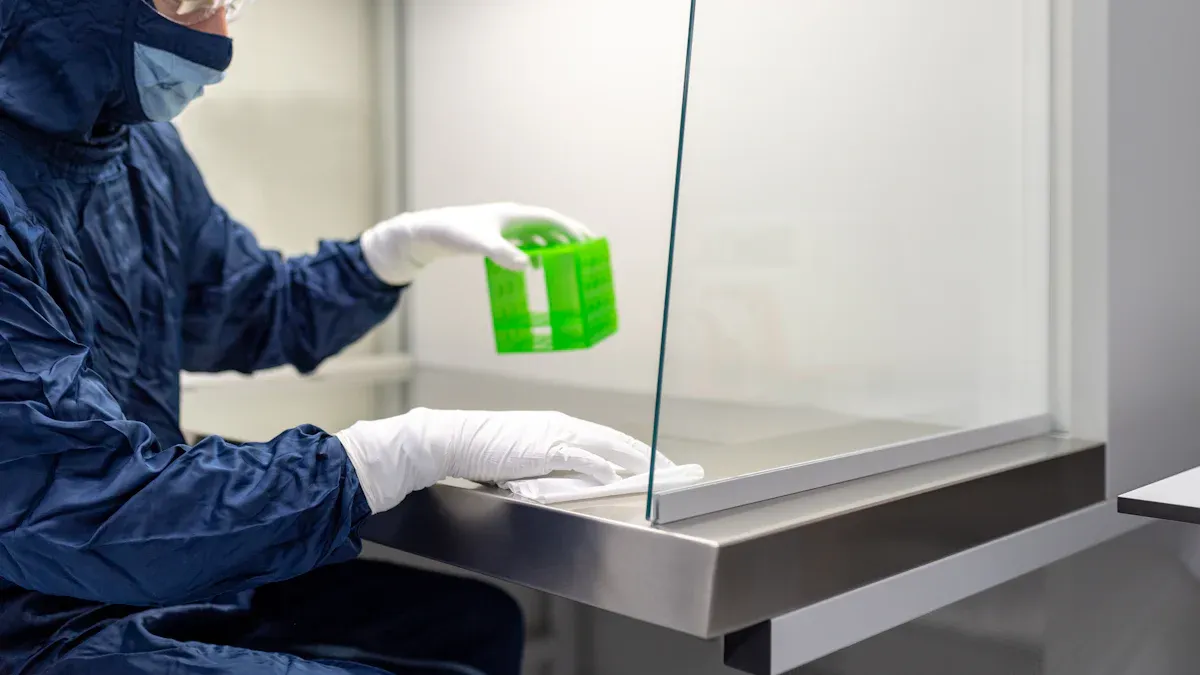
Cleanroom Mopsare indispensable tools. They significantly elevate hygiene and operational standards in controlled environments. These specialized cleanroom mops mitigate contamination risks effectively.Antistatic cleanroom mops ensure product integrity. Medical cleanroom mops protect sensitive processes. Floor cleanroom mops maintain pristine conditions.
Key Takeaways
- Cleanroom mops are special tools. They keep controlled places very clean. They stop tiny bits and germs from spreading.
- These mops use special materials. They do not shed lint. They can handle strong cleaning liquids. Regular mops cannot do this.
- Using cleanroom mops correctly is important. It helps keep sensitive products safe. It also follows strict rules for cleanliness.
How Cleanroom Mops Enhance Contamination Control
Superior Particle and Fiber Retention
Cleanroom mops excel at capturing and containing microscopic particles and fibers. Manufacturers design these mops with advanced materials like microfiber and knitted polyester. These materials feature extremely fine fibers and a dense, tightly woven structure. This unique construction creates a large surface area with numerous microscopic crevices. These crevices effectively trap and hold contaminants, preventing their redistribution across critical surfaces. Standard mops often release particles and fibers back into the environment. Cleanroom mops, however, minimize this shedding, maintaining a cleaner space.
Effective Microbial Reduction
Cleanroom mops play a crucial role in reducing microbial loads on surfaces. They physically remove bacteria, viruses, and fungi during the cleaning process. This physical removal is a primary method of contamination control. For example, studies in hospital settings demonstrate the effectiveness of specialized mops. A probiotic-based cleaning procedure using microfiber mops significantly reduced bacterial loads. This method achieved up to an 80% general reduction and maintained low microbial levels for 24 hours. It outperformed traditional chemical-based protocols. Specific reductions for Staphylococcus aureus and Coliforms on various surfaces were notable. Some reductions exceeded 95%.

Chemical Compatibility and Residue Prevention
The materials used in cleanroom mops must be chemically compatible with the disinfectants and cleaning agents employed. This compatibility prevents the mop from degrading or releasing contaminants. Mops should withstand exposure to common cleanroom chemicals. These include 70% isopropyl alcohol, hydrogen peroxide, peracetic acid, and quaternary ammonium compounds. Polyester and nylon fabrics generally offer good resistance. Low-quality materials, however, can break down. This breakdown generates additional particles and fibers, compromising cleanliness. Incompatible mop materials can also lead to issues like fiber shedding or sticky residues. These residues can attract new contaminants. Therefore, selecting mops made from chemically inert materials like micropolyester or specific nonwoven fabrics is essential. These materials ensure cleaning efficacy and prevent unwanted byproducts.
Differentiating Cleanroom Mops from Standard Mops
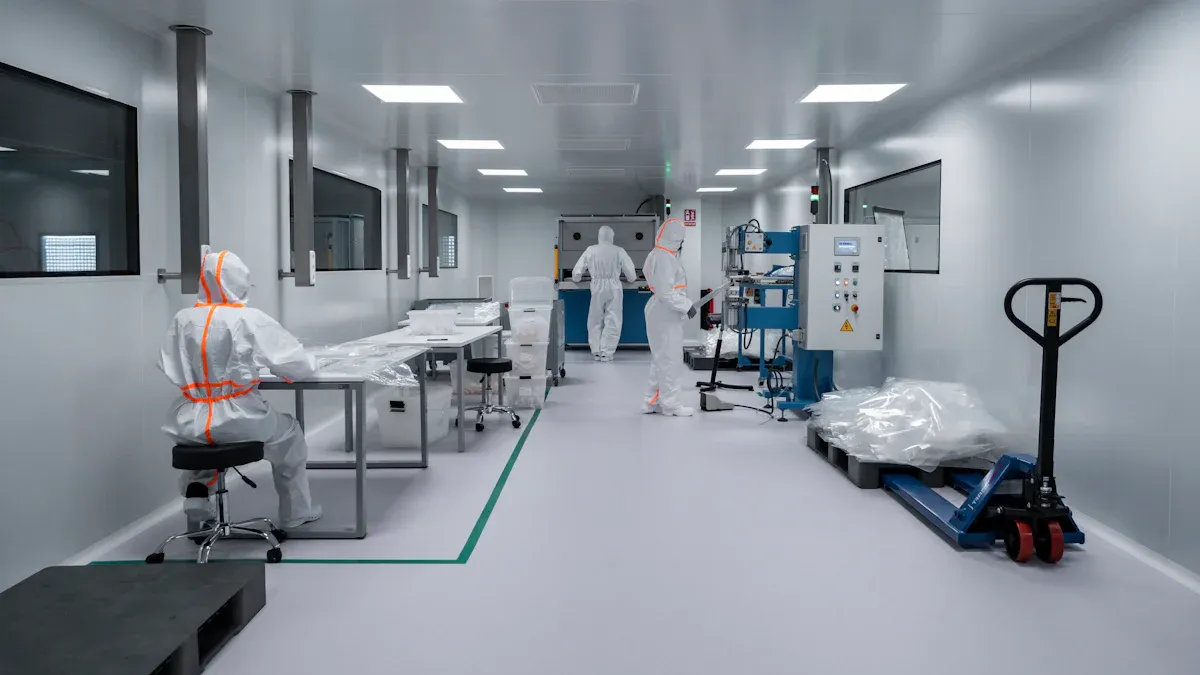
Cleanroom mops stand apart from standard mops. They meet the strict demands of controlled environments. Their design, materials, and usage protocols differ significantly. These differences ensure superior contamination control.
Specialized Material Composition
Cleanroom mops use specific materials. These materials minimize particle shedding. They also resist chemical degradation. Manufacturers typically make these mops from low-linting materials. Examples include polyester or microfiber. These materials reduce particle release. This is crucial for maintaining cleanroom classifications. Standard mops often use cotton or blended fibers. These materials shed lint easily. They can introduce contaminants into sensitive areas.
Cleanroom mop materials also withstand aggressive cleaning agents. They resist chemicals like isopropyl alcohol (IPA) and disinfectants. This prevents material breakdown. Degradation would release new particles. Standard mops do not require this level of chemical resistance. Their materials can degrade quickly when exposed to strong chemicals. This makes them unsuitable for cleanroom use.
Design for Controlled Environments
Cleanroom mop designs prioritize contamination prevention. They feature specific elements to achieve this goal. For instance, cleanroom mop systems often use multi-bucket configurations. These systems have separate buckets for clean solution, rinsing, and waste. This prevents reapplying dirty water. Standard mops typically use a single bucket. This single bucket often reintroduces contaminants.
Cleanroom mops also employ low-linting, non-abrasive Mop Heads. These heads are often autoclavable. They are also chemically compatible. This minimizes particle release. It also allows them to withstand strong disinfectants. Standard mop materials do not offer these critical features.
Modern cleanroom systems incorporate hands-free mop head changes. This reduces contamination risk during handling. Standard mop designs generally lack this feature. Pre-saturated systems also exist. These systems use pre-impregnated mops or wipe covers. They eliminate the need for buckets. They also ensure consistent chemical dilution. This simplifies procedures. It reduces contamination potential. Manual solution preparation with standard mops does not offer these benefits.
Cleanroom mop designs prioritize low particle generation. They use materials often pre-laundered and sterilized. This minimizes fiber release. This is essential for maintaining strict ISO classifications. Materials for cleanroom mops are chosen for chemical compatibility. They resist degradation from aggressive disinfectants. They avoid introducing new contaminants. This consideration is less critical for standard mops.
Many cleanroom mop components are autoclavable. Some come pre-sterilized (gamma irradiated). This suits aseptic environments. Standard mops do not require this level of sterility. Specific products like Texwipe® AlphaMop® Cleanroom Mops feature lightweight, durable aluminum handles. They have low-linting polyester mop heads. These designs optimize particle removal. Their slim profile allows easy access to confined areas. Berkshire® Mop Systems use high-performance materials. These include sealed-edge polyester. This provides exceptional cleaning and particle retention. Their lightweight and ergonomic design ensures ease of use.
Sterilization and Laundering Protocols for Cleanroom Mops
Cleanroom mops follow strict sterilization and laundering protocols. These protocols maintain their cleanliness and effectiveness. Many cleanroom mops are autoclavable. This means they can undergo high-temperature steam sterilization. This process kills microorganisms. Some mops are supplied pre-sterilized. They undergo gamma irradiation. This ensures they are ready for immediate use in aseptic environments.
Laundering protocols for cleanroom mops are also rigorous. They involve specialized washers and dryers. These machines prevent cross-contamination. They use specific detergents. These detergents leave no residue. Standard mops typically undergo basic washing. This does not meet cleanroom sterility requirements. The strict protocols for cleanroom mops ensure they do not introduce contaminants. They maintain the integrity of controlled environments.
Best Practices for Cleanroom Mop Usage and Maintenance
Proper Mopping Techniques for Cleanroom Mops
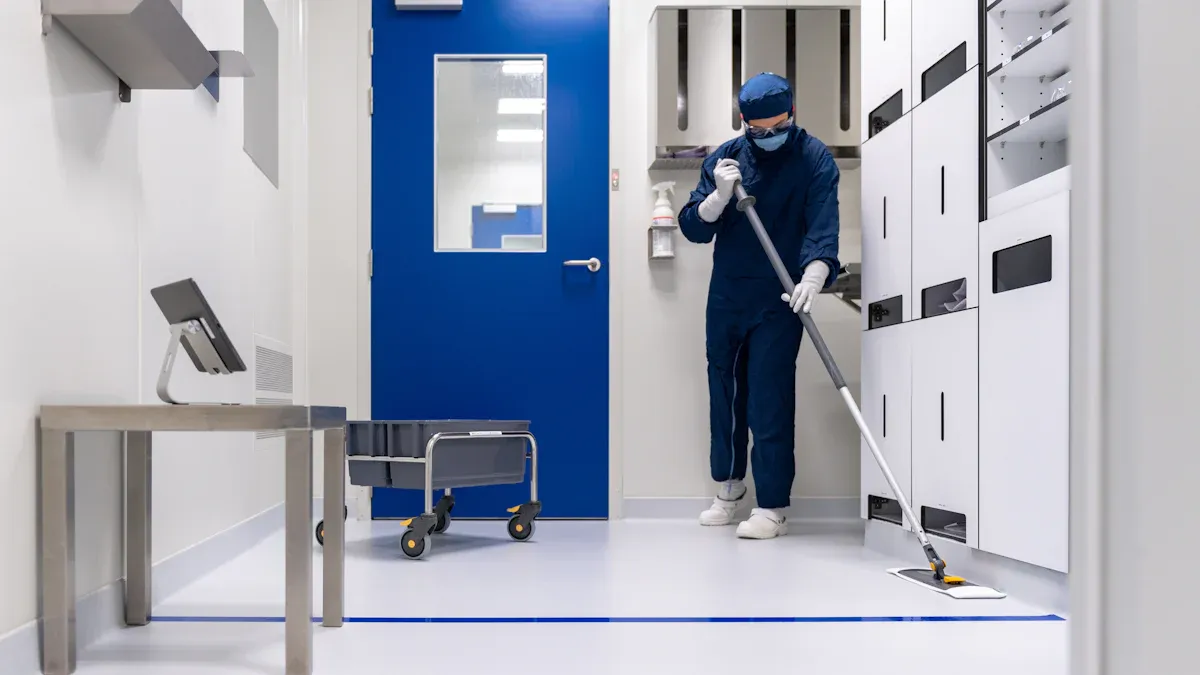
Effective mopping techniques are crucial for maintaining cleanroom integrity. Personnel should develop a consistent mopping pattern to ensure complete floor coverage and prevent spreading contamination. Experts recommend unidirectional mopping with controlled overlap to avoid recontamination. For instance, the perimeter-then-S method effectively cleans walls and floors, reducing particle redistribution. Using improper cleaning techniques or products can introduce contaminants, compromising cleanroom integrity. Failing to properly train personnel leads to inconsistent or ineffective cleaning. Using the wrong wiping technique, such as scrubbing in circles or reusing contaminated wipes, spreads particles instead of removing them. This increases microbial contamination risk. The correct method involves a one-directional, overlapping wipe with approved lint-free wipes.
Selecting Appropriate Cleanroom Mop Systems
Choosing the right cleanroom mop system is vital for effective contamination control. Selection criteria depend on the cleanroom's ISO classification and surface type. For ISO 1-5 environments with smooth floors, low-linting, heat-sealed microfiber mops are recommended. ISO 7-8 classifications on smooth floors can utilize microfiber or knitted polyester mops. For rougher surfaces, like epoxy or conductive floors, looped mops with textured yarns prove more effective. Material compatibility is also key; mops must be low in particle shedding and compatible with disinfectants. Common materials include microfiber, knitted polyester, and nonwoven fabrics. Mop head size should match the cleaning area, with flat mops suitable for under furniture and loop-ended mops for general cleaning.
Effective Laundering and Sterilization of Cleanroom Mops
Proper laundering and sterilization protocols are essential for reusable cleanroom mops. While reusable microfiber mops offer durability and cost-effectiveness, their laundering process requires careful attention. Some laundered reusable versions have shown high microorganism counts, including HAI-associated ones. This suggests single-use options may offer better bacteria control. Disposable mops, though initially appearing more costly, eliminate the risks associated with re-laundering. They also reduce cross-contamination. Polyester fabrics, especially when woven or double-knitted, offer superior strength and minimal particle shedding, making them ideal for cleanroom applications. Mop fabric must also be compatible with cleaners and solvents to prevent degradation.
Cleanroom Mops are critical tools. They uphold stringent cleanliness and contamination control standards. Their specialized features ensure operational integrity and regulatory compliance. Investing in the right Cleanroom Mops and adhering to best practices guarantees a consistently controlled environment. This commitment maintains high hygiene levels.
FAQ
What makes cleanroom mops different from regular mops?
Cleanroom mops use specialized, low-linting materials. Manufacturers design them to prevent particle shedding. They also withstand harsh chemicals. Regular mops do not offer these features.
Why is proper cleanroom mop usage important?
Proper usage prevents contamination. It ensures effective cleaning. Correct techniques maintain the cleanroom's integrity. This protects sensitive products and processes.
Can facilities reuse cleanroom mops?
Yes, facilities can reuse many cleanroom mops. They require strict laundering and sterilization protocols. This maintains their cleanliness. Some applications prefer single-use mops for critical areas.
