

 Send Email
 whatsapp


How Disposable Mops Improve Efficiency and Reduce Cross-Contamination
Disposable mops significantly improve cleaning efficiency. They eliminate laundering, ensuring a fresh cleaning surface every time.Medical disposable mops and antibacterial disposable mops effectively reduce cross-contamination. They prevent germ redistribution. New disposable mop heads, such as floor cleaning disposable mop heads, are used for each area. A Disposable Floor Mop provides consistent cleanliness.
Key Takeaways
- Disposable mops make cleaning faster. They save time by removing the need to wash and dry mops.
- Disposable mops stop germs from spreading. Each new Mop Head ensures a clean start and prevents cross-contamination.
- Disposable mops improve hygiene. They are good for places like hospitals where cleanliness is very important.
The Efficiency Advantage of Disposable Mops
Streamlined Workflow and Time Savings
Disposable mops significantly enhance cleaning efficiency by simplifying the entire cleaning process. Cleaning teams save considerable time because they eliminate the need for sorting, washing, and drying mops. This streamlined workflow means faster preparation before cleaning tasks and quicker disposal afterward. Staff can dedicate more time to actual cleaning and less to mop maintenance. This operational shift allows facilities to complete cleaning routes more quickly, improving overall productivity and reducing labor costs.
Consistent Cleaning Performance with Disposable Mops
Disposable mops ensure a fresh, clean surface for every cleaning task, leading to consistently high cleaning performance. Each new mop head guarantees maximum absorbency and dirt-trapping capability, preventing the re-distribution of contaminants. Studies consistently demonstrate the superior cleaning efficacy of disposable mop materials. For instance, the Li et al. study, published in InfectionControl.tips journal, investigated Staphylococcus aureus removal from floors. This research found traditional string mops inferior to both launderable and disposable flat mops. Both types significantly reduced bacteria cross-contamination compared to cotton string mops, regardless of the cleaning product used. Another study compared microfiber mops with cotton string mops in a research animal facility. It showed microfiber mops, when used with disinfectants, reduced colony-forming units (cfu) and relative light units (RLU) on floors. Crucially, reusing cotton string mop heads with a disinfectant without proper laundering increased contamination rather than cleaning floors. This evidence highlights how a fresh disposable mop prevents spreading germs, ensuring a truly clean environment.
Reduced Resource Consumption
Disposable mops offer significant advantages in resource consumption, particularly regarding water usage. They use less water because cleaning teams discard them after a single use, eliminating the need for laundering. Traditional mops, conversely, require regular washing, which consumes significant volumes of water for rinsing and cleaning. Disposable mop systems bypass the entire washing and drying cycle, leading to a distinct advantage in reducing water usage. This also translates into lower energy consumption, as facilities do not need to operate washing machines and dryers. Furthermore, the precise dosing of cleaning solutions with disposable systems can reduce chemical waste, contributing to a more environmentally responsible cleaning operation.
Minimizing Cross-Contamination with Disposable Mops
Eliminating Germ Transfer
Disposable mops play a crucial role in preventing the spread of pathogens. They ensure that cleaning staff do not reintroduce germs into previously cleaned areas. Each new mop head guarantees a fresh start, effectively breaking the chain of contamination. Research consistently demonstrates the superior ability of disposable options to contain bacteria. A study comparing different manual floor mopping methods found that flat mops with disposable heads left significantly less viable bacteria on the floor compared to traditional cotton mops.
| Mop Type | Log10 Densities Recoveries (Mean ± SD) |
|---|---|
| Cotton Mops (CM) | 1.29 ± 0.45 |
| Flat Mop with Disposable Head (FD) | 1.10 ± 0.29 |
| Flat Mop with Launderable Head (FL) | 1.19 ± 0.47 |
Note: Cotton mops (CM) left significantly more viable bacteria than flat mops with disposable heads (FD) (P = 0.0062). No significant difference was found between disposable and launderable flat mops (P = 0.2140).
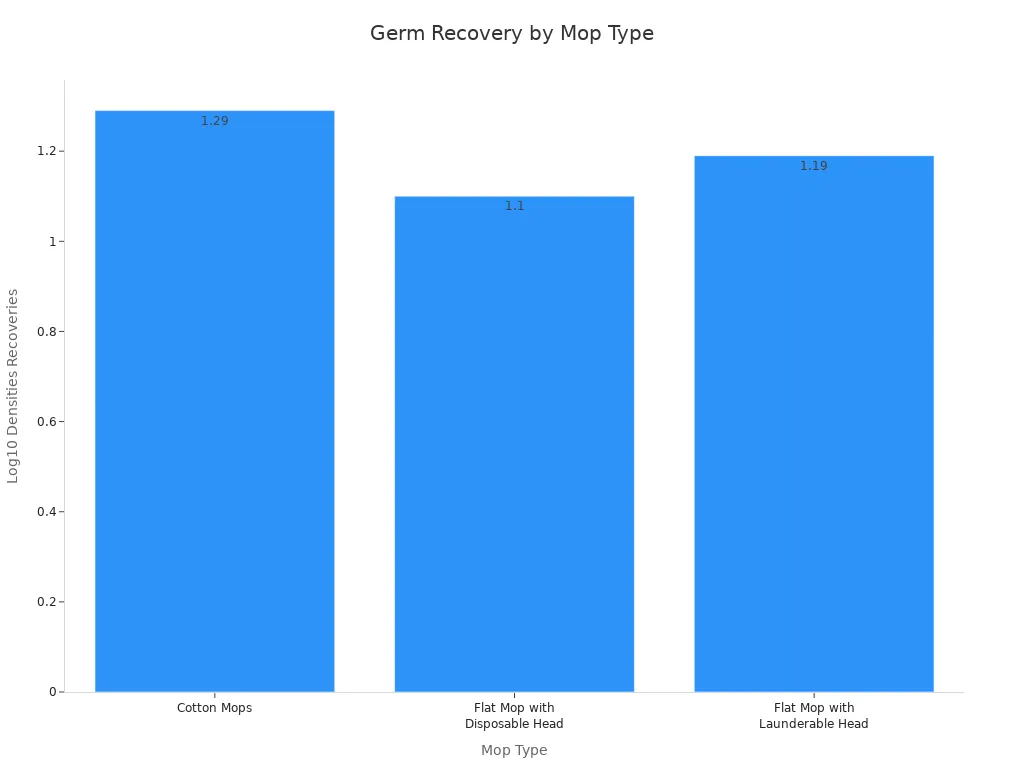
Cotton mops had a log10 density recovery of 1.29 ± 0.45, while flat mops with disposable heads showed 1.10 ± 0.29 (P = 0.0062). This indicates a clear advantage for disposable options in bacteria removal. The study also highlighted that cotton string mops consistently increased the risk of cross-contamination, regardless of the cleaning product used. This evidence underscores how a fresh mop prevents spreading germs, ensuring a truly clean environment. Single-use cleaning tools are particularly effective in containing various pathogens, including:
- Bloodborne Pathogens
- Methicillin-resistant Staphylococcus aureus (MRSA)
- Vancomycin-resistant enterococci
- Up to 99.99% of tested pathogens
Targeted Cleaning for High-Risk Areas
Disposable mops are indispensable for maintaining hygiene in high-risk environments. Facilities use them once and then discard them, preventing the transfer of infectious agents between rooms. This practice is especially crucial in healthcare settings like isolation rooms, intensive care units, and operating rooms. For infection prevention, it is recommended to use single-use disposable mop options.
Tip: Implement color-coded equipment to clearly differentiate between various cleaning zones, preventing cross-contamination.
Mop heads should be single-use or removable for daily laundering. They must be changed between each room, including bathrooms. This single-use approach significantly reduces the risk of transferring infectious agents. Disposable microfiber mop pads are an important component of a comprehensive infection control strategy. This strategy also includes hand hygiene, PPE use, and medical equipment disinfection. Disposable mops significantly reduce healthcare-associated infections (HAIs). They prevent the transfer of accumulated dirt, debris, and bioburden back into facilities. As single-use items, they eliminate the risk of cross-contamination inherent with laundered mops. Laundered mops, even microfiber ones, can become a source of contamination if not processed correctly. The laundering process itself can damage the microfiber, compromising its cleaning efficiency and the effectiveness of disinfectants. Disposable options ensure consistent cleaning results without these risks, leading to cleaner environments and reduced infection rates.
Improved Hygiene Standards
Adopting disposable mop systems significantly elevates overall hygiene standards. These systems offer superior cleaning efficacy and virtually eliminate cross-contamination risks.
| Hygiene Standard | Traditional Mops | Disposable Mop Systems |
|---|---|---|
| Cleaning Efficacy | Less effective at trapping microscopic particles and microbes. | High particle and microbial removal (e.g., 99.9% of microbes). Can achieve 6-8 log reduction with disinfectants. Highest pathogen removal (e.g., 99.99% of human coronavirus OC43). Positively charged fibers attract particles. |
| Cross-Contamination | High risk if not meticulously managed (frequent changes, proper laundering). | Virtually eliminates cross-contamination (single-use per room/area). |
| Regulatory Fit | Generally less compliant with modern EU GMP Annex 1 Contamination Control Strategy (CCS) and USP <797>/<800> environmental monitoring standards due to lower efficacy. | Ideal for EU GMP Annex 1 Grade A/B areas and USP <797> ISO 5 PECs where sterility and single-use are paramount. Supports rigorous ISO 14644-17 (Particle Deposition Rate) goals. |
Disposable mop pads, especially those made from microfiber, capture and remove microbes more effectively than traditional cotton mops. Their single-use design ensures that pathogens do not transfer between rooms. This is vital in sensitive areas such as intensive care units. Disposable microfiber mop pads can remove up to 95% of microbes, compared to 68% with reusable mops. This reduction in cross-contamination risk supports safer environments for both staff and clients. Hospitals report floors up to 80% cleaner and a notable reduction in infections such as C. difficile after adopting disposable mop systems.
Industry guidelines and certifications endorse the use of disposable mops for enhanced hygiene.
- ISO 14644-18: This standard details how to assess cleanliness attributes and functional performance for mops, implicitly supporting pre-validated disposable options.
- EU GMP Annex 1: This mandates sterility for mops and agents in aseptic zones, a requirement often met by pre-validated, sterile disposable mops.
- USP 797: This advocates for non-shedding, low-lint materials and dedicated use for mops, aligning with the characteristics and benefits of disposable mops.
- USP 800: This recommends wetted wipes and a four-step cleaning process, where disposable options prevent cross-contamination and ensure residue removal.
- CDC Guidelines: These emphasize effective cleaning to minimize pathogen spread and reduce healthcare-associated infections (HAIs), which disposable mops support by preventing cross-contamination.
Cleanroom-certified disposable mops, made of 100% polyester with limited particle shedding, are often preferred in controlled environments. Hospital best practices particularly favor disposable mop pads for high-risk areas to prevent cross-contamination. These pads can remove 99.9% of microbes, including bacteria and viruses, even with water alone.
Disposable Mops vs. Traditional Mops: A Clear Advantage
Cost-Benefit Analysis
Facilities often evaluate cleaning systems based on their financial implications. Traditional mop and bucket systems offer compelling economic advantages over high-end robot mops or premium cordless scrubbers. These advanced devices represent significant investments. Smart devices require ongoing costs for proprietary replacement pads, specialized cleaning fluids, HEPA filter replacements, and battery wear. The maintenance cycle for a traditional mop is simpler, more transparent, and more cost-effective over a five-year period. Manufacturers of traditional mops focus on durability and sustainability. Microfiber mop heads are machine washable and reusable hundreds of times. This directly counters the wasteful, disposable nature of many smart device pads. The core product, from wringer bucket to mop handle, uses reinforced materials for longevity. Only the mop head requires occasional, minimal-expense replacement.
Washable microfiber mops offer significant long-term financial benefits compared to disposable cleaning tools. Disposable options incur recurring costs with each cleaning session. Microfiber mops can be reused up to 500 times, making them a more economical choice. Beyond reusability, microfiber mops achieve high cleaning efficiency using only water. This reduces the need for costly chemical solutions and further saves money. This also minimizes chemical exposure. The University of California Davis Medical Center's pilot test found that microfiber mops saved $30 per 100 rooms and reduced chemical costs by 95%. They lasted up to 500 washes compared to 55-100 for cotton mops. Overall, microfiber mops can lead to 90-95% savings in product costs and a 20% reduction in labor expenses. Annual labor cost savings potentially reach $7,665.
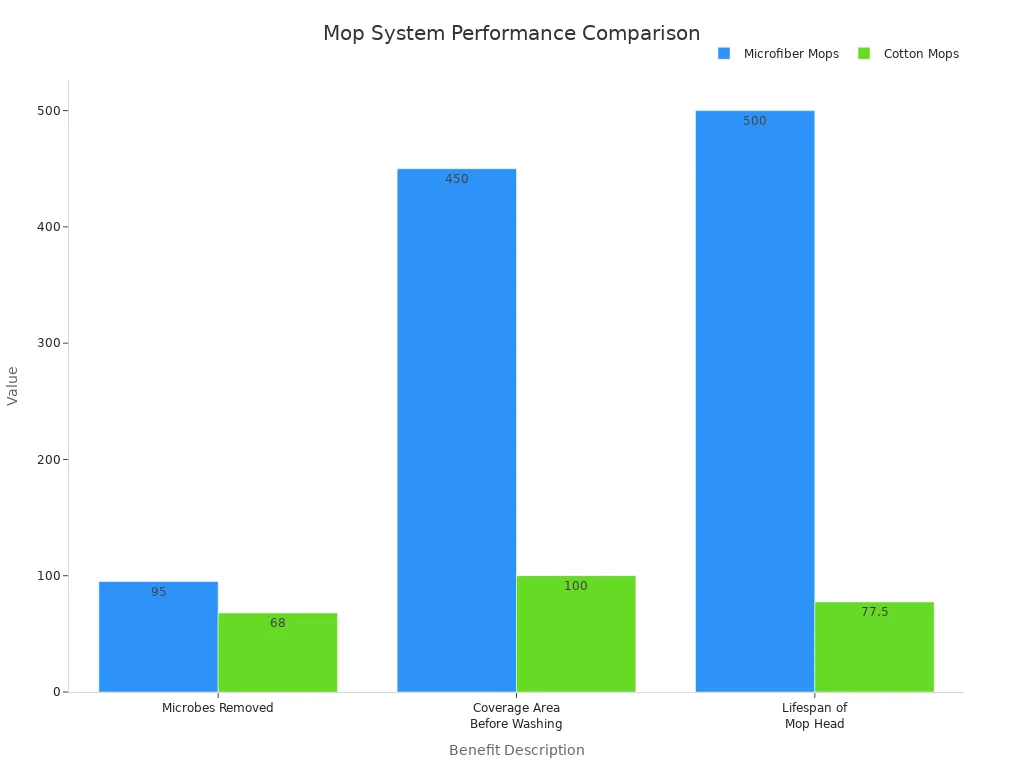
| Benefit Description | Microfiber Mops | Cotton Mops |
|---|---|---|
| Labor Cost Savings | 20% savings per day | N/A |
| Mop Cost Reduction | 60% reduction in costs | N/A |
| Product Cost Savings | 90-95% savings per day | N/A |
| Microbes Removed | 95% with microfiber | 68% with cotton |
| Coverage Area Before Washing | 400-500 sq ft | 100 sq ft |
| Lifespan of Mop Head | Up to 500 washes | 55-100 washes |
| Annual Savings in Labor Costs (example) | $7,665 per year | N/A |
Reusable mop systems often come with hidden costs. These can negate initial savings. Expenses include frequent replacements, waste disposal fees, transportation, regulatory compliance, staff training, and inventory management. Disposable mop pads, by contrast, help facilities avoid these hidden costs. They offer a more straightforward financial option. For businesses requiring frequent cleaning, bulk purchasing of disposable pads can significantly reduce overall expenses through discounts. This is particularly beneficial for institutions like hospitals and schools. Hygiene is critical there, and cross-contamination prevention is paramount. This occurs without the high costs of laundering reusable pads. Additionally, disposable mop pads eliminate the need for laundering. They reduce associated labor costs, further enhancing savings for facilities that would otherwise launder pads in-house.
Ease of Training and Implementation
Implementing disposable mop systems simplifies staff training significantly. Cleaning personnel do not need to learn complex laundering protocols. They also avoid sorting procedures for used mop heads. Staff simply use a fresh disposable mop for each area and then discard it. This straightforward process reduces the time required for training new employees. It also minimizes the potential for human error in cleaning routines. The consistent availability of clean, fresh mop heads ensures uniform cleaning quality. This removes reliance on proper laundering practices. This ease of use contributes to a more efficient and effective cleaning operation.
Disposable mops offer a compelling solution for modern cleaning challenges. They deliver significant improvements in operational efficiency. These systems critically reduce cross-contamination risks. This makes them a superior choice for maintaining hygienic environments. Their single-use design ensures optimal cleanliness and prevents germ spread.
FAQ
How do disposable mops prevent cross-contamination?
Disposable mops prevent germ transfer. Users discard them after single use, ensuring a fresh cleaning surface every time. This breaks the chain of contamination effectively.
Do disposable mops offer cost savings?
Yes, disposable mops reduce labor and laundering costs. Bulk purchasing can offer significant savings, especially for facilities prioritizing hygiene and efficiency.
Are disposable mops a more hygienic choice for all environments?
Disposable mops are ideal for high-risk areas. They ensure optimal cleanliness and prevent germ spread. This makes them a superior choice for maintaining hygienic environments.
