

 Send Email
 whatsapp


How Esun Microfiber Mops Eliminate Cross-Contamination in Healthcare

Esun's single use mop pads provide the cornerstone for eliminating cross-contamination. Their advanced microfiber technology actively prevents pathogen transfer. Thesedisposable mop pads ensure superior hygiene in hospitals, labs, and cleanrooms. Esun's disposable cleaning pads, including their disposable floor mop pads and disposable microfiber mop heads, redefine infection control. Mop disposable pads offer consistent cleanliness.
Key Takeaways
- Esun single-use mop pads stop germs from spreading. You use a fresh pad for each area, then throw it away. This keeps hospitals cleaner.
- These mops use special fibers that pick up and trap germs better than old mops. They work well with strong cleaning liquids.
- Using Esun mops makes cleaning easier and helps keep patients safe. They also save water and energy because you do not need to wash them.
The Persistent Threat of Cross-Contamination with Traditional Mops

How Reusable Mops Spread Pathogens
Traditional Reusable Mops pose a significant risk in healthcare environments. These mops often serve as reservoirs for microbes, creating a pathway for infection transmission. Even after laundering, these mops can harbor dangerous pathogens. While current laundering processes effectively reduce vegetative pathogenic bacteria likeS. aureus and E. coli to undetectable levels, C. difficile spores may still be detected. This indicates a potential for continued pathogen presence, even after cleaning, which compromises hygiene efforts.
High-Risk Areas for Infection Transmission
Healthcare facilities contain numerous high-risk areas for infection transmission. Patient rooms, operating theaters, intensive care units, and isolation rooms demand stringent cleaning protocols. Shared spaces like waiting areas, hallways, and restrooms also present significant challenges. Pathogens can easily transfer from contaminated surfaces in one area to another via reusable cleaning tools, creating a cycle of contamination.
Compromising Patient Safety and Outcomes
Cross-contamination directly impacts patient safety and health outcomes. Healthcare-associated infections (HAIs) lead to severe consequences for patients and substantial economic burdens for healthcare systems. The estimated direct annual cost of treating HAIs in the United States ranges from $28.4 billion to $45 billion. Patients with HAIs also experience significantly longer hospital stays. For instance, cases in Ethiopia stayed 8.3 days longer than controls, and Chinese hospitals reported an increase of 8.2 to 12.6 days. In an Italian healthcare setting, HAIs increased costs by €4,695 (60.45%) in one model. The financial impact extends to increased expenses for procedures, investigations, hospital beds, and drugs.
| Cost Category (Ethiopian Birr) | HAI Patients (Mean) | Controls (Mean) | Difference (Mean) |
|---|---|---|---|
| Procedures and Investigations | 926.1 | 476.5 | 449.6 |
| Hospital Bed | 572.2 | 327 | 245.2 |
| Drugs | 3346.8 | 893.1 | 2453.7 |
| Total Cost | 4825.9 | 1792.9 | 3033.0 |
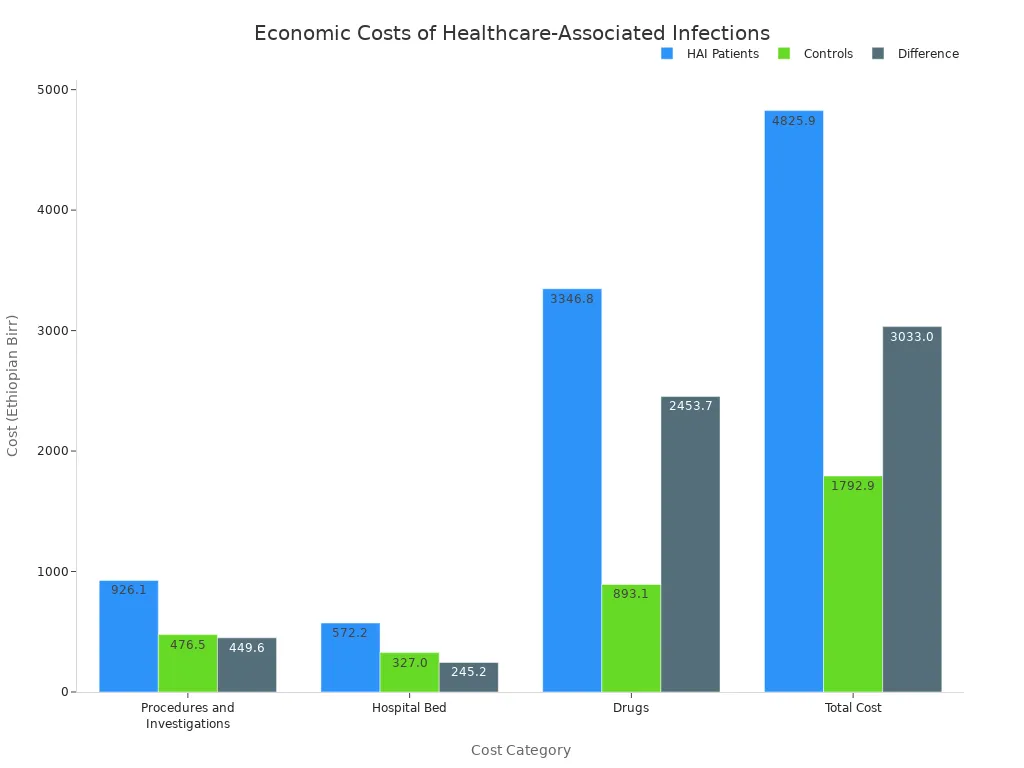
These additional costs highlight the critical need for effective infection control measures.
Esun's Single Use Mop Pads: A Paradigm Shift in Infection Control

Esun's single use mop pads represent a fundamental change in how healthcare facilities approach infection control. They move beyond traditional cleaning methods, offering a proactive solution to prevent pathogen spread. This innovative approach ensures a safer environment for patients and staff.
Advanced Microfiber Technology for Superior Pathogen Capture
Esun's advanced microfiber technology actively captures and removes pathogens from surfaces. Microfiber materials possess unique properties that make them highly effective. They have tiny openings and spaces within their fibers. These spaces act like hooks, gently lifting away dirt, grime, and bacteria. Unlike cotton products, microfiber consists of inorganic materials. This means pathogens find no food source on the mop itself. Traditional cotton fibers often push dirt around rather than trapping it.
Scientific studies consistently show microfiber mops outperform traditional mops in bacteria removal.
| Mop Type | Microbe Removal Rate (using only water) |
|---|---|
| Microfiber Mops | Up to 99.54% |
| Traditional Cotton Mops | Approximately 67% |
| Microfiber Mops (general) | 99% |
| Traditional Mops (general) | About 30% |
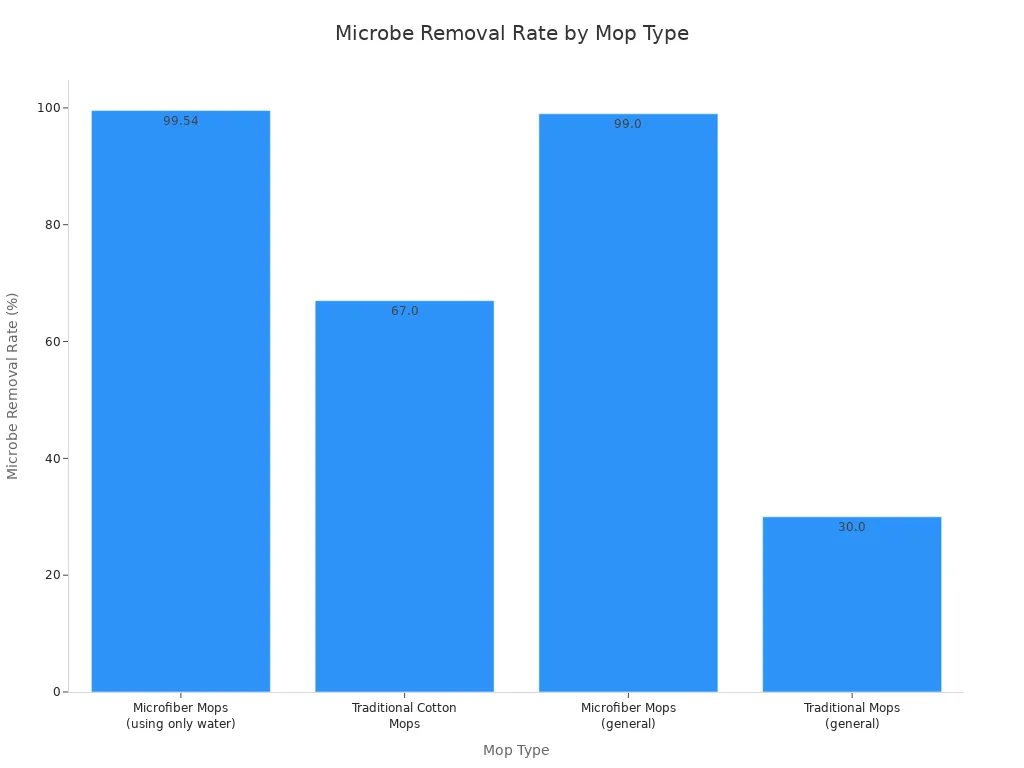
Microfiber cloths significantly reduce pathogens such as Clostridium difficile, E. coli, and methicillin-resistant Staphylococcus aureus. One study reported a mean log10 reduction of 2.21 in bacterial load when using single-use damp microfiber cloths in healthcare settings. Microfiber mops even picked up dirt after traditional mops had been used, demonstrating their superior cleaning power. This superior capability contributes directly to better infection control in healthcare environments.
Guaranteed Freshness with Every Single Use Mop Pads
Esun's single use mop pads ensure guaranteed freshness for every cleaning task. The fundamental principle is "use once, then discard." This approach is crucial for preventing the spread of contaminants. By using a fresh pad for each new area, the cleaning process effectively breaks the chain of infection. This guarantees a higher and more consistent standard of cleanliness. Every cleaning task begins with a fresh, high-performance tool. This eliminates the hidden costs and inconsistencies associated with reusable options.
This single-use design fundamentally alters infection control paradigms. It removes the need for laundering, which prevents structural damage to microfibers. Such damage can lead to 'binding,' which reduces disinfectant effectiveness. Without the binding issue, single-use mops deliver disinfectants at their full strength. This significantly enhances the elimination of healthcare-associated infections (HAIs). Disposing of the mop after each use eliminates the risk of reintroducing pathogens into healthcare environments. This is a common problem with inadequately laundered reusable mops. The CDC highlights that microfiber cleaning systems, often utilizing single-use pads, demonstrate superior microbial removal compared to conventional string mops. A new microfiber pad for each room prevents the transfer of microbes between different areas. This reduces the potential for cross-contamination and subsequent infection.
While concerns about increased waste from single-use mops exist, their overall environmental impact is often mitigated. Eliminating the laundering cycle for reusable mops leads to significant savings in water, energy, and transportation. Many single-use mops are now manufactured with a high percentage of recycled content. This makes them a more environmentally conscious choice than initially perceived.
Minimizing Human Error in Cleaning Protocols
Traditional cleaning protocols with reusable mops often introduce risks due to human error. Human inconsistency leads to variations in cleaning effectiveness. Studies show only 40% of near-patient surfaces are cleaned according to hospital policies. Distractions, fatigue, or oversight can result in missed or inadequately cleaned areas. This creates potential gaps in disinfection. Staff may not allow disinfectants to remain on surfaces for the required dwell time, compromising their efficacy. Manual cleaning can merely move pathogens around rather than eradicating them. One study found cross-contamination in 50% of samples after terminal cleaning. The relaundering process itself can diminish the performance and quality of reusable mops over time. This happens due to degradation of microfiber structures. Retention of particles and residues in relaundered mops can negatively affect disinfectant efficacy. Human error in monitoring and validating the performance and quality of reusable mops over time can lead to unacceptable risks.
Esun's single-use systems significantly reduce the potential for human error in cleaning processes. They eliminate the need for rigorous cleaning and validation between batches. Since single-use systems are discarded after each use, the manufacturing process simplifies. The requirement for cleaning validation is removed. This not only reduces downtime but also directly lowers the potential for human error associated with complex cleaning and validation steps. This enhances overall efficiency and product safety. The implementation of single-use systems removes the necessity for cleaning and validation procedures. This saves time previously spent on cleaning hard pipes and vessels, operator time, and time for cleaning analysis. Automated processes utilizing single-use technologies can decrease contamination risks by reducing or completely removing the need for cleaning and maintenance.
Unmatched Cleaning Efficacy and Operational Advantages
Esun microfiber mops offer healthcare facilities unparalleled cleaning efficacy and significant operational benefits. They redefine cleaning standards through superior design and functionality.
High Absorbency and Efficient Debris Removal
Esun microfiber mops demonstrate exceptional absorbency. They quickly absorb water due to their polymer and polyamide fiber composition. These mops can absorb up to 32 oz. of liquid within 2-4 minutes without drips or leakage. This feature allows for quick spill management using a flat mop handle, eliminating the need for a bucket and wringer. This superior performance also reduces the need for chemicals and water usage.
Esun microfiber mops are highly effective in removing debris from various healthcare surfaces. Their design lifts and traps dust, dirt, and over 99% of bacteria, rather than merely pushing them around. Studies show these mops can remove up to 99% of bacteria from a surface when used correctly. This represents a significant improvement over conventional mops. The abrasive action of microfiber more effectively achieves the physical removal of biofilms, protective layers that harbor bacteria. This ensures hygienically clean floors. Microfiber strip mops deliver exceptional cleaning performance. They utilize ultra-fine synthetic fibers that create a static charge, effectively lifting dirt, dust, and bacteria. Esun's disposable microfiber pocket mop pads feature alternating thick and thin yarn stripes. These efficiently remove dirt and bacteria without clinging to the floor surface. They offer stronger cleaning ability and better sterilization effects. A hospital case study correlated the implementation of a color-coded microfiber mopping system for patient rooms, corridors, and operating theaters with a measurable reduction in healthcare-associated infection (HAI) rates. This demonstrates the practical effectiveness of Esun microfiber mops in improving patient safety and hygiene in healthcare environments.
Compatibility with Hospital-Grade Disinfectants
Esun microfiber mop pads are designed for full compatibility with hospital-grade disinfectants. Their synthetic construction ensures compatibility with all disinfectants, including quats, chlorine, and peroxides. Esun strong scrubbing disposable microfiber spray flat floor cleaning mop pads do not neutralize disinfectants. They are compatible with common disinfectants such as Quat (without binding), Chlorine Bleach, and Hydrogen Peroxide. Esun microfiber mop pads feature proprietary technology that prevents them from neutralizing or binding disinfectants. This ensures effective disinfection without chemical interference.
Interactions between disinfectant solutions and the fibers of a wipe can impact fiber characteristics. They also affect the binding of the disinfectant to the wipe material and the amount of disinfectant released from the wipe onto a surface. Quaternary Ammonium Compounds (QACs) are sticky. They can clog the tiny pores of microfiber cloths, which are designed to trap dirt and microbes. This clogging reduces the cloth's ability to effectively pick up and hold contaminants. Once clogged, microfiber cloths lose their efficiency. This can lead to dirt and bacteria being wiped off but not effectively trapped. This can result in streaks and residues. QACs can also leave residue, especially on shiny surfaces. When combined with microfiber, this can cause streaking and a less clean appearance. Previous studies indicate that cotton cloths, often used for disinfecting healthcare surfaces, are less effective. They bind more tightly to disinfectants. This tighter binding results in a lower concentration of disinfectant being delivered to the surfaces being cleaned. Esun's design avoids these issues, ensuring disinfectants perform at their full potential.
Streamlined Cleaning Operations and Waste Management
Single-use mop systems significantly streamline cleaning workflows in healthcare facilities. They reduce cross-contamination. Cleaning personnel change single-use mop heads between each room, including bathrooms. This prevents the transfer of infectious agents and accumulated bioburden. This eliminates the risk of contamination inherent with laundered mops. Disposable systems offer superior cleaning efficacy. They capture and remove up to 95% of microbes compared to 68% with reusable mops. This leads to significantly cleaner environments and a notable reduction in healthcare-associated infections (HAIs), such as C. difficile. Hospitals have reported floors being up to 80% cleaner and a notable reduction in infections like C. difficile after implementing disposable mop systems.
Single-use systems simplify staff training. Cleaning personnel no longer need to learn complex laundering protocols or sorting procedures. They simply use a fresh mop for each area and discard it. This reduces training time and minimizes human error. These systems optimize resource consumption. They use less water and energy by eliminating the need for washing and drying cycles. Precise dosing of cleaning solutions also reduces chemical waste. This contributes to more environmentally responsible operations. Disposable microfiber mop pads can enhance worker productivity. They lead to reduced labor costs. Cleaning staff can simply discard the pad after use. This eliminates the time-consuming and cumbersome process of collecting and laundering soiled pads.
A Life Cycle Assessment (LCA) comparing disposable and reusable microfiber mop pads revealed that reusable pads can have a greater environmental impact across categories such as global warming potential, water usage, and smog production. This is attributed to the energy and resources required for repeated laundering. This makes reusable options potentially less sustainable than disposable alternatives in some contexts. A 500-bed hospital, fully occupied and using two mops per room daily, would generate approximately 39 pounds of single-mop waste each day. This daily waste from single-use mops represents a 0.25% increase in overall waste generation for such a facility. Healthcare facilities can implement responsible disposal practices, such as participating in recycling programs for used microfiber pads. They can also engage in waste reduction strategies, including selecting products with minimal packaging. Choosing suppliers who adhere to environmentally friendly practices also contributes to sustainability.
Esun disposable microfiber mops are indispensable for preventing cross-contamination. They deliver superior hygiene and infection control standards. Esun transforms cleaning practices in healthcare environments. These innovative single use mop pads ensure a safer future for patients and staff, setting a new benchmark for cleanliness.
FAQ
How do Esun single-use mops prevent cross-contamination?
Esun single-use mops prevent cross-contamination by ensuring a fresh, clean pad for each area. This "use once, then discard" approach eliminates pathogen transfer between rooms. Their advanced microfiber technology also captures and removes microbes effectively.
Are Esun mops compatible with hospital-grade disinfectants?
Yes, Esun mops are fully compatible with hospital-grade disinfectants. Their synthetic construction prevents binding or neutralizing chemicals. This ensures disinfectants maintain full efficacy against pathogens.
Do single-use mops contribute to more waste?
While single-use mops generate solid waste, they significantly reduce water and energy consumption from laundering. Many also contain recycled content. This offers a more environmentally conscious choice in some contexts.
