

 Send Email
 whatsapp


How Microfiber Mops Improve Your Cleaning Routine

Microfiber Mops transform cleaning by capturing more dirt and bacteria than a standardfloor mop. Users see up to 95% less water and chemical use, with labor efficiency rising from 5,000 to 23,000 square feet per hour. The table below highlights these benefits for cleaning mops for floors:
| Metric | Cotton Damp Mops | Microfiber Damp Mops |
|---|---|---|
| Washings Per Mop | 50 | 500 |
| Chemical Costs (per day) | $1.32 | $0.055 |
| Water Costs (per day) | $0.48 | $0.02 |
| Labor Efficiency | 5,000 | 23,000 |
A microfiber mop delivers a safer, faster solution for any floor cleaning mop routine.
Key Takeaways
- Microfiber mops clean better by trapping up to 99% of bacteria and dirt, making floors safer and more hygienic than traditional cotton mops.
- They save water, chemicals, and time by using less liquid and drying floors faster, which also reduces slip hazards and worker injuries.
- Using proper techniques like color-coded pads, detergent, and high-temperature washing keeps microfiber mops effective and prevents cross-contamination.
Microfiber Mops: What Makes Them Different

What Is Microfiber and How Does It Work?
Microfiber is a synthetic material made from ultra-fine fibers, typically a blend of polyester and polyamide. Each fiber measures less than one denier, making it much thinner than a human hair. This unique structure creates a vast surface area that attracts and holds dust, dirt, and bacteria. When used in cleaning, the fibers generate a static charge that lifts particles from surfaces and traps them within the Mop Pad. Unlike traditional cotton mops, microfiber mops do not simply push dirt around. Instead, they capture and lock in contaminants, resulting in a cleaner and more hygienic environment.
Superior Cleaning Performance and Hygiene
Microfiber mops deliver exceptional cleaning results, especially in environments where hygiene is critical. Research published in the Journal of Hospital Infection shows that Microfiber Cloths can eliminate up to 99.999% of bacteria on hospital surfaces. The ultra-fine fibers trap dust, dirt, and pathogens such as MRSA, E. coli, and C. difficile. Microfiber mops maintain their cleaning efficiency even after repeated laundering, with only a slight decline after 150 washes. Their lint-free and non-abrasive nature protects delicate surfaces while reducing the need for harsh chemicals.
Note: Microfiber mops are widely used in healthcare, hospitality, and commercial settings due to their superior cleaning performance and ease of use. Over 70% of healthcare managers now prioritize cleaning efficacy over price, reflecting a shift in industry standards.
The following table highlights key performance metrics for microfiber mops:
| Metric | Data Point | Context/Impact |
|---|---|---|
| Bacteria removal efficiency | Up to 99% | Removes bacteria effectively, crucial for sterile environments |
| Pathogen reduction | Up to 99% | Lowers infection risk and improves outcomes |
| Cleaning time reduction | 30% | Improves cleaning efficiency in hospitals |
| Cleaning cost reduction | 25% | Delivers cost savings over one year |
| Durability | Up to 500 wash cycles | Reduces replacement frequency and costs |
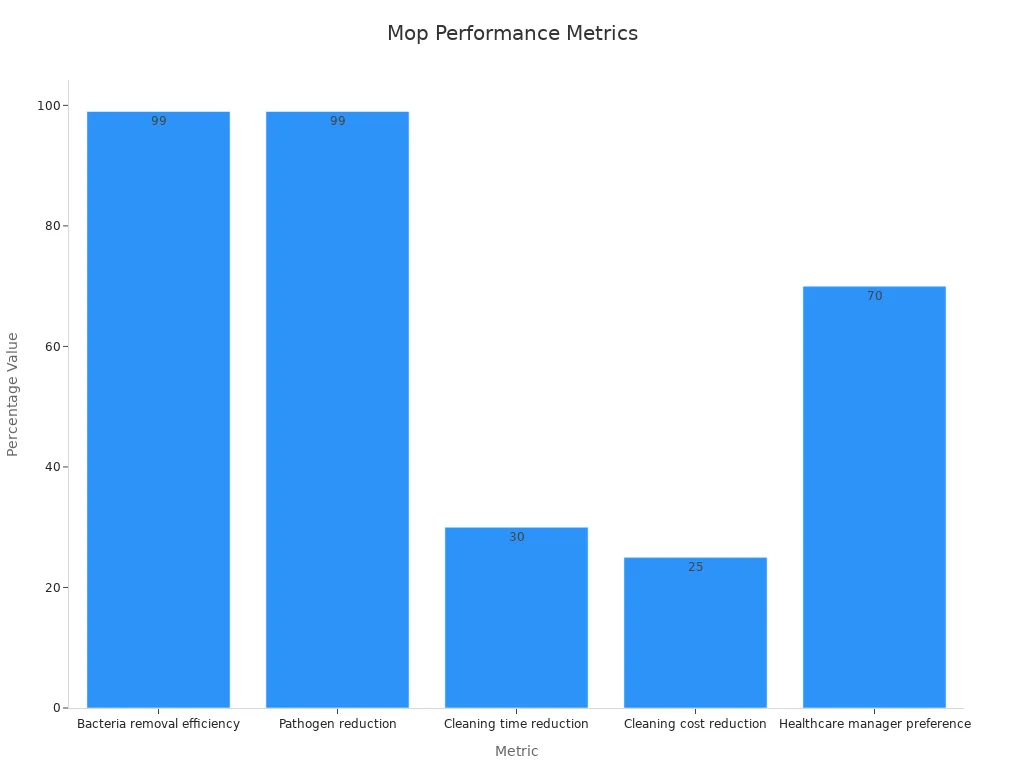
Microfiber mops also reduce residue on surfaces by about 10%, ensuring a streak-free finish. Single-use microfiber technology further enhances hygiene by preventing cross-contamination, making it ideal for sensitive environments.
Water, Chemical, and Time Savings
Microfiber mops offer significant advantages in resource efficiency. Studies at UC Davis Medical Center found that water usage dropped from 105 gallons to just 5 gallons per 100 rooms when switching from cotton to microfiber mops. The design of microfiber mop pads allows for replacement after each room, which eliminates frequent dumping of dirty water and reduces cross-contamination. Workers experience faster cleaning times and increased productivity, as microfiber mops are lighter and easier to maneuver.
| Metric | Cotton String Mop | Microfiber Mop |
|---|---|---|
| Average mopping time (s) | 515 | 410 |
| Disinfectant volume (mL) | 343 (QUAT) | 164 (HPD) |
| Annual cost per room (USD) | $377 - $1,932 | $313 - $378 |
| Water usage | Buckets required | Buckets not needed, less water used |
- Microfiber mops use 10 to 20 times less water than conventional mops.
- They dry floors faster, reducing slip and fall hazards.
- The pads last up to 500 wash cycles, lowering long-term costs.
- Reduced chemical use means less exposure for workers and a smaller environmental footprint.
Microfiber mops weigh about two pounds and require less liquid, which decreases the risk of worker injuries. Faster drying floors also improve safety in busy environments. These combined benefits make microfiber mops a smart investment for both residential and commercial cleaning routines.
Using Microfiber Mops for Best Results
How to Use Microfiber Mops Effectively
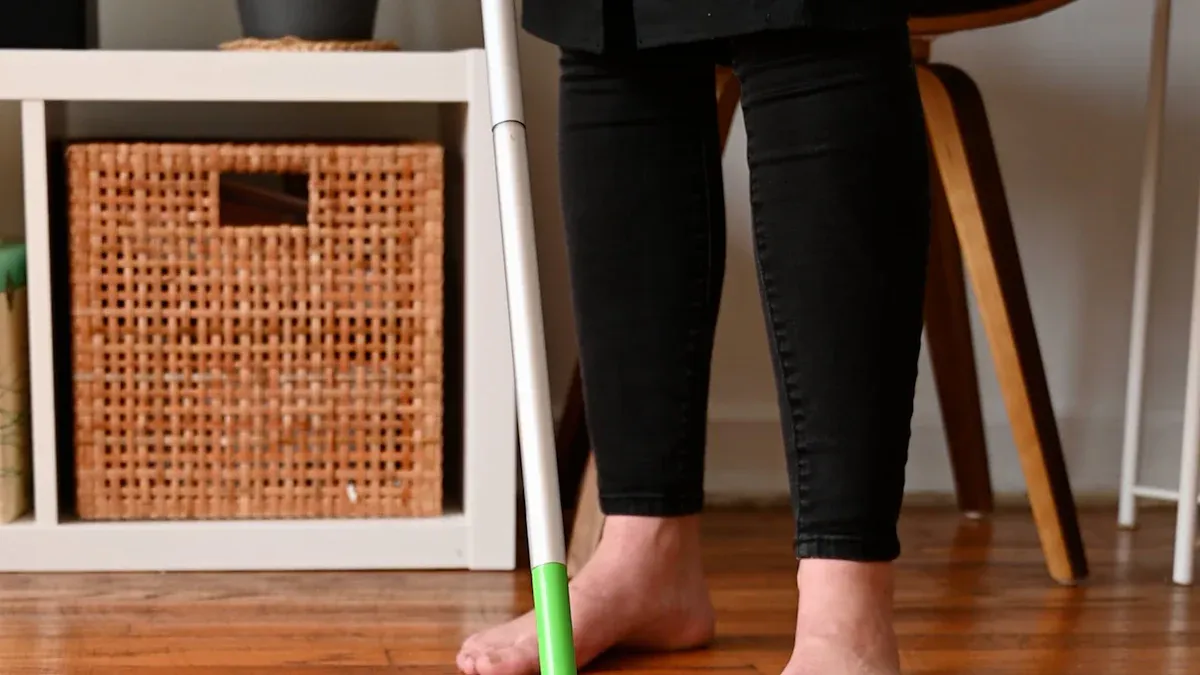
Proper technique maximizes the cleaning power of microfiber mops. Users should always moisten the mop pad with water and a suitable detergent before cleaning. Studies in animal care facilities show that using detergent with microfiber mops significantly reduces bacterial load, especially on textured or anti-slip surfaces. Cleaning each area for at least four minutes ensures thorough soil removal. For best hygiene, staff should use a fresh mop pad for each room or high-risk area, which helps prevent cross-contamination.
Color-coded mop systems further reduce the risk of spreading germs between spaces. For example, blue pads can be reserved for general areas, while red pads are used only in bathrooms. This simple system supports infection control protocols in both homes and professional settings.
Tip: Always launder mop pads at high temperatures (up to 95°C) between uses. High heat kills bacteria and maintains cleaning effectiveness.
| Best Practice | Description |
|---|---|
| Use detergent | Enhances removal of bacteria and dirt, especially on textured floors |
| Single-use per area | Prevents cross-contamination between rooms |
| Color coding | Segregates cleaning tools by area to improve hygiene |
| Sufficient cleaning time | At least 4 minutes per area for optimal results |
| High-temperature laundering | Maintains hygiene and mop performance |
Care, Maintenance, and Maximizing Lifespan
Routine care extends the lifespan and effectiveness of microfiber mops. After each use, users should shake or vacuum the mop head to remove loose debris. Rinsing under warm water and gently squeezing out excess moisture prepares the pad for washing. Machine washing with mild detergent in warm water preserves the fibers. Bleach and fabric softeners should be avoided, as they degrade microfiber and reduce cleaning performance.
Experts recommend air drying mop heads in a well-ventilated area, away from direct sunlight. High heat from dryers or irons can damage the fibers. For stubborn stains, pre-treating with mild detergent and hand washing may be necessary. Storing mop heads in a clean, dry place—either hanging or flat—helps maintain their shape and prevents mold growth.
- Shake or vacuum mop head after use.
- Rinse with warm water and squeeze out excess.
- Machine wash with mild detergent; avoid bleach and fabric softener.
- Air dry in a ventilated area, away from sunlight.
- Pre-treat stains if needed.
- Store in a clean, dry place.
- Avoid high heat exposure.
- Replace mop heads when cleaning performance declines.
Note: Proper laundering is critical. In one hospital, improper washing of microfiber mop heads led to a Clostridium difficile outbreak. Correcting the laundering process and educating staff stopped the spread of infection.
Microfiber Mops vs. Traditional Mops
Microfiber mops consistently outperform traditional cotton string mops in cleaning efficiency and hygiene. Laboratory comparisons reveal that microfiber materials remove more soil and bacteria due to their electrostatic properties and high absorbency. Cotton mops often absorb disinfectant chemicals, reducing their effectiveness and leaving more residue behind. In contrast, microfiber mops trap dirt and microbes within their fibers, resulting in cleaner surfaces.
| Factor | Microfiber Mops | Traditional Cotton Mops |
|---|---|---|
| Bacterial removal | Higher, especially with detergent and proper use | Lower, more cross-contamination risk |
| Water and chemical use | Less required | More required |
| Durability | Up to 500 washes | 50-100 washes |
| Cross-contamination | Lower with single-use and color coding | Higher, especially with shared mop heads |
| Cleaning performance | Superior soil and microbe removal | Less effective, especially on textured floors |
Microfiber mops also dry floors faster, reducing slip hazards. While neither mop type completely eliminates all pathogens, microfiber mops provide better hygiene outcomes and cost savings over time. Specialized training in microfiber use further improves results, making them the preferred choice in healthcare, hospitality, and residential cleaning.
Microfiber mops deliver superior cleaning by removing up to 99% of bacteria, even outperforming cotton mops with disinfectants. Their design reaches deep into surface pores, reducing chemical use and cross-contamination. Laboratory studies confirm that microfiber mops help lower infection risks, making them a smart, cost-effective upgrade for any cleaning routine.
FAQ
How often should someone replace microfiber mop pads?
Most users replace microfiber mop pads after 300–500 washes. Replace pads sooner if cleaning performance drops or visible wear appears.
Can microfiber mops clean all floor types?
Microfiber mops clean hardwood, tile, laminate, and vinyl floors. Avoid using them on unfinished wood or surfaces sensitive to moisture.
Do microfiber mops require special detergents?
- Standard mild detergents work best.
- Avoid bleach and fabric softeners.
- These chemicals damage microfiber fibers and reduce cleaning effectiveness.