

 Send Email
 whatsapp


How often should disposable hospital curtains be changed?

Disposable hospital curtainsrequire immediate replacement if visibly soiled or contaminated with body fluids. Their change frequency also depends on functional risk assessments and specific hospital areas. Recommendations vary from monthly to quarterly, or every 3-6 months, unless soiled. Implementing scheduled changes for a hospital curtain, such assurgical curtains, offers significant cost savings. One study reported over $20,000 annually, a benefit also seen with medical clinic curtains.
Key Takeaways
- Change disposable hospital curtains right away if they look dirty or have body fluids on them. This stops germs from spreading.
- Hospitals change curtains on a schedule, like every few months, depending on how busy the area is. Busy areas need changes more often.
- Changing curtains often helps stop infections in hospitals. It keeps patients safe and the hospital clean.
Immediate Triggers for Disposable Hospital Curtain Changes
Healthcare facilities prioritize patient safety and infection control. Certain situations demand the immediate replacement of disposable hospital curtains, regardless of their scheduled change cycle. These immediate triggers prevent the spread of pathogens and maintain a sterile environment.
Visible Soiling and Contamination of Hospital Curtain
Visible soiling on a hospital curtain necessitates immediate removal and replacement. This includes any obvious signs of dirt, grime, or discoloration. Healthcare professionals must act promptly when they observe such contamination. Studies indicate that visible stains, blood, or other bodily fluids on a hospital curtain are clear indicators for an urgent change. These visible contaminants can harbor harmful microorganisms, posing a direct risk to patients and staff.
Patient Discharge from Isolation or High-Risk Areas
Patient discharge from isolation rooms or other high-risk areas also triggers an immediate curtain change. These areas often house patients with highly transmissible infections. Curtains in these settings can become reservoirs for dangerous pathogens. For instance, an outbreak of Acinetobacter baumannii in a Birmingham ICU identified bedside curtains as a primary source. Similarly, a Group A Streptococcus (GAS) outbreak in an ENT ward found bedside curtains harboring GAS. Research consistently shows numerous human pathogens, including Micrococcus species, Bacillus sp., Escherichia coli, coagulase-negative Staphylococcus, and Staphylococcus aureus, on hospital and clinic curtains. Surveys have reported significant contamination with vancomycin-resistant enterococci (VRE), methicillin-resistant S. aureus (MRSA), and Clostridium difficileon Privacy Curtains, especially in isolation rooms. One study found 92% of privacy curtains in hospital wards and ICUs contaminated with bacteria, many harboring MRSA and VRE. This evidence underscores the critical need for immediate replacement after a patient leaves an isolation or high-risk environment.
Contamination with Body Fluids on Hospital Curtain
Any contamination with body fluids on a hospital curtain requires immediate action. This includes blood, urine, feces, vomit, or respiratory secretions. These fluids can contain a high concentration of infectious agents. Even small, seemingly insignificant splashes can transmit pathogens. Prompt removal and replacement of the contaminated curtain prevent potential cross-contamination to other patients, healthcare workers, or the surrounding environment. This proactive measure is a fundamental aspect of maintaining a hygienic healthcare setting.
Recommended Frequencies for Disposable Hospital Curtain Replacement
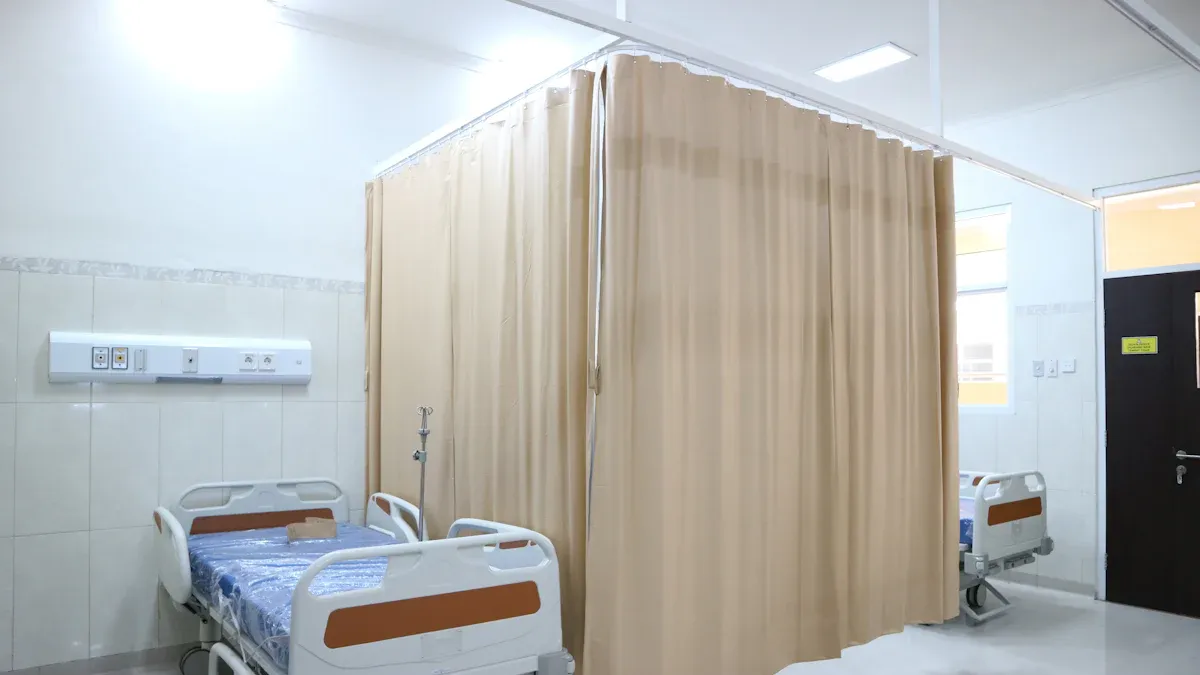
Establishing clear schedules for replacing disposable hospital curtains is crucial for maintaining hygiene and preventing infections. These schedules vary based on the specific environment and patient risk levels within a healthcare facility.
Quarterly Changes for General Hospital Curtains
Healthcare facilities often implement a quarterly change schedule for disposable hospital curtains in general patient wards. This approach balances infection control needs with operational efficiency. For standard patient rooms and general wards, the recommended cleaning frequency for curtains is every one to three months. Disposable hospital curtains are specifically designed for regular replacement, which eliminates the need for laundering. This design simplifies maintenance and supports consistent hygiene practices across the facility.
Monthly or Bimonthly for High-Traffic Hospital Curtains
High-traffic areas, such as emergency departments, require more frequent replacement of disposable hospital curtains. The Centers for Disease Control and Prevention (CDC) advises replacing disposable curtains in patient areas at least monthly. Facilities should change them more frequently if they are visibly soiled, contaminated, or damaged. This recommendation also applies when curtains contact blood, bodily fluids, or other potentially infectious materials, necessitating immediate replacement and cleaning. While specific bimonthly recommendations for high-traffic areas like emergency departments are not explicitly detailed, the general guidance for high-risk areas and the CDC's monthly recommendation suggest a frequent change schedule. This proactive measure helps mitigate the higher risk of pathogen transmission in busy environments.
Every 3-6 Months for Lower-Risk Hospital Curtains
Some areas within a hospital present a lower risk of contamination, allowing for less frequent changes of disposable hospital curtains. These areas might include administrative offices, waiting rooms with minimal direct patient contact, or long-term care units with stable patient populations. In such settings, a replacement schedule of every three to six months may be appropriate. This longer interval recognizes the reduced exposure to pathogens and body fluids. However, staff must remain vigilant and perform immediate changes if any visible soiling or contamination occurs, regardless of the scheduled interval.
Factors Influencing Disposable Hospital Curtain Change Schedules
Several factors guide healthcare facilities in determining the optimal schedule for replacing disposable hospital curtains. These considerations ensure effective infection control and efficient resource management.
Functional Risk Assessment of Hospital Areas
Hospitals conduct functional risk assessments for different areas. This assessment helps determine the likelihood of contamination and pathogen transmission. Areas with high patient turnover or those housing immunocompromised patients require more frequent curtain changes. For example, intensive care units (ICUs) and emergency departments typically have a higher risk profile. Conversely, administrative offices or waiting areas with less direct patient contact may have a lower risk. The risk assessment directly influences the recommended replacement frequency for disposable hospital curtains.
National and International Guidelines for Hospital Curtains
National and international health organizations provide guidance on infection control. However, these guidelines often lack specific recommendations for disposable hospital curtain changes. For instance, the Centers for Disease Control and Prevention (CDC) offers recommendations for environmental infection control in healthcare facilities. These guidelines suggest cleaning walls, blinds, and window curtains in patient-care areas when they appear dusty or soiled. Yet, the CDC's guidelines do not specifically address the changing frequency of disposable hospital curtains. Furthermore, organizations like the CDC or the World Health Organization (WHO) do not offer specific recommendations regarding the use of disposable fabrics versus durable goods.
Hospital-Specific Protocols for Disposable Hospital Curtains
Each hospital develops its own specific protocols for managing disposable curtains. These protocols consider the facility's unique patient population, local infection rates, and available resources. Hospitals often combine general best practices with their internal risk assessments. They also factor in budget constraints and staff workload. Clear, facility-specific protocols ensure consistent application of change schedules. This approach helps maintain a safe and hygienic environment tailored to the hospital's needs.
The Critical Role of Disposable Hospital Curtain Changes in Infection Control
Regularly changing disposable hospital curtains plays a vital role in maintaining a safe healthcare environment. This practice directly impacts infection control efforts, patient well-being, and overall facility hygiene.
Preventing Healthcare-Associated Infections (HAIs)
Disposable hospital curtain changes directly reduce the incidence of healthcare-associated infections (HAIs). Curtains often become contaminated surfaces.
Cubicle curtains are a proven source of bacterial cross contamination (Rutala, 2013). A curtain can be touched by a patient, visitor or a nurse who could have an HAI on his or her hands. This can lead to a transfer of the HAI to another patient, visitor or staff member.
Traditional privacy curtains frequently harbor harmful pathogens like MRSA and C. difficile. These germs can survive on surfaces for extended periods. Patients, visitors, and staff often touch these curtains, creating a direct pathway for pathogen transmission. Disposable curtains combat this by being replaced often, thus stopping the spread of germs and keeping patients safer from infections.
- Reducing Pathogen Transmission: Immediate and scheduled replacement of disposable curtains ensures each new patient has a clean barrier. This minimizes the spread of bacteria.
- Eliminating Cross-Contamination Risks: Disposable curtains are replaced after each patient's discharge or contamination. This prevents pathogen transfer between individuals, effectively breaking the chain of transmission.
Maintaining Environmental Hygiene with Hospital Curtains
Clean hospital curtains significantly contribute to the overall environmental hygiene of a healthcare facility. Unmanaged healthcare curtains can become breeding grounds for harmful bacteria. This contributes significantly to HAIs. Improper cleaning practices risk spreading harmful bacteria, endangering both patients and staff. A dedicated curtain cleaning program provides a cleaner and safer environment. It also frees up valuable staff time and resources.
- Curtains should be regularly cleaned, sanitized, and inspected. This meets the highest infection prevention standards.
- A consistent schedule for changing curtains ensures continuous cleanliness.
Enhancing Patient Safety and Confidence
Visible signs of cleanliness, such as fresh hospital curtains, greatly influence patient perception of safety and quality of care. Patients entering a hospital develop a perception of its cleanliness. This directly influences their view of the care they receive. Patients easily recognize visible cues like stains on linens or dirty surfaces. They form judgments about cleanliness without needing special training. This ability to easily assess visible cleanliness means that such cues, like fresh hospital curtains, significantly impact their overall perception of safety and quality of care. This often outweighs unseen infection control measures.
Practical Implementation for Disposable Hospital Curtain Management
Effective management of disposable hospital curtains requires a structured approach. Facilities must establish clear guidelines and ensure staff adherence. This proactive strategy optimizes hygiene and operational efficiency.
Establishing Clear Protocols for Hospital Curtain Changes
Hospitals must develop clear, written protocols for changing disposable curtains. These protocols should specify when to change curtains, who performs the task, and how to document the process. Clear guidelines prevent confusion and ensure consistent application of infection control measures. They also help staff understand their roles and responsibilities in maintaining a clean environment.
Staff Training and Compliance for Disposable Hospital Curtains
Proper staff training is essential for successful curtain management. Training for disposable products is simplified. It focuses on a straightforward protocol: use once and discard properly. This reduces the likelihood of procedural errors. Staff training should cover several key areas:
- Proper handling techniques prevent cross-contamination during replacement and disposal.
- Correct use of personal protective equipment (PPE) protects staff from exposure.
- Safe methods for removing and disposing of used curtains ensure environmental safety.
- Accurate procedures for installing new curtains maintain sterility. Ongoing training sessions and regular audits of protocols help ensure compliance.
Inventory Management and Cost Considerations for Hospital Curtains
Efficient inventory management helps control costs and ensures curtain availability. Hospitals can implement routine sanitization and replacement schedules. This helps avoid premature disposal and minimizes replacement costs. Several strategies optimize cost-effectiveness:
- Utilizing efficient tracking systems, such as barcoding technology, reduces administrative burden. It also minimizes human error in monitoring curtain rotation.
- Adopting a rental program with features like 'Loss Reserve Protection' covers damaged or missing curtains. This reduces unexpected expenses.
- Leveraging '125% Inventory Flexibility' in rental programs ensures a surplus of curtains. This allows for quick changes and compliance, optimizing inventory management.
Best Practices for Disposable Hospital Curtain Maintenance
Effective management of disposable hospital curtains requires a structured approach. Facilities must establish clear guidelines and ensure staff adherence. This proactive strategy optimizes hygiene and operational efficiency.
Regular Audits and Monitoring of Hospital Curtains
Hospitals conduct regular audits and monitoring of their hospital curtains. These checks ensure compliance with established protocols. They also identify areas needing improvement. Consistent oversight helps maintain high standards of cleanliness. It also prevents potential infection risks.
Documentation of Hospital Curtain Change Dates
Accurate documentation of hospital curtain change dates is crucial. This ensures accountability and compliance. The launderer provides documentation confirming when curtains were changed. This documentation includes information on how the launderer tracks these changes. Leveraging technology minimizes human error in tracking. Electronic tracking systems log change dates. These systems issue reminders and produce audit reports. Consistent tracking creates accountability across environmental services, nursing, and infection prevention teams. It also makes compliance easily auditable for regulatory visits.
Utilizing Technology for Tracking Hospital Curtain Replacements
Technology offers efficient solutions for tracking and managing disposable hospital curtain replacements. The Curtain Change Management System (CCMS) App by ICP Medical helps manage infection control processes. It provides real-time compliance documentation. This system makes tracking curtain changes easier. It quickly identifies curtains that are in or out of compliance.
| Tool/System | Description |
|---|---|
| Grabber tool | Facilitates curtain exchanges in under one minute. It improves operational efficiency without hooks or chains. |
| Changeout Curtain Tracking app | Uses QR codes for real-time tracking of curtain status. It automates compliance management and reporting. |
The CHANGEOUT® CURTAIN TRACKER SOFTWARE is a cloud-based app. It automates compliance with seamless real-time reporting on curtain status. It uses built-in QR codes printed on each curtain panel. This eliminates manual tracking methods like notebooks and spreadsheets.
Timely replacement of disposable hospital curtains is crucial for effective infection control. Healthcare facilities must combine immediate changes for visible soiling with systematic risk assessments and scheduled replacements. This proactive management of curtains forms a key component of comprehensive hygiene strategies, enhancing patient safety.
FAQ
How often must hospitals change disposable curtains immediately?
Hospitals change disposable curtains immediately when visibly soiled or contaminated with body fluids. This prevents pathogen spread and maintains a sterile environment.
What is the typical schedule for changing general hospital curtains?
Hospitals often implement a quarterly change schedule for disposable curtains in general patient wards. This balances infection control with operational efficiency. 🗓️
What critical role do disposable curtain changes play in infection control?
Regular changes of disposable hospital curtains directly reduce healthcare-associated infections. They prevent pathogen transmission and maintain environmental hygiene.