

 Send Email
 whatsapp


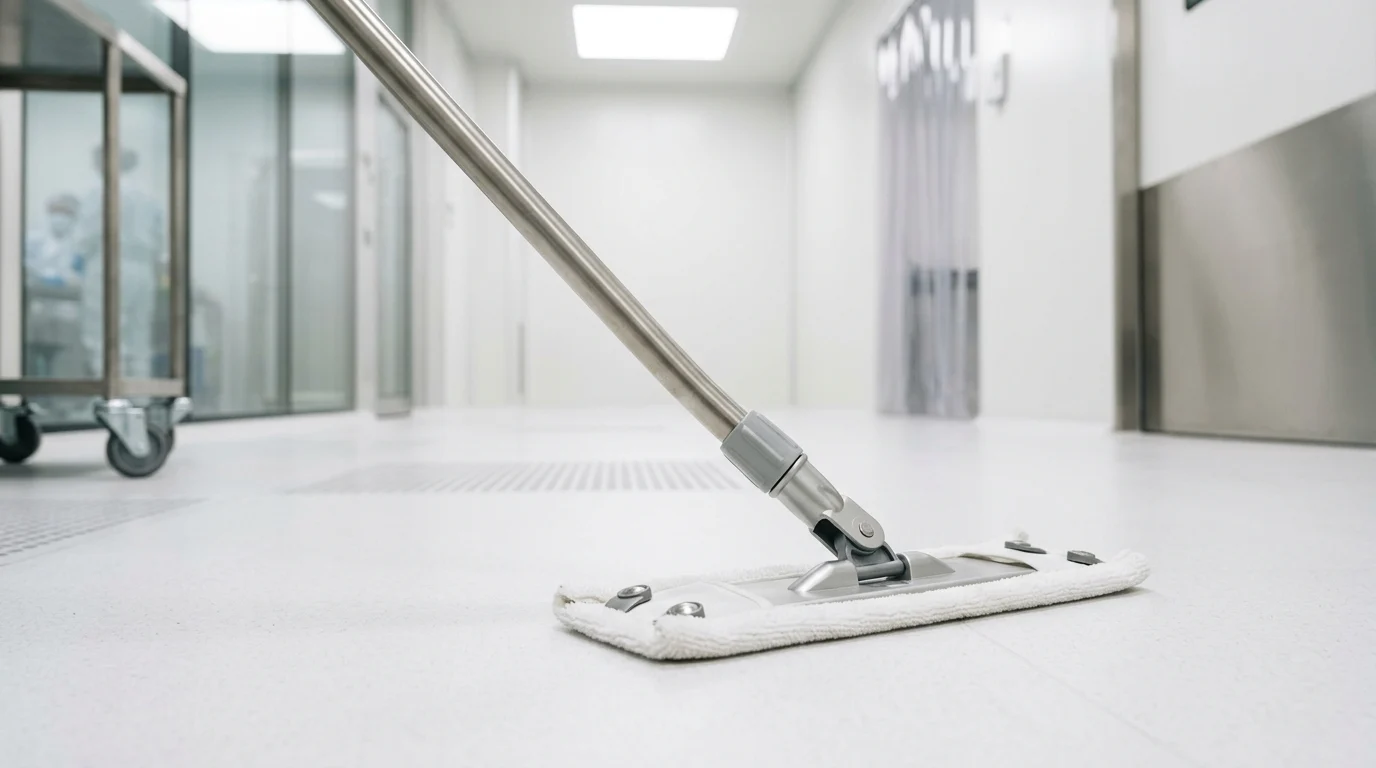
In a controlled environment, a mop is not a simple cleaning tool—it is a potential source of particles, microbes, and chemical residue if chosen poorly. Facilities working under strict contamination limits must evaluate mop materials, sterility, absorbency, shedding behavior, and disinfectant compatibility before adding any product to a cleaning protocol. The right cleanroom mop supports surface decontamination, protects product yield, and helps maintain regulatory expectations in pharmaceutical, semiconductor, medical device, and laboratory settings. This guide explains the key specifications to compare, the contamination risks to avoid, and the practical trade-offs that matter when choosing a mopping system for critical environments.
Why Cleanroom Mop Selection Matters
Maintaining stringent conditions in controlled environments requires specialized protocols, where the physical removal of surface contaminants is paramount. Selecting the appropriate cleaning implement is a critical operational decision that directly impacts product yield, regulatory compliance, and overall facility hygiene.
What Defines a Cleanroom Mop
Standard janitorial equipment is entirely unsuitable for controlled environments due to high shedding rates and chemical incompatibility. A specialized Cleanroom Mop Head is engineered from low-linting materials, typically utilizing continuous filament synthetic yarns or advanced microfiber blends. These implements undergo rigorous manufacturing processes, such as ultrasonic or laser edge-sealing, to prevent the release of loose fibers during mechanical abrasion against floor surfaces.
Furthermore, mops designated for aseptic environments are pre-sterilized via gamma irradiation, often achieving a Sterility Assurance Level (SAL) of 10^-6. To ensure they introduce zero baseline contamination upon entry, these products are packaged in dual-layer poly bags processed under strict ISO Class 4 conditions.
Key Contamination Risks to Control
The primary function of a cleanroom mopping protocol is to mitigate three distinct risk vectors: particulate matter, bioburden, and cross-contamination. Particulate risks involve microscopic debris, often measured down to 0.3 or 0.5 microns, which can settle on critical manufacturing surfaces and cause catastrophic defects in semiconductor or pharmaceutical production.
Bioburden refers to the presence of viable microorganisms. An ineffective mop may inadvertently spread bacteria and spores across surfaces rather than physically removing them, making it difficult for disinfectants to achieve the necessary reduction in microbial populations. Finally, chemical cross-contamination occurs when mop materials degrade upon contact with harsh sporicides or disinfectants, leaving behind polymeric residues that compromise subsequent manufacturing processes.
Cleanroom Mop Specifications to Compare
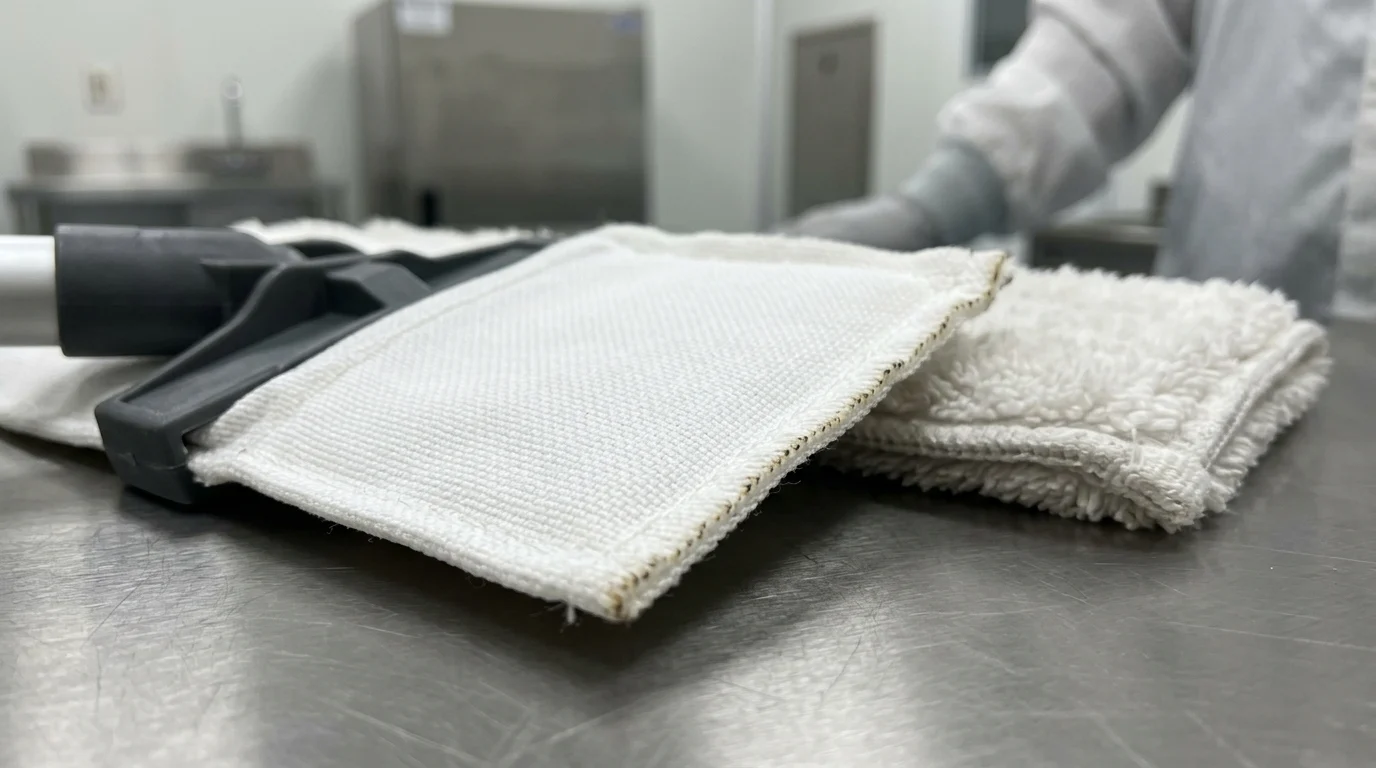
Evaluating different mopping solutions requires a thorough comparison of physical specifications and lifecycle models. Facility managers must balance cleaning efficacy, material durability, and long-term operational costs to determine the most effective strategy for their specific operational environment.
Material, Absorbency, Shedding, and Chemical Compatibility
The core material dictates a mop's performance regarding liquid retention, particle capture, and chemical resistance. Polyester is the industry standard for high-grade environments due to its exceptionally low particle generation and high tensile strength. Conversely, microfiber offers superior mechanical cleaning action, capable of trapping microscopic debris within its split-fiber structure, though it may shed slightly more than standard polyester.
When selecting a Cleanroom Polyester Mop, absorbency capacity is a critical metric; high-performance models can often retain several times their dry weight in disinfectant solutions. However, there is a practical trade-off: highly absorbent mops become heavier when saturated, which can reduce maneuverability and increase operator fatigue. Chemical compatibility is equally vital, as the material must withstand prolonged exposure to aggressive agents like 70% Isopropyl Alcohol (IPA), sodium hypochlorite, and peracetic acid without structural degradation. While foam mops offer exceptional absorbency, they may be inappropriate for areas requiring high abrasion resistance or compatibility with certain harsh solvents.
| Material Type | Particle Shedding Risk | Absorbency Capacity | Chemical Resistance | Optimal Application |
|---|---|---|---|---|
| Knitted Polyester | Extremely Low | Moderate (300%) | Excellent | ISO 3-5, Aseptic |
| Microfiber Blend | Low | High (400%+) | Very Good | ISO 5-8, Heavy Soil |
| Polyurethane Foam | Very Low | Very High (500%) | Moderate | Spill Control |
Disposable vs. Reusable Mop Options
The decision between disposable and reusable implements significantly impacts both the facility's budget and its standard operating procedures. Disposable mops eliminate the risk of cross-contamination entirely, as a fresh, sterile unit is deployed for each cleaning session. This model requires a lower initial capital investment but results in higher recurring consumable costs and increased solid waste generation.
Reusable Mops demand a robust, heavily documented laundering process to ensure they return to their original particulate and sterility baselines. The validation burden for this laundering program can be substantial, requiring regular testing to confirm efficacy. While high-quality reusable mops can withstand numerous commercial wash and sterilization cycles before structural integrity declines, facilities must calculate the total cost of ownership carefully. This includes factoring in laundering fees, validation costs, replacement rates, and inventory management overhead against the upfront purchase price.
How to Choose the Right Cleanroom Mop
Transitioning from specification analysis to procurement requires aligning the physical characteristics of the mopping equipment with the facility's specific regulatory classifications and daily operational workflows.
Match the Mop to Your Cleanroom Class and Workflow
Regulatory standards, particularly ISO 14644-1 classifications, dictate the acceptable limits of airborne particulates and heavily influence equipment selection. For stringent ISO Class 3 and 4 environments, only the lowest-linting polyester mops are permissible, as any fiber shedding is unacceptable. In ISO Class 5 through 8 environments, where tolerances are slightly broader, microfiber and foam-based heads become viable options, offering enhanced ergonomic glide and superior liquid distribution.
Furthermore, the choice of a comprehensive Cleanroom Mopping Systemmust account for the specific workflow—such as the two-bucket or three-bucket method. This ensures that the Mop Head size and absorbency align seamlessly with the wringer mechanisms and the overall square footage of the zones being treated.
Final Buying Checklist
Before finalizing a purchase, facility operators should utilize a comprehensive evaluation checklist to ensure seamless integration. First, verify hardware compatibility; ensure the Cleanroom Floor Mop heads securely attach to existing stainless steel or anodized aluminum handles without creating hard-to-clean crevices that harbor bacteria.
Second, scrutinize documentation by requesting Certificates of Conformance (CoC) and Certificates of Irradiation (CoI) for each product lot to guarantee compliance with internal quality assurance mandates. Third, evaluate ergonomic factors to prevent operator fatigue; a fully saturated mop head and handle assembly should be lightweight enough to facilitate proper overlapping figure-eight mopping techniques without causing strain over extended shifts.
Ultimately, selecting the right cleanroom mop requires navigating inevitable prioritization conflicts.
Key Takeaways
- Select a cleanroom mop made from low-linting materials such as knitted polyester or approved microfiber to reduce particle release during floor cleaning.
- Match the mop to the cleanroom grade and process risk, using sterile gamma-irradiated options for aseptic or critical manufacturing areas.
- Verify chemical compatibility with agents such as 70% IPA, sodium hypochlorite, and peracetic acid before adopting a mop into routine protocols.
- Compare absorbency with operator handling because highly absorbent mop heads can become heavy when saturated and reduce maneuverability.
- Avoid standard janitorial mops because they can shed fibers, spread microorganisms, and introduce residues that compromise contamination control.
Frequently Asked Questions
Why can’t standard janitorial mops be used in a cleanroom?
Standard mops shed fibers and particles, may retain bioburden, and can degrade when exposed to cleanroom disinfectants. Cleanroom mops use low-linting materials and controlled manufacturing to reduce contamination risk.
What material is best for a cleanroom mop?
Knitted polyester is commonly preferred for high-grade cleanrooms because it offers low particle shedding, durability, and chemical resistance. Microfiber may be useful when stronger mechanical particle capture is needed.
When should I choose a sterile cleanroom mop?
Use sterile mops in aseptic or critical environments, such as pharmaceutical, biotech, or medical device areas. Sterile mop heads are often gamma irradiated and packaged to help prevent introducing viable microorganisms.
Which chemicals should a cleanroom mop be compatible with?
A cleanroom mop should tolerate the disinfectants and sporicides used in your facility, such as 70% IPA, sodium hypochlorite, or peracetic acid, without shedding, swelling, breaking down, or leaving residues.
How does mop absorbency affect cleanroom cleaning?
Higher absorbency helps distribute disinfectant evenly and cover more surface area, but an overly saturated mop can become heavy, reduce control, and increase operator fatigue during routine cleaning.