

 Send Email
 whatsapp


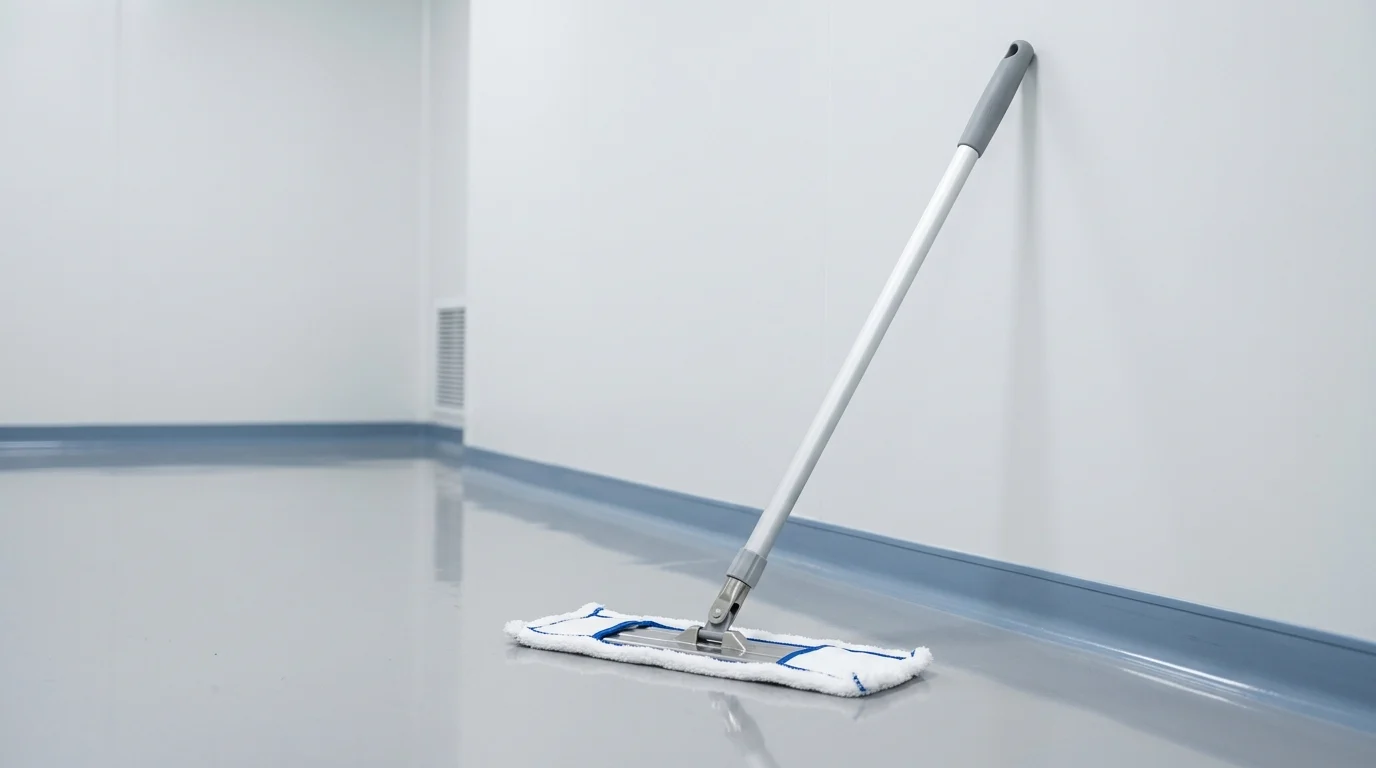
In an ISO-classified facility, a mop is not just a cleaning tool—it is part of the contamination control system. The wrong material, edge construction, or absorbency level can add particles to the environment instead of removing them, putting product quality and regulatory compliance at risk. Selecting the right cleanroom mop requires a practical understanding of ISO class limits, surface type, disinfectant chemistry, particle shedding, and whether disposable or reusable systems make sense for your workflow. This guide breaks down the key specifications procurement teams and facility managers should evaluate so every mopping process supports cleaner surfaces, consistent disinfectant coverage, and controlled particulate levels.
Defining Cleanroom Mops for ISO-Classified Environments
Maintaining strict environmental control within an ISO-classified facility requires rigorous surface decontamination protocols. A specialized Cleanroom Mop serves as the primary tool for applying disinfectants and mechanically removing particulate matter from floors, walls, and ceilings. Unlike standard janitorial equipment, these tools are engineered to prevent the introduction of new contaminants while effectively capturing and removing viable and non-viable particles.
Cleanroom Mop Materials and Construction
The base materials used in a Cleanroom Microfiber Mopor standard polyester mop determine its performance in a sterile environment. Manufacturers typically utilize continuous filament polyester, polyurethane foam, or highly refined microfiber blends. Continuous filament construction is critical because it prevents the shedding of short fibers under mechanical stress. Advanced microfiber variations often feature ultra-fine fibers ranging from 0.3 to 1.0 denier, maximizing the surface area available to trap sub-micron particles and residues without relying solely on chemical solvents. Additionally, premium Mop Heads utilize ultrasonic or laser-sealed edges rather than stitched borders, effectively eliminating the release of loose threads during rigorous scrubbing operations.
ISO Class, Contamination Risk, and Surface Compatibility
The selection of a mopping system must directly align with the facility's ISO 14644-1 classification. For instance, an ISO Class 3 environment, which permits a maximum of 1,000 particles ≥ 0.1 μm per cubic meter, demands ultra-low linting materials such as laundered continuous filament polyester. In contrast, ISO Class 7 or 8 environments, which tolerate higher particulate thresholds, may safely utilize non-woven polyester or specialized sponge mops. Surface compatibility also plays a critical role: abrasive anti-slip flooring requires highly durable mop fabrics that resist tearing, whereas smooth epoxy flooring benefits from the high-contact surface area of microfiber flat mops to ensure uniform disinfectant coverage.
Comparing Cleanroom Mop Specifications Before Procurement
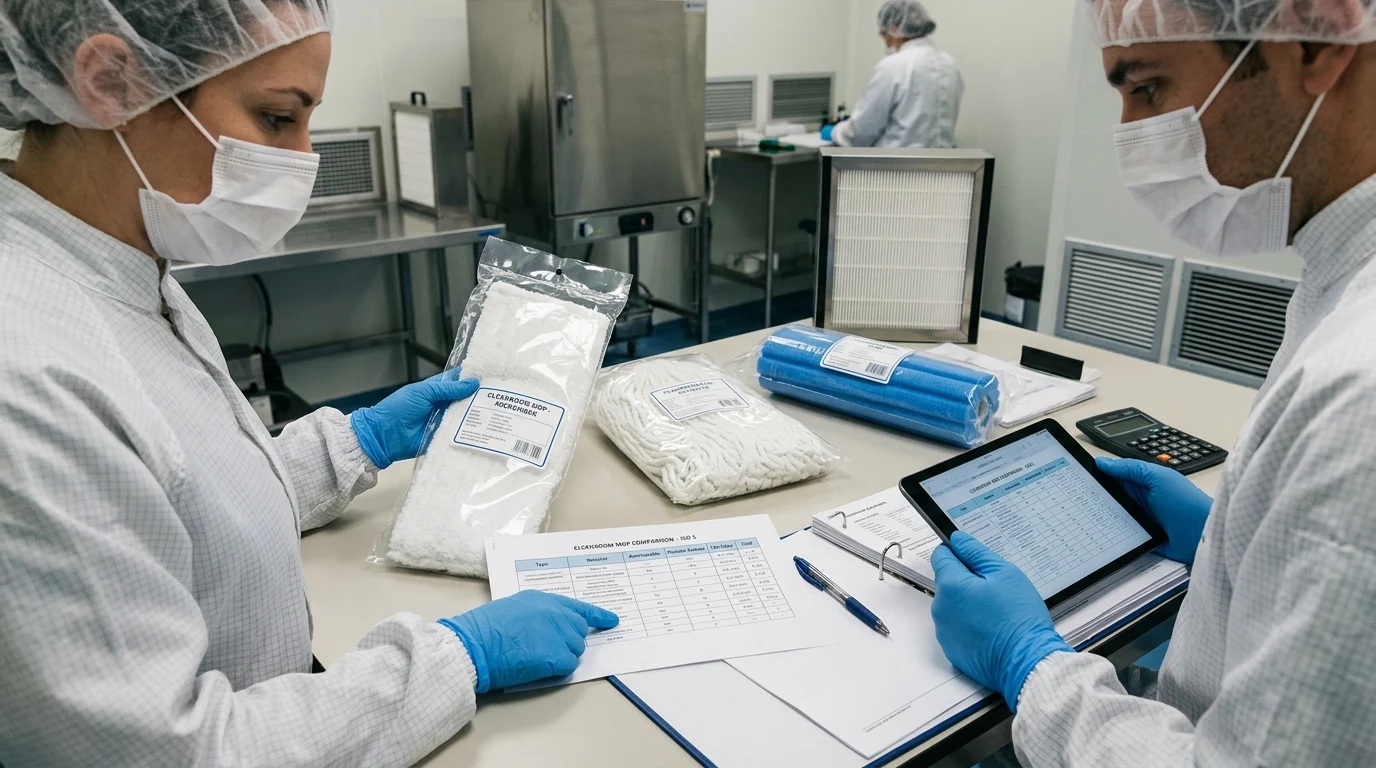
Procurement teams and facility managers must evaluate a range of specifications before authorizing a Cleanroom Floor Mop for facility use. Beyond basic material composition, technical parameters such as liquid retention, chemical resistance, and the lifecycle classification of the mop head determine both its operational efficacy and long-term cost-effectiveness.
Particle Shedding, Absorbency, and Chemical Compatibility
Effective decontamination relies on a mop's ability to hold and distribute aggressive cleaning agents without degrading. cleanroom mops must exhibit robust chemical compatibility with common disinfectants, including 70% isopropyl alcohol (IPA), sodium hypochlorite (bleach), and quaternary ammonium compounds. Fluid absorbency is another critical metric;high-performance mop heads are engineered to achieve absorbency rates between 300% and 400% of their dry weight, ensuring sufficient dwell time for disinfectants on critical surfaces.
| Material Type | Particle Shedding Risk | Absorbency Capacity | Chemical Resistance | Recommended ISO Class |
|---|---|---|---|---|
| Laundered Polyester | Very Low | Moderate (approx. 300%) | Excellent | ISO 3 - ISO 5 |
| Microfiber Blend | Low | High (approx. 400%) | Good | ISO 5 - ISO 7 |
| Polyurethane Sponge | Moderate | Very High (>500%) | Moderate | ISO 7 - ISO 8 |
Disposable vs. Reusable Cleanroom Mop Evaluation
The decision between disposable and reusable mop heads fundamentally impacts facility logistics and risk management. Reusable mops offer a lower total cost of ownership over time but require a stringent, validated laundering and sterilization process. For sterile pharmaceutical manufacturing, reusable mops are typically subjected to gamma irradiation at doses between 25 and 40 kGy to achieve a guaranteed Sterility Assurance Level (SAL) of 10^-6. Conversely, disposable mop heads eliminate the risk of cross-contamination and the administrative burden of tracking wash cycles. While disposables present a higher recurring unit cost, they are increasingly preferred in highly critical zones where the financial impact of a contamination event far outweighs the cost of single-use consumables.
Selecting, Sourcing, and Validating Cleanroom Mops
Integrating a new Cleanroom Mopping System into an established Standard Operating Procedure (SOP) requires a systematic approach to vendor qualification and product validation. Sourcing the appropriate equipment is not merely a purchasing transaction; it is a critical quality assurance milestone that directly impacts regulatory compliance and cleanroom integrity.
Procurement and Quality Selection Steps
Identifying a reliable Cleanroom Mop Supplier involves auditing their manufacturing environment and supply chain resilience. High-quality cleanroom mops should be manufactured and packaged in an ISO-classified environment (typically ISO Class 4 or 5) to prevent baseline contamination. Procurement teams must also negotiate logistical parameters, as specialized sterile mops often carry Minimum Order Quantities (MOQs) ranging from 100 to 500 units per case. Establishing continuous supply agreements, coupled with safety stock requirements, mitigates the risk of stockouts that could halt production lines or compromise daily sanitization schedules.
Compliance Documentation and Validation Requirements
Regulatory bodies require comprehensive documentation to prove that a cleaning tool will not compromise the controlled environment. Every batch of cleanroom mops must be accompanied by a Certificate of Conformance (CoC) verifying material specifications and particle counts. For sterile environments, a Certificate of Irradiation (CoI) is mandatory to confirm the exact dosimetric range applied during sterilization. Additionally, in pharmaceutical or biologics manufacturing, mops must be validated for low endotoxin levels, with stringent thresholds frequently set below 20 EU (Endotoxin Units) per device. Validation protocols must also include in-situ testing to confirm that the chosen mop effectively applies disinfectants without leaving unacceptable residue levels on facility surfaces.
Key Takeaways
- Match the mop material to the ISO 14644-1 classification, using ultra-low-lint laundered polyester for stricter ISO Class 3 to ISO Class 5 areas.
- Choose continuous filament polyester or sealed-edge microfiber designs to reduce fiber shedding during repeated scrubbing and disinfectant application.
- Verify chemical compatibility with 70% IPA, bleach, and quaternary ammonium compounds before approving a mop for cleanroom use.
- Select mop absorbency based on disinfectant coverage needs, with many high-performance mop heads retaining about 300% to 400% of their dry weight.
- Consider floor texture when choosing a mop, as abrasive anti-slip surfaces require durable fabrics while smooth epoxy floors benefit from microfiber flat mops.
Frequently Asked Questions
What makes a cleanroom mop different from a standard mop?
A cleanroom mop is engineered to minimize particle shedding while removing contamination from floors, walls, and ceilings. It typically uses low-lint materials, sealed edges, and cleanroom-compatible construction unlike standard janitorial mops.
Which mop material is best for ISO Class 3 to ISO Class 5 areas?
Laundered continuous filament polyester is often preferred for ISO Class 3 to ISO Class 5 environments because it has very low particle shedding and strong chemical resistance.
Are microfiber mops suitable for cleanrooms?
Yes. Cleanroom microfiber mops can be suitable, especially for ISO Class 5 to ISO Class 7 areas. Their ultra-fine fibers increase surface contact and help capture fine particles while supporting even disinfectant coverage.
What disinfectants should a cleanroom mop be compatible with?
A cleanroom mop should tolerate common disinfectants such as 70% isopropyl alcohol, sodium hypochlorite, and quaternary ammonium compounds without degrading, shedding, or losing performance.
How important is absorbency when selecting a cleanroom mop?
Absorbency is critical because the mop must hold and distribute enough disinfectant to support proper surface coverage and dwell time. Many high-performance cleanroom mop heads absorb about 300% to 400% of their dry weight.