

 Send Email
 whatsapp


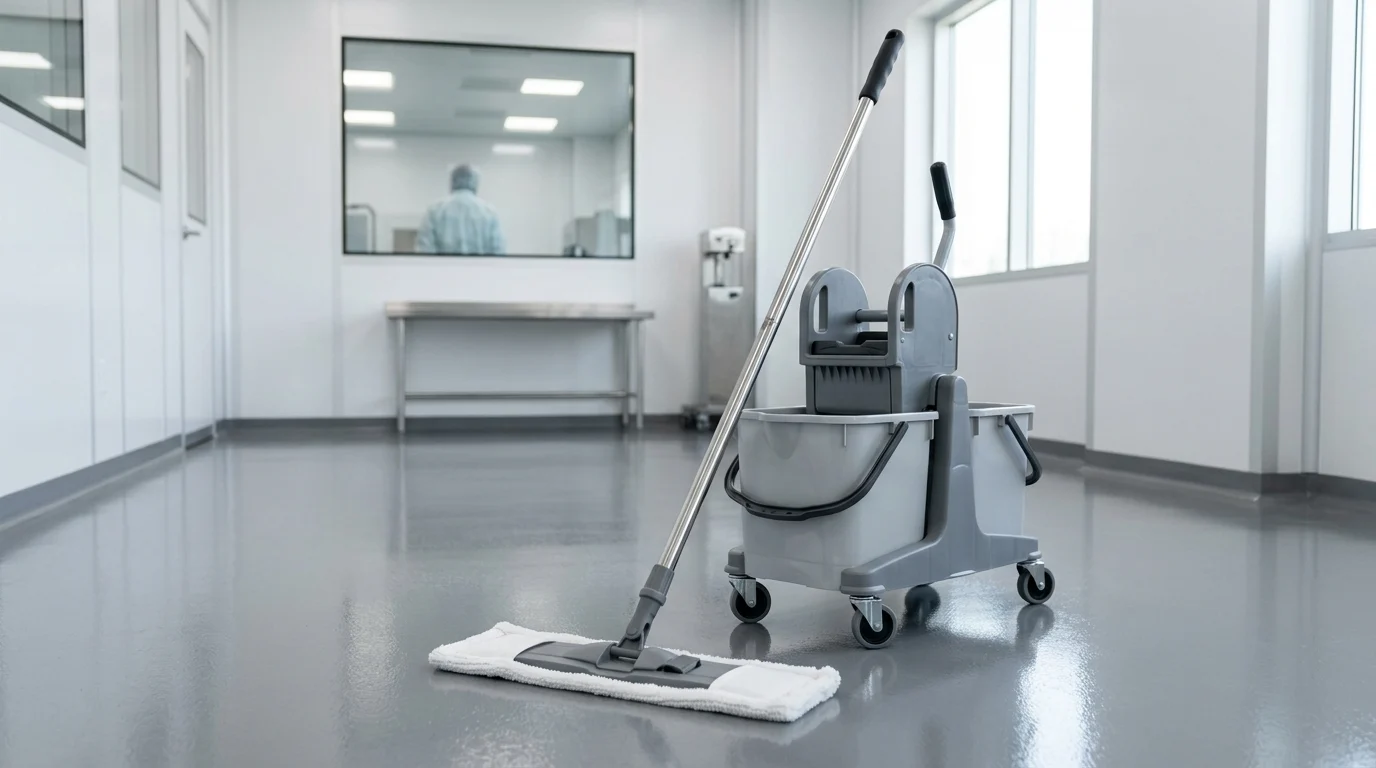
For wholesale buyers, a cleanroom mop is not just another janitorial SKU—it is a controlled contamination-risk item that can affect audits, product yield, and customer trust. Facilities operating under ISO classifications, GMP expectations, or sector-specific standards need mops that remove particles and bioburden without shedding fibers, reacting with disinfectants, or spreading moisture between zones. This article explains how procurement teams can evaluate materials, sterility, chemical compatibility, sourcing consistency, and lifecycle cost when selecting cleanroom mopping systems. With the right criteria, distributors can reduce compliance exposure, rationalize inventory, and supply products that support validated cleaning programs across pharmaceutical, semiconductor, aerospace, and food-processing environments.
Cleanroom Mop Contamination Risks
Maintaining an ISO-certified environment requires continuous mitigation of particulate and microbial threats. While HEPA and ULPA filtration systems govern airborne particulates, surface-level control relies on strict physical removal. For distributors and volume buyers, supplying the appropriate cleaning hardware is a matter of mitigating buyer-level risk and ensuring regulatory compliance. Acceptable mop specifications differ significantly by industry (pharmaceutical, semiconductor, aerospace, food processing) and region (FDA, EMA, ISO). Consequently, procurement selections must align with facility-specific standard operating procedures (SOPs) and local Good Manufacturing Practice (GMP) expectations. Furthermore, the mop is only one component of a validated cleaning program; operator training, mop sequencing (cleaning from cleanest to dirtiest areas), saturation limits, disinfectant rotation, validated dwell times, and environmental monitoring are equally essential alongside equipment choice.
Recent guideline updates, such as EU GMP Annex 1, emphasize comprehensive contamination control. Every item introduced into the sterile core must be evaluated for its potential to introduce bioburden or shed particulates. The tools utilized to sanitize surfaces must meet exacting specifications to prevent yield losses or failed environmental audits, making SKU rationalization critical for wholesale suppliers.
Why Cleanroom Mops Are Critical Control Items
A specialized cleanroom cleaning tool functions as a critical control item within a facility's contamination control strategy. Standard commercial mops utilizing cotton or standard synthetic blends can shed significant particulate matter—sometimes cited in illustrative tests as exceeding 10,000 particles (≥0.5 µm) per square meter during use. Releasing high volumes of particulates can immediately violate the stringent thresholds of ISO cleanroom classes (e.g., ISO Class 5) and GMP grades (e.g., Grade A/B).
The mechanical action of wiping surfaces inherently generates friction, making the structural integrity of the mop substrate a primary defense mechanism against self-generated contamination. If a mop head lacks sealed edges or continuous-filament construction, the abrasive interaction with floor textures will shear microfibers directly into the cleanroom air stream, transforming a cleaning tool into an active contamination source.
Key Contamination Pathways to Assess
Evaluating contamination pathways requires examining both physical degradation and chemical interactions over the tool's lifecycle. When a floor mopis repeatedly exposed to aggressive disinfectants like sporicides, 70% isopropyl alcohol (IPA), or sodium hypochlorite, inferior materials suffer accelerated binder breakdown. This chemical degradation creates a secondary contamination pathway where degraded fibers and chemical residues are dispersed across the facility. For example, degraded fibers can easily transfer from a Mop Head to a bucket, contaminating the cleaning solution.
Furthermore, inadequate fluid release and improper wringing mechanics present severe bioburden risks. If a mop retains excessive moisture due to inefficient wringing systems, or fails to properly capture microbial contaminants, it risks spreading viable particles across different zones (e.g., dragging contaminants from a lower-grade gowning room into a critical processing area). Additionally, poorly designed mop handles and frames can harbor residues in crevices. It is essential to assess how the mop integrates with dual-bucket or triple-bucket systems to ensure that cross-contamination between dirty and clean reservoirs remains at an absolute minimum.
Cleanroom Mop Specifications to Compare
Transitioning from risk assessment to wholesale procurement requires a rigorous comparison of material specifications and manufacturing standards. Analyzing the physical characteristics of various mop substrates ensures exact alignment with specific cleanroom classifications (ranging from ISO Class 3 to ISO Class 8) and end-user SOPs. Understanding the trade-offs between absorbency, chemical compatibility, and linting profiles is essential for optimizing cleaning efficacy, SKU rationalization, and budgetary constraints.
Low-Lint Materials and Compatibility
The material composition of the mop head dictates its particle generation rate and fluid retention capacity. Continuous-filament polyester and ultra-fine microfiber are the prevailing industry standards for low-linting performance. Laundered polyester, constructed with ultrasonically or laser-sealed edges, prevents edge-fraying under heavy use. Conversely, microfiber offers superior capillary action, allowing for the highly uniform application of disinfectants necessary for achieving designated contact times.
Note: The values below are qualitative comparisons and illustrative examples; actual performance varies by product and supplier, and should be verified via independent ASTM test methods.
| Material Substrate | Relative Particle Generation | Illustrative Liquid Absorbency | Chemical Resistance Profile |
|---|---|---|---|
| Laundered Continuous Polyester | Lowest | Moderate (e.g., ~300% of dry weight) | Excellent |
| Microfiber (Polyester/Nylon Blend) | Low | High (e.g., ~450% of dry weight) | Good |
| Polyurethane (PU) Sponge | Moderate | Very High (e.g., ~600% of dry weight) | Moderate |
Selecting the correct substrate depends heavily on the target environment. ISO Class 3 and 4 facilities commonly specify laundered knitted polyester due to its ultra-low particulate profile, whereas ISO Class 7 and 8 environments often leverage microfiber for its enhanced mechanical cleaning efficiency. Ultimately, facility SOPs and validated supplier data dictate the final selection.
Sterility, Packaging, and Lot Traceability
For aseptic manufacturing and pharmaceutical compounding, sterility assurance levels (SAL) are strictly non-negotiable. Mops designated for ISO Class 4 or 5 cleanrooms must undergo validated gamma irradiation—typically dosed in illustrative ranges such as 25 to 40 kGy, depending entirely on supplier dose mapping and validation—to achieve a 10^-6 SAL. A 10^-6 SAL represents a one-in-a-million probability of a viable microorganism surviving, rather than the absolute eradication of all bioburden.
It is common practice to verify that sterile products arrive double- or triple-bagged in vacuum-sealed packaging compatible with facility disinfectants (such as IPA) to facilitate safe transfer through pass-through chambers. Furthermore, strict lot traceability through readily available Certificates of Sterility (CoS) and Certificates of Conformance (CoC) is mandatory. Without these documents tied to specific manufacturing lots, facilities cannot satisfy FDA, EMA, or ISO auditor requirements.
Cleanroom Mop System Selection
Establishing a resilient supply chain for cleanroom consumables requires wholesale buyers to strategically align with manufacturing partners.
Key Takeaways
- Match cleanroom mop specifications to the end user’s ISO class, GMP grade, industry requirements, and facility SOPs before purchasing in volume.
- Prioritize low-lint mop heads with sealed edges and continuous-filament construction to reduce particle shedding during surface friction.
- Verify chemical compatibility with common disinfectants such as sporicides, 70% IPA, and sodium hypochlorite to prevent substrate breakdown.
- Evaluate sterility, packaging, documentation, and traceability requirements for pharmaceutical, aseptic, and other high-risk cleanroom environments.
- Use SKU rationalization to simplify distributor inventory while reducing the risk of customers selecting an unvalidated or inappropriate mop system.
- Consider lifecycle cost, not just unit price, because premature degradation can increase contamination risk, replacement frequency, and compliance exposure.
Frequently Asked Questions
Why are standard commercial mops unsuitable for cleanrooms?
Standard cotton or synthetic mops can shed high levels of particles and fibers during use. In ISO-classified or GMP-regulated areas, this can turn the mop into a contamination source and increase audit, yield, or product safety risks.
What materials should wholesale buyers prioritize in cleanroom mops?
Buyers should look for low-lint materials such as continuous-filament polyester, microfiber, or other cleanroom-compatible substrates. Sealed edges, strong construction, and chemical resistance are important to reduce particle shedding during repeated use.
How does disinfectant compatibility affect mop selection?
cleanroom mops must tolerate repeated exposure to agents such as sporicides, 70% IPA, and sodium hypochlorite. Poor compatibility can cause fiber degradation, residue transfer, and reduced cleaning performance over the mop’s lifecycle.
Should wholesale buyers source sterile cleanroom mops?
Sterile mops may be required for aseptic, pharmaceutical, or high-grade cleanroom areas, depending on facility SOPs and GMP expectations. Buyers should confirm sterility needs, documentation, and packaging requirements with end users before purchasing.
How can SKU rationalization reduce contamination risk?
Limiting mop SKUs to validated, facility-appropriate options reduces misuse, simplifies training, and supports consistent compliance. It also helps distributors manage inventory while ensuring customers receive products aligned with their cleanroom class and application.