

 Send Email
 whatsapp


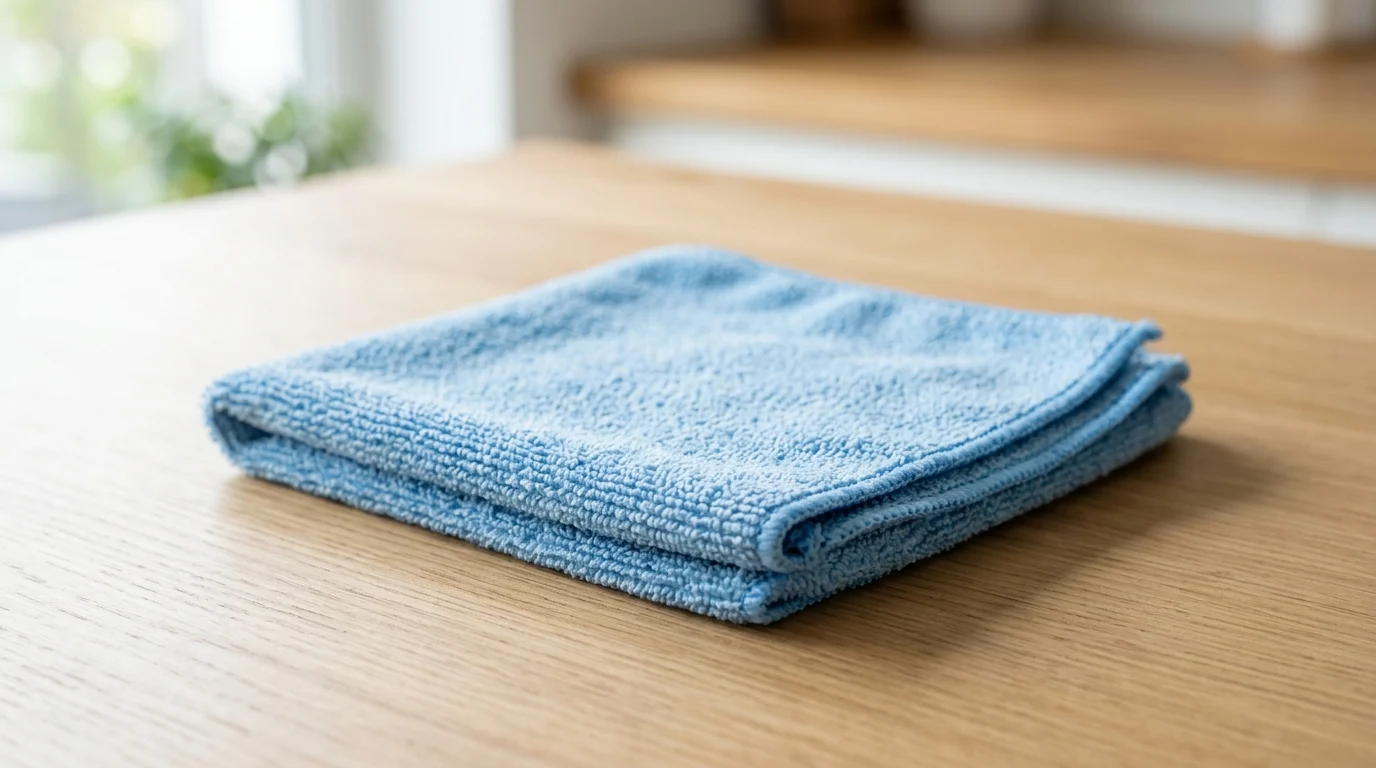
Facility maintenance teams are under pressure to keep buildings visibly clean, hygienic, and cost-efficient without increasing chemical use or disposable waste. Microfiber has become a practical tool in that shift because its split synthetic fibers can capture soil and moisture mechanically, often reducing the need for aggressive cleaning agents. But not every cloth performs the same. Specifications such as GSM, polyester-polyamide blend, weave, and edge quality determine whether a cloth removes contamination efficiently or simply spreads it. This article explains how microfiber supports more sustainable maintenance, where low-quality products create operational risk, and what procurement teams should evaluate before standardizing cloths across commercial facilities.
Why Microfiber Cleaning Cloths Matter for Facilities
Modern facility management demands maintenance protocols that balance rigorous hygiene standards with environmental sustainability. Traditional cotton rags and paper towels often fall short, generating excessive waste and relying heavily on harsh chemical solvents to achieve acceptable cleanliness levels.
Integrating a high-quality microfiber cleaning cloth into daily operations changes this approach. By leveraging advanced synthetic textile engineering, commercial facilities can achieve superior sanitation metrics while significantly reducing their ecological footprint and recurring consumable costs.
How microfiber reduces chemical use
The structural design of microfiber allows for mechanical cleaning rather than chemical reliance. During the manufacturing process, synthetic fibers are split to create millions of microscopic hooks and crevices. This unique split-fiber structure relies on mechanical trapping and capillary action to physically lift and hold dust, dirt, and pathogens from surfaces.
Consequently, commercial-grade microfiber can significantly reduce surface bacteria using only water. However, this hygienic result is not automatic; effective pathogen removal depends on utilizing cloths with adequate GSM and applying proper folding and rotation techniques (such as the eight-fold method) to ensure a clean cloth surface is always in use. When implemented correctly, facility managers frequently report a substantial reduction in chemical cleaning agent consumption. This decrease not only lowers procurement expenses but also minimizes volatile organic compound (VOC) emissions, improving overall indoor air quality for building occupants.
What risks come from low-quality cloths
Procuring substandard textiles forces recleaning and increases labor hours for maintenance teams. Low-grade options often lack the critical split-fiber construction, meaning they merely push dirt and moisture across surfaces rather than absorbing them. This mechanical failure drastically increases the risk of cross-contamination in critical environments like healthcare facilities and food preparation zones.
Furthermore, inferior manufacturing leads to rapid degradation. While a premium cloth is designed to withstand hundreds of industrial wash cycles, low-quality alternatives may lose their structural integrity after a fraction of that time. Premature failure of low-grade cloths forces higher replacement rates, negating initial cost savings and contributing to landfill waste.
It is also vital to acknowledge the universal environmental trade-offs of all microfiber products, regardless of quality. As synthetic textiles, both premium and economy cloths shed microplastics during laundering—which can bypass standard wastewater treatment—and complicate recycling streams since blended plastics are difficult to process at the end of their lifecycle. While premium cloths mitigate some waste through longevity, these inherent synthetic-shedding impacts must be weighed against the environmental benefits of reduced chemical use.
Key Microfiber Cloth Specifications
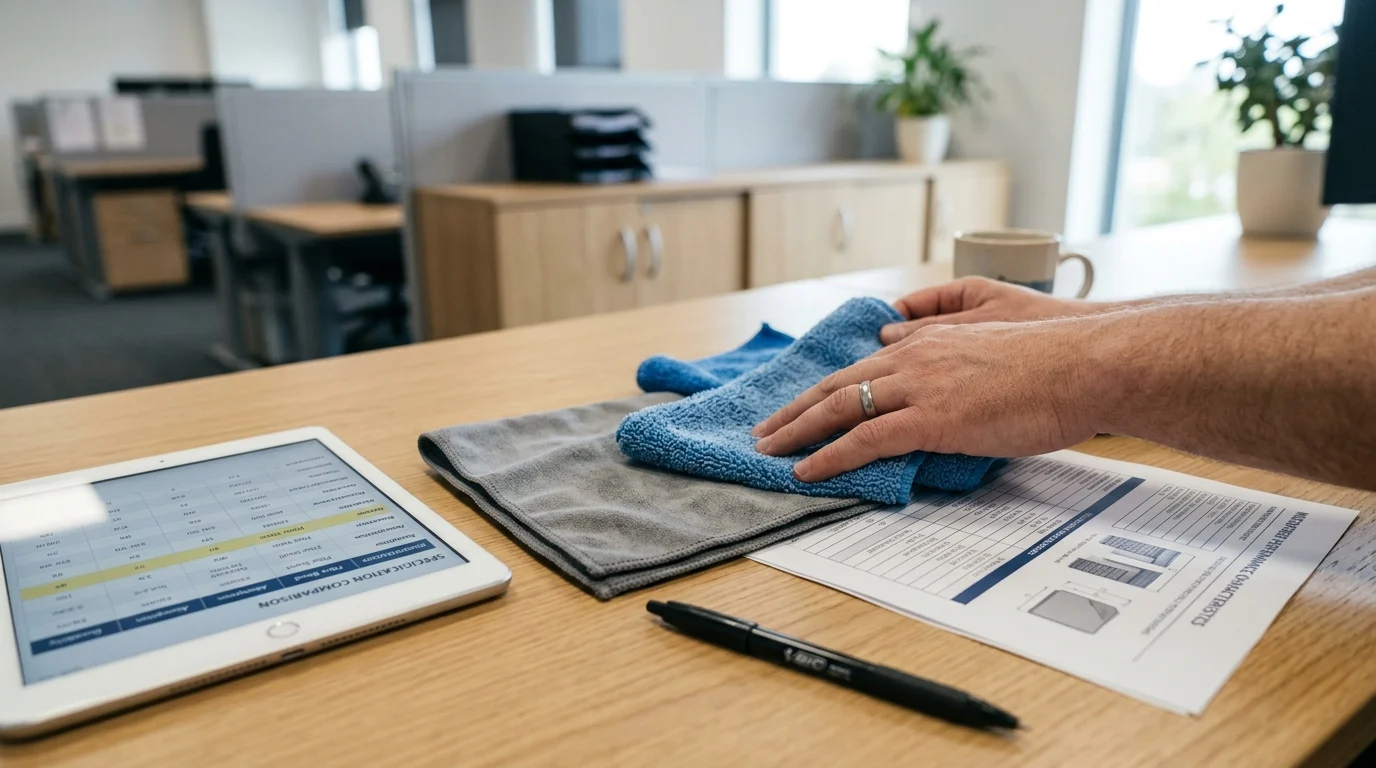
Selecting the appropriate reusable microfiber cleaning cloth requires a thorough understanding of textile specifications. Facility procurement teams must evaluate multiple technical parameters to ensure the chosen products align with specific maintenance tasks and durability expectations.
How to assess blend, GSM, weave, and edges
The performance of a microfiber textile is dictated by its blend, weight, weave, and edge construction. The blend ratio indicates the proportion of polyester (for scrubbing) to polyamide (for absorbency). A standard commercial blend is typically 80/20, while premium high-absorbency textiles utilize a 70/30 ratio.
Weight is measured in Grams per Square Meter (GSM). Cloths under 250 GSM are thin and suited for light dusting, whereas 300 to 350 GSM represents the sweet spot for general facility maintenance. Weave types also dictate functionality; a terry weave offers versatile multi-surface cleaning, while a waffle weave excels at moisture retention and glass polishing. Finally, edge construction determines longevity. Overlocked stitched edges prevent unraveling during rigorous use, whereas ultrasonically cut edgeless designs are preferred for scratch-sensitive surfaces.
What to include in a cloth comparison table
To streamline procurement, facility managers should utilize a standardized specification matrix. This ensures that purchasing decisions are based on quantifiable metrics rather than subjective marketing claims. By matching the GSM and blend to specific cleaning zones, teams can prevent the waste of using heavy-duty cloths for light office dusting, while ensuring high-absorbency options are available for spill recovery.
| Specification Tier | Blend (Poly/PA) | GSM Range | Ideal Facility Application | Estimated Wash Cycle Life |
|---|---|---|---|---|
| Economy / Light Duty | 90/10 | 200 - 250 | Light dusting, low-traffic wiping | Dozens of washes |
| Standard Commercial | 80/20 | 280 - 320 | General surface cleaning, glass | Hundreds of washes |
| Premium / Heavy-Duty | 70/30 | 350 - 400+ | Spill recovery, heavy scrubbing | Maximum wash cycles |
Rather than simply reviewing these specifications during procurement, facility leaders should use this framework to audit current inventory and optimize daily operations. By physically separating and storing cloths by GSM tier in supply closets, staff can easily grab the correct tool for the task. It is important to note that the estimated wash cycle life is only a baseline. Operational realities—such as embedded abrasive soils, accidental bleach exposure, and high-heat drying—can destroy fibers long before they reach this threshold. Consequently, routine visual inspection should always guide cloth replacement and retirement criteria.
Implementation and Sourcing Best Practices
Successful deployment of a wholesale microfiber cleaning cloth program extends beyond initial procurement. It requires strict adherence to operational protocols, standardized laundering procedures, and strategic supplier partnerships to maximize the return on investment.
How to manage color coding and laundering
A fundamental best practice in commercial cleaning is the implementation of a strict color-coding system to prevent cross-contamination between distinct facility zones. While color-coding conventions vary by region, facility type, and local regulation, a common four-color methodology often reserves red for high-risk sanitary areas like restrooms, yellow for sinks and washrooms, green for food preparation and cafeteria spaces, and blue for general office areas and glass. Facility managers should always verify local compliance standards rather than assuming one system is universal.
Equally critical is the laundering protocol. Microfiber demands specific care to maintain its structural integrity. Textiles must be washed at temperatures not exceeding 140°F (60°C) to prevent melting the synthetic fibers.
Key Takeaways
- Choose split-fiber Microfiber Cloths for facility cleaning because they mechanically trap dust, moisture, and microbes instead of relying mainly on chemicals.
- Train staff to use folding and rotation methods, such as the eight-fold technique, so each cleaning pass uses a fresh cloth surface.
- Evaluate blend ratio, GSM, weave, and edge construction before procurement to match cloth performance with specific cleaning tasks.
- Avoid low-grade microfiber that smears dirt or degrades early, because it can increase recleaning, labor hours, replacement frequency, and landfill waste.
- Account for microfiber’s sustainability trade-offs by selecting durable cloths that last through hundreds of industrial wash cycles while managing laundering to reduce microplastic shedding.
- Use quality reusable microfiber to cut paper towel waste, lower chemical purchasing needs, and support better indoor air quality through reduced VOC exposure.
Frequently Asked Questions
How does a microfiber cleaning cloth reduce chemical use?
Split microfiber creates microscopic hooks and channels that lift and hold soil, moisture, and microbes mechanically. With correct use, many routine surfaces can be cleaned effectively with water, reducing reliance on harsh chemical agents.
What makes commercial-grade microfiber different from low-quality cloths?
Commercial-grade microfiber typically has better split-fiber construction, stronger edges, suitable GSM, and longer wash-cycle durability. Low-quality cloths may smear soil, fail quickly, and increase labor, replacement costs, and contamination risk.
Why does GSM matter when choosing microfiber cloths?
GSM indicates cloth density and weight. Higher or task-appropriate GSM can improve absorbency, durability, and surface coverage, while the wrong GSM may reduce cleaning performance or make the cloth inefficient for specific maintenance tasks.
Can microfiber cleaning cloths remove bacteria with only water?
Yes, quality microfiber can reduce surface bacteria using water, but results depend on proper cloth quality, adequate GSM, and correct procedures such as folding, rotating, and replacing soiled cloths during cleaning.
What is the eight-fold method for microfiber cloths?
The eight-fold method folds a cloth into multiple clean panels. Staff rotate to a fresh panel as they clean, helping prevent cross-contamination and extending usable cleaning surface before laundering.