

 Send Email
 whatsapp


Introduction
Choosing between microfiber and cotton affects more than texture or cost; it changes how effectively a cloth lifts dust, absorbs liquid, and removes oils and microbes from surfaces. This comparison explains the material differences that drive cleaning performance, including fiber structure, absorption behavior, and particle capture. You’ll see where microfiber typically outperforms cotton, where cotton may still be suitable, and how the choice influences chemical use, labor efficiency, and hygiene results. With that context, the rest of the article breaks down which cloth cleans better in real maintenance and household settings.
Why Microfiber Cloth Performance Matters
Commercial cleaning protocols increasingly rely on engineered textiles rather than traditional natural fibers to meet stringent hygiene standards. The performance difference between materials directly impacts labor efficiency, chemical consumption, and overall facility sanitation profiles.
As environmental and occupational health regulations tighten, understanding the structural mechanics behind these textiles is essential for optimizing maintenance workflows and achieving superior surface management.
How Microfiber Differs from Cotton
The fundamental distinction between these materials lies in their fiber architecture. Traditional cotton fibers possess a relatively large, natural tubular structure, typically measuring between 1.5 and 2.0 denier. In contrast, standard engineered microfiber is synthesized from a blend of polyester and polyamide, then chemically and mechanically split to produce microscopic strands measuring 0.1 to 0.2 denier.
To contextualize this metric, a single thread of microfiber is roughly one-hundredth the diameter of a human hair; one gram of the material can stretch for over 9,000 meters. This split configuration creates a massive surface area with asteroidal cross-sections. Instead of merely pushing debris across a surface, these microscopic channels trap dirt, oils, and moisture through powerful capillary action.
Which Cleaning Outcomes Matter Most
In commercial applications, the primary metrics for success are particulate capture, microbial reduction, and chemical efficiency. Clinical studies and industry tests demonstrate that a high-quality microfiber cloth for cleaning can physically remove up to 99% of surface bacteria using only aqueous solutions, whereas standard cotton loops typically remove approximately 30%.
This superior capture rate allows facilities to significantly reduce their reliance on harsh chemical disinfectants. Furthermore, lint-free outcomes are critical in controlled environments such as laboratories and healthcare facilities. Because synthetic fibers are composed of continuous filaments, they resist shedding and degradation. Short-staple cotton fibers, however, continuously break down under friction, leaving behind particulate residue that compromises sterile fields and high-gloss surfaces.
Microfiber vs Cotton in Professional Use
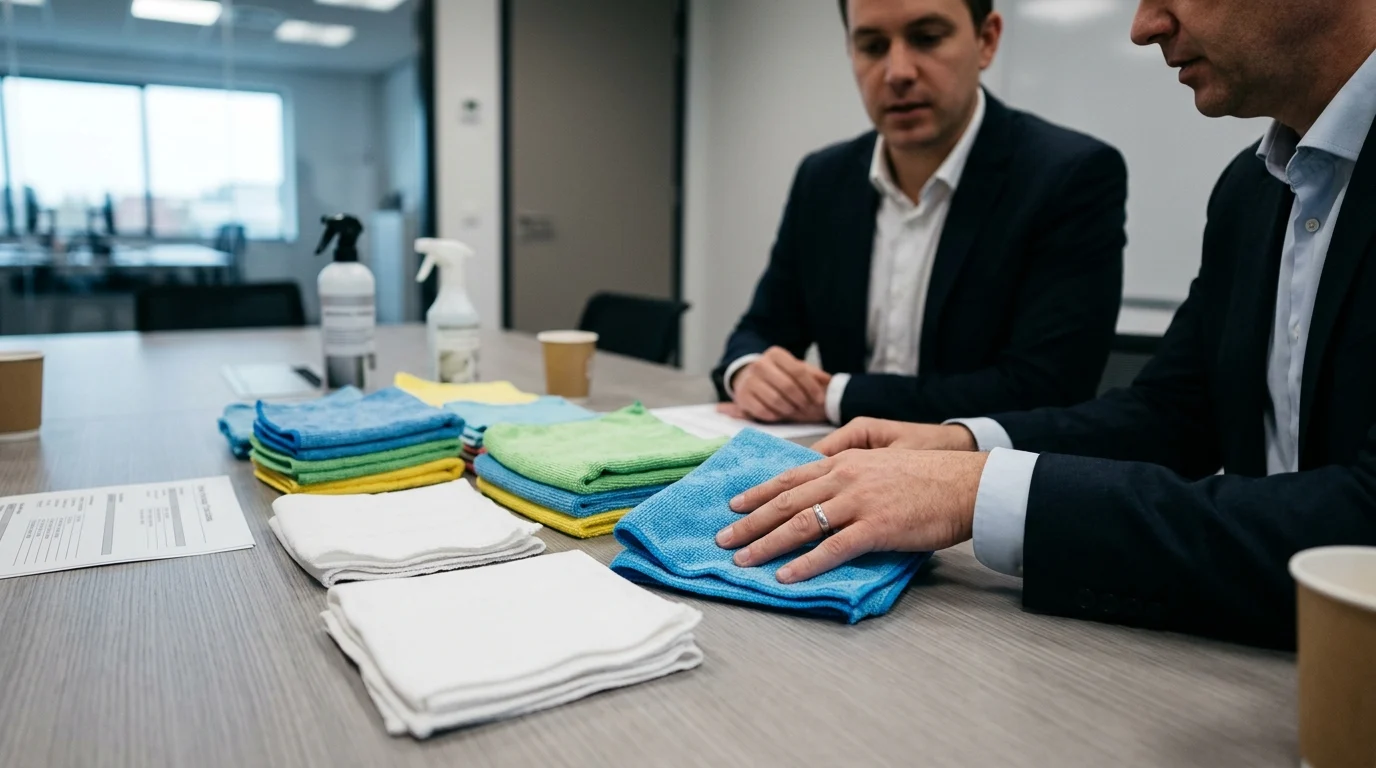
Transitioning from natural textiles to synthetic alternatives requires a comprehensive analysis of total cost of ownership, operational longevity, and task-specific efficacy. Procurement managers must weigh initial acquisition costs against lifecycle performance and maintenance requirements.
Key Comparison Points
Evaluating these materials reveals stark contrasts in physical capabilities and lifecycle costs. A quantitative comparison highlights why synthetics have largely displaced natural fibers in commercial maintenance.
| Performance Metric | Engineered Microfiber | Traditional Cotton |
|---|---|---|
| Liquid Absorbency | 7x to 8x its dry weight | 3x to 4x its dry weight |
| Bacterial Removal Rate | Up to 99% (mechanical action) | Approx. 30% (mechanical action) |
| Wash Cycle Lifespan | 500 to 1,000 cycles | 100 to 200 cycles |
| Drying Time & Energy | Fast (requires low heat) | Slow (high energy cost) |
While the initial unit cost of synthetic cloths is generally higher, the extended wash cycle lifespan yields a substantially lower cost-per-use over a 12-month operational period. However, synthetics demand strict laundering protocols: they must be washed without fabric softeners or bleach and dried at temperatures below 140°F (60°C) to prevent the polyamide channels from melting and fusing.
Trade-Offs by Industry
Different sectors prioritize distinct textile characteristics based on their unique operational challenges. In the automotive industry, technicians rely heavily on a specialized microfiber cloth for car detailing to prevent micro-marring on delicate clear coats—a significant risk when using abrasive cotton threads.
Similarly, facilities management teams utilize a tightly woven, flat-weave microfiber cloth for glass cleaning to achieve streak-free finishes without relying on volatile, alcohol-based chemical sprays. Conversely, industrial environments dealing with heavy, viscous greases or metal shavings may still employ disposable cotton rags. In these specific scenarios, the cost of permanently ruining expensive synthetic textiles with insoluble industrial lubricants negates their lifecycle advantages, making bulk cotton the more pragmatic choice.
How to Choose the Right Microfiber Cloth
Optimizing janitorial inventories demands precise specification of textile parameters. Buyers must move beyond generic labels and evaluate the quantitative attributes that dictate performance, durability, and return on investment.
Practical Evaluation Steps
The primary metric for textile density and plushness is Grams per Square Meter (GSM). General-purpose utility cloths typically fall within the 250 to 300 GSM range, providing an optimal balance of agility and liquid absorbency. For heavy-duty liquid recovery or delicate automotive finishing, buyers should specify materials exceeding 400 GSM.
Additionally, the polymer blend ratio is critical: an 80/20 polyester-to-polyamide ratio is the industry standard for durability, while a 70/30 blend offers superior softness and hydro-retention. Partnering directly with a specialized OEM microfiber cleaning cloth manufacturer allows procurement teams to dictate these precise specifications. Buyers should also perform a water drop test on samples; high-quality split fibers will absorb a water droplet almost instantly, whereas unsplit or inferior fibers will push the water around before absorbing it.
Decision Guidance for Buyers
Strategic procurement also involves assessing environmental impact, supply chain logistics, and facility compliance standards. Modern facilities increasingly specify an eco friendly microfiber cleaning cloth manufactured from recycled polyethylene terephthalate (rPET) to meet stringent corporate sustainability mandates and reduce virgin plastic consumption.
When establishing a supply chain, buyers must account for production Minimum Order Quantities (MOQs), which typically range from 3,000 to 5,000 units for custom dyeing and branding. Implementing a rigorous color-coded textile program (e.g., red for high-risk sanitary areas, blue for glass) is a regulatory requirement in many healthcare and food service environments to prevent cross-contamination. Securing bulk customization ensures that the procurement strategy perfectly aligns with both consumption rates and strict occupational health guidelines.
Key Takeaways
- The most important conclusions and rationale for Microfiber Cleaning cloth
- Specs, compliance, and risk checks worth validating before you commit
- Practical next steps and caveats readers can apply immediately
Frequently Asked Questions
Does microfiber clean better than cotton?
Yes. Quality microfiber traps dirt and removes more bacteria with water alone, while cotton tends to push debris and leaves more residue behind.
When should I choose cotton instead of a microfiber cleaning cloth?
Use cotton for heavy grease, harsh industrial messes, or disposable wipe tasks where ruining a reusable microfiber cloth would cost more.
Why does microfiber leave fewer streaks and less lint?
Its split synthetic filaments are lint-free and capture fine particles and moisture more evenly, making it better for glass, gloss, and controlled environments.
How long does a microfiber cleaning cloth last compared with cotton?
Microfiber typically lasts about 500 to 1,000 wash cycles, while cotton is often closer to 100 to 200, lowering cost per use over time.
How should I wash microfiber cleaning cloths to keep performance high?
Wash without bleach or fabric softener, and dry on low heat below 140°F (60°C) so the fibers stay open and effective.