

 Send Email
 whatsapp


Microfiber Nonwoven vs. Traditional Cloths for Infection Control

Microfiber Nonwovencloths trap and remove bacteria much better than traditional cloths. For example, a study found traditional wet mops reduced bacteria by only 30%, while Microfiber Mops achieved 99% reduction.
| Cleaning Method | Bacteria Reduction (%) |
|---|---|
| Traditional Wet Mop | 30 |
| Microfiber Mop | 99 |
Using the right cleaning steps helps keep spaces even safer.
Key Takeaways
- Microfiber Nonwoven cloths can catch and remove 99% of germs.
- Regular cloths only get rid of about 30% of germs.
- Microfiber Nonwoven cloths work much better than regular cloths.
- Using different colored cloths for each area helps stop germs from spreading.
- Cleaning in the right order also keeps places safer.
- Wash these cloths every day, but do not use bleach.
- Dry them in places with good air flow.
- Replace old or damaged cloths to keep them working well.
- These steps help Microfiber Nonwoven cloths fight germs better.
Microfiber Nonwoven vs. Traditional Cloths: Effectiveness in Infection Control
Microfiber Nonwoven: Structure and Bacteria Removal
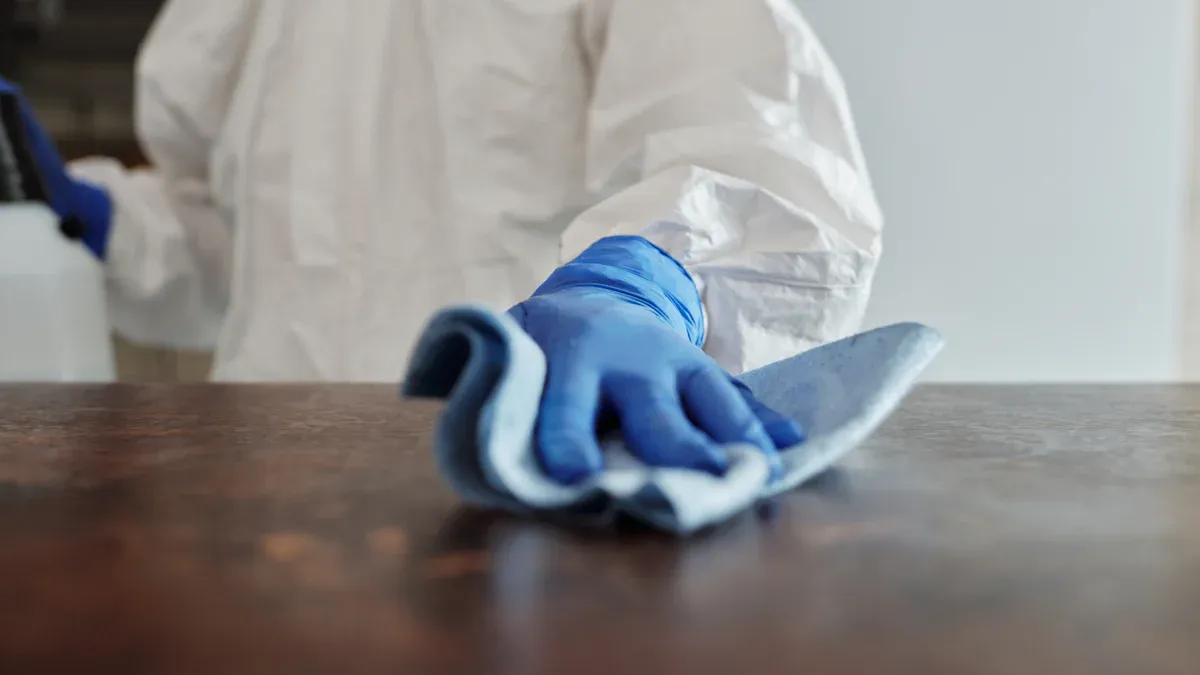
Microfiber Nonwoven cloths have a unique structure. Each cloth contains thousands of tiny fibers. These fibers are much thinner than a human hair. When someone wipes a surface with a Microfiber Nonwoven cloth, the fibers reach into small cracks and crevices. They grab and hold onto dirt, dust, and bacteria. This design helps remove more germs than regular cloths.
E-Sun’s Microfiber Nonwoven cloths use a blend of polyester and polyamide. This blend increases the cloth’s ability to trap bacteria. In hospital tests, ultraMicrofiber Cloths removed more bacteria from surfaces than conventional cloths. The cloths also left less contamination behind. This means they help keep surfaces cleaner and safer, especially in places where infection control matters most.
Tip: Using Microfiber Nonwoven cloths wet works best for removing bacteria. Dry cloths do not remove as many germs.
Traditional Cloths: Cross-Contamination Risks
Traditional cloths, like cotton rags or standard towels, do not trap bacteria as well. The fibers are thicker and less dense. When someone wipes a surface, germs can stay on the cloth. If the same cloth is used on another surface, it can spread bacteria instead of removing it.
The risk of cross-contamination is high with traditional cloths. Studies show that hospital textiles, such as bed sheets and uniforms, often carry harmful bacteria. Over time, the amount of bacteria on these items increases. For example, nurse uniforms started a shift with 39% contaminated and ended with 54% contaminated. Doctors’ scrubs picked up more bacteria the longer they were worn.
| Source / Study | Evidence Type | Key Findings |
|---|---|---|
| Tarrant, Jenkins & Laird, 2018 | Quantitative contamination data | 51 CFU/25 cm² C. difficile spores recovered from soiled hospital bed sheets of infected patients |
| Ohl et al., 2012 | Contamination survey | 92% of Privacy Curtains contaminated within one week; includesS. aureus (62%), MRSA (21%), VRE (42%) |
| Wolfensberger et al., 2018 | Simulated healthcare activity contamination rates | 10% of healthcare worker gowns contaminated during patient contact; transfer rate lower than hands/gloves (30-33%) |
| Casanova et al., 2008 | Experimental contamination transfer | 1–4 log10 MS2 bacteriophage transferred onto scrubs during PPE removal, indicating contamination risk |
| Perry, Marshall & Jones, 2001 | Observational contamination over shift | Nurse uniforms contaminated with MRSA, VRE, C. difficile on 39% before shift, increasing to 54% after shift |
| Burden et al., 2011 | Time-course contamination study | Doctors’ scrubs pockets contaminated with ~50 CFU after 2.5 hours, >100 CFU after 8 hours; MRSA present on 20% of uniforms |
This table shows that traditional cloths and textiles can spread germs quickly. Without proper cleaning, they become a source of infection.
Scientific Data and Real-World Outcomes
Scientists have tested different cleaning cloths in labs and hospitals. They found that not all microfiber cloths work the same. Some remove more bacteria than others. When used dry, both microfiber and traditional cloths do not remove many germs. When used wet, some microfiber cloths, like Microfiber Nonwoven, remove much more bacteria and organic dirt than regular cloths.
In one hospital study, staff switched to ultramicrofiber cloths for cleaning. After 40 weeks, 95% of surfaces met cleanliness standards. This was a big improvement over standard cleaning methods. The results show that using the right type of microfiber cloth, such as Microfiber Nonwoven, can lower the risk of infection in real-world settings.
Note: The term "microfiber" does not always mean better cleaning. The type of microfiber and how it is used matter a lot.
Microfiber Nonwoven: Best Practices for Infection Control
Color-Coding and Cleaning Order
Color-coding makes cleaning safer and easier. Many hospitals and food factories use color-coded cloths to keep germs from spreading between different areas. For example, they might use red cloths for bathrooms, blue for patient rooms, and green for kitchens. This system helps everyone know which cloth to use in each area. It also stops people from using the same cloth in places where cross-contamination could happen.
Color-coding works well because it is simple and clear. Employees can spot mistakes quickly. Auditors and inspectors like color-coding because it shows that a facility takes hygiene seriously. Many cleaning experts recommend using color-coded kits for different zones. This practice supports food safety and infection control by making sure tools do not move germs from one place to another.
Cleaning order matters, too. Workers should always clean the cleanest areas first and save the dirtiest spots for last. For example, they might start with patient rooms, then move to hallways, and finish with bathrooms. This order keeps germs from spreading to cleaner areas. Using a fresh Microfiber Nonwoven cloth for each room or zone lowers the risk of cross-contamination even more.
Tip: Assign a color to each cleaning zone and train staff to follow the cleaning order every time.
Proper Laundering and Maintenance
Taking care of Microfiber Nonwoven cloths helps them last longer and work better. Hospitals and clinics should wash these cloths every day. High-temperature washing, up to 200°F, removes bacteria and viruses. However, bleach and fabric softeners can damage the fibers, so it is best to avoid them. Instead, use mild detergent and rinse well.
Research shows that washing microfiber cloths in colder and shorter cycles can help them last longer and shed fewer fibers. After about five washes, the amount of fiber loss levels off. This means that proper laundering keeps the cloths strong and effective for infection control. Always dry the cloths in a well-ventilated area. Store them in dry, color-coded bins to prevent mold and keep them ready for use.
Hospitals should check cloths for signs of wear, like frayed edges or less absorbency. When a cloth looks worn out, replace it right away. Clean cloths remove more germs and help keep patients safe.
Common Mistakes to Avoid
Some mistakes can make Microfiber Nonwoven cloths less effective. One common error is using the same cloth in multiple rooms or zones. This spreads germs instead of removing them. Another mistake is washing cloths with bleach or fabric softener. These chemicals break down the fibers and lower cleaning power.
People sometimes forget to follow the right cleaning order. Cleaning dirty areas first can move germs to cleaner spots. Skipping daily laundering also lets bacteria build up on the cloths. Not storing cloths in dry, ventilated bins can lead to mold growth.
To avoid these problems, staff should:
- Use a fresh cloth for each room or area.
- Follow the color-coding system every time.
- Wash cloths daily with mild detergent and no bleach.
- Dry and store cloths in clean, dry bins.
- Replace worn-out cloths right away.
Microfiber Nonwoven cloths remove up to 98% of bacteria and 93% of viruses with just water. They also use less water and chemicals, making them eco-friendly and cost-effective. By following best practices, hospitals and clinics can keep their spaces cleaner and safer for everyone.
Microfiber Nonwoven cloths trap and remove up to 99% of bacteria, making them a smart choice for infection control. When teams use color-coding and proper laundering, they lower cross-contamination risks. Many hospitals now switch to microfiber for cleaner, safer spaces and better patient outcomes.
FAQ
How often should someone replace a Microfiber Nonwoven cloth?
Most experts suggest replacing the cloth when it looks worn or loses absorbency. Regular checks help keep cleaning effective and safe.
Can Microfiber Nonwoven cloths clean without chemicals?
Yes! These cloths remove up to 99% of bacteria with just water. They trap germs in their fibers, making them a great eco-friendly choice.
What makes E-Sun’s Microfiber Nonwoven cloth different from regular microfiber?
E-Sun’s cloth blends polyester and polyamide for better bacteria removal. It works well in hospitals and supports strict infection control standards.
Tip: Always follow color-coding and proper laundering for best results!