

 Send Email
 whatsapp


Sustainable Nonwoven Materials for Disposable Hospital Curtains

Sustainable nonwoven hospital curtains play a crucial role in disposable hospital curtains. They provide essential support for infection control in healthcare settings. By utilizing these materials, facilities can enhance medical privacy curtains while promoting eco-friendly solutions. The shift towards sustainable healthcare curtain material is vital for a healthier environment, ensuring that hospital privacy curtains meet both functional and environmental standards.
Key Takeaways
- Switching to disposable hospital curtains can save healthcare facilities up to 70% on maintenance costs, allowing more resources for patient care.
- Sustainable nonwoven materials provide effective barriers against pathogens, enhancing infection control and ensuring patient safety in healthcare settings.
- Choosing biodegradable hospital curtains helps reduce landfill waste and pollution, contributing to a healthier environment and a more sustainable future.
Benefits of Sustainable Nonwoven Materials

Cost Savings
Sustainable nonwoven materials significantly reduce costs for healthcare facilities. Traditional hospital curtains often require extensive laundering, which incurs high maintenance costs. In contrast, disposable hospital curtains eliminate these expenses. A comparison of costs reveals the following:
| Type of Curtain | Annual Cost Estimate | Maintenance Costs | Savings Potential |
|---|---|---|---|
| Traditional Curtains | $25,000 | High (laundering) | N/A |
| Disposable curtains | N/A | None | Up to 70% |
By switching to disposable options, hospitals can save up to 70% on maintenance costs. This financial benefit allows healthcare facilities to allocate resources to other critical areas, enhancing overall patient care.
Infection Control
Infection control remains a top priority in healthcare settings. Sustainable nonwoven materials excel in this area by providing effective barriers against pathogens. Research indicates that spunbond–meltblown–spunbond (SMS) products offer superior protection. These materials combine comfort with high barrier properties, making them ideal for hospital environments. Key findings include:
- Nonwoven medical products are increasingly utilized in hospitals, despite concerns about disposability.
- SMS products deliver the highest level of protection, effectively preventing the spread of hospital-acquired infections.
- Surgical gowns with smaller pore sizes and higher fabric repellency demonstrate enhanced barrier properties against microorganisms.
These attributes make sustainable nonwoven materials a vital component in infection control strategies, ensuring patient safety and reducing the risk of healthcare-associated infections.
Environmental Impact
The environmental impact of disposable hospital curtains is a critical consideration. Sustainable nonwoven materials contribute to a significant reduction in landfill waste compared to traditional options. A European hospital reported impressive results after switching to disposable curtains:
- The hospital reduced its annual water consumption by 22,000 liters.
- Energy costs related to laundry operations decreased by 18%.
Additionally, the comparison of disposable and reusable pads highlights the environmental benefits:
| Aspect | Disposable Pads | Reusable Pads |
|---|---|---|
| Durability | Single-use, limited | 150–200 cycles, cost-effective |
| Environmental Impact | High waste, microplastic pollution | Reduces waste, laundering required |
By opting for sustainable nonwoven materials, healthcare facilities can minimize their carbon footprint and promote a healthier planet.
Innovations in Nonwoven Materials
Biodegradable Options
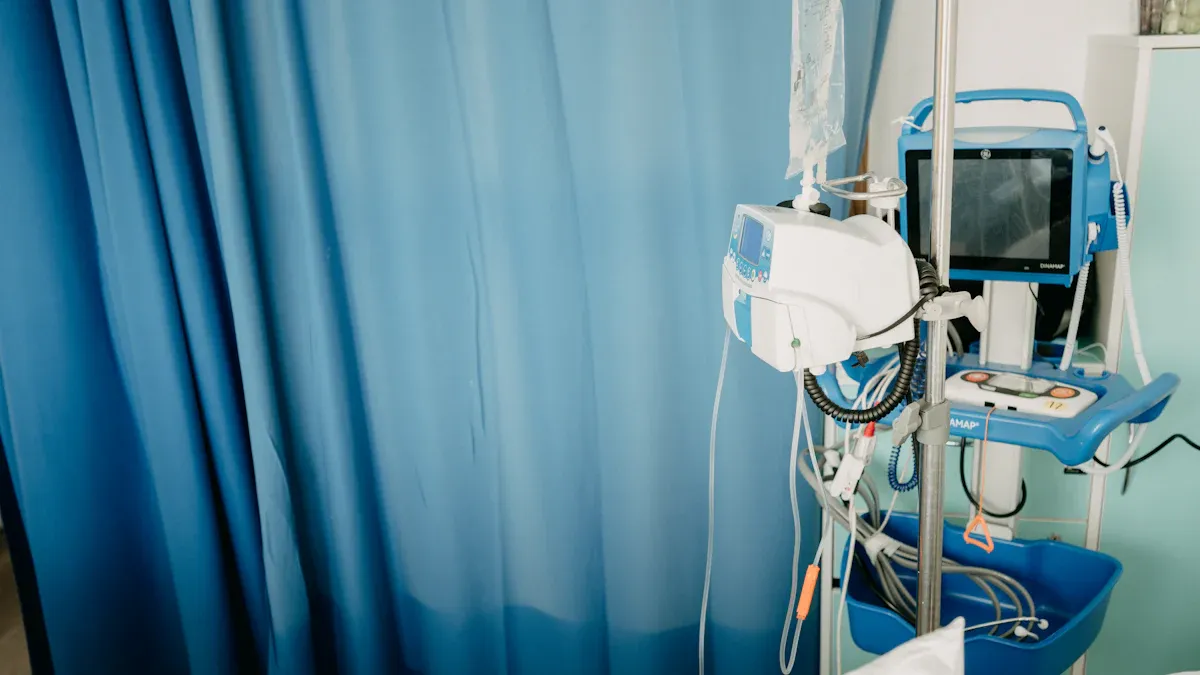
The healthcare industry increasingly recognizes the importance of biodegradable materials in reducing environmental impact. Biodegradable nonwoven hospital curtains offer a sustainable alternative to conventional options. These curtains decompose naturally, minimizing landfill waste and pollution.
A comparison of decomposition times illustrates the significant advantage of biodegradable fabrics:
| Type of Fabric | Decomposition Time |
|---|---|
| Biodegradable (Kapok, Hemp, Cotton) | 6–12 months |
| Conventional (Synthetic) | Up to 500 years |
This data highlights that biodegradable options can break down within 6 to 12 months, while synthetic materials may persist in the environment for centuries. By choosing biodegradable disposable hospital curtains, healthcare facilities can contribute to a more sustainable future.
Antimicrobial Protection
Antimicrobial protection is another innovative feature of sustainable nonwoven materials. These curtains incorporate advanced antimicrobial agents that help prevent the growth of harmful bacteria and viruses. This protection is crucial in healthcare settings, where infection control is paramount.
Several types of antimicrobial agents are commonly used in these materials:
| Antimicrobial Agent | Description |
|---|---|
| Microban Technology | Utilizes silver ion technology to eliminate bacterial growth. |
| Active Protection | Reduces up to 99.9999% of bacterial growth continuously. |
| Resistance Prevention | Protects against antibiotic-resistant bacteria, including MRSA. |
The effectiveness of these antimicrobial treatments is evident in their performance against various pathogens. For instance, studies show impressive reduction rates:
| Pathogen | CFU Reduction (%) | Viral Reduction (%) |
|---|---|---|
| Staphylococcus aureus | 99.97 | 99.88 |
| Pseudomonas aeruginosa | 99.73 | 99.55 |
| Acinetobacter baumanii | 100 | N/A |
These statistics demonstrate that sustainable nonwoven hospital curtains not only provide comfort and privacy but also play a vital role in enhancing infection control. By integrating biodegradable options and antimicrobial protection, healthcare facilities can ensure a safer environment for patients and staff alike.
Market Trends
Growing Demand for Sustainability
The healthcare sector has witnessed a significant rise in the demand for sustainable nonwoven materials over the past decade. Several factors contribute to this trend. The COVID-19 pandemic heightened awareness of hygiene and infection control, prompting hospitals to shift towards disposable hospital curtains. These curtains offer a more sustainable and manageable alternative to traditional linen options. Reports indicate that Marlux experienced a remarkable 200% increase in demand for sustainable hospital curtains between March 2020 and April 2021.
Furthermore, the nonwoven fabrics market is projected to grow at a compound annual growth rate (CAGR) of 4.9% from 2024 to 2030. This growth reflects the increasing importance of sustainable materials in healthcare applications. The healthcare fabrics market is also expected to expand from USD 22.01 billion in 2025 to around USD 40.91 billion by 2034, with a CAGR of 7.10%. Such figures underscore the rising demand for sustainable nonwoven materials in hospitals.
Regulatory Influences
Regulatory bodies play a crucial role in shaping the market for sustainable nonwoven materials. The Centers for Disease Control and Prevention (CDC) emphasizes the need for infection prevention and control in healthcare settings. Approximately 1 in 31 patients in hospitals have at least one healthcare-associated infection, highlighting the critical need for disposable products that ensure hygiene and safety.
Additionally, the nonwoven fabric industry is increasingly adopting sustainable practices. This shift includes the development of biodegradable and recyclable materials, driven by heightened environmental awareness. As regulations evolve, healthcare facilities will likely face greater pressure to adopt eco-friendly solutions, further propelling the demand for sustainable nonwoven materials.
Future Predictions
Technological Advancements
The future of sustainable nonwoven materials for disposable hospital curtains looks promising due to several technological advancements. Key innovations include:
- Material Selection: Manufacturers increasingly use bio-based polymers and recycled fibers instead of virgin plastics.
- Energy Optimization: Facilities are integrating solar, wind, and waste-heat recovery systems during production.
- Closed-Loop Systems: These systems recycle process water and fabric scraps back into the production cycle.
- Low-Emission Bonding: Techniques like hydroentangling and needle-punching eliminate harmful adhesives.
- Eco-Friendly Finishing: The use of plant-based dyes and coatings replaces solvent-based finishes.
These advancements not only reduce the environmental footprint but also improve resource efficiency. For instance, new methods can save up to 40% energy and 60% water compared to conventional practices. Additionally, they enhance the biodegradability of fabrics, allowing them to decompose within 90 to 180 days under composting conditions.
Circular Economy in Healthcare
The principles of the circular economy are gaining traction in healthcare, particularly concerning disposable hospital curtains. This approach emphasizes responsible disposal and the use of recyclable materials. Many manufacturers now produce curtains from 100% recyclable and biodegradable materials, significantly minimizing landfill impact.
For example, Francesc de Borja Hospital is developing a circular economy model for non-sterile surgical gowns. This initiative aims to reduce carbon emissions and plastic waste by recycling used gowns into raw materials for new products. Implementing such models could potentially reduce carbon emissions by 75%, showcasing the effectiveness of circular economy practices in healthcare.
By adopting these strategies, hospitals can enhance sustainability while maintaining high standards of hygiene and patient care.
Sustainable nonwoven materials for disposable hospital curtains offer numerous benefits. They enhance infection control, reduce costs, and minimize environmental impact. By adopting these materials, healthcare facilities can align with global sustainability goals.
Embracing eco-friendly practices is essential for improving public health and protecting the environment. Healthcare providers should prioritize sustainable options to foster a healthier future for all.
FAQ
What are sustainable nonwoven materials?
Sustainable nonwoven materials are fabrics made from eco-friendly fibers that minimize environmental impact while providing effective infection control in healthcare settings.
How do disposable hospital curtains enhance infection control?
Disposable hospital curtains reduce the risk of cross-contamination by eliminating the need for laundering, ensuring a clean barrier against pathogens for each patient.
Are biodegradable hospital curtains effective?
Yes, biodegradable hospital curtains maintain high barrier properties and antimicrobial protection, ensuring safety and hygiene while reducing environmental waste.
