

 Send Email
 whatsapp


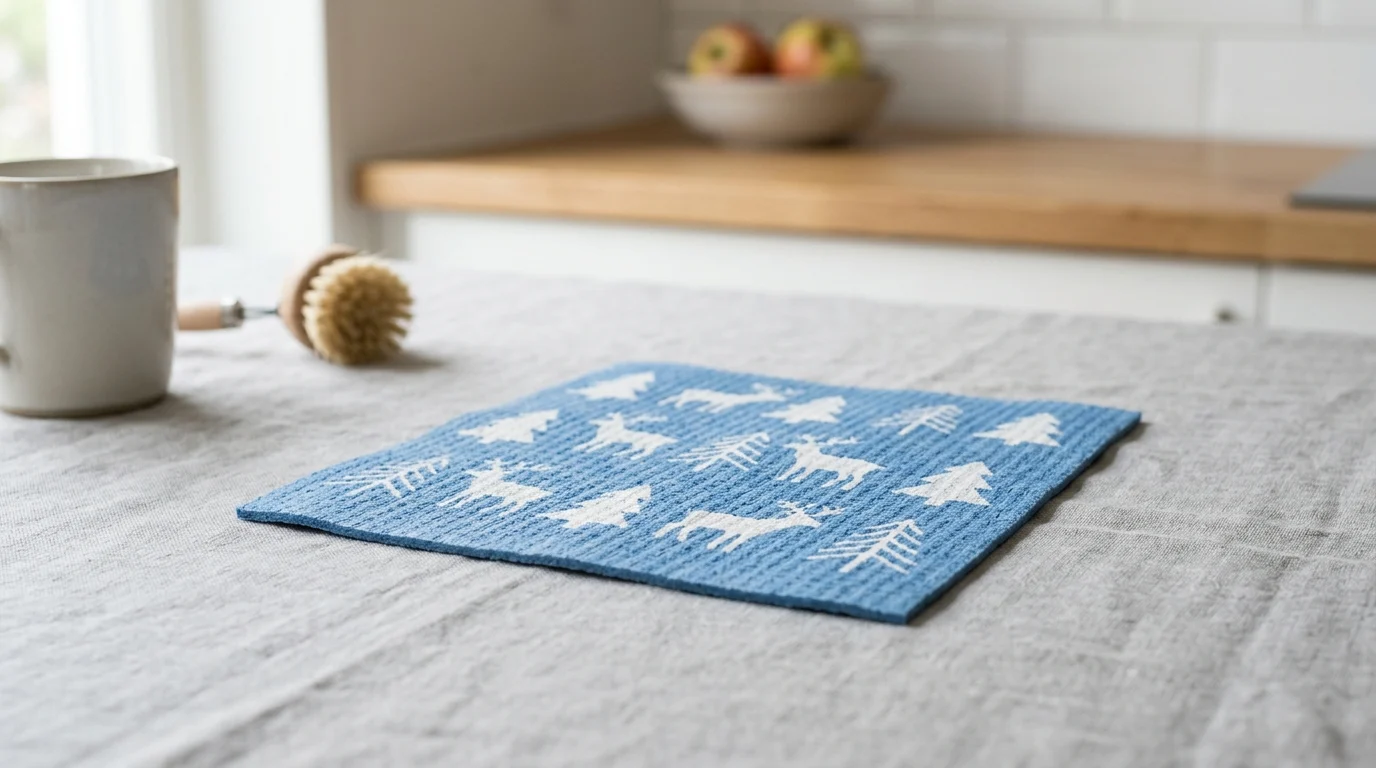
A single spill may not seem like an environmental decision, but repeated hundreds of times a year, the choice between disposable paper and reusable cleaning cloths adds up. Swedish Dish Cloths have become a practical benchmark for lower-waste kitchens because they combine cellulose absorbency, cotton strength, and compostable end-of-life disposal. Paper towels still have a place for certain sanitary or hazardous messes, but their single-use model creates ongoing pressure through resource use, landfill waste, and replacement costs. This comparison looks at how the two options differ in durability, absorbency, compostability, and everyday practicality so households and businesses can choose the right tool for cleaner surfaces with less waste.
Why Swedish Dish Cloths Are a Sustainability Benchmark
The shift toward sustainable habits in both homes and businesses has prompted a reevaluation of everyday cleaning supplies. For decades, single-use paper products dominated surface cleaning due to their convenience. However, growing awareness of deforestation and landfill waste has driven demand for durable, eco-conscious alternatives.
In this context, the Swedish sponge dish cloth has emerged as a popular sustainable option. By combining the absorbency of a traditional sponge with the flexibility of a woven towel, this product handles demanding cleaning tasks while meeting environmental goals. The design demonstrates how simple, naturally derived materials can offer a practical, long-lasting alternative to disposable products.
What Is a Swedish Dish Cloth?
Invented in 1949 by a Swedish engineer, the traditional Swedish dish cloth typically consists of 70% wood pulp (cellulose) and 30% cotton. This blend creates a highly porous structure that can absorb significantly more liquid than standard towels—often cited as up to 20 times its dry weight. Because it contains no petroleum-based plastics, it functions as a sturdy reusable kitchen sponge cloth that resists tearing even when fully saturated.
Beyond its durability, the material is compostable at the end of its usable life. In a commercial composting facility, the cloth generally breaks down within several weeks (typically 6 to 8 weeks). This natural degradation ensures the product leaves no microplastic residue in the soil, aligning well with zero-waste initiatives.
Why Paper Towels Create Sustainability Pressures
The heavy reliance on paper towels places a continuous strain on natural resources. Estimates suggest that in the United States alone, billions of pounds of paper towels are discarded annually. Because these towels are frequently soiled with food waste, grease, or chemical cleaning agents, they usually cannot be recycled and are diverted directly to landfills.
The manufacturing footprint for disposable paper is also intensive. Producing a standard roll of paper towels requires substantial amounts of fresh water—often estimated at up to 17 gallons—alongside the energy needed to pulp wood, bleach fibers, and transport the final product. As these single-use items decompose under layers of trash in landfills, they release methane. While paper towels remain necessary for certain tasks—such as cleaning up raw meat juices, toxic spills, or medical waste—their linear "take-make-dispose" model makes them less ideal for everyday, high-volume surface cleaning.
Swedish Dish Cloths vs. Paper Towels
Evaluating the environmental and economic impact of cleaning supplies requires looking beyond the initial purchase price. A direct comparison between reusable cellulose products and single-use paper reveals clear contrasts in longevity, performance, and long-term costs.
Key Comparison Points
To understand the practical differences, buyers should weigh several performance metrics. The following table outlines the primary distinctions between a standard biodegradable dish cloth and conventional two-ply paper towels.
| Metric | Swedish Dish Cloth | Conventional Paper Towel |
|---|---|---|
| Average Lifespan | Several months (up to 200 washes) | Single use |
| Absorbency Capacity | Up to 20x its dry weight | 2x to 3x its dry weight |
| End-of-Life | Compostable | Landfill |
| Estimated Annual Cost | Lower recurring cost | Higher recurring cost |
This comparison illustrates that while the upfront cost of a reusable cloth is higher per unit, the need for constant replacement drops dramatically. For heavy users, whether large households or commercial kitchens, the financial savings accumulate over time. Switching from disposable paper to reusable textiles can significantly reduce annual consumable expenditures, often offsetting the initial investment within the first few weeks.
Lifecycle Trade-Offs
Analyzing the complete lifecycle of both products reveals a trade-off between initial production impacts and ongoing waste. Manufacturing a cellulose-cotton blend requires agricultural inputs, water for processing, and energy for weaving. However, this initial ecological footprint is offset over a lifespan that can endure numerous machine wash cycles.
Conversely, paper towels require a continuous loop of resource extraction. Every minor spill cleaned with a paper towel demands fresh water for pulping and energy for distribution. By effectively replacing multiple rolls of paper towels over its lifespan, a single Swedish cloth can help reduce the carbon emissions and water footprint associated with daily surface maintenance.
How Buyers Should Decide
Transitioning from disposable paper to reusable cellulose requires simple behavioral adjustments. Whether managing a busy household kitchen or outfitting a commercial venue, users should adopt basic care routines to maximize both hygiene and the product's lifespan.
Practical Steps for Homes and Facilities
Both households and commercial facilities can benefit from these reusable tools, though their approaches may differ. For businesses, buyers often evaluate suppliers based on material purity and bulk availability, sometimes using color-coded systems to ensure cloths used in raw food prep areas are kept separate from those used in dining spaces. In homes, integrating an eco-friendly dish cloth is as simple as keeping one by the sink for everyday spills, while reserving paper towels strictly for tasks like handling raw meat or cleaning up pet waste.
To maintain optimal hygiene and prevent bacterial growth, users should rinse the cloth thoroughly with warm water after each use and allow it to air dry completely. The porous nature of the cellulose enables rapid moisture evaporation, which naturally helps prevent sour odors.
Ultimately, while paper towels remain a necessary tool for specific sanitary and hazardous cleanups, they are no longer the only option for general maintenance. By thoughtfully incorporating Swedish Dish Cloths into daily cleaning routines, both households and businesses can significantly reduce their environmental footprint and lower their long-term costs without sacrificing performance.
Key Takeaways
- Use Swedish dish cloths for routine kitchen wiping because one cloth can last several months and replace many single-use paper towels.
- Choose cellulose-and-cotton dish cloths if compostability matters, as they can break down in commercial composting in about 6 to 8 weeks.
- Reserve paper towels for high-risk messes such as raw meat juices, medical waste, toxic spills, or heavily contaminated cleanup.
- Wash and dry Swedish dish cloths regularly to extend their lifespan and reduce odor, bacteria buildup, and unnecessary replacement.
- Compare long-term cost rather than shelf price, since reusable cloths can withstand up to about 200 washes while paper towels are discarded after one use.
Frequently Asked Questions
What is a Swedish dish cloth made of?
A typical Swedish dish cloth is made from about 70% wood pulp cellulose and 30% cotton. This blend creates a flexible, sponge-like cloth that is absorbent, durable, reusable, and compostable at the end of its life.
Are Swedish dish cloths more sustainable than paper towels?
Yes, for most everyday cleaning tasks. Swedish dish cloths can be reused for months and washed many times, while paper towels are single-use and often go directly to landfill after cleaning food, grease, or spills.
How absorbent are Swedish dish cloths?
Many Swedish dish cloths can absorb up to 20 times their dry weight. That makes them useful for wiping counters, drying dishes, cleaning spills, and replacing multiple sheets of paper towel in daily use.
Can Swedish dish cloths be composted?
Yes, if they are made from natural cellulose and cotton without plastic additives. In commercial composting conditions, they may break down in roughly 6 to 8 weeks, leaving no microplastic residue.
How long does a Swedish dish cloth last?
A Swedish dish cloth can last several months with proper care and may withstand up to about 200 washes. Its exact lifespan depends on cleaning frequency, washing method, and whether it is used on harsh surfaces.