

 Send Email
 whatsapp


Top 3 Cleanroom Mops for a Pristine 2025
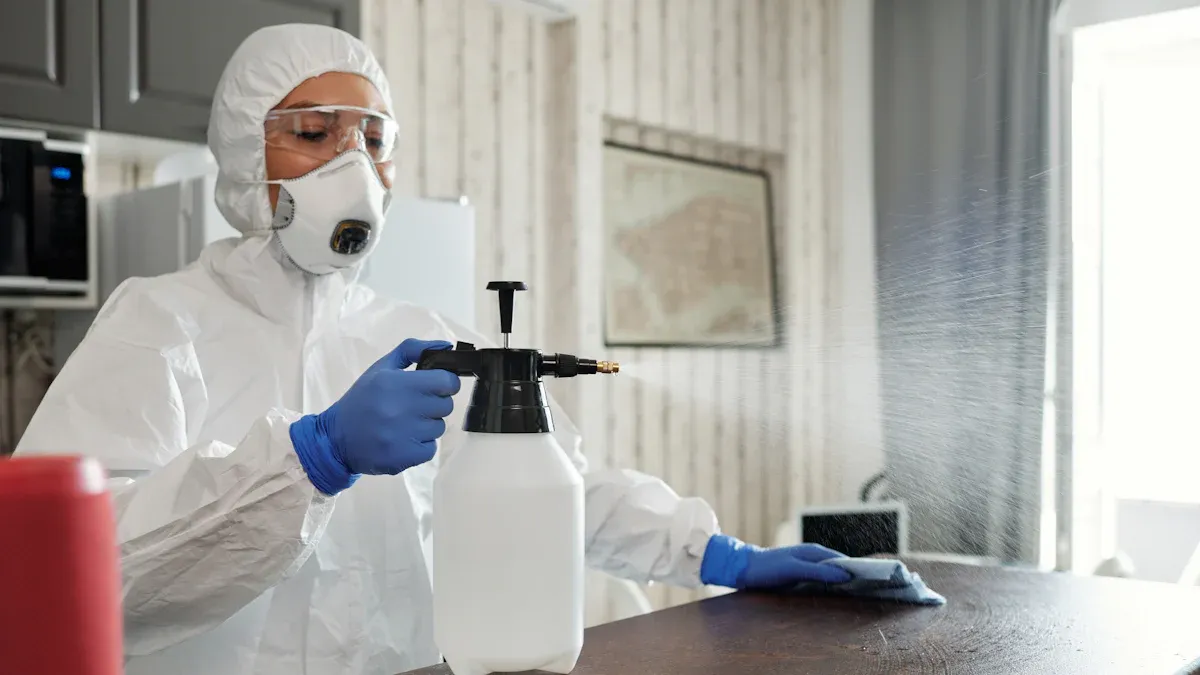
Discover leading cleanroom mops engineered for superior performance in 2025. Selecting the rightfloor cleanroom mops is critical for contamination control. Contamination incidents, such as TSMC's $550 million loss from damaged products, underscore this necessity. This guide identifies top medical cleanroom mops and antistatic cleanroom mops that set industry standards.
Key Takeaways
- Choosing the right cleanroom mop is important. It stops dirt and germs from spreading. This keeps your cleanroom safe.
- Different mops work best for different jobs. Some mops are good at picking up tiny bits. Other mops are good at killing germs. Pick the mop that fits your cleanroom's needs.
- Taking good care of your mop makes it last longer. Clean and store mops the right way. This helps them work well and keeps your cleanroom clean.
Contec® VertiKlean® MAX™: The Pinnacle of Particle Removal Among Cleanroom Mops
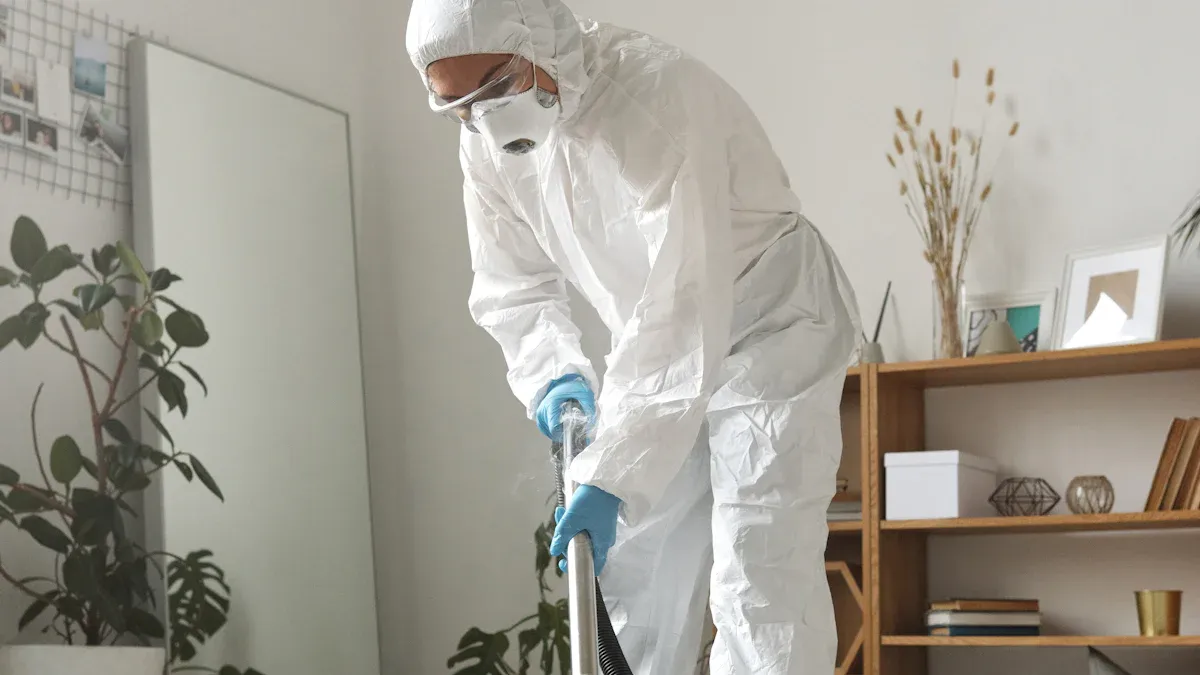
Advanced Design and Material Composition
The Contec® VertiKlean® MAX™ Mop Head features a sophisticated design. It incorporates a single layer of hydrophilic polyurethane foam laminated to textured polyester microfiber fabric. A semi-rigid thermoformed plate backs this construction, allowing easy and secure attachment to the mop head frame. This durable, lightweight design ensures efficient handling and consistent surface contact during cleaning operations. The material composition, including hydrophilic urethane foam and knitted microfiber polyester, provides excellent liquid retention capabilities.
Unmatched Particle Pickup Efficiency
This mop offers superior sorbency, a critical feature for effective contamination control. Its microfiber fabric, combined with hydrophilic foam, allows it to retain liquids effectively and mop surfaces dry. The ribbed microfiber face actively dislodges and removes contamination, ensuring thorough cleaning. This design maximizes particle pickup, leaving surfaces exceptionally clean and free from residues.
Optimal Applications for Critical Environments
Facilities effectively utilize the Contec® VertiKlean® MAX™ mop in ISO 5-8 cleanroom environments, which correspond to Grade A/B classifications. Its design allows versatile application for applying disinfectants to both horizontal and vertical surfaces. This includes floors, walls, and ceilings, making it suitable for a wide range of critical cleaning tasks.
Advantages and Considerations
The Contec® VertiKlean® MAX™ is available gamma irradiated and validated sterile to a Sterility Assurance Level of 10-6. It functions as a single-use, disposable option, which eliminates concerns associated with re-laundering. This mop offers broad compatibility with various disinfectants and detergents. Its excellent chemical and abrasion resistance makes it durable, often outlasting traditional sponge mops. Laser-cut edges further reduce the risk of fiber and particulate contamination, solidifying its position as a leading choice among cleanroom mops.
Kimberly-Clark Kimtech™ Pure M7: Leading Cleanroom Mops for Bioburden Control
Innovative Microfiber Technology and Sterility Options
Kimberly-Clark Kimtech™ Pure M7 mops incorporate advanced microfiber technology. This innovative design effectively captures and retains microscopic particles and contaminants. Facilities can choose between sterile and non-sterile options. The sterile versions undergo gamma irradiation, ensuring their suitability for the most critical environments. This approach significantly enhances contamination control within sensitive areas.
Superior Bioburden Reduction and Chemical Compatibility
The Kimtech™ Pure M7 excels in bioburden reduction. Its unique microfiber construction efficiently picks up microorganisms from surfaces, preventing their spread. This mop demonstrates excellent compatibility with a wide range of disinfectants and cleaning agents. Users can confidently apply various solutions without compromising mop integrity or cleaning efficacy. This feature proves crucial for maintaining aseptic conditions in regulated spaces.
Ideal for Pharmaceutical and Biotech Cleanrooms
Pharmaceutical and biotech cleanrooms demand stringent contamination control. The Kimtech™ Pure M7 mop meets these rigorous requirements. Its sterile options and superior particle capture make it an ideal choice for these sensitive applications. It helps prevent cross-contamination and ensures product integrity. This mop supports compliance with strict regulatory standards, making it a preferred tool for critical cleaning.
Benefits and Practical Limitations
A primary benefit of the Kimtech™ Pure M7 is its high absorbency and low-linting properties. It leaves minimal residue, which is vital for critical surfaces. The sterile versions offer convenience and reduce preparation time. A practical limitation involves its single-use nature. While beneficial for contamination control, this can lead to higher operational costs compared to reusable cleanroom mops. Users must consider disposal protocols.
Texwipe® AlphaMop™: Versatile and Robust Cleanroom Mops
Durable Polyester Knit and Modular System Features
The Texwipe® AlphaMop™ features a robust modular system. It includes a lightweight, durable aluminum handle. This handle provides ease of use and ensures longevity. The system incorporates a low-linting polyester mop head. This head ensures optimal particle removal, crucial for cleanroom environments. The mop's slim profile allows easy access to confined areas and tight cleanroom spaces. This design enhances maneuverability in critical zones.
High Abrasion Resistance and Solvent Compatibility
This mop demonstrates high abrasion resistance. It maintains its integrity even with rigorous use. The Texwipe AlphaMop is compatible with a range of industrial solvents. These include Isopropyl alcohol (IPA), ethanol, and hydrogen peroxide. This broad compatibility allows its use with various cleaning solutions without material degradation.
Broad Utility for General Cleanroom Maintenance
The Texwipe AlphaMop offers broad utility for general cleanroom maintenance. It excels at cleaning isolators, laminar flow hoods, biosafety cabinets, and glove boxes. This mop is suitable for ISO Class 4–8 cleanrooms and EU GMP Grades A–D environments. It handles both wet and dry cleaning applications. The AlphaMop is compatible with many disinfectants and cleaning agents. Its low-profile, swivel head design reaches difficult-to-access areas with ease. It also uses easily changeable, laundered polyester covers for rapid wiping surface changes.
Strengths and Investment Considerations
The AlphaMop provides a versatile and robust solution for cleanroom environments. Its durable construction and broad compatibility offer long-term value. Facilities consider its effectiveness across various applications when investing in cleanroom mops. Its ability to clean diverse surfaces and compatibility with multiple solutions makes it a cost-effective choice.
Comparative Analysis of Top Cleanroom Mops for 2025
Performance Metrics Across Brands
Each leading cleanroom mop offers distinct performance advantages. The Contec® VertiKlean® MAX™ excels in particle removal. Its microfiber and hydrophilic foam design ensures superior sorbency and efficient contaminant pickup. Kimberly-Clark Kimtech™ Pure M7 focuses on bioburden reduction. Its innovative microfiber technology effectively captures microorganisms. The Texwipe® AlphaMop™ provides broad utility. It handles both wet and dry cleaning applications with high abrasion resistance and solvent compatibility.
Cost-Effectiveness and Long-Term Value
Evaluating the long-term value of cleanroom products involves considering their durability and efficiency. High-quality materials are crucial for ensuring the longevity of mops, even when frequently exposed to cleaning agents and sterilization processes. Mop heads must endure repeated laundering for reusable options or consistently perform as single-use items. The extended lifespan of cleanroom mops and mop heads directly contributes to their long-term value. Reusable microfiber mops offer durability, provided facilities properly launder them. This maintains effectiveness.
User Experience and Ergonomics
User experience and ergonomic design significantly impact operational efficiency. The Texwipe® AlphaMop™ features a low-profile, swivel head design. It includes a lightweight and durable fiberglass handle. This offers the user excellent control over the swivel head. The Texwipe® TexMop also features a low-profile, swivel head with lightweight handles, which facilitates easier cleaning. Its design is lightweight, ergonomic, and stable. Contec's lightweight design also promotes easy handling, reducing user fatigue during extensive cleaning tasks.
Choosing the Best Cleanroom Mops for Your Specific Needs
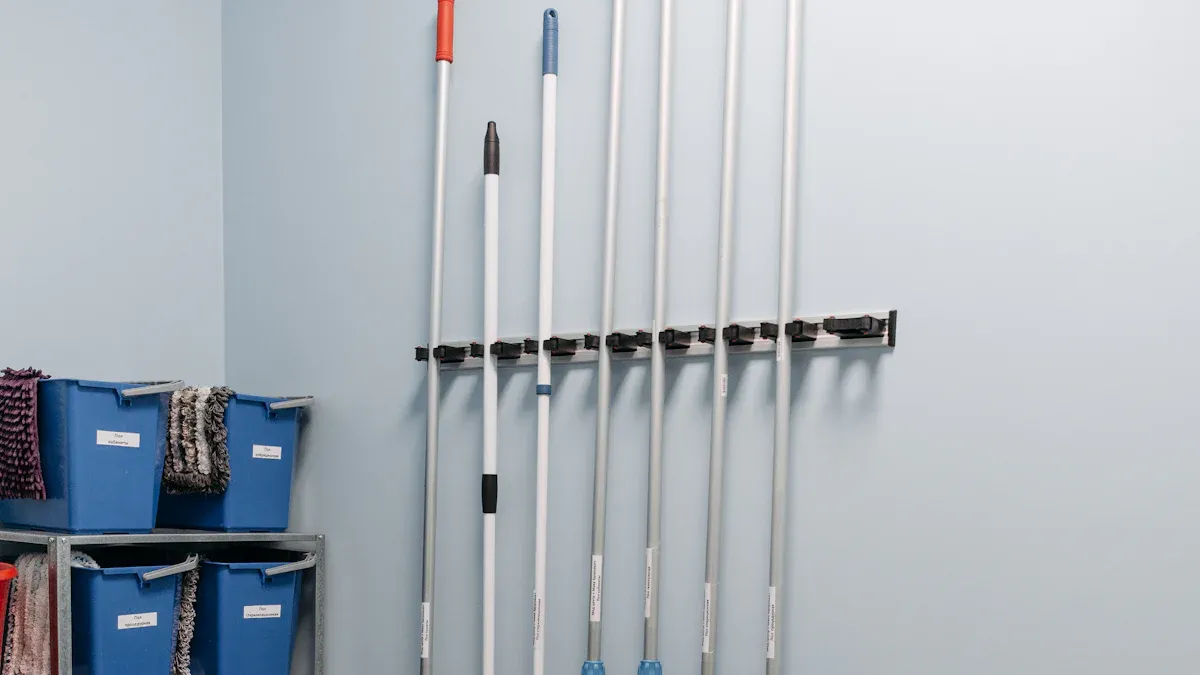
Matching Mop Features to Cleanroom Class and Contaminants
Selecting the optimal cleanroom mop requires careful consideration of the cleanroom's classification and specific contaminants. Facilities choose mops made from low-linting, non-shedding materials like microfiber or polyester to minimize particle introduction. A flat head design ensures optimal surface contact and thorough cleaning. The mop head must also be compatible with the cleanroom's specific flooring material, whether smooth or textured. For higher classifications, such as ISO 1-5, heat-sealed microfiber mops are recommended for smooth floors, while looped mops with textured yarns suit rough floors. All ESD-safe environments require mops constructed from static dissipative materials. Depending on requirements, mops should be easily sterilizable or laundered without compromising integrity.
Budgetary Constraints and Operational Efficiency
Balancing budget with operational efficiency is crucial for cleanroom mop selection. Consider the total cost of ownership, not just the upfront price. For instance, stainless steel handles cost $250–$500, requiring $50–$200 in maintenance. An anodized aluminum system, like PharmaMOP GO, costs under $200 and offers low maintenance. This affordability and reduced maintenance contribute to a lower total cost of ownership. Lightweight designs, typically 1–2 lbs for aluminum compared to 3–5 lbs for stainless steel, minimize operator strain. This improves adherence to cleaning Standard Operating Procedures (SOPs) and enhances overall operational efficiency.
Importance of User Ergonomics and Training
User ergonomics significantly impact cleaning effectiveness and operator well-being. An adjustable handle is crucial for user comfort and prevents strain during extended cleaning tasks. Lightweight mop systems reduce operator fatigue, promoting consistent and thorough cleaning. Proper training ensures operators use the mops correctly, maximizing their particle removal and bioburden reduction capabilities. This combination of ergonomic design and comprehensive training supports a pristine cleanroom environment.
Maintenance and Longevity of Cleanroom Mops
Best Practices for Cleaning and Sterilization
Proper cleaning and sterilization extend the life of cleanroom mops. Facilities must follow strict protocols for reusable mop heads. They launder these items in dedicated cleanroom washing machines. These machines use specific detergents and purified water. Sterilization often involves autoclaving or gamma irradiation for sterile environments. This process eliminates microbial contamination. Operators must handle mops carefully to prevent damage during washing and sterilization cycles. This ensures their continued effectiveness.
Establishing Optimal Replacement Schedules
Establishing optimal replacement schedules prevents contamination risks. Mop heads degrade over time, even with proper care. Their fibers can break down, releasing particles. Their absorbency may decrease. Facilities should track mop usage and performance. They replace mops when signs of wear appear. These signs include fraying, thinning, or reduced cleaning efficiency. Regular replacement maintains cleaning standards. It also prevents unexpected contamination events.
Impact of Proper Care on Mop Lifespan
Proper care significantly impacts a mop's lifespan. Adhering to manufacturer guidelines for cleaning and storage is crucial. Incorrect washing methods can damage mop materials. Harsh chemicals can degrade fibers prematurely. Storing mops improperly can lead to contamination or material breakdown. Consistent, correct care maximizes the mop's useful life. This reduces replacement costs. It also ensures consistent cleaning performance in critical environments.
Selecting the correct cleanroom mop is crucial for stringent contamination control. Contec® VertiKlean® MAX™ excels in particle removal. Kimtech™ Pure M7 leads in bioburden reduction. Texwipe® AlphaMop™ offers robust versatility. Evaluate specific cleanroom requirements to make an informed decision for 2025.
FAQ
What makes a cleanroom mop different from a regular mop?
Cleanroom mops feature low-linting materials. They prevent particle shedding. Manufacturers design them for specific contamination control. Regular mops do not meet these stringent requirements. 🔬
Should facilities always use sterile cleanroom mops?
No, not always. Facilities use sterile mops in critical environments. These include pharmaceutical or biotech cleanrooms. Non-sterile mops suit less stringent areas. Evaluate your cleanroom class.
How often should facilities replace cleanroom mop heads?
Facilities replace mop heads based on wear and tear. They also consider cleaning frequency. Degradation signs, like fraying, indicate replacement. This maintains cleaning effectiveness.
