

 Send Email
 whatsapp


Introduction
Made from a blend of cellulose and cotton, a Swedish Dish Cloth is a reusable cleaning cloth designed to absorb spills like a sponge while wiping like a soft towel. Its rise in popularity comes from a practical mix of performance and convenience: it holds a large amount of liquid, dries quickly, cleans smooth surfaces without much lint, and can replace many paper towels in daily use. It also appeals to buyers looking for lower-waste household products, since it is durable yet biodegradable. The sections below explain how the material works, how it compares with common alternatives, and why it has become a staple in many kitchens.
What is a Swedish dish cloth
The Swedish dish cloth is a highly engineered cleaning textile bridging the gap between disposable paper and durable woven fabrics. Invented in 1949, this composite material has transitioned from a Scandinavian staple into a globally recognized commodity within the commercial and residential cleaning sectors. Its structural matrix delivers industrial-grade fluid retention while maintaining a fully biodegradable lifecycle.
Materials and performance
At the core of a Swedish cellulose sponge cloth is a precise material ratio: typically 70% wood pulp cellulose and 30% natural cotton fibers. This blend creates a capillary network capable of absorbing up to 20 times the cloth's dry weight in liquid. When dry, the material is rigid enough for light surface scouring; when wet, it becomes exceptionally pliable, allowing for streak-free cleaning across glass, granite, and stainless steel.
Quantitatively, a standard 17-by-20-centimeter unit weighs approximately 10 to 12 grams dry but holds over 200 milliliters of water. The inherent porosity of the cellulose-cotton matrix allows for rapid moisture evaporation. This accelerated drying physically inhibits the proliferation of odor-causing bacteria, resolving a common failure point in standard cotton textiles that retain moisture for extended periods.
How it compares to alternatives
Evaluating this material against traditional implements reveals significant operational efficiencies. Standard cotton rags offer durability, but their liquid retention peaks at roughly five times their weight, requiring high-temperature laundering to mitigate bacterial loads. Microfiber alternatives provide strong particulate capture but release microplastics into municipal water systems and remain entirely non-biodegradable at the end of their lifecycle.
The following table illustrates the baseline performance metrics of the Swedish variant compared to standard alternatives:
| Material Type | Absorbency Capacity | Average Lifespan | Biodegradability |
|---|---|---|---|
| Swedish Cellulose Cloth | 15x - 20x dry weight | 6 to 9 months | 100% (approx. 8 weeks in soil) |
| Microfiber Synthetic | 7x - 8x dry weight | 12 to 24 months | 0% (petroleum-based) |
| Standard Cotton Rag | 4x - 5x dry weight | 12+ months | 100% (slow degradation) |
| Commercial Paper Towel | 2x - 3x dry weight | Single-use | 100% |
Why Swedish dish cloths are gaining traction
The commercial trajectory of these cellulose composites has shifted dramatically, driven by supply chain optimization and changing purchasing criteria. Retailers and commercial distributors increasingly prioritize inventory that maximizes shelf-space return on investment (ROI) while fulfilling stringent environmental, social, and governance (ESG) mandates.
Retail and shelf advantages
From a logistics perspective, the physical properties of the eco-friendly dish cloth offer distinct advantages. Because the cloths are shipped completely dry, their volumetric footprint is exceptionally low. A master carton can house upwards of 1,000 units while weighing under 15 kilograms. This density allows distributors to load approximately 40,000 units onto a standard shipping pallet, drastically reducing unit freight costs and minimizing associated carbon transport emissions.
In the retail environment, this translates to superior shelf density. A retail peg holding four bulky paper towel rolls can accommodate dozens of packaged cellulose cloths. Consequently, the revenue yield per square foot of retail space increases significantly. With gross margins frequently operating in the 50% to 65% band, the financial incentive for buyers to stock these compact alternatives is substantial.
Sustainability and consumer demand
Consumer demand is heavily influenced by domestic sustainability initiatives and lifecycle cost analyses. A single cloth is engineered to replace up to 17 rolls of conventional paper towels over a functional lifespan of six to nine months. For a commercial facility or household, this represents a measurable reduction in recurring consumable expenses and solid waste generation.
Furthermore, the product's end-of-life profile aligns seamlessly with zero-waste objectives. Relying entirely on plant-based inputs, a discarded cloth will fully decompose in standard composting environments within six to eight weeks. This verifiable biodegradability satisfies a growing market segment actively boycotting synthetic cleaning accessories due to microplastic shedding concerns.
How buyers should evaluate Swedish dish cloth options
Procuring high-quality cellulose textiles requires buyers to evaluate underlying manufacturing specifications. Variations in raw material sourcing, chemical processing, and printing techniques drastically alter product durability and market viability for B2B buyers and commercial distributors.
Selection criteria
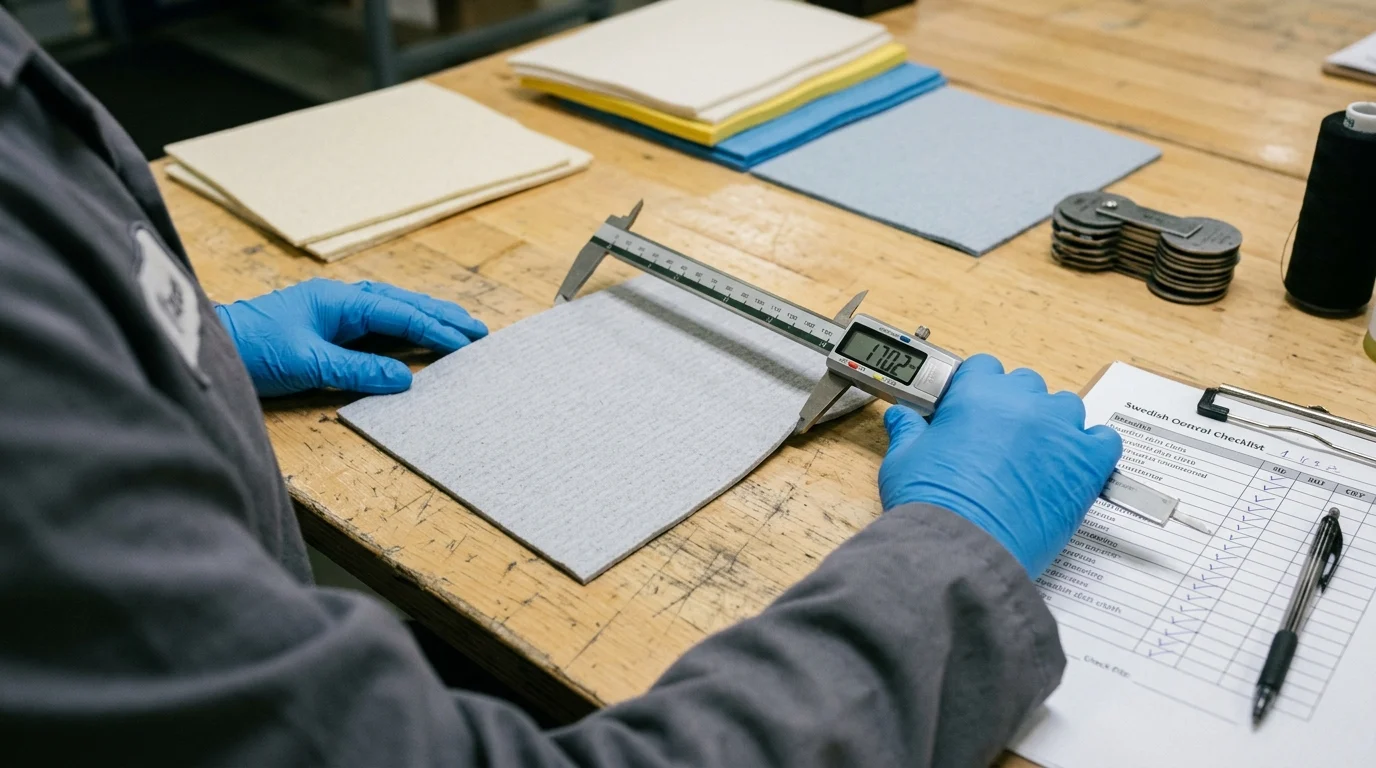
Procurement teams must verify strict adherence to the 70% cellulose to 30% cotton ratio. Deviations introduced to lower production costs result in products that lack structural integrity when wet or fail to achieve the desired fluid retention parameters. Buyers should stipulate requirements for a true lint-free Swedish dish cloth, necessitating long-staple cotton fibers and high-pressure extrusion during manufacturing.
Print quality is another critical evaluation metric, particularly for visual merchandising. Inks must be water-based and non-toxic to maintain compostable certifications. Buyers must demand colorfastness testing data, ensuring pigments remain stable across a minimum of 50 machine wash cycles at temperatures reaching 60°C (140°F) to 90°C (194°F).
Sourcing and brand fit
Assessing a manufacturing partner involves scrutinizing supply chain transparency. Leading facilities source wood pulp from Forest Stewardship Council (FSC) certified forests, a credential that is increasingly mandatory for premium retail placement. Additionally, the final Swedish sponge dish cloth should carry OEKO-TEX Standard 100 certification to guarantee the absence of harmful chemical residues from pulp bleaching.
Commercially, buyers must navigate Minimum Order Quantities (MOQs) and lead times. Standard unprinted stock may be available with MOQs as low as 500 units, but custom-printed production runs typically require MOQs between 2,500 and 5,000 units. Factoring in a standard manufacturing lead time of 21 to 30 days plus oceanic freight, supply chain managers must forecast inventory requirements at least 90 days in advance to prevent stockouts.
Key Takeaways
- The most important conclusions and rationale for Swedish dish cloth
- Specs, compliance, and risk checks worth validating before you commit
- Practical next steps and caveats readers can apply immediately
Frequently Asked Questions
What is a Swedish dish cloth made of?
It is usually made from about 70% wood pulp cellulose and 30% natural cotton, creating a plant-based cloth that is absorbent, flexible when wet, and biodegradable.
Why is a Swedish dish cloth so popular?
It absorbs up to 20 times its dry weight, dries fast, replaces many paper towels, and composts after use, making it practical for both cleaning performance and waste reduction.
How long does a Swedish dish cloth usually last?
A quality cloth typically lasts about 6 to 9 months with normal household use. Rinse it well, let it dry between uses, and avoid leaving it soaked for long periods.
How does a Swedish dish cloth compare with microfiber or cotton rags?
It usually absorbs more than cotton, dries faster, and avoids microfiber plastic shedding. It also offers a better balance of reusability and biodegradability than paper towels.
What should buyers check when choosing Swedish dish cloths?
Look for the cellulose-cotton ratio, absorbency, drying speed, biodegradability, print safety, and consistent manufacturing quality. For wholesale or private label, ask suppliers for material and performance specifications.