

 Send Email
 whatsapp


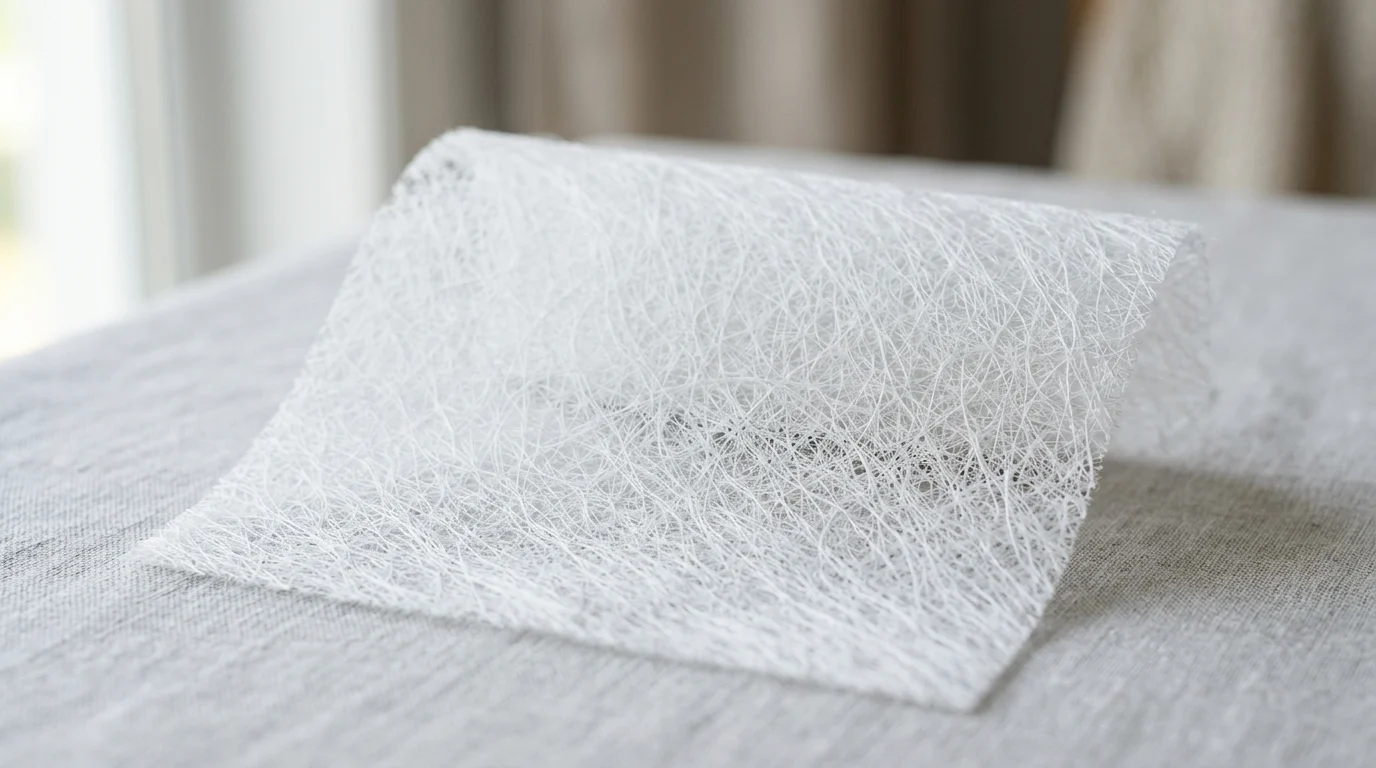
Modern cleaning is no longer just about wiping a surface until it looks clean; in cleanrooms, healthcare facilities, and precision manufacturing, microscopic residue can drive defects, downtime, and infection risk. Microfilament Nonwoven materials are engineered to meet these higher standards by combining ultra-fine PET/PA filaments, low-lint construction, and strong durability under demanding use. This guide explains how the fabric is made, why its continuous filament structure matters, where it outperforms cotton or conventional microfiber, and what procurement teams should compare before buying. For organizations balancing hygiene, productivity, and lifecycle cost, understanding this material can turn cleaning from a routine expense into a measurable operational advantage.
Why Microfilament Nonwoven Matters in Modern Cleaning
The commercial and industrial cleaning sectors are undergoing a significant transformation, driven by the need for superior contamination control and operational efficiency. Traditional textiles and disposable paper products are increasingly being replaced by engineered fabrics capable of meeting stringent hygiene standards.
Key benefits driving this shift include:
- Contamination Control: Microfilament technology can reduce surface contamination by up to 99.9% in specific manufacturer trials (typically tested on smooth, non-porous surfaces using standardized bioburden swabbing) without relying on excessive chemical solvents.
- Operational Efficiency: Adopting these advanced materials is a calculated operational upgrade designed to mitigate the high costs associated with cross-contamination, product defects, and facility downtime.
What Is Microfilament Nonwoven?
Produced through a highly sophisticated manufacturing technique, Microfilament Nonwoven Fabric is engineered using a bi-component extrusion process followed by high-pressure hydroentanglement. The raw material typically consists of a blend of polyester (PET) and polyamide (PA). During production, high-velocity water jets split these bi-component filaments (such as segmented pie or sea-island structures) into ultra-fine microfilaments.
Unlike standard knitted microfiber, which relies on spun staple fibers that are prone to shedding, microfilament nonwoven is formed from continuous filaments. These filaments frequently reach a linear mass density as low as 0.1 to 0.15 denier (a measurement of mass per unit length, roughly equivalent to 0.11 to 0.16 decitex). To put this into perspective, these filaments are up to 100 times finer than a standard human hair. The result of this intensive process is a remarkably dense, isotropic textile structure that offers extraordinary mechanical strength in all directions, ensuring it does not fray, tear, or degrade easily under intense physical stress.
Which Cleaning Markets Benefit Most?
High-stakes environments demand rigorous particulate control and consistent reliability. In high-tech manufacturing, cleanrooms operating under ISO Class 4 or 5 standards rely heavily on Microfilament Cleaning Wipes because the continuous filament structure generates a near-zero linting rate. In the healthcare and pharmaceutical sectors, these textiles are crucial for infection control; they can endure hundreds of commercial wash cycles—with some manufacturers citing up to 500 cycles under controlled industrial laundering conditions—at thermal disinfection temperatures of 95°C without losing their structural integrity.
Furthermore, the automotive and aerospace industries utilize these advanced materials for surface preparation prior to painting. The fabric effectively traps microscopic dust and oils, reducing paint defect rates by an estimated 15% to 20% in certain manufacturer case studies compared to traditional cotton rags. However, buyers should note trade-offs: microfilament fabrics often have higher upfront costs than cotton and can feel stiffer than knitted textiles.
Key Microfilament Nonwoven Specifications to Compare
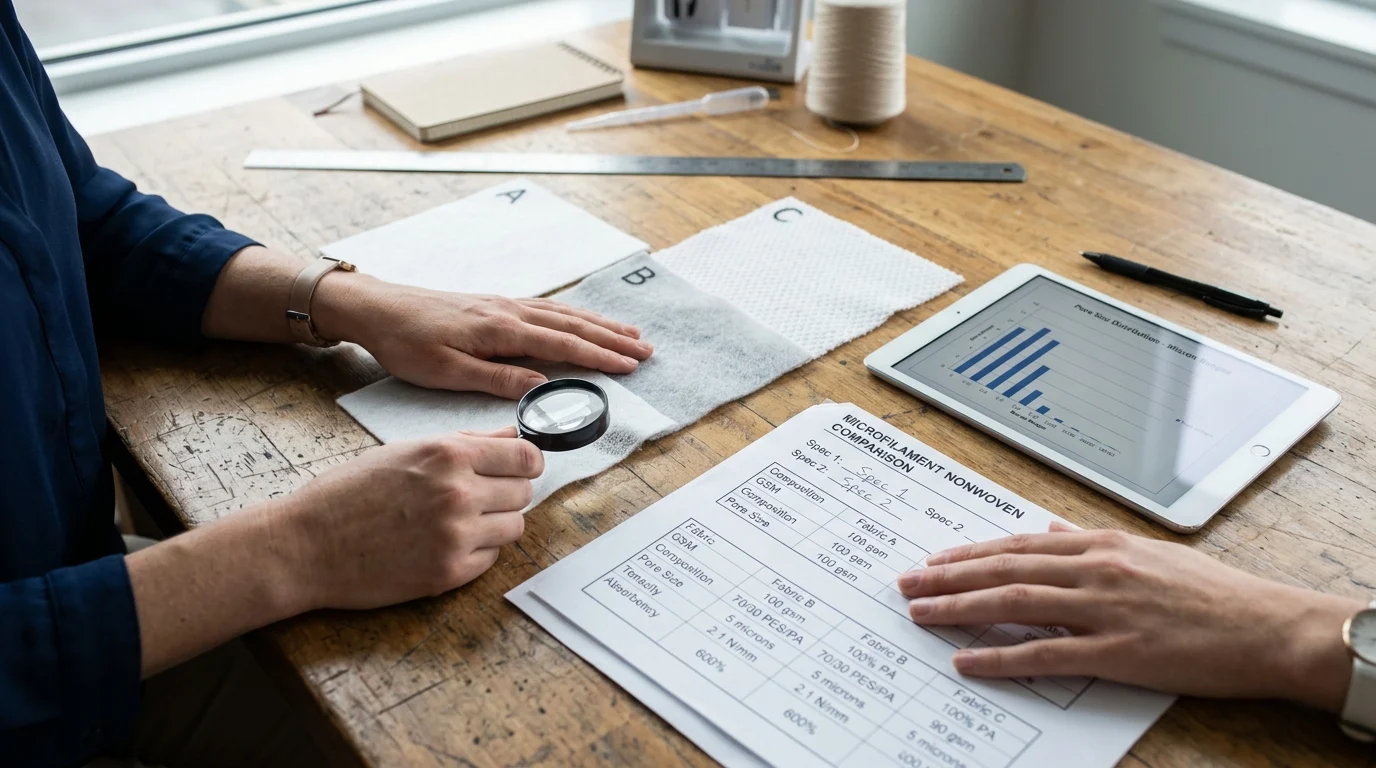
For procurement teams and facility managers, selecting the appropriate cleaning textile requires a precise analysis of physical properties. Treating all nonwovens as identical commodities inevitably leads to poor performance and inflated lifecycle costs. By evaluating specific technical metrics, buyers can accurately match the fabric's capabilities to the exact demands of their operational environment, ensuring maximum return on investment.
How Do Fiber Splitting, Weight, Thickness, and Absorbency Affect Performance?
The degree of fiber splitting during the manufacturing process directly dictates the available surface area, which is the primary driver for trapping microscopic dirt and absorbing liquids through capillary action. Standard fabric weights for commercial cleaning applications typically range from 80 to 130 grams per square meter (GSM), with an optimal thickness usually falling between 0.45 mm and 0.60 mm.
At these precise specifications, the material demonstrates exceptional fluid handling, achieving an absorbency capacity of up to 400% of its own dry weight when tested with distilled water under standard laboratory conditions. This rapid liquid uptake, often measurable in under three seconds per ISO 9073-6 standards, is absolutely critical for emergency spill control and leaving surfaces completely streak-free after a single pass.
How Does Microfilament Nonwoven Compare with Microfiber?
While often confused in commercial terminology, microfilament and traditional knitted microfiber exhibit fundamental differences in construction, leading to distinct performance profiles. As noted earlier, the continuous filament architecture of a premium Microfilament Cleaning Cloth inherently prevents the fiber shedding that is commonly associated with staple-fiber microfiber products. This structural stability translates directly to a longer usable lifespan and vastly superior dimensional stability during aggressive laundering. However, knitted microfiber still holds advantages in conformability and initial cost for less critical tasks.
| Performance Metric | Microfilament Nonwoven | Standard Knitted Microfiber |
|---|---|---|
| Manufacturing Method | Hydroentangled continuous filaments | Knitted or woven staple fibers |
| Linting / Shedding Rate | Extremely low (often <0.5% mass loss in Helmke Drum tests) | Moderate to High (typically 1% - 3% mass loss) |
| Wash Durability | High (Up to 500 cycles in manufacturer trials) | Medium (200 - 300 cycles under standard conditions) |
| Dimensional Stability | Excellent (Isotropic tensile strength) | Prone to stretching and warping |
| Conformability & Elasticity | Lower (stiffer structure) | Higher (stretches to irregular surfaces) |
| Drying Time | Ultra-fast (Enhanced air permeability) | Slower (Retains moisture longer) |
| Initial Cost | Higher | Lower (ideal for non-critical tasks) |
How to Select and Source Microfilament Nonwoven
Executing a successful sourcing strategy for advanced textiles requires comprehensive supplier vetting. Identifying a capable Microfilament Nonwoven Manufacturer involves auditing their quality control infrastructure, testing protocols, and ability to scale production to meet fluctuating global demands. Typical lead times for bulk international orders range from 4 to 6 weeks, making supply chain reliability a paramount concern.
What Tests Confirm Cleaning Efficiency?
To validate mechanical cleaning efficacy and material safety, industry professionals mandate rigorous, standardized testing methodologies. ATP (Adenosine Triphosphate) testing is frequently deployed to verify physical bacteria removal. While some supplier tests show up to 99% removal using only water, ATP results depend heavily on cleaning technique, contact time, the specific test liquid, and the initial bioburden on the substrate. Furthermore, water-only cleaning does not replace validated chemical disinfection protocols required in healthcare environments.
For controlled environments, the Helmke Drum test (per
Key Takeaways
- Choose microfilament nonwoven for critical cleaning tasks where low linting and consistent contamination control are more important than the lowest upfront material cost.
- Verify the fabric construction, because continuous PET/PA microfilaments reduce shedding compared with spun staple microfiber or cotton alternatives.
- Use microfilament cleaning wipes in ISO Class 4 or 5 cleanrooms when particulate release must be tightly controlled.
- Evaluate lifecycle cost, not just purchase price, since some microfilament nonwovens can endure hundreds of industrial wash cycles at thermal disinfection temperatures.
- Consider microfilament nonwoven for automotive and aerospace surface preparation, where better dust and oil capture may help reduce paint defects by 15% to 20% in some case studies.
- Match specifications such as fiber fineness, splitting quality, weight, and thickness to the cleaning surface and contamination risk before purchasing.
Frequently Asked Questions
What is microfilament nonwoven made from?
It is typically made from bi-component polyester (PET) and polyamide (PA) filaments that are split by high-pressure hydroentanglement into ultra-fine continuous microfilaments.
How is microfilament nonwoven different from knitted microfiber?
Microfilament nonwoven uses continuous filaments, while knitted microfiber often uses spun staple fibers. This gives microfilament nonwoven lower linting, better dimensional stability, and stronger resistance to fraying.
Why is microfilament nonwoven useful in cleanrooms?
Its continuous filament structure produces very low lint, making it suitable for controlled environments such as ISO Class 4 or 5 cleanrooms where particulate contamination must be minimized.
Can microfilament nonwoven reduce chemical use?
Yes. Its ultra-fine filaments can lift and trap contamination effectively, helping reduce reliance on excessive solvents in some cleaning processes, especially on smooth, non-porous surfaces.
How durable is microfilament nonwoven in industrial laundering?
Some microfilament nonwoven textiles can withstand hundreds of commercial wash cycles, with certain manufacturers citing up to 500 cycles under controlled laundering and thermal disinfection conditions.