

 Send Email
 whatsapp


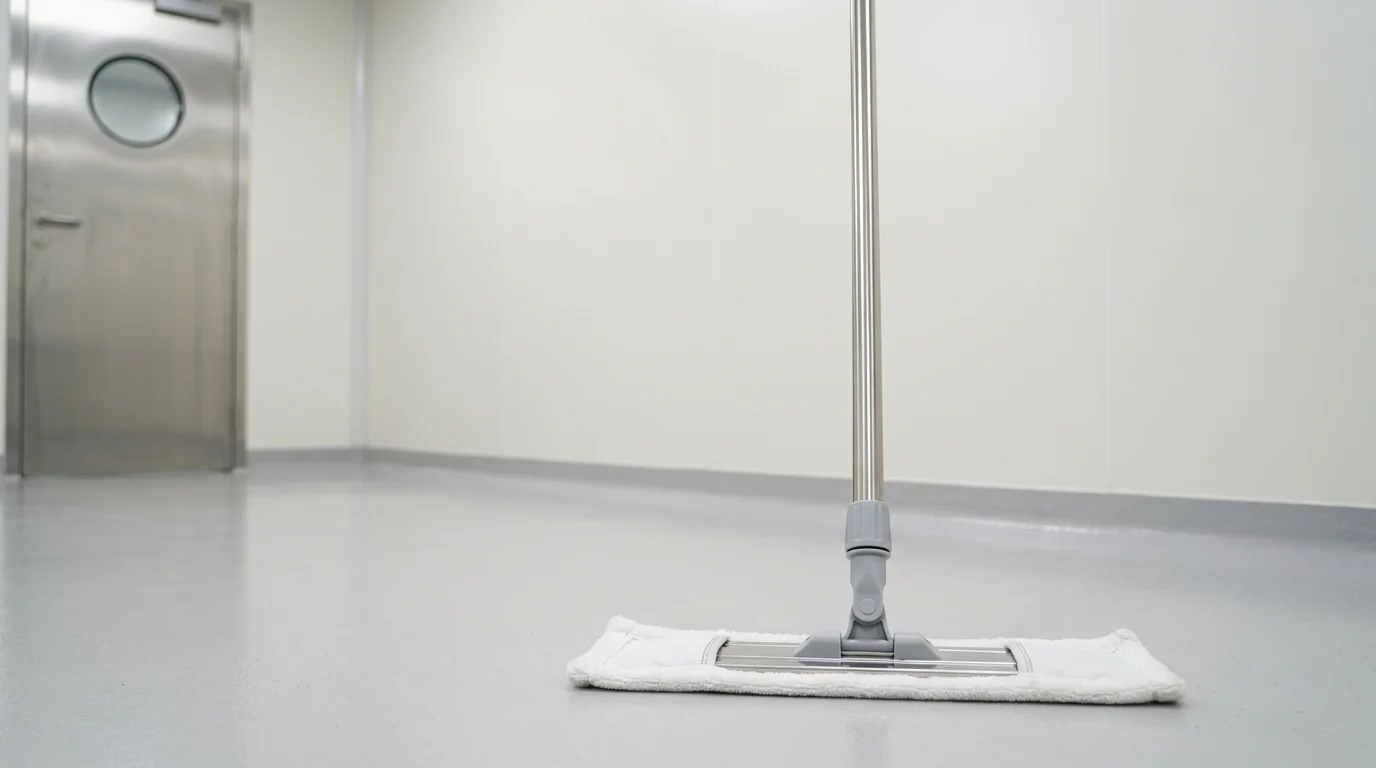
In a controlled environment, a mop is not just a cleaning tool—it is a contamination control device. ISO Class 5 spaces, for example, must stay below 3,520 particles of 0.5 µm or larger per cubic meter of air, leaving little room for equipment that sheds fibers or spreads residue. cleanroom mops help facilities apply disinfectants consistently, remove settled particles, and reduce cross-contamination across floors, walls, and ceilings. This article explains how they differ from standard mops, what risks they help control, and which specifications matter most when selecting a system for pharmaceutical, biotech, semiconductor, or other regulated environments.
Why Cleanroom Mops Matter for Contamination Control
Maintaining the strict particulate and microbiological limits of controlled environments requires specialized protocols and equipment. Under ISO 14644-1 standards, an ISO Class 5 cleanroom must maintain fewer than 3,520 particles measuring 0.5 µm or larger per cubic meter of air. Achieving true environmental control demands rigorous surface disinfection routines.
Facility managers rely heavily on specialized wiping and mopping systems to apply disinfectants and physically remove settled contaminants from floors, walls, and ceilings. When these tools fail or are improperly used, facilities face increased risks, including environmental monitoring excursions, regulatory audit observations, and potential batch losses. While mop selection is an essential safeguard for surface disinfection, it is only one component of a comprehensive contamination control strategy and cannot replace robust HVAC filtration or strict personnel gowning protocols. Choosing the right tool remains a critical safeguard for product integrity rather than a simple janitorial choice.
How Cleanroom Mops Differ from Industrial Mops
The primary distinction between commercial janitorial mops and a cleanroom cleaning moplies in material composition and edge construction. Traditional String Mops utilize cellulose, cotton, or blended fibers that naturally shed, generating thousands of microscopic particles and releasing ionic contaminants like sodium and potassium with every stroke.
In contrast, cleanroom-grade mops are manufactured from continuous filament polyester or advanced synthetic blends. Their edges are typically sealed using laser or ultrasonic technology, which melts and binds the fiber ends. This construction reduces particulate generation significantly. While manufacturers often market this as an "up to 99% reduction" compared to standard industrial counterparts, this is a vendor-specific marketing figure. Actual particle-shedding performance should be verified using recognized industry test methods, such as the Helmke drum test or IEST-RP-CC004 standards. Furthermore, cleanroom mops are engineered to resist chemical degradation when exposed to harsh, highly concentrated disinfectants such as sodium hypochlorite, hydrogen peroxide, or peracetic acid.
Contamination Risks Cleanroom Mops Help Control
Effective contamination control addresses both viable threats (bacteria, fungi, spores, and biofilms) and non-viable risks (dust, skin cells, and synthetic fibers). Mops serve as the primary delivery mechanism for liquid disinfectants, ensuring adequate, uniform surface coverage. This controlled application maintains required wet contact times—which can range from a few minutes to 15 minutes for robust sporicidal efficacy, depending strictly on the specific disinfectant used and its manufacturer label instructions—without causing excessive pooling or rapid evaporation.
By physically lifting and trapping microscopic debris in their structural matrix rather than merely pushing it across the surface, specialized mops prevent the redeposition of particulate matter. This mechanical lifting action is critical in preventing cross-contamination between different manufacturing zones, particularly in high-risk pharmaceutical compounding, biotechnology, and semiconductor fabrication areas where microscopic residue can cause severe yield losses.
Key Cleanroom Mop Specifications to Compare

Evaluating mop specifications is critical for aligning cleaning protocols with specific cleanliness classifications and operational budgets. Facility operators must balance absorption capacity, mechanical cleaning efficiency, material durability, and ergonomics.
A high-quality mop head should feature a high absorption capacity—often ranging from 300% to 400% of its dry weight depending on the fabric blend—to ensure the uniform application of disinfectants over large surface areas, reducing the frequency of re-saturation and minimizing operator fatigue during overhead cleaning.
Mop Materials, Head Designs, and Handle Systems
The performance of a mop is largely dictated by its material substrate and hardware compatibility. A cleanroom microfiber mop utilizes ultra-fine synthetic fibers that create a vast surface area and capillary action, enabling the mechanical removal of microscopic particles, with some high-grade options tested to capture particles down to 0.1 µm under controlled conditions.
Hardware components must be constructed from electropolished 304 or 316L stainless steel, or lightweight anodized aluminum. When reusable systems are employed, these materials are chosen specifically to withstand repeated autoclave sterilization cycles (e.g., at 121°C for 30 minutes) without corroding, warping, or shedding metal flakes into the environment, though compatibility varies by manufacturer.
| Material Type | Primary Benefit | Particle Shedding Risk | Chemical Compatibility | Autoclave Suitability | Relative Cost | Ideal Application |
|---|---|---|---|---|---|---|
| Continuous Polyester | High chemical resistance | Very Low | Excellent | Yes | Moderate | ISO 4-5 / Grade A/B |
| Microfiber Blend | Superior mechanical particle removal | Low | Good | Varies by blend | High | ISO 5-6 / General Cleaning |
| Polyurethane Sponge | Excellent liquid retention | Low | Moderate | No (typically) | Low | Liquid spill recovery |
Sterile, Non-Sterile, Disposable, and Reusable Options
Cleanroom classifications dictate the sterility requirements of all cleaning tools. While lower-grade environments may safely use non-sterile options, ISO Class 5 (GMP Grade A/B) environments generally mandate the use of sterile mops, which are typically gamma-irradiated and validated to a Sterility Assurance Level (SAL) of 10^-6.
Facilities must weigh the operational costs and logistical burdens of reusable versus disposable systems. Reusable mops require validated commercial cleanroom laundering and sterilization, incurring processing costs that can range from $2.00 to $4.00 per wash cycle (as an illustrative, region-dependent estimate), alongside ongoing lifecycle tracking to monitor fabric degradation. Conversely, disposable options significantly reduce cross-contamination risks and laundering logistics, provided they are handled correctly. While disposables increase the volume of solid waste and require consistent consumable inventory management, they guarantee optimal material integrity for every single use.
How to Select, Validate, and Use Cleanroom Mops
Implementing a robust cleaning program extends far beyond material selection; it requires validated application techniques and strict adherence to internal protocols. Selecting a reliable cleanroom mop supplier helps ensure lot-to-lot consistency, which is vital for maintaining compliance with Current Good Manufacturing Practices (cGMP).
However, facilities must perform their own practical validation rather than relying on supplier assurances alone. This validation process must explicitly account for testing conditions, operator variability, and operational limitations—such as mop-head degradation over time and improper drying protocols. Mop performance must be confirmed against the facility's own environmental monitoring data and Standard Operating Procedures (SOPs).
Key Takeaways
- Use cleanroom-grade mops made from low-shedding synthetic materials rather than cotton or cellulose mops in controlled environments.
- Verify particle-shedding performance with recognized test methods such as the Helmke drum test or IEST-RP-CC004 before accepting vendor claims.
- Select mop systems that apply disinfectant uniformly and support the required wet contact time, which may range from a few minutes to 15 minutes depending on the label.
- Choose mop heads with sealed edges and chemical-resistant construction when using agents such as sodium hypochlorite, hydrogen peroxide, or peracetic acid.
- Treat mop selection as one part of a broader contamination control strategy that also includes HVAC filtration, gowning, monitoring, and validated cleaning procedures.
Frequently Asked Questions
What makes a cleanroom mop different from a standard industrial mop?
Cleanroom mops use low-shedding materials such as continuous filament polyester and often feature sealed edges. Standard cotton or cellulose mops can release fibers, particles, and ionic contaminants that compromise controlled environments.
Why are cleanroom mops important in ISO-classified environments?
They help remove settled particles and apply disinfectants evenly to floors, walls, and ceilings. In strict environments such as ISO Class 5 cleanrooms, even small contamination events can trigger monitoring excursions or product quality risks.
Can a cleanroom mop replace HVAC filtration or gowning controls?
No. A cleanroom mop supports surface contamination control, but it cannot replace HEPA filtration, airflow design, gowning procedures, personnel discipline, or validated cleaning protocols.
How should facilities verify low particle shedding claims?
Facilities should review test data based on recognized methods such as the Helmke drum test or IEST-RP-CC004 instead of relying only on vendor marketing claims.
What disinfectants must cleanroom mops tolerate?
Cleanroom mops should resist degradation from commonly used disinfectants such as sodium hypochlorite, hydrogen peroxide, peracetic acid, and other approved agents used in the facility’s cleaning rotation.