

 Send Email
 whatsapp


Why Disposable Hospital Curtains Are a Must-Have for Modern Healthcare in the US and Canada
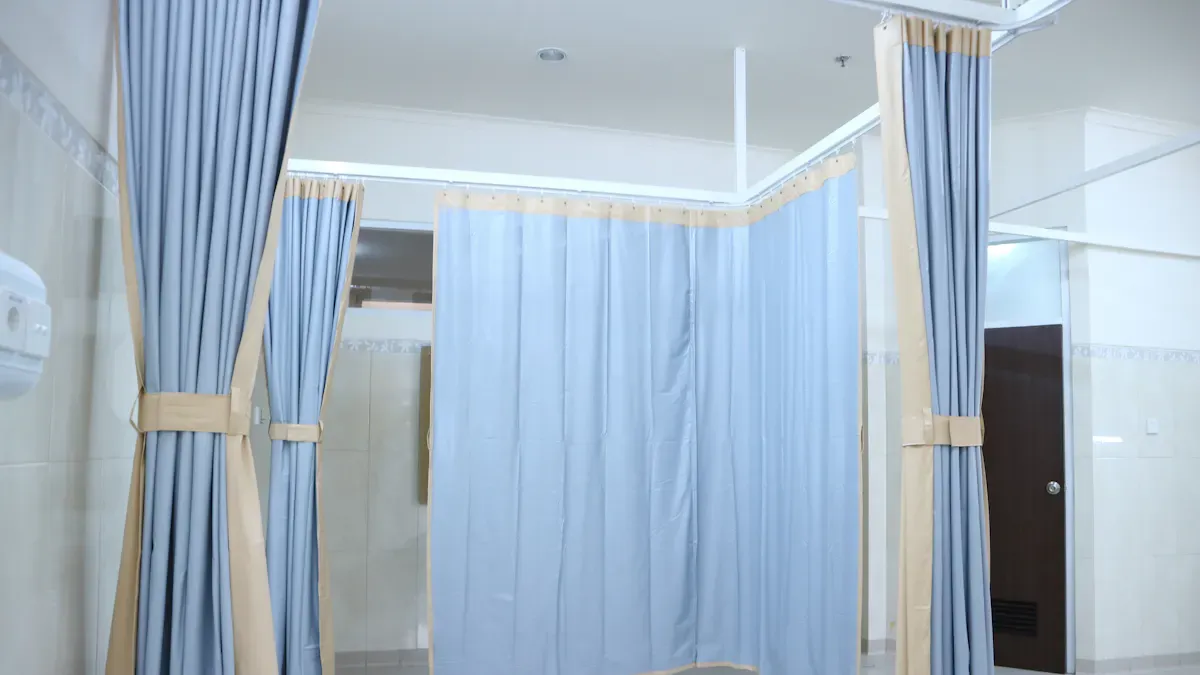
Disposable hospital curtains are essential for infection control in healthcare environments. Thesehospital privacy curtains serve as a critical barrier, effectively preventing the spread of healthcare-associated infections. As hospitals work to uphold high hygiene standards, solutions such as single-use hospital curtains become indispensable. The demand for these disposable hospital curtains for infection control is increasing, fueled by an intensified focus on maintaining a safe and clean environment.
Key Takeaways
- Disposable hospital curtains significantly reduce infection risks by providing a fresh barrier for each patient, preventing cross-contamination.
- These curtains are cost-effective, eliminating laundering expenses and improving workflow efficiency in healthcare facilities.
- Disposable curtains comply with strict healthcare standards, ensuring patient safety and privacy while enhancing the overall hygiene of medical environments.
Healthcare-Associated Infections and Curtains
Infection Risks Linked to Hospital Curtains
Hospital curtains often serve as overlooked surfaces in healthcare settings, yet they can harbor a variety of pathogens. Studies reveal that more than 20% of cultures from patient privacy curtains at skilled nursing facilities test positive for multidrug-resistant organisms (MDROs). For instance, a significant analysis of 1,521 samples from Michigan facilities found that 22% of curtain samples contained MDROs, including vancomycin-resistant enterococci (VRE) in 13.8% of cultures and methicillin-resistant Staphylococcus aureus (MRSA) in 4.9%.
Key Findings on Curtain Contamination:
- Contamination Rate: 22% of curtain samples tested positive for MDROs.
- Common Pathogens: VRE found in 13.8% of cultures, MRSA in 4.9%.
- Patient-Curtain Transmission: 15.7% of cases had the same MDRO on both patient and curtain.
- Cleaning Frequency: Curtains are cleaned infrequently, contributing to contamination.
The infrequent cleaning of traditional curtains exacerbates the risk of infection transmission. As these surfaces accumulate pathogens, they become potential vectors for cross-contamination between patients and healthcare staff.
How Disposable Hospital Curtains Interrupt Germ Transmission
Disposable hospital curtains provide a proactive solution to the infection risks associated with traditional fabric curtains. Their single-use design eliminates the possibility of residual contamination, ensuring that each patient receives a fresh barrier. This approach significantly reduces the likelihood of cross-infection.
Research indicates that disposable curtains can effectively disrupt the transmission chain of pathogens. For example, they often feature antimicrobial properties that inhibit bacterial growth. In contrast, traditional curtains may harbor infectious germs even after cleaning.
| Feature | Disposable Curtains | Traditional Curtains |
|---|---|---|
| Barrier Protection | Low permeability limits pathogen passage | Can harbor microbes even after cleaning |
| Single-Use Design | Eliminates risk of residual contamination | Reusable, risk of contamination persists |
| Safe Disposal Process | Sealed and processed through medical waste systems | Standard cleaning may not neutralize all pathogens |
| Clinical Evidence | Lower rates of cross-infection in hospitals | Higher rates of cross-infection reported |
By regularly replacing disposable curtains, healthcare facilities can maintain a lower bacterial load, thereby enhancing overall hygiene. The evidence suggests that hospitals utilizing disposable hospital curtains experience significantly decreased counts of pathogens, contributing to improved patient safety and infection control.
What Are Disposable Hospital Curtains?

Key Features and Materials Used
Disposable hospital curtains consist mainly of specialized materials designed to enhance infection control and safety in healthcare settings. Manufacturers primarily use non-woven polypropylene, which offers strong barrier properties against microbial penetration. This material also allows easy disposal, reducing the risk of hospital-acquired infections. Many curtains incorporate antimicrobial additives that actively inhibit bacterial and pathogen growth on their surfaces, further improving hygiene.
Additional treatments include flame retardant coatings that comply with strict fire safety standards such as NFPA 701. These treatments reduce afterflame time and char length, ensuring the curtains do not contribute to fire spread in clinical environments. Some disposable curtains also feature innovations like alcohol-repellent and anti-static finishes, which enhance protection in high-risk areas.
Other common materials include polyester and vinyl-coated fabrics, which provide durability and resistance to fluids. These combined features help block harmful bacteria and viruses from settling on curtain surfaces, maintaining a safer environment for patients and healthcare workers.
Key Materials and Features:
- Non-woven polypropylene for microbial barrier and disposability
- Antimicrobial additives to inhibit pathogen growth
- Flame retardant treatments meeting NFPA 701 standards
- Polyester and vinyl-coated fabrics for durability and fluid resistance
- Alcohol-repellent and anti-static finishes for enhanced protection
Advantages Over Traditional Curtains
Disposable hospital curtains offer several advantages compared to traditional fabric curtains, especially regarding infection control and maintenance. Traditional curtains require frequent laundering or replacement to meet hygiene standards. However, studies show that by day 14, 87.5% of laundered curtains still tested positive for MRSA, highlighting the difficulty in maintaining cleanliness. In contrast, disposable curtains eliminate the need for laundering by providing a fresh, sterile barrier for each patient.
Maintenance of traditional curtains involves manual handling, increasing contact points and contamination risks. Disposable curtains reduce these risks by allowing quick replacement without extensive handling. Their single-use design also lowers the bacterial load in patient areas, contributing to better infection control.
| Aspect | Disposable Hospital Curtains | Traditional Curtains |
|---|---|---|
| Infection Control | Single-use, antimicrobial, reduces contamination | Requires frequent laundering, contamination risk persists |
| Maintenance | Minimal, replaced after use | Labor-intensive, frequent cleaning required |
| Lifespan | Shorter, designed for single patient use | Longer, reusable but harder to keep sterile |
| Fire Safety Compliance | Pre-treated to meet NFPA 701 standards | Also treated but requires ongoing maintenance |
| Environmental Impact | 100% recyclable, chemical-free disposal | Requires water and chemicals for laundering |
Hospitals in the US and Canada also benefit from disposable curtains meeting regulatory standards such as The Joint Commission’s patient safety guidelines and HIPAA privacy rules. These curtains provide physical safeguards for patient privacy while simplifying compliance with fire safety and infection control protocols.
Furthermore, disposal and waste management practices for these curtains align with sustainability goals. Many products are recyclable with other polypropylene medical waste, reducing environmental impact without compromising safety.
Overall, disposable hospital curtains improve operational efficiency, reduce infection risks, and support regulatory compliance, making them a superior choice for modern healthcare facilities.
Practical Benefits of Disposable Hospital Curtains
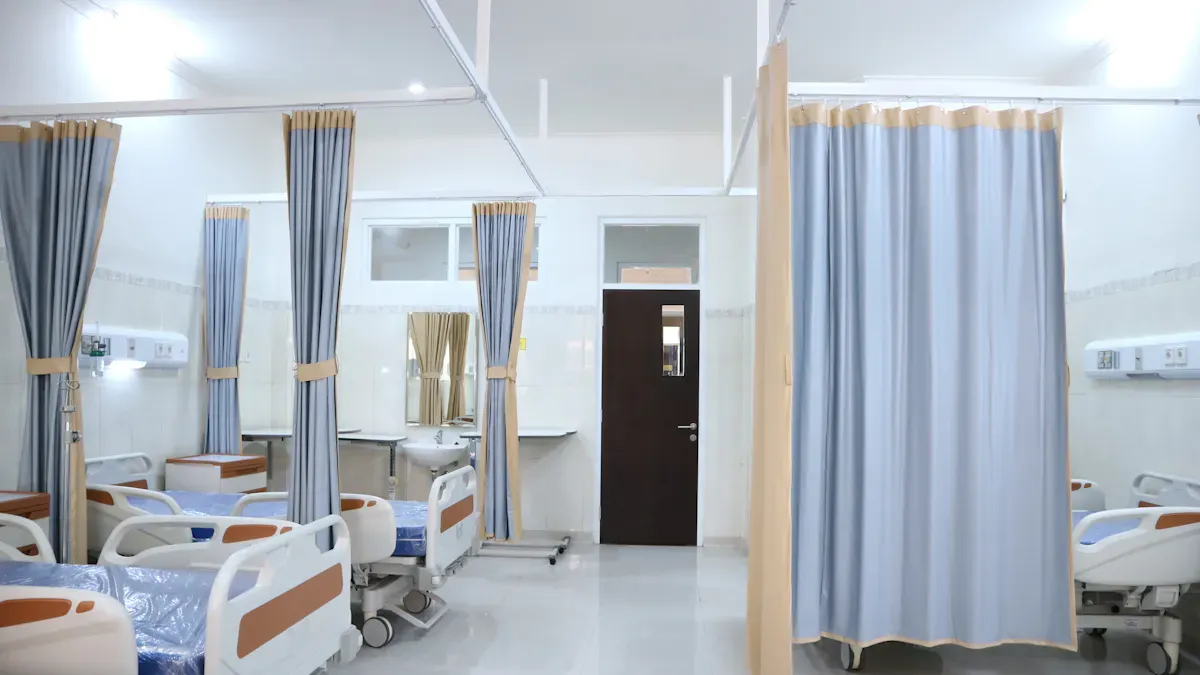
Reducing Infection Risks and Enhancing Hygiene
Disposable hospital curtains play a crucial role in minimizing infection risks within healthcare settings. Research indicates that these curtains maintain a near-zero contamination rate after 20 weeks of use. In contrast, traditional curtains exhibit a staggering contamination rate of 92% within just one week. This stark difference highlights the effectiveness of disposable curtains in enhancing hygiene standards.
- Disposable curtains provide a clean barrier for each patient, significantly reducing bacterial buildup.
- They eliminate cross-contamination risks associated with reusable curtains, which often harbor dangerous pathogens such as MRSA and VRE.
- The antimicrobial properties of certain disposable curtains actively inhibit the growth of harmful bacteria, further contributing to infection control.
In high-risk areas like intensive care units (ICUs) and emergency rooms, the need for stringent infection control is paramount. Disposable hospital curtains are designed for complete replacement, preventing pathogens from surviving on the fabric. This feature is essential for maintaining a safe environment for vulnerable patients.
Cost-Effectiveness and Operational Efficiency
Investing in disposable hospital curtains can lead to significant cost savings and improved operational efficiency for healthcare facilities. Traditional fabric curtains require extensive maintenance, including laundering and sterilization, which can be time-consuming and labor-intensive.
- Staff at leading hospitals report improved workflow efficiency due to the use of disposable curtains. For example, City Medical Center experienced a reduction in cleaning and sterilization time between procedures, leading to increased patient throughput.
- Traditional curtains often take up to 30 minutes for removal and replacement, exposing staff to safety risks. In contrast, disposable curtains simplify this process, allowing for quicker changes and reducing the risk of contamination.
The long-term financial implications also favor disposable options. While the upfront cost may be lower for disposable curtains, the lifetime cost of ownership for reusable curtains can be approximately 50% cheaper due to ongoing laundering and maintenance expenses.
| Aspect | Disposable Curtains | Reusable Curtains |
|---|---|---|
| Upfront Cost | Lower | Higher |
| Lifetime Cost of Ownership | Higher | Approximately 50% cheaper |
| Environmental Impact | Limited recyclability | Recyclable/Upcyclable |
Compliance with Healthcare Standards and Customization Options
Disposable hospital curtains help healthcare facilities comply with stringent infection control protocols and safety regulations. They meet guidelines set by organizations such as The Joint Commission, ensuring that hospitals maintain high hygiene standards.
Customization options for disposable curtains allow facilities to meet specific needs and preferences. Hospitals can choose from various features, including:
| Feature | Description |
|---|---|
| Fabric Patterns | Options like Stormy Weather and Beach Glass add visual appeal. |
| Sizes | Available dimensions include 69" w x 84" h and 69" w x 96" h. |
| Antimicrobial Options | Hospitals can opt for antimicrobial fabric to enhance hygiene. |
| Eco-Friendly Options | Eco-friendly fabric options are available for sustainability. |
| Branding | Facilities can incorporate logos and branding elements into the curtains. |
These customization options not only enhance the aesthetic appeal of healthcare environments but also provide essential privacy during treatment. By minimizing visual distractions, customized curtains can help reduce anxiety and stress for patients, facilitating a more comfortable healing environment.
Overall, the practical benefits of disposable hospital curtains extend beyond infection control. They contribute to operational efficiency, compliance with healthcare standards, and the ability to customize environments to meet patient needs.
Disposable hospital curtains represent a vital investment for enhancing patient safety and infection control. They provide numerous benefits, including:
- Quick replacement after each patient, reducing pathogen transmission.
- Antimicrobial coatings that inhibit bacterial growth, lowering bio-burden.
- Elimination of laundering costs, decreasing labor and contamination risks.
Healthcare providers in the US and Canada should prioritize adopting these curtains to improve care quality and operational efficiency.
FAQ
What makes disposable hospital curtains better for infection control?
Disposable curtains provide a fresh, sterile barrier for each patient, reducing pathogen buildup and cross-contamination risks compared to reusable curtains.
Are disposable hospital curtains cost-effective for healthcare facilities?
Yes, they reduce laundering and maintenance costs, improve workflow efficiency, and lower infection-related expenses despite higher upfront costs.
Do disposable curtains comply with healthcare safety standards?
Disposable curtains meet fire safety and infection control regulations, including NFPA 701 and The Joint Commission guidelines, ensuring patient safety and privacy.
