

 Send Email
 whatsapp


Why Disposable Mops Are Essential for Hospital Hygiene
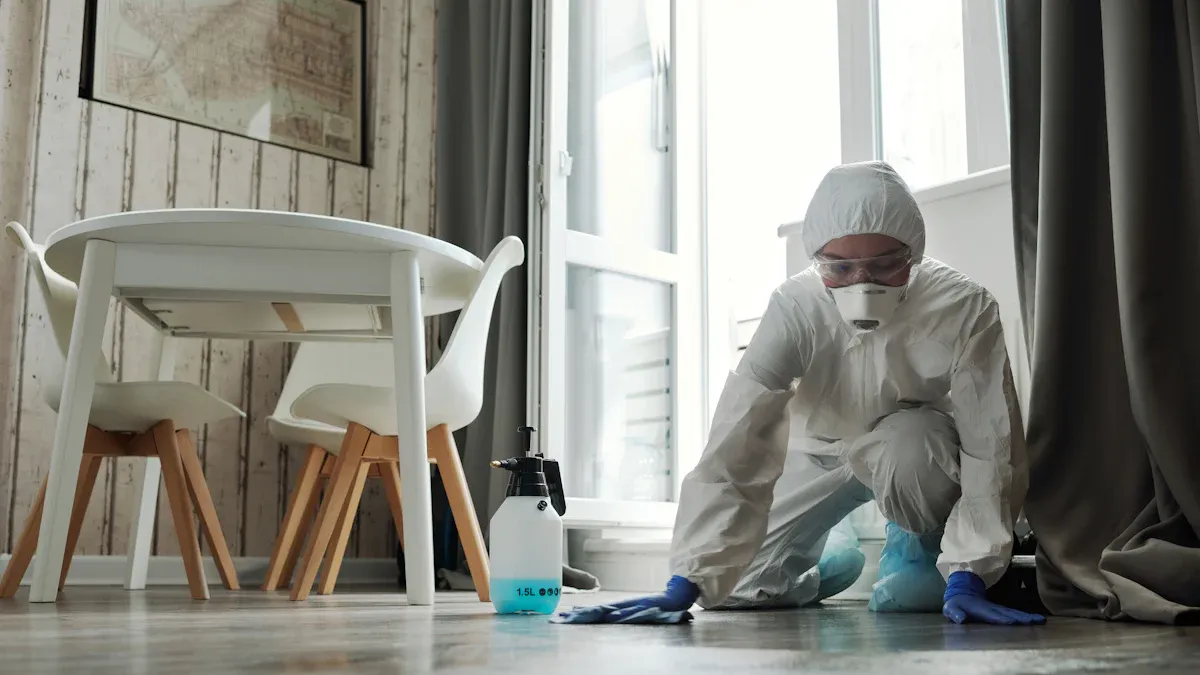
Maintaining cleanliness in hospitals demands precision and care. I’ve seen firsthand how disposable microfiber mop pads revolutionize hygiene practices. These single-use microfiber mop pads trap bioburden and debris, preventing contaminants from re-entering the environment. Unlike reusable mops, adisposable mop eliminates soil build-up and reduces hospital-acquired infections. Infection control experts consistently recommend these disposable mop pads for superior cleaning performance.
Healthcare facilities increasingly rely on disposable mop pads to ensure safer environments for patients and staff.
Key Takeaways
- Disposable mop pads stop germs from spreading. A new pad is used for each cleaning, keeping areas safe for everyone.
- These pads clean faster and save money. They don’t need washing, which takes time and costs more.
- Disposable mop pads lower the risk of infections in hospitals. They are important for keeping places clean and healthy.
Why Washable Mops Fall Short in Hospitals
Cross-contamination risks with reusable mops
Reusable mops pose significant risks in hospital environments. I’ve observed how these mops, even after laundering, can retain microbes and debris. Research highlights that the delicate fibers of Microfiber Mops degrade during repeated laundering. This damage reduces their ability to trap and remove contaminants effectively. When cleaning tools fail to perform, they inadvertently spread pathogens across surfaces, increasing the risk of cross-contamination.
The process of laundering reusable mops also introduces additional challenges. High heat and harsh chemicals, often used to sanitize mops, can irreversibly damage the microfiber structure. This damage compromises the mop’s cleaning efficiency. Worse, it can deactivate disinfectants, leaving surfaces inadequately cleaned. In clinical settings, where infection control is paramount, such risks are unacceptable.
Challenges in maintaining cleanliness of washable mops
Maintaining the cleanliness of washable mops is a constant struggle. I’ve seen how traditional cotton string mops, if not properly laundered, can promote microorganism growth. Studies show that these mops can increase contamination levels rather than reduce them. For example:
- The QC method, a common cleaning approach, resulted in a significant rise in colony-forming units (cfu) after mopping.
- In contrast, other cleaning methods showed a decrease in cfu, underscoring the inefficacy of reusable mops.
These findings reveal a critical flaw in washable mops. They require meticulous laundering to remain effective, yet the process itself often falls short. Without proper maintenance, these mops become a breeding ground for harmful microorganisms, undermining hospital hygiene efforts.
Inefficiencies in time and resources for laundering
Laundering reusable mops demands significant time and resources. I’ve noticed how hospitals must allocate staff, equipment, and energy to clean and sanitize these mops. This process is not only labor-intensive but also costly. The repeated washing cycles consume water, electricity, and detergents, adding to operational expenses.
Moreover, the time spent laundering mops could be better utilized elsewhere. Housekeeping teams often face tight schedules, and the added burden of laundering reusable mops can lead to delays in cleaning routines. Disposable microfiber mop pads eliminate this inefficiency. Their single-use design ensures consistent cleaning performance without the need for laundering, saving both time and resources.
Superior pathogen removal with disposable microfiber technology
I’ve seen how disposable microfiber mop pads outperform traditional cleaning tools in pathogen removal. Their advanced microfiber technology traps and removes up to 99.99% of tested pathogens from surfaces. This level of efficiency is unmatched by reusable mops, which often leave behind harmful microorganisms. The fine fibers in disposable mop pads penetrate microscopic crevices on surfaces, ensuring thorough cleaning. Unlike traditional materials, these mop pads maintain their effectiveness without requiring harsh chemicals.
Studies confirm that single-use microfiber cloths achieve a mean log10 reduction of 2.21 for pathogens like Clostridium difficile and E. coli. Traditional cleaning methods, in comparison, show significantly lower pathogen removal rates. For instance, hygiene audits reveal that microfiber mops remove 95% of microbes, while conventional mops achieve only 68%. These metrics highlight the superior cleaning power of disposable microfiber technology, making it an essential tool in hospital infection control.
Preventing the spread of harmful microorganisms
Preventing cross-contamination is critical in healthcare settings. Disposable microfiber mop pads excel in this area by providing a clean start for every cleaning session. I’ve observed how their single-use design eliminates the risk of transferring bacteria and fungi between patient rooms. This feature is especially important in high-risk areas like intensive care units, where even minor lapses in hygiene can have severe consequences.
Research shows that using a new microfiber mop pad for each room significantly reduces the spread of germs. For example, disposable mop pads reduce cross-contamination by up to 80%, compared to reusable mops. Hospitals that adopt these products report fewer healthcare-associated infections (HAIs), leading to safer environments for patients and staff. By discarding the mop pad after each use, cleaning teams ensure that harmful microorganisms do not travel from one area to another.
Supporting compliance with hospital hygiene standards
Disposable microfiber mop pads play a vital role in helping hospitals meet strict hygiene compliance standards. Their effectiveness and ease of use streamline the cleaning process, ensuring consistent disinfection across all areas. I’ve noticed how these mop pads simplify training for housekeeping teams, as their straightforward design requires minimal instruction. This simplicity reduces errors and enhances overall cleaning performance.
Organizations that implement disposable mop pads often see improved infection prevention and regulatory compliance. For instance, hospitals using these products report higher adherence to cleaning protocols, which directly contributes to lower HAI rates. A study found that microfiber mop pads remove 98% of bacteria and 93% of viruses with just water, significantly enhancing hygiene. By addressing cross-contamination concerns and ensuring thorough cleaning, disposable mop pads help healthcare facilities maintain the highest standards of cleanliness.
Key Advantages of Disposable Mops in Healthcare
Enhancing safety for patients and staff
I’ve observed how disposable microfiber mop pads significantly enhance safety in healthcare environments. Their single-use design ensures that pathogens do not transfer between patient rooms, reducing the risk of healthcare-associated infections (HAIs). This feature is especially critical in high-risk areas like operating rooms and intensive care units. By eliminating contamination risks, these mop pads create safer spaces for both patients and staff, fostering trust in the hospital’s hygiene practices.
Reducing cleaning fatigue for housekeeping teams
Housekeeping teams often face demanding schedules, and disposable microfiber mop pads help alleviate cleaning fatigue. I’ve noticed how their lightweight design and ease of use streamline cleaning routines. Unlike reusable mops, which require additional effort for laundering and maintenance, disposable mop pads allow staff to focus solely on cleaning tasks. This efficiency reduces physical strain and improves morale, enabling teams to maintain high standards of cleanliness without feeling overwhelmed.
Cost-effectiveness through improved infection control
Cost-benefit analyses consistently highlight the financial advantages of disposable mops in healthcare settings. I’ve seen how they eliminate expenses associated with laundering reusable mops, such as water, electricity, and detergent costs. The table below illustrates key advantages:
| Advantage | Description |
|---|---|
| Improved Efficiency | TASKISUM mops enhance cleaning speed and effectiveness, crucial for healthcare environments. |
| Reduced Risk of Cross-Contamination | Disposable mops minimize the chance of spreading pathogens compared to reusable mops. |
| Lower Overall Costs | Eliminates costs associated with laundering and maintenance of reusable mops, including shrinkage. |
These savings, combined with improved infection control, make disposable mop pads a cost-effective choice for hospitals.
Ensuring consistent cleaning performance with every use
Consistency is vital in hospital hygiene, and disposable microfiber mop pads deliver reliable cleaning performance every time. Controlled trials demonstrate their superiority over laundered mops, as shown in the table below:
| Characteristic | Disposable Mop Pads | Laundered Mops |
|---|---|---|
| Consistency of Performance | High | Variable |
| Contamination Accumulation | None | Yes |
| Degradation Over Time | None | Yes |
I’ve seen how disposable mop pads maintain their effectiveness without degradation, ensuring thorough cleaning across all surfaces. This reliability supports infection control efforts and reinforces compliance with hospital hygiene standards.
Disposable microfiber mop pads are indispensable for hospital hygiene. Their single-use design prevents cross-contamination by using a fresh pad for every cleaning session. This approach reduces healthcare-associated infections in critical areas like operating rooms. Hospitals adopting these mop pads report improved cleaning efficiency, better patient outcomes, and compliance with hygiene standards.
FAQ
What makes disposable microfiber mop pads better than reusable ones?
Disposable microfiber mop pads trap pathogens effectively and eliminate cross-contamination risks. Their single-use design ensures consistent cleaning performance without degradation.
Are disposable mop pads cost-effective for hospitals?
Yes, disposable mop pads reduce laundering expenses and improve infection control. Hospitals save resources while maintaining high hygiene standards.
Can disposable mop pads be used in all hospital areas?
Absolutely! I’ve seen them excel in high-risk zones like ICUs and operating rooms. Their versatility ensures thorough cleaning across diverse healthcare environments.