

 Send Email
 whatsapp


Introduction
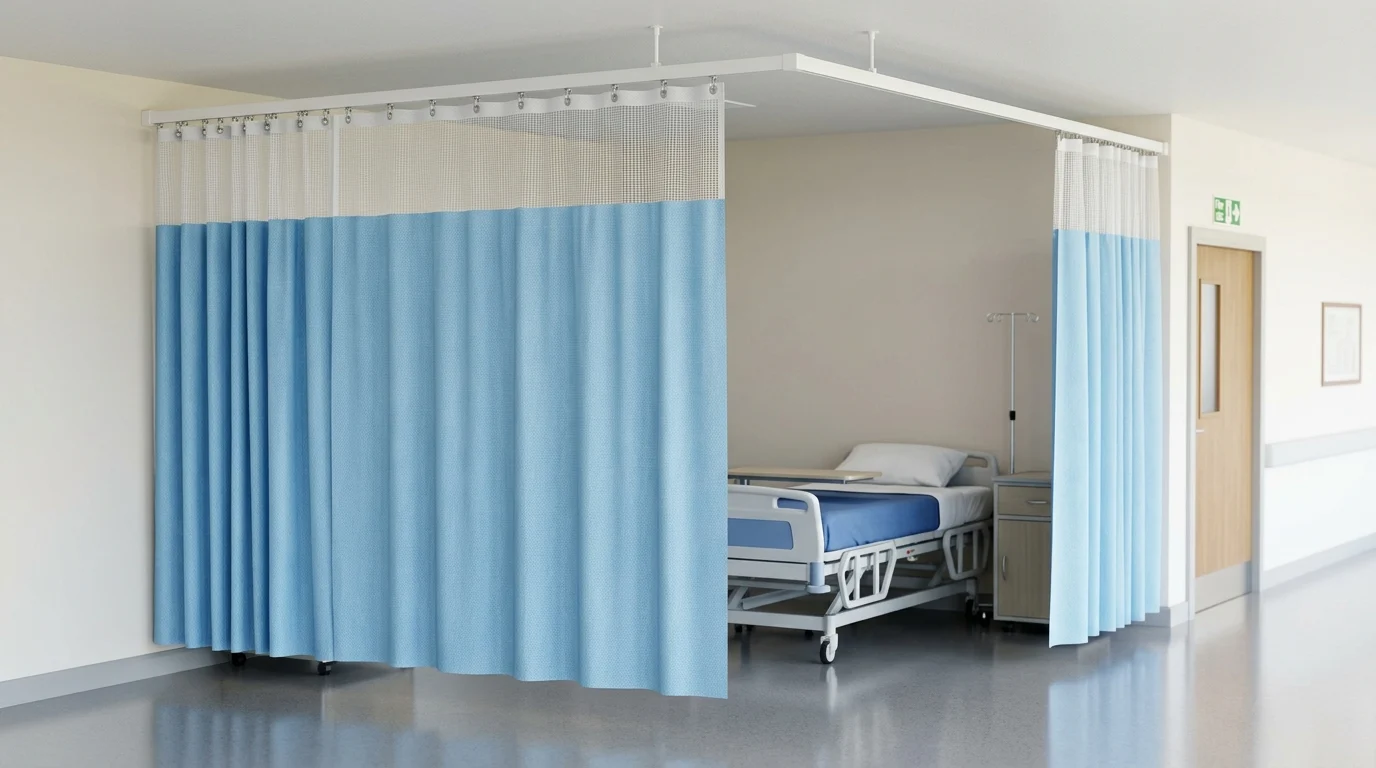
Infection control, labor efficiency, and compliance now shape even routine equipment choices in healthcare settings. Disposable Privacy Curtains have moved from a niche option to a practical standard because they address several operational problems at once: reducing contamination risks, simplifying curtain changes, lowering laundry dependence, and supporting faster room turnover. They also give facilities a more predictable way to manage hygiene protocols across busy wards, emergency areas, and long-term care spaces. This article explains the five main reasons hospitals increasingly choose disposable privacy curtains and shows how those advantages affect patient safety, staff workload, and day-to-day hospital operations.
Why Disposable Privacy Curtains Are Becoming a Strategic Standard
Healthcare facilities are increasingly transitioning from traditional fabric partitions to Single-Use Hospital Curtains to mitigate cross-contamination risks and streamline facility operations. This shift is driven by stringent regulatory pressures and the need to optimize clinical environments with predictable, scalable solutions.
How Disposable Privacy Curtains Improve Infection Prevention
Traditional fabric curtains are notorious vectors for healthcare-associated infections (HAIs), frequently harboring pathogens like MRSA and VRE for up to 14 days. By implementing Disposable Hospital Curtains, facilities eliminate the laundering cycle, which is historically fraught with thermal and chemical disinfection failures. Antimicrobial treatments applied to the non-woven polypropylene matrix actively inhibit bacterial colonization, achieving up to a 99.9% reduction in surface bioburden within 24 hours of contact. This proactive approach to infection control significantly interrupts the chain of transmission between patients and healthcare workers.
Definitions, Product Formats, and Performance Specifications
These modern partitions are typically manufactured from 100% recyclable, non-woven spunbond polypropylene. Standard industry specifications demand a material weight between 100 and 120 grams per square meter (GSM) to ensure adequate opacity for patient privacy while maintaining necessary tensile strength. Furthermore, compliance with international flame retardant standards, such as NFPA 701 or BS 5867 Part 2 Type C, is non-negotiable for institutional deployment. Available in standard vertical drops ranging from 2.0 to 2.5 meters, these units often feature integrated mesh tops to accommodate fire sprinkler penetration codes, representing a highly engineered solution for clinical spatial management.
Why Hospitals Prefer Disposable Privacy Curtains
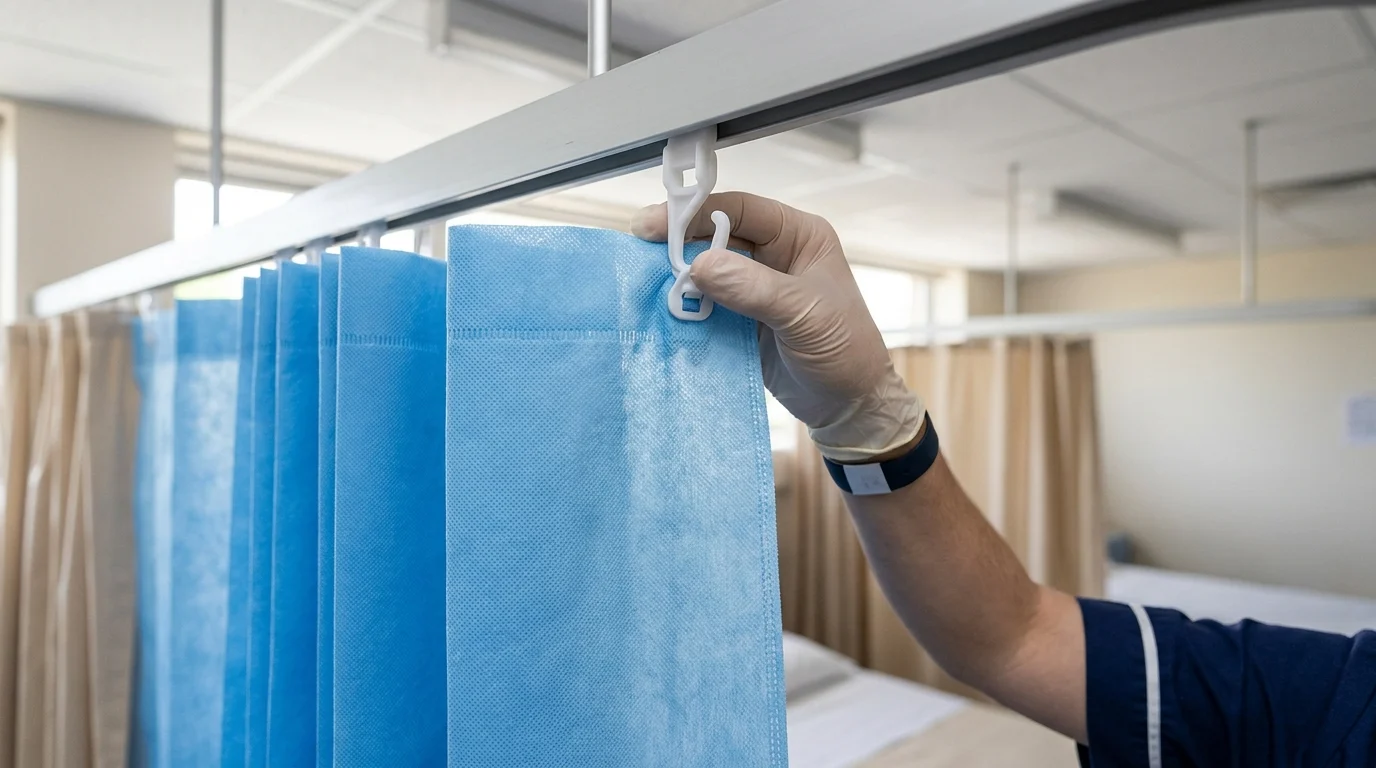
The preference for Medical Curtains engineered for single use extends well beyond clinical efficacy into measurable operational efficiency. Administrators favor these systems because they resolve long-standing logistical bottlenecks inherent in textile management, fundamentally altering the economics of facility upkeep.
Infection Control, Labor Reduction, and Bed-Space Efficiency
Replacing a traditional fabric curtain requires specialized environmental services staff, step ladders, and approximately 15 to 20 minutes per bed, causing significant room downtime. Conversely, modern disposable systems utilize rapid-fit hook mechanisms that allow a single technician to complete the changeover in under 2 minutes. This 85% reduction in labor time directly increases bed turnover rates. In high-acuity environments like Intensive Care Units, where curtains must be changed after every discharged patient, this time savings translates directly into maximized bed-space utilization and increased admission capacity without expanding the physical footprint.
Compliance, Cost Predictability, and Supply Chain Simplicity
Financially, the shift to disposables eliminates unpredictable commercial laundry fees, which can fluctuate between $0.60 and $1.20 per pound depending on regional utility and chemical costs. The fixed unit cost of a disposable curtain allows procurement departments to forecast annual expenditures with precise accuracy. Furthermore, the supply chain is vastly simplified; facilities no longer need to manage complex inventory tracking for soiled, in-transit, and clean textiles. Routine auditing for Joint Commission compliance is also streamlined, as disposable models often feature built-in, peel-off audit labels that clearly display the installation date and the mandated 3-to-6-month replacement deadline, ensuring compliance is visually verifiable at a glance.
How Hospitals Should Evaluate Disposable Privacy Curtains for Procuremen
Transitioning a facility's entire privacy screen inventory requires a systematic approach to vendor selection and product validation. Procurement teams must evaluate technical specifications against supply chain reliability to ensure the seamless integration of Healthcare Curtains into daily operations.
Comparison Criteria That Support Procurement Decisions
Key procurement criteria include material durability, antimicrobial efficacy, and existing track compatibility. Evaluating the total cost of ownership requires analyzing both direct unit costs and indirect labor savings to build a comprehensive business case.
| Feature | Traditional Fabric Curtains | Disposable Polypropylene Curtains |
|---|---|---|
| Material Weight | 250 - 300 GSM | 100 - 120 GSM |
| Changeover Time | 15 - 20 minutes | 1 - 2 minutes |
| Upfront Unit Cost | $40 - $80 | $10 - $25 |
| Laundering Cost | $5 - $8 per cycle | $0 (Single-use) |
| Pathogen Retention | High (Days/Weeks) | Low (Antimicrobial treated) |
Buyers should also verify minimum order quantities (MOQs) with manufacturers, which typically range from 500 to 1,000 units for custom institutional prints or specific color-coding schemes, alongside standard lead times of 3 to 5 weeks for bulk container shipments.
Practical Steps to Select, Trial, and Implement
Implementation should commence with a localized pilot program, typically within a single high-turnover department such as the Emergency Room or Oncology ward. Facilities should install the Hospital Curtains and monitor staff feedback regarding ease of installation, privacy opacity, and track glide compatibility. During this 30-to-60-day trial, infection control teams must conduct environmental surface swab tests to validate the manufacturer's antimicrobial claims against the facility's specific endemic pathogens. Following a successful pilot, procurement can establish standing orders, ensuring a continuous 60-day buffer stock is maintained onsite or via a distributor to protect against global logistics disruptions.
Key Takeaways
- The most important conclusions and rationale for Disposable Privacy Curtains
- Specs, compliance, and risk checks worth validating before you commit
- Practical next steps and caveats readers can apply immediately
Frequently Asked Questions
Why do hospitals switch from fabric to disposable privacy curtains?
They reduce cross-contamination risk, cut changeover time to about 1–2 minutes, and remove laundering delays and costs.
How often should disposable hospital curtains be replaced?
Most facilities replace them every 3 to 6 months, or immediately after discharge in high-risk areas like ICUs or isolation rooms.
What specifications should buyers check before ordering disposable privacy curtains?
Confirm 100–120 GSM polypropylene, flame-retardant compliance like NFPA 701 or BS 5867, opacity, antimicrobial treatment, and track compatibility.
Are disposable privacy curtains more cost-effective than fabric ones?
Usually yes. They have a fixed unit price, no laundry fees, lower labor needs, and faster bed turnover, which improves operational efficiency.
Can disposable privacy curtains support hospital compliance audits?
Yes. Many include date labels for installation tracking, making replacement schedules easy to verify during Joint Commission or internal audits.