

 Send Email
 whatsapp


Why Microfilament Nonwoven Is Ideal for Automotive, Electronics, and Medical Fields
Microfilament Nonwovens excel in automotive, electronics, and medical fields. They offer a unique combination of strength, filtration efficiency, and barrier properties, addressing critical performance demands. The market for long fibermicrofiber nonwoven fabric projects a 6.9% CAGR from 2025 to 2032. This growth highlights the increasing importance of Microfilament Fabric, including specialized Bicomponent Microfilament Fabric and Spunlace Microfilament Fabric.
Key Takeaways
- Microfilament nonwovens are strong and filter well. They are good for cars, electronics, and medical uses.
- These materials make cars lighter and safer. They protect electronics from static. They also help medical masks filter tiny particles.
- Microfilament nonwovens last a long time. They help keep things clean and safe in many important jobs.
Understanding the Superiority of Microfilament Nonwoven Properties

Defining Microfilament Nonwoven Technology
Microfilament nonwoven materials represent advanced textile engineering. Manufacturers produce these materials using ultra-fine fiber technology. A key manufacturing process is melt blowing. This method converts polymers into continuous filaments. Hot, fast-flowing air creates a self-bonded web of fibers. The resulting filaments typically have diameters ranging from 1 to 5 micrometers. This makes them significantly finer than fibers from other methods. Fibers with a diameter from 1000 to 10,000 nm classify as 'micron size' or 'micro-fibers'. This classification is relevant for Microfilament Nonwoven production.
The manufacturing of nonwoven materials generally involves two primary stages. First, web forming converts staple fibers or filaments into two-dimensional webs or three-dimensional batts. Methods include dry laid, wet laid, and polymer laid processes like spun bonding and melt blowing. Second, web bonding imparts the necessary frictional force to maintain the structure's unity. This stage largely determines the mechanical characteristics, compactness, and porosity of the final product. Bonding methods include mechanical, thermal, and chemical techniques.
Key Performance Advantages of Microfilament Nonwoven Materials
Microfilament nonwoven materials offer several critical performance advantages. Their ultra-fine fiber structure contributes to superior filtration capabilities. Microfiber filter bags are notable for their exceptional filtration efficiency for micron and sub-micron particles. They are designed for fine polishing, sub-micron filtration, and critical applications. The typical micron range for microfiber filter bags is 0.5 - 50 µm. Research involves 3D modeling of filtration processes using polyurethane nanofiber-based nonwoven filters. These filters are specifically designed for sub-micron particle filtration. This research compares theoretical predictions for filtration efficiency with experimental data, indicating these materials are engineered and tested for sub-micron particle capture. This high filtration efficiency makes them ideal for environments requiring stringent contamination control.
Microfilament Nonwoven in Automotive, Electronics, and Medical Applications

Enhancing Automotive Performance and Durability with Microfilament Nonwoven
Microfilament nonwoven materials significantly improve automotive performance and durability. Manufacturers utilize these advanced textiles in various interior and structural components. For instance, they appear in seat covers and headliners, enhancing both aesthetics and comfort. Interior cladding for dashboards also incorporates these materials, contributing to a refined cabin environment. Noise-reducing nonwoven mats effectively dampen sound, creating a quieter ride.
Automotive engineers also employ microfilament nonwovens for structural integrity and weight reduction. They serve as carpet backing, allowing for easy molding and dimensional stability. Carpets and throw-in mats, often made from recycled materials, demonstrate the adaptability of these nonwovens. Primary and secondary backings for headliners, underbody shields, and wheel arches provide crucial strength and elongation support, typically using 100% polyester fibers. Airbag curtains benefit from these sustainable and functional materials. Acoustic pads, featuring ultrafine fibers, reduce noise for comfortable rides, with microfilaments based on Evolon® specifically enhancing sound absorption. Driver comfort is a key focus for seating applications.
These materials also contribute to vehicle lightweighting and fuel efficiency. Freudenberg’s headliner facing materials offer significant weight reduction potential in headliners, trunk liners, and seat backs, especially compared to composite knitted or foam fabrics. Evolon microfilament textiles possess an outstanding strength-to-weight ratio, making them suitable for various automotive applications where weight savings are crucial. Unique multi-layer composites are also utilized for molded underbody panels and wheel liners to achieve weight savings. Freudenberg's microfilament textiles support fuel savings and CO2 reductions, enhancing cost-efficient and climate-friendly driving.
Precision and Protection in Electronics with Microfilament Nonwoven
The electronics industry demands materials offering precision and protection, and microfilament nonwovens meet these stringent requirements. These materials provide crucial electrostatic discharge (ESD) protection for sensitive electronic components. Microfilament nonwoven cloths possess electrostatic properties that mitigate the risk of static discharge. Manufacturers treat these materials to manage electrostatic charge, which can impact sensitive processes and environments. They are highly effective in electrostatic discharge management.
Freudenberg developed the Evolon ESD range specifically for packaging sensitive electronic components. This range provides permanent electrostatic discharging capabilities. Its surface resistivity can be customized to meet specific requirements, ensuring optimal protection for delicate electronics during manufacturing, transport, and storage.
Ensuring Safety and Comfort in Medical Fields with Microfilament Nonwoven
In the medical field, microfilament nonwoven materials play a vital role in ensuring safety and comfort, particularly in filtration and protective wear. Their fine fiber structure makes them ideal for critical healthcare applications. Meltblown technology, which produces ultra-fine fibers (1-5 microns), is specifically used in medical face masks to meet stringent healthcare requirements. This technology ensures high filtration efficiency against airborne particles.
Nanofiber technology further enhances medical filtration. Layers as thin as 100 nm are applied in medical filtration for ventilators, masks, and other critical healthcare equipment. These nanofibers effectively capture submicron particles and aerosols, providing superior protection. Drylaid process materials, created by blending staple fibers into a uniform web, are also utilized in medical face masks. These materials enhance their ability to capture fine particles through electrostatic features, adding another layer of safety for medical professionals and patients.
The Tangible Benefits of Microfilament Nonwoven Across Industries
Improved Filtration and Contamination Control
Microfilament nonwoven materials offer superior filtration and contamination control, which is crucial for sensitive environments. These materials are specifically designed to minimize particle and fiber release. This characteristic is essential for preventing contamination of sensitive equipment and products, particularly in cleanroom settings. Cleanroom wipes, for example, are low-linting and non-abrasive. Their design prevents residue from being left behind, which is vital in laboratories and hospitals. This minimizes contamination risks.
Ultra-thin fibers, up to 100 times finer than a human hair, create a dense structure. This structure effectively traps dirt, dust, and contaminants, preventing their redistribution. Unlike traditional wipes that push dirt around, these materials capture and hold particles. Their low linting properties make them virtually lint-free. This makes them ideal for cleanrooms and laboratories where maintaining critical cleanliness is paramount. The design of these materials minimizes waste generation and cross-contamination risks. This makes them a safer and more sustainable choice for maintaining high hygiene standards.
Advanced Barrier Protection and Material Efficiency
Microfilament nonwoven materials provide advanced barrier protection against various fluids, contributing significantly to material efficiency. Highly Permeable and Liquid-Repellent Textiles (HPPT) with micro-nano-networks demonstrate excellent liquid barrier properties. For water, the contact angle (WCA) was 131°, for blood (BCA) it was 126°, for oil (OCA) it was 104°, and for ethanol (ECA) it was 85°. These high contact angles, especially for water, blood, and oil, indicate superior anti-wettability. WCA, BCA, and OCA remained stable over 300 seconds. The material's tiny pores and low surface energy contribute to this anti-wettability.
Manufacturers use various nonwoven types for barrier applications, including:
- Polypropylene melt-blown non-wovens
- Polyester spun bond non-wovens
- PTFE microporous membranes
- Cellulose spun bond non-wovens
Non-woven fabric-based microfluidic devices utilize a hydrophobic wax barrier. These materials allow fluid penetration via capillary force without external pumps. Non-woven fabrics are low-cost, easy to process, and disposable compared to glass or polymer. As a fiber-based material, non-woven fabric offers greater durability and mechanical strength than paper. It also provides a wide range of surface chemical and physical properties for microfluidic applications.
Microfilament nonwoven materials significantly reduce material consumption compared to traditional fabrics. This is primarily due to their extended lifespan and reusability. Products like microfilament pads and mops can endure hundreds of wash cycles, maintaining their performance over time.
| Fabric Type | Wash Cycles Without Bleach | Wash Cycles With Bleach | Notes on Durability and Cost Impact |
|---|---|---|---|
| Microfiber Pads | 500 - 600 | 250 - 300 | Lasts 5-10 times longer than cotton, reducing replacement frequency and costs |
| Microfiber Damp Mops | ~500 | N/A | Significantly more durable than cotton damp mops, leading to cost savings |
| Cotton Damp Mops | ~50 | N/A | Much lower durability, requiring frequent replacement and higher long-term costs |
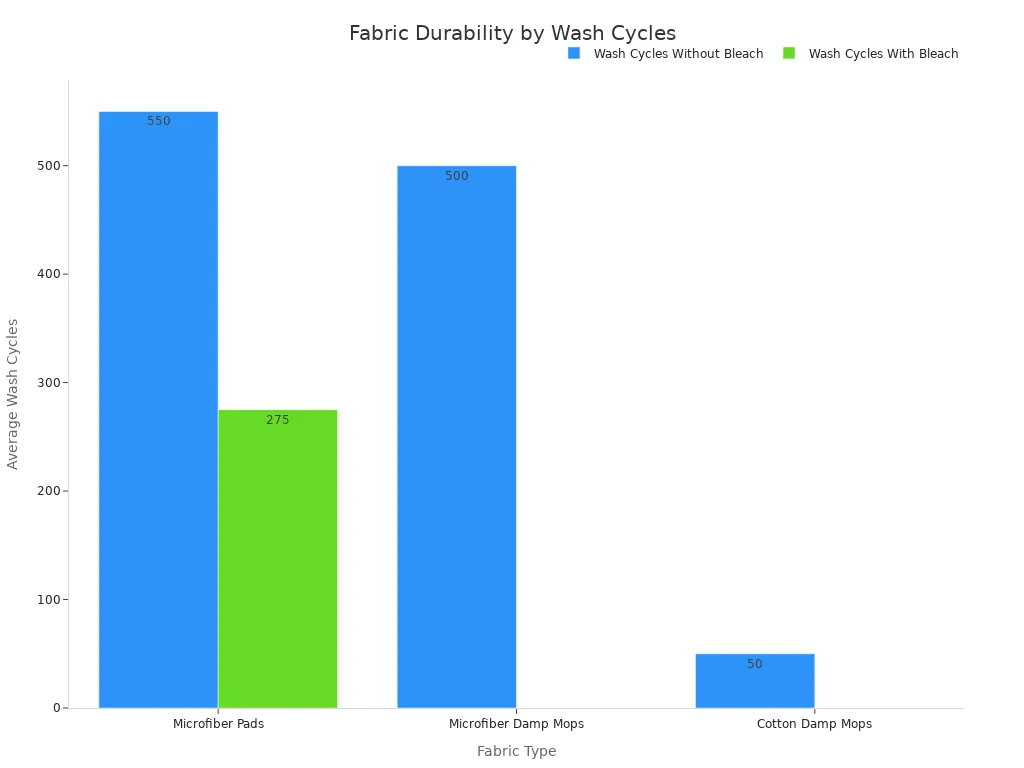
This substantial difference in durability means microfilament products require far less frequent replacement. This directly leads to lower overall material consumption and reduced waste. Continuous filament technology in some microfilament wipes enhances their durability and resistance to fraying. This further extends their usable life and contributes to material savings.
Enhanced Comfort, Lightweighting, and Durability
Microfilament nonwoven materials enhance comfort, facilitate lightweighting, and provide exceptional durability across various applications. In protective apparel, these materials offer a balance of breathability and filtration.
| Material Type | Quality Factor (Pre-wash) | Quality Factor (Post-wash) | Filtration Performance (Submicron Particles) |
|---|---|---|---|
| Meltblown Polypropylene (e.g., N95s, surgical masks) | 27 to 119 kPa–1 | < 10 kPa–1 (degraded significantly) | Best, especially against submicron particles (degraded post-wash) |
| SMS Medical Wraps (H400, H100, Advancheck SMS) | 13 to 36 kPa–1 | 8 to 10 kPa–1 | High |
| Spunbond Polypropylene (OlyFun, SmartFab) | 8 to 11 kPa–1 | 8 to 10 kPa–1 | Lower than meltblown pre-wash |
| Nonwoven Polyester (Pellon 930) | 8 to 11 kPa–1 | N/A | Lower than meltblown pre-wash |
| Woven Cotton (Kona, Sateen) | Lowest | 6 kPa–1 (Kona) | Lowest |
| Cotton Flannel | Better than woven cotton | N/A | Better than woven cotton due to disordered structure |
Nonwoven synthetics generally perform better in terms of breathability and filtration than woven cotton, both washed and unwashed. The 'quality factor' (Q) combines filtration efficiency and breathability; a higher Q indicates better performance. Materials containing meltblown nonwoven polypropylene initially showed the best filtration, especially for submicron particles. However, they degraded significantly after washing. Washing reduced the filtration performance of the best nonwovens to a level comparable to average nonwovens. Degradation after washing was most pronounced for submicron particle filtration. This likely occurred due to the neutralization of electrostatic charges in electret-based meltblown filters. Spunbond nonwovens and cotton flannel offer a sustainable improvement over widely-used woven cotton masks.
Ingeo 6500D, a microfilament nonwoven material, is known for its 'softer feel'. Manufacturers can combine it with hydrophilic fiber coating technology. This combination leads to 'enhanced fluid management' with improvements in 'strike-through, re-wet, and run-off'. All these factors contribute to 'better comfort on skin' in nonwoven hygiene applications.
Microfilament nonwoven materials also exhibit remarkable long-term durability, even in challenging outdoor environments. Properly stabilized and buried nonwoven polypropylene geotextiles are estimated to have a functional longevity of up to 200 years. In oceanic or marine applications, properly stabilized polypropylene geotextiles have been estimated to last nearly 200 years. Accelerated laboratory incubation protocols suggest an antioxidant lifetime of approximately 120 years at 25°C for polyethylene and polypropylene geotextiles in leachate or surface water collection systems. These findings highlight the exceptional resilience and longevity of these advanced materials.
Microfilament Nonwoven materials prove ideal for automotive, electronics, and medical fields. Their unique properties directly address the stringent demands for performance, safety, and efficiency in these critical sectors. This positions Microfilament Nonwoven as a material of choice for future innovations, driving progress across industries.
FAQ
What makes microfilament nonwoven ideal for automotive, electronics, and medical fields?
Microfilament nonwovens offer superior strength, filtration efficiency, and barrier properties. These materials meet the stringent demands for performance, safety, and efficiency in these critical sectors.
How does microfilament nonwoven contribute to lightweighting in automotive applications?
Microfilament nonwovens provide an outstanding strength-to-weight ratio. They enable significant weight reduction in components like headliners and underbody panels, improving fuel efficiency.
What role does microfilament nonwoven play in ensuring safety in medical fields?
These materials offer high filtration efficiency against airborne particles and submicron contaminants. They are crucial for protective wear, surgical masks, and advanced medical filtration systems.
