

 Send Email
 whatsapp


Why Professionals Choose Microfiber Towels for Detailing, Dusting, and Deep Cleaning

Professionals consistently choose Microfiber Towels for their superior performance and versatility in detailing, dusting, and deep cleaning. Their unique properties deliver unmatched efficiency and pristine results across various demanding tasks. This chart illustrates the significant performance difference compared to traditional cloths:
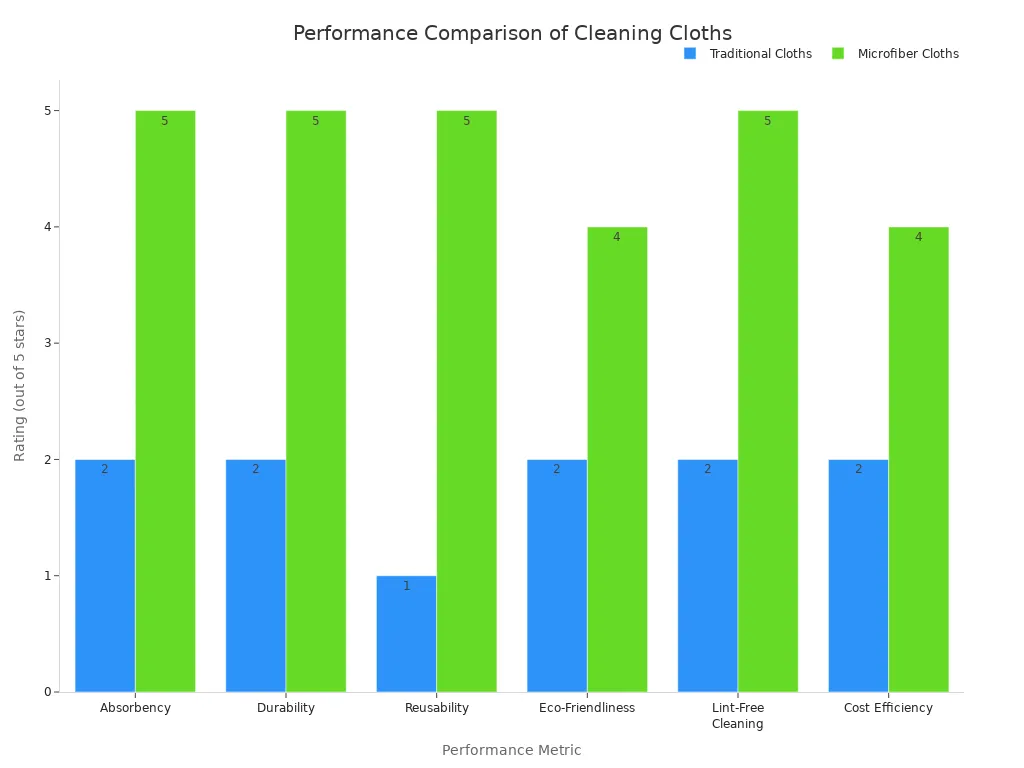
Understanding these advantages reveals why professionals consider Microfiber Towels an indispensable tool for achieving professional-grade cleanliness.
Key Takeaways
- Microfiber towels absorb liquids well and dry fast. They clean surfaces gently without scratches.
- These towels clean without leaving lint or streaks. You can use them for many different cleaning jobs.
- Microfiber towels last a long time and save money. Wash them carefully to keep them working well.
The Unrivaled Performance of Microfiber Towels

Professionals rely on tools that consistently deliver exceptional results. Microfiber towels stand out in the cleaning industry due to their advanced material science and superior functional properties. These towels offer a level of performance traditional Cleaning Cloths cannot match, making them essential for demanding tasks.
Superior Absorbency and Quick Drying with Microfiber Towels
Microfiber towels excel in liquid absorption, a critical factor for effective cleaning and detailing. Their unique construction, featuring millions of tiny fibers, creates a vast surface area capable of holding several times their weight in liquid. This characteristic makes them highly efficient for spills, drying surfaces, and product removal.
Consider the significant difference in water absorption between common towel types:
| Properties | Microfiber Towels | Cotton Towels |
|---|---|---|
| Water Absorption | High | Medium |
Gram for gram, a microfiber towel demonstrates superior absorbency compared to a cotton one. Microfiber fabrics are incredibly absorbent, making them ideal towel materials for various applications. The absorbency of these towels can vary based on their GSM (grams per square meter); a higher GSM towel will be heavier and absorb moisture more efficiently. However, lower-quality microfiber towels can sometimes be less absorbent than cotton ones. Beyond their impressive absorption capacity, microfiber towels also dry quickly. This rapid drying prevents the growth of bacteria and mildew, ensuring the towels remain hygienic and ready for repeated use.
Gentle and Non-Abrasive Microfiber Towels for All Surfaces
The delicate nature of many surfaces in detailing and deep cleaning requires a non-abrasive cleaning tool. Microfiber towels meet this requirement perfectly. Their ultra-fine fibers are designed to lift and trap dirt, dust, and grime without scratching or marring surfaces. This gentle action makes them safe for use on sensitive materials such as clear coats, polished metals, glass, and delicate electronics.
Tip: Always use a clean microfiber towel to avoid transferring abrasive particles that could scratch surfaces.
Professionals trust these towels to clean high-gloss finishes and intricate components without leaving behind swirl marks or damage. The non-abrasive quality of microfiber ensures a pristine finish every time, preserving the integrity and appearance of valuable assets.
Achieving Flawless Finishes with Microfiber Towels
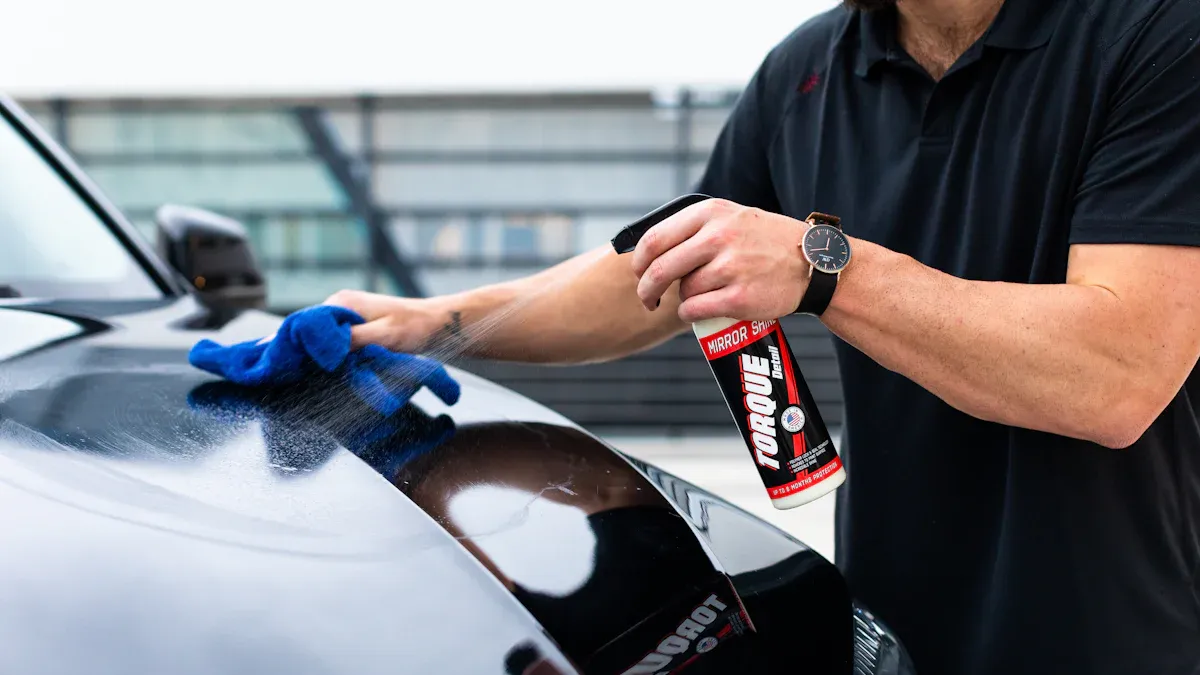
Professionals strive for perfection in every cleaning task. They understand that the right tools make the difference between an acceptable result and a truly flawless finish. Microfiber towels play a crucial role in achieving this high standard.
Lint-Free Cleaning Power of Microfiber Towels
A truly clean surface is free from streaks and lint. Microfiber towels are generally known for their ability to deliver a lint-free finish. Their unique construction traps dust and debris without leaving behind fibers. However, professionals recognize that not all microfiber performs equally. Some microfiber towels, despite marketing claims, can leave microfibers or isolated strands on glass surfaces. In contrast, well-washed 100% cotton flour sack towels or old cotton t-shirts sometimes leave very little lint. Professionals therefore carefully select high-quality microfiber towels and maintain them properly to ensure they achieve truly lint-free results, especially on sensitive surfaces like glass or polished paint. They understand that the quality of the towel and its care directly impact its lint-free performance.
Versatility of Microfiber Towels in Detailing and Cleaning
The adaptability of microfiber towels makes them indispensable across a wide range of detailing and cleaning applications. Professionals often implement a color-coding system for their towels. This practice prevents cross-contamination and optimizes performance for specific tasks. For instance, they dedicate certain towels for compounds and polishes, others for sealants, and a separate set for carnauba-based products. High-quality towels are reserved for paint and other scratch-sensitive areas. Less critical tasks, such as cleaning wheels and engine bays, use different, often yellow, towels.
Microfiber towels excel in numerous common detailing and cleaning tasks:
- Drying off vehicles after a wash
- Waxing
- Polishing
- Buffing
- Wiping down surfaces
- Polishing chrome
- Applying wax
- Cleaning glass
- Interior detailing
- Exterior detailing
These towels also work effectively with specific cleaning solutions. Dedicated microfiber towel detergents are formulated to break down oils, waxes, and residues without clogging the fibers. Examples include Dr. Joe Prime Emulsifier, Chemical Guys Microfiber Wash, and Meguiar’s Microfiber Wash. Specialty emulsifiers, like Dr. Joe Prime Emulsifier Microfiber Cleaner, deep clean and restore fibers for maximum absorbency. A small amount of white vinegar can also complement cleaning, fighting odors and removing lingering residues.
The Durability and Value of Professional Microfiber Towels
Professionals demand tools that perform reliably and offer long-term value. Microfiber products meet these criteria, providing both exceptional durability and cost-effectiveness. Investing in high-quality microfiber translates into sustained performance and significant savings over time.
Long-Lasting and Reusable Microfiber Towels
Professional-grade microfiber towels are built for endurance. Their robust construction allows for extensive reuse, making them a sustainable choice. Quality microfiber towels can withstand 80 to 150 wash cycles before critical failure, assuming proper maintenance. Performance may drop below 60% after more than 150 washes, characterized by fiber breakage and lint shedding. However, high-quality microfiber towels typically endure 200 to 500 washes. Premium microfiber towels, with proper care, can even surpass 500 washes while maintaining their effectiveness.
Proper care significantly extends the lifespan of these valuable tools. Professionals follow specific guidelines to maximize towel longevity:
- Separate Microfiber: Always wash microfiber separately from cotton or other lint-producing garments. This prevents lint transfer, which clogs fibers and reduces effectiveness.
- Consider a Pre-Rinse: For heavily soiled towels, hand-rinse them in cold water before machine washing. This ensures thorough cleaning and protects less-dirty towels.
- Choose Detergent Wisely: Use a detergent free of fabric softeners, fragrances, or optical brighteners. These additives can clog fibers and ruin absorbency. Use a small amount, as too much leaves residue.
- Use the Gentle Cycle: A gentle cycle preserves the fiber structure and prevents wear. Microfiber does not require heavy agitation.
- Add Vinegar: Instead of fabric softener, add a half cup of white vinegar during the rinse cycle. This naturally softens and deodorizes the fabric.
- Assess an Extra Rinse: Ensure all detergent is completely rinsed out. Residue reduces absorbency and causes streaking. Run an extra rinse cycle if in doubt.
- Minimize Heat: Air dry or tumble dry on low or no heat. High heat can melt synthetic fibers, making towels stiff or slick and reducing effectiveness. Air drying is gentler. If machine drying, use tennis or dryer balls to break up stiffness and speed drying. Remove towels immediately after the cycle.
- Skip Dryer Sheets: Avoid dryer sheets when machine drying. They coat towels in residue.
Professionals also know when to replace towels. They replace cloths when:
- They feel rough or stiff.
- They no longer absorb liquid effectively.
- They start to streak or leave lint.
Proper storage also contributes to longevity. Fold clean microfiber cloths flat to prevent warping. Keep them separate from cotton cloths. Store them in dust-free containers or drawers. Color-coding cloths by area, such as red for restrooms and blue for glass, avoids cross-contamination and maintains hygiene.
Cost-Effectiveness of Investing in Quality Microfiber Towels
The initial investment in quality microfiber towels pays dividends over time. Switching to reusable consumables, such as these cleaning cloths, significantly reduces long-term costs. It decreases the need for constant replacements. While an initial investment is necessary, these items can pay for themselves within a few months. Maximizing these savings requires investing in high-quality, durable products. These products withstand repeated use and cleaning, ensuring they maintain effectiveness over time.
However, professionals also understand that cost-effectiveness can vary by industry. In healthcare settings, for example, reusable microfiber can incur significant hidden costs. Hospitals using third-party laundry services may face substantial replacement charges for lost or damaged items. These charges can potentially exceed $100,000 annually per hospital. These costs, along with laundry and delivery fees, can sometimes make disposable microfiber a more cost-effective option overall by eliminating such expenses. For most professional cleaning and detailing applications, the durability and reusability of high-quality microfiber towels offer a clear economic advantage.
Microfiber Towels are the professional's preferred choice. They offer exceptional absorbency, a gentle nature, and lint-free performance. Their versatility across detailing, dusting, and deep cleaning, combined with their durability, makes them a smart investment. Professionals achieve superior cleaning results, enhanced efficiency, and long-term value by adopting these essential tools.
FAQ
What is the best way to wash microfiber towels?
Professionals wash microfiber towels separately in cold water with a dedicated detergent. They avoid fabric softeners and high heat drying. This maintains towel integrity and absorbency.
Why do professionals prefer microfiber over cotton?
Microfiber towels offer superior absorbency, lint-free cleaning, and gentle action. They effectively trap dirt and dry quickly. Cotton towels lack these advanced performance characteristics.
Can professionals use the same microfiber towel for all tasks?
No, professionals often color-code towels for specific tasks. This prevents cross-contamination. They use different towels for paint, glass, wheels, and interior surfaces.
