

 Send Email
 whatsapp


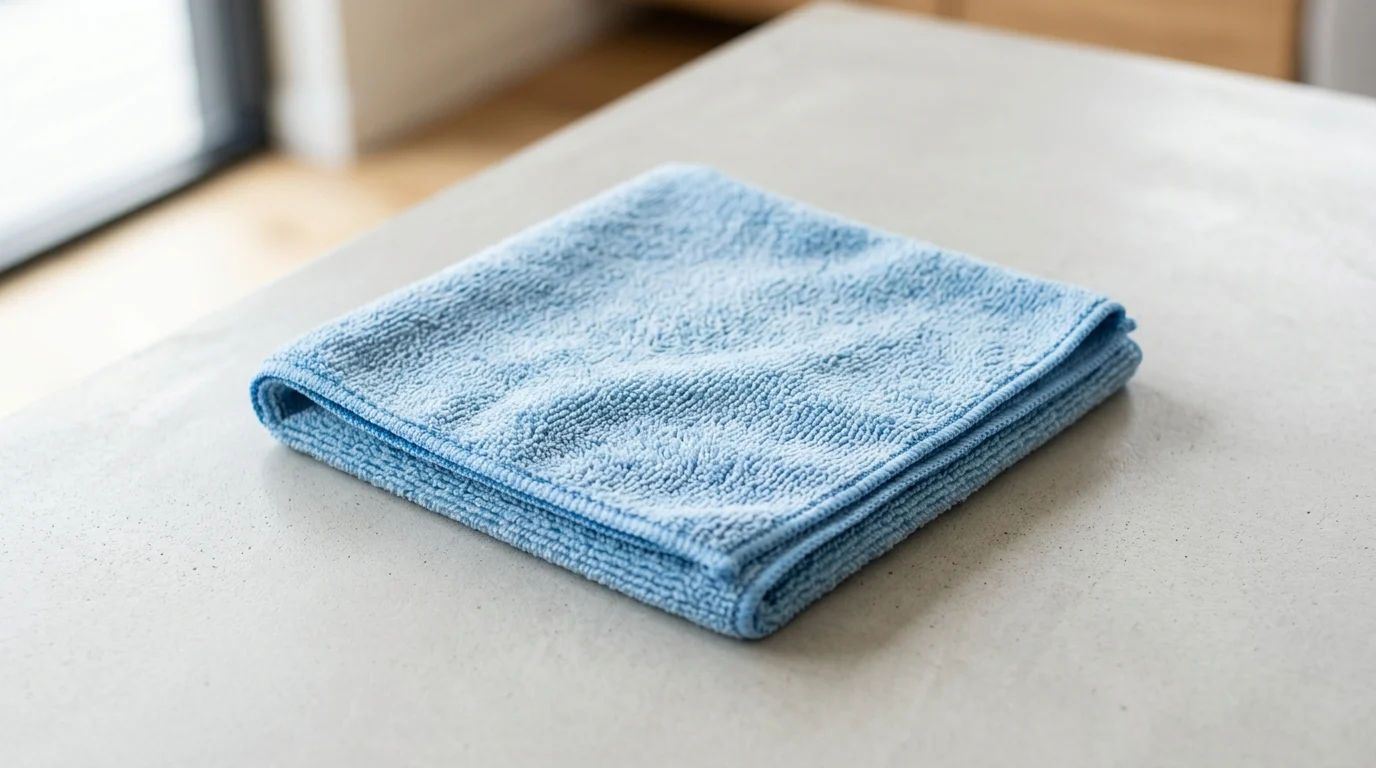
Small material choices can reshape cleaning results at scale. In facilities, vehicles, clinics, and commercial workspaces, the cloth used for wiping is no longer an afterthought—it affects labor efficiency, chemical consumption, surface safety, and total operating cost. Microfiber has become a preferred tool because its ultra-fine split fibers can capture dust, grease, and moisture more effectively than many traditional textiles. This article explains what separates professional-grade microfiber from ordinary cloth, how specifications such as denier, blend ratio, and GSM influence performance, and why reusable microfiber often outperforms cotton rags and paper towels in demanding cleaning environments.
Why Choose a Microfiber Cleaning Cloth
The commercial cleaning industry has undergone a significant transformation in recent decades, shifting away from traditional textiles toward advanced synthetic materials. At the forefront of this evolution is the microfiber cloth, a tool that has fundamentally upgraded janitorial, automotive, and healthcare sanitation standards. Professionals choose microfiber because it effectively traps dirt and pathogens, reduces chemical usage, prevents surface scratching, and lowers long-term costs through reusability. Understanding the mechanics behind this material reveals why many facility managers and sanitation professionals prefer it over conventional alternatives.
What Defines Professional-Grade Microfiber
The efficacy of a high-quality microfiber cleaning cloth lies in its microscopic architecture. True professional-grade microfiber is typically composed of a precise blend of polyester and polyamide (nylon), most commonly in an 80/20 or 70/30 ratio. The polyester provides structural durability and scrubbing power, while the polyamide imparts liquid absorbency and quick-drying characteristics.
Furthermore, commercial microfiber is defined by its denier—a unit of measurement for the linear mass density of fibers. To be classified as true microfiber, the material must have a denier of less than 1.0. However, professional-grade variants often feature a denier between 0.1 and 0.2, meaning the individual fibers are roughly one-hundredth the diameter of a human hair. During manufacturing, these ultra-fine threads are mechanically or chemically split to create a network of microscopic hooks and loops, which physically trap dirt, grease, and pathogens rather than merely pushing them across a surface.
Key Performance Metrics for Commercial Cleaning
When evaluating inventory for commercial applications, Grams per Square Meter (GSM) is a critical performance metric. GSM determines the density, thickness, and overall liquid capacity of the textile. Standard commercial utility cloths typically measure between 250 and 300 GSM, offering an optimal balance for general-purpose wiping and dusting. Heavy-duty automotive or spill-recovery applications, however, often require dense textiles exceeding 400 GSM.
Beyond density, the electrostatic properties of the split fibers serve as a primary metric for dry-dusting efficiency. When used dry, the friction generated by wiping creates a positive electrostatic charge that attracts negatively charged dust particles. When dampened, capillary action draws liquids and emulsified soils deep into the fiber matrix, allowing professionals to clean larger surface areas without frequent rinsing.
Microfiber vs Cotton and Paper
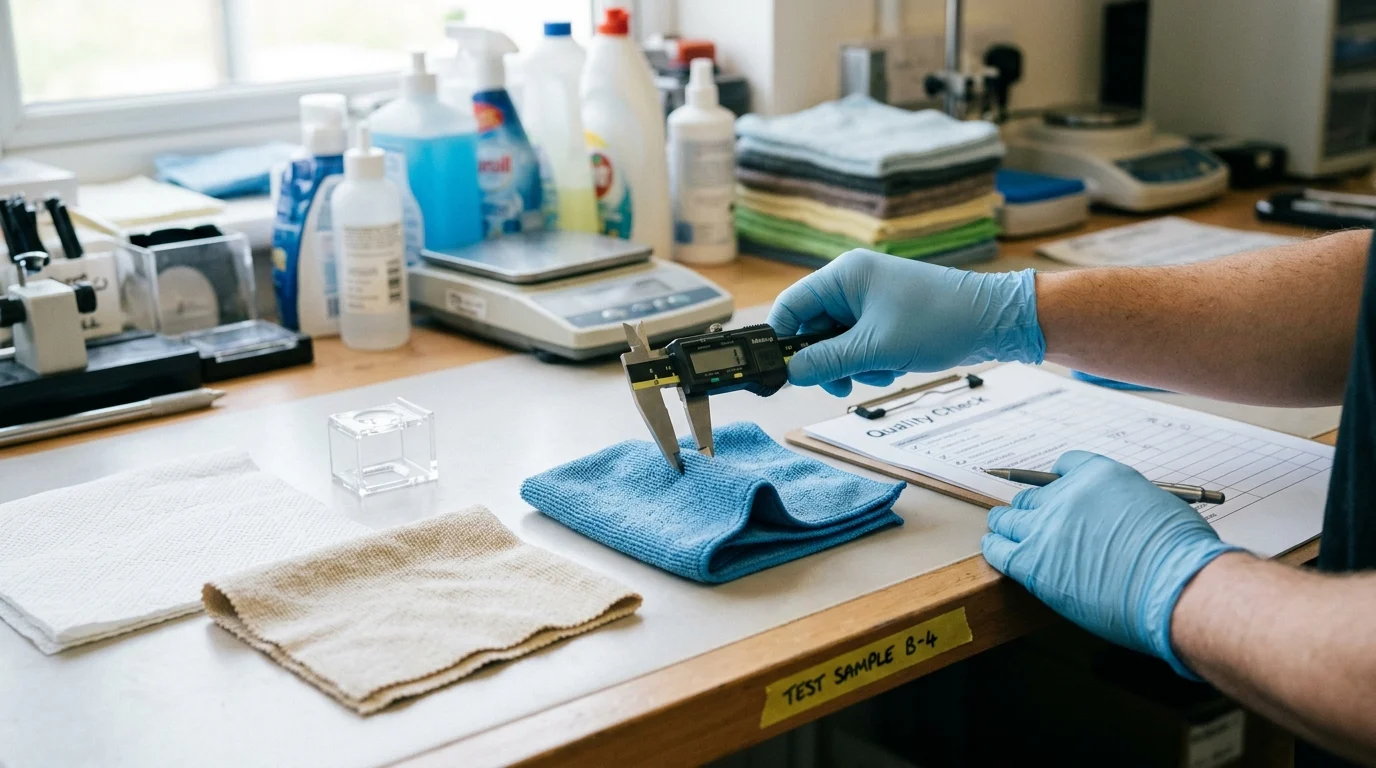
Historically, the industry standard relied heavily on cotton rags or disposable paper towels. However, empirical testing and lifecycle analyses demonstrate that engineered synthetic fibers often outperform traditional materials across many operational and financial parameters, though older materials still serve specific niche uses.
Specification Comparison Points
Comparing materials across standardized metrics highlights the performance gap between modern synthetics and traditional cleaning supplies. Cotton fibers are large, smooth cylinders that lack the physical structure to capture microscopic debris effectively, while paper products degrade instantly upon saturation.
| Metric | Professional Microfiber | Standard Cotton Rag | Commercial Paper Towel |
|---|---|---|---|
| Lifespan | Up to 500 wash cycles* | 50-100 wash cycles | Single-use |
| Liquid Absorbency | Up to 7x its dry weight | ~3x its dry weight | ~2x its dry weight |
| Microbe Removal (Water Only) | Up to 99%* | 30% | N/A (Disperses) |
| Linting Propensity | Extremely Low | High | Moderate to High |
*Figures represent optimal laboratory conditions; actual wash-cycle counts and microbe removal rates vary widely based on test protocols, product quality, and maintenance.
The data indicates that synthetic split-fiber textiles offer superior mechanical cleaning action. The high microbe removal rate observed in some manufacturer studies is particularly valuable in healthcare and food service environments. However, it is critical to clarify that mechanical microbe removal with water is not equivalent to EPA-registered disinfection or sterilization. Regulated environments still require approved chemical protocols to meet strict compliance standards.
Cost, Hygiene, Waste, and Surface Safety Trade-Offs
The transition to reusable microfiber involves evaluating cost, hygiene, and environmental impact. While the initial unit cost of microfiber is higher than cotton or paper, the Return on Investment (ROI) is achieved rapidly. Because high-quality synthetic cloths can endure hundreds of wash cycles under optimal conditions, the recurring procurement costs associated with paper towels and low-grade rags are significantly reduced.
Hygiene and surface safety also drive adoption. Microfiber is non-abrasive, making it safe for delicate surfaces like optical lenses, stainless steel, and clear-coat automotive finishes without leaving micro-scratches. Furthermore, using these cloths reduces reliance on harsh chemical solvents. Some facilities report up to a 40% to 50% reduction in chemical cleaning costs, as the mechanical action of the split fibers requires only water or minimal neutral cleaners to effectively strip soils and bio-films from surfaces.
Despite these benefits, facilities must acknowledge certain limitations. Synthetic textiles contribute to microplastic shedding during laundering, which complicates their environmental profile, and there is broad variance in microfiber quality across different vendors. Furthermore, in edge cases involving heavy grease accumulation or high-heat environments, traditional materials like cotton may still outperform synthetics.
How to Select, Use, and Maintain Microfiber Cloths
Procurement and proper care determine the lifespan and efficacy of a commercial textile investment. Even premium materials will fail prematurely if subjected to improper laundering or deployment strategies.
Best Practices for Better Cleaning Results
To maximize the durability and efficacy of a reusable microfiber cloth, facilities should separate maintenance into clear laundering parameters and operational techniques:
- Laundering Parameters: Wash textiles at temperatures below 140°F (60°C) and avoid high-heat drying. Exceeding these thermal thresholds can permanently melt the delicate polyamide fibers, fusing the split structures and destroying the cloth's capillary action and electrostatic performance. Additionally, never wash microfiber with cotton or lint-producing fabrics, as the micro-hooks will trap the lint. Maintenance staff must also avoid fabric softeners (which coat fibers in lipids, eliminating electrostatic charge) and chlorine bleach (which degrades the polyester matrix).
- Operational Technique: Professionals maximize efficiency by folding the cloth into eighths. By folding a standard 16x16-inch cloth in half, and then in half again, the user creates eight distinct, clean surfaces.
Key Takeaways
- Choose professional microfiber with an 80/20 or 70/30 polyester-polyamide blend for a strong balance of durability, absorbency, and cleaning performance.
- Look for true microfiber below 1.0 denier, with premium commercial cloths often using 0.1 to 0.2 denier fibers to capture finer soil and debris.
- Use 250 to 300 GSM cloths for everyday commercial wiping, and select cloths above 400 GSM for heavier spill recovery or automotive detailing.
- Use microfiber dry for electrostatic dust attraction and damp for capillary action that pulls liquids and emulsified soil into the fiber matrix.
- Replace disposable paper towels with washable microfiber where appropriate, since professional cloths can last up to 500 wash cycles and reduce long-term waste.
Frequently Asked Questions
What makes a microfiber cloth professional grade?
Professional-grade microfiber typically uses an 80/20 or 70/30 polyester-polyamide blend, has fibers below 1.0 denier, and often reaches 0.1 to 0.2 denier for stronger dirt, grease, and moisture capture.
Why does microfiber clean better than cotton?
Split microfiber has microscopic hooks and loops that trap particles instead of pushing them around. Cotton fibers are larger and smoother, so they are less effective at capturing fine dust, grease, and debris.
What GSM is best for commercial microfiber cloths?
For general commercial wiping and dusting, 250 to 300 GSM offers a practical balance of absorbency, handling, and drying speed. Heavy-duty automotive or spill applications often benefit from cloths above 400 GSM.
Can microfiber reduce chemical use?
Yes. Microfiber’s split fibers and capillary action help lift and hold soil effectively with water or less cleaning solution, allowing many facilities to reduce chemical consumption while maintaining cleaning performance.
How long does a microfiber cleaning cloth last?
A professional Microfiber Cloth can last up to about 500 wash cycles when laundered correctly, making it more cost-effective and less wasteful than disposable paper towels or short-lived cotton rags.