

 Send Email
 whatsapp


5 Features to Look for When Choosing Disposable Microfiber Mop Pads

Statistical market data reveal that users favor disposable microfiber mop pads with high absorbency, durability, and compatibility.Microfiber disposable mop materials lead the market for their cleaning performance and longevity. Disposable floor mop solutions, including disposable mop heads and medical disposable mops, deliver convenience and hygiene. Eco-friendly disposable mop options respond to growing environmental demands.
Key Takeaways
- Choose mop pads with high absorbency to clean spills and dirt quickly, saving time and keeping floors streak-free.
- Look for durable pads made from quality microfiber that resist wear and help prevent germs, especially in busy or healthcare settings.
- Select mop pads that fit your mop system well and match your floor type to ensure effective cleaning and avoid slippage.
Absorbency in Disposable Microfiber Mop Pads
Why Absorbency Matters
Absorbency stands as a critical feature in any cleaning tool. Disposable Microfiber Mop Pads with high absorbency remove spills, dirt, and grime more efficiently. They trap moisture and particles, preventing streaks and residue on floors. High absorbency also reduces the number of passes needed to clean a surface, saving time and effort. In healthcare and food service environments, superior absorbency helps maintain hygiene by quickly removing contaminants.
How to Assess Absorbency
Buyers can assess absorbency by checking product specifications and user reviews. Manufacturers often list the liquid capacity of their mop pads. A simple test involves pouring a measured amount of water onto a surface and observing how much the pad absorbs in one pass. Some brands provide absorbency ratings or demonstrate their products in videos. Comparing these details helps users select the best option for their needs.
Tip: Always look for pads that specify their absorbency in milliliters or ounces for easy comparison.
Tips for Maximizing Absorbency
- Store mop pads in a dry, clean place to maintain their effectiveness.
- Replace pads promptly when they become saturated to avoid spreading dirt.
- Use the correct Mop Head pressure to ensure full contact with the floor.
- Choose pads designed for the specific type of mess or floor surface.
A table comparing absorbency ratings can also help users make informed decisions:
| Brand | Absorbency (ml) | Suitable For |
|---|---|---|
| Brand A | 250 | Light spills |
| Brand B | 400 | Heavy-duty cleaning |
| Brand C | 300 | Everyday use |
Durability of Disposable Microfiber Mop Pads
What Makes a Mop Pad Durable
Durability in mop pads depends on the quality of materials and construction methods. Manufacturers use split microfiber, a blend of nylon and polyester fibers, to create ultra-fine filaments. This advanced material resists wear and maintains cleaning power over multiple uses. High-quality pads withstand repeated exposure to water, cleaning solutions, and friction from floors. The best Disposable Microfiber Mop Pads keep their shape and effectiveness until disposal.
Benefits of Durable Disposable Pads
Durable disposable pads offer significant advantages in demanding environments. Scientific studies show that split microfiber pads remove up to 98% of bacteria and 93% of viruses from surfaces using only water. These pads clean up to 40% faster than traditional cotton options. Facilities such as hospitals and schools benefit from the one-pad-per-room approach, which reduces cross-contamination and supports infection prevention. Durable pads also lower replacement frequency, saving time and resources during long-term cleaning operations.
Note: Durable pads maximize cleaning efficiency and help maintain strict hygiene standards in healthcare and high-traffic facilities.
Signs of Quality Construction
Quality construction ensures a mop pad performs reliably. Industry standards highlight several measurable features:
| Specification/Feature | Measurable Sign/Value |
|---|---|
| Material Composition | 100% synthetic microfiber, polyester |
| Weight per square meter (GSM) | 230-290 GSM |
| Fiber Fineness | 0.53D (147.1Den/276F) |
| Absorbency Rate | 700-750% |
| Fluid Holding Capacity | 1.6 litre/m² (absorbs fluid in less than 1 second) |
| Solution Release Rate | Over 90% |
| Coverage Area per Mop | 180-250 sq.ft |
| Antimicrobial Performance | 99.9% microbe removal |
| Lint Control | Ultrasonic slitting for lint-free edges |
| Quality Standards Compliance | ISSA, APPA, IFMA, BOMA |
Manufacturers who follow these standards deliver pads that meet hygiene and operational expectations. Consistent quality control and documented specifications further indicate a reliable product.
Compatibility with Your Mop System
Ensuring a Proper Fit
Selecting mop pads that fit the mop system correctly ensures efficient cleaning and prevents operational issues. Manufacturers design some mop pads to match specific mop handles and heads. For example, the Hydroflex PurMop system uses sterile, disposable mop covers that fit the PurMop Black handle and head. These covers meet ISO5 Class 100 and cGMP standards, supporting cleanroom requirements. The unique flap attachment method secures the pad, preventing slippage and enhancing cleaning efficiency. Foamtec’s UltraMOP SW mop heads also demonstrate this principle. They fit Roll-O-Matic® style handles and undergo rigorous validation, including material durability and compatibility with disinfectants. These certifications guarantee a proper fit and reliable performance.
Universal vs. Brand-Specific Disposable Microfiber Mop Pads
Users can choose between universal and brand-specific mop pads. Universal pads offer flexibility and can fit a range of mop frames. They suit facilities with multiple mop systems or those seeking a cost-effective solution. Brand-specific pads, on the other hand, are engineered for a particular mop system. These pads often provide a more secure fit and may include features like microhook technology or custom flaps. Brand-specific options usually meet strict industry standards and pass compatibility testing, ensuring optimal cleaning results.
Tip: Always check manufacturer recommendations before purchasing Disposable Microfiber Mop Pads for your mop system.
Checking Size and Attachment Methods
Proper attachment of mop pads is essential for effective cleaning. Users should verify the pad’s dimensions and compare them to the mop frame. Pads that are too large or too small can reduce cleaning efficiency. Attachment methods vary, including flaps, microhooks, or Velcro strips. Following manufacturer guidelines for pad compatibility and attachment ensures a secure connection. Regularly checking for proper pad attachment helps maintain cleaning performance and prevents slippage during use.
| Attachment Method | Description | Common Use Case |
|---|---|---|
| Flaps | Fold over mop head | Cleanrooms, hospitals |
| Microhooks | Hook-and-loop connection | Commercial cleaning |
| Velcro Strips | Quick stick-and-release | Residential cleaning |
Cleaning Performance of Disposable Microfiber Mop Pads
Microfiber Quality and Density
Microfiber quality and density play a crucial role in cleaning performance. High-density microfiber traps more dirt, dust, and bacteria than lower-quality alternatives. Experimental studies comparing cleaning cloth materials show that microfiber’s structure and density directly affect its ability to remove bacteria such as Listeria monocytogenes from surfaces like stainless steel and Formica. These studies reveal that not all microfiber performs equally; higher-quality, denser fibers deliver better results. Frequent cleaning with the right microfiber pad helps prevent biofilm formation and reduces the risk of microbial contamination. In some cases, other materials may outperform low-density microfiber, highlighting the importance of selecting pads with superior fiber construction.
Performance on Different Floor Types
Disposable Microfiber Mop Pads demonstrate varying effectiveness depending on the floor type. Stain cleaning tests on hard floors, such as those performed with the Roborock Qrevo, show that twin rotating mop pads can remove dried-on stains efficiently. The use of high water flow and deep cleaning modes enhances stain pickup, especially on hard surfaces. Automatic features like pre-washing and drying also help maintain consistent performance. While these pads excel on hard floors, users should consider specific pad designs for optimal results on other surfaces, such as tile or laminate.
Features That Enhance Cleaning Results
Several features contribute to the superior cleaning results of Disposable Microfiber Mop Pads:
- High absorbency allows the pads to hold up to eight times their weight in liquid, capturing pathogens and debris.
- Electrostatic charge attracts negatively charged dirt and bacteria, improving pickup efficiency.
- Microscopic triangular fibers trap germs and particles more effectively than traditional cotton mops.
- Reduced chemical and water usage supports sustainability and lowers operational costs.
- Durability ensures that cleaning performance remains high even after repeated use and washing.
Comparative studies show that microfiber mop pads remove up to 98% of bacteria and 93% of viruses using only water, far surpassing cotton mops. These features also help reduce cross-contamination and increase labor productivity, making them ideal for demanding environments like hospitals.
Eco-Friendliness and Sustainability
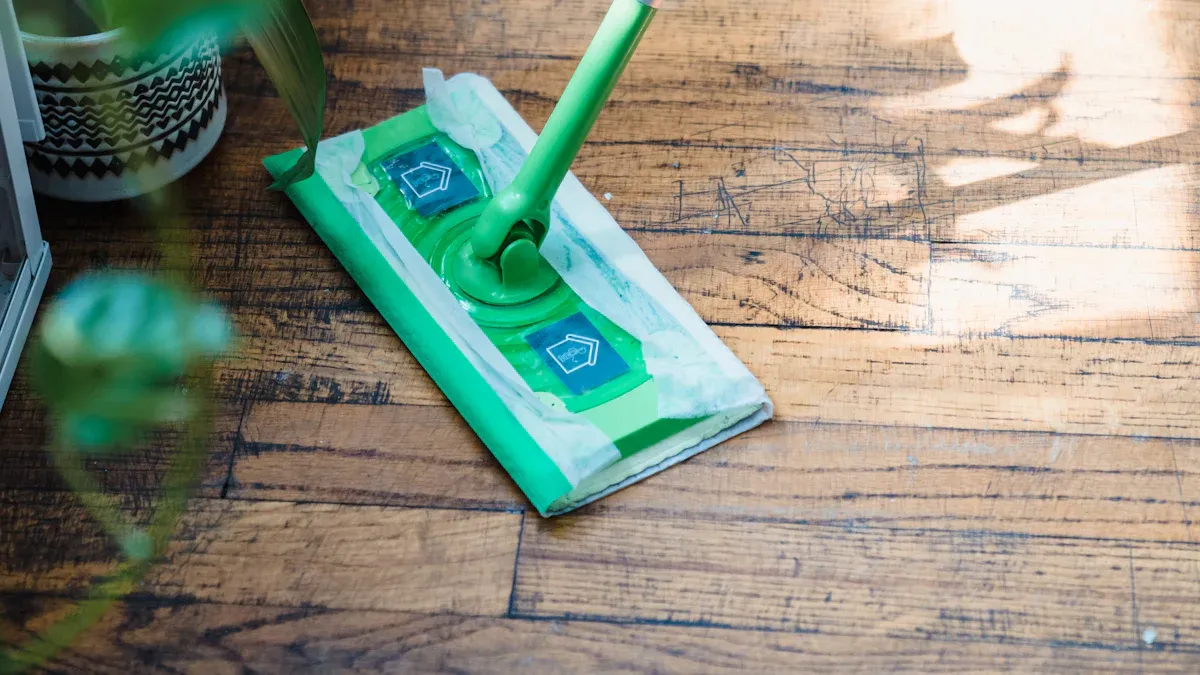
Biodegradable and Sustainable Disposable Microfiber Mop Pads
Manufacturers now focus on sustainability by developing mop pads with biodegradable components. Some brands use plant-based fibers or recycled materials to reduce environmental impact. These pads break down faster in landfills compared to traditional synthetic options. Companies also design packaging with minimal plastic or use recycled paper. Facilities that prioritize green cleaning often select products with clear sustainability claims. Choosing pads with renewable resources supports a circular economy and helps organizations meet environmental goals.
Reducing Waste with Smart Choices
Facilities can reduce waste by selecting mop pads designed for single-use but with high cleaning capacity. Using one pad per room or area limits cross-contamination and maximizes each pad’s utility. Some organizations implement color-coded systems to prevent unnecessary disposal. Staff training on proper pad usage also helps minimize waste. Bulk purchasing and efficient storage further support waste reduction efforts. These strategies not only lower landfill contributions but also improve operational efficiency.
Certifications and Environmental Claims
Environmental certifications provide assurance that mop pads meet strict sustainability standards. Several respected organizations evaluate and certify cleaning products:
- Green Seal certifies products based on science-driven environmental criteria.
- UL/EcoLogo uses life cycle analysis and scientific testing for multi-attribute certification.
- EPA Safer Choice identifies products safer for people and the environment.
- ISSA Cleaning Industry Management Standard (CIMS) supports quality and environmental performance in cleaning operations.
- LEED includes green cleaning standards as part of its green building certification system.
Facilities seeking to improve their environmental footprint should look for these certifications on product labels. Verified claims help buyers make informed, responsible choices.
Selecting mop pads with high absorbency, durability, compatibility, cleaning performance, and eco-friendliness leads to superior results. The table below highlights how each feature contributes to convenience and value. Users who follow this checklist achieve efficient, hygienic, and sustainable cleaning.
| Feature | Benefit Summary |
|---|---|
| Absorbency | Traps lint, dust, and particles efficiently |
| Durability | Resists abrasion and tearing, ensuring longer use |
| Compatibility | Works with most chemicals and mop systems |
| Cleaning Performance | Delivers deep cleaning and prevents contamination |
| Eco-friendliness | Reduces cross-contamination and supports sustainability |
FAQ
How often should users replace disposable microfiber mop pads?
Users should replace pads after each cleaning session or when saturated. Frequent replacement ensures optimal cleaning performance and reduces the risk of cross-contamination.
Can disposable microfiber mop pads be used with disinfectants?
Most disposable microfiber mop pads work well with common disinfectants. Always check manufacturer guidelines to confirm compatibility with specific cleaning solutions.
Are disposable microfiber mop pads safe for all floor types?
Manufacturers design most disposable microfiber mop pads for use on hardwood, tile, laminate, and vinyl floors. Users should test on a small area before full application.