

 Send Email
 whatsapp


Features That Set Disposable Hospital Curtains Apart
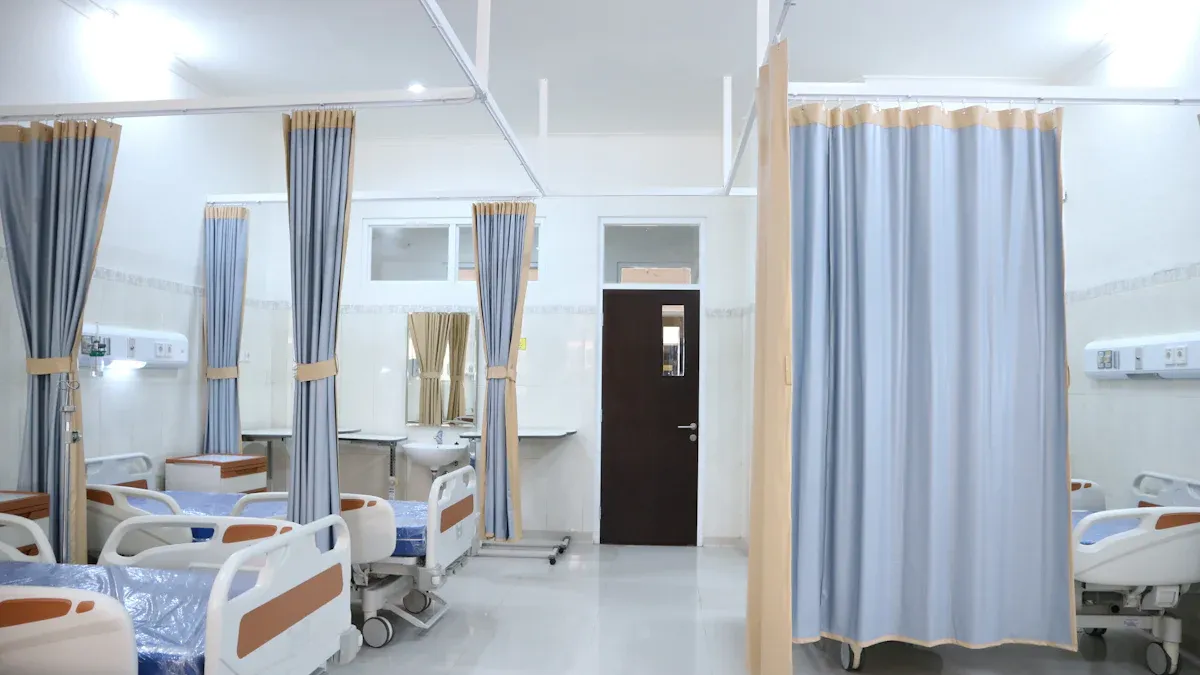
When I select a disposable hospital curtainfor a healthcare environment, I notice significant advantages compared to traditional cloth hospital curtain options. I depend on the low bacterial counts and quick replacement times of thesemedical curtainsolutions to maintain safe patient areas. Studies indicate that using disposable hospital curtains can save over $20,000 annually and completely eliminate laundering costs.
| Metric | Disposable antimicrobial curtains | Traditional Cloth Curtains |
|---|---|---|
| Laundering Cost | $0 | $379.05 |
| Annual Cost Savings | $20,079.38 | N/A |
| Time to Replace Curtains | 0.50 hours (15 min x 2) | 26.25 hours (15 min x 105) |
| Annual Time Saved | 66.95 hours | N/A |
| Mean Bacterial Count | Less than 1 CFU | Significantly higher CFUs |
I rely on disposable hospital curtain solutions for infection control, cost efficiency, and environmental sustainability in every hospital partition curtain, hospital cubicle curtains, medical curtain, and medical clinic curtains installation.
Key Takeaways
- Disposable hospital curtains help stop the spread of germs by using antimicrobial materials and quick replacement, keeping patients safer.
- These curtains save time and money by being easy to install and removing the need for laundering, which improves hospital efficiency.
- Many disposable curtains use eco-friendly materials that support recycling and reduce waste, helping hospitals meet sustainability goals.
Key Features of Disposable Hospital Curtains
Hygiene and Infection Control
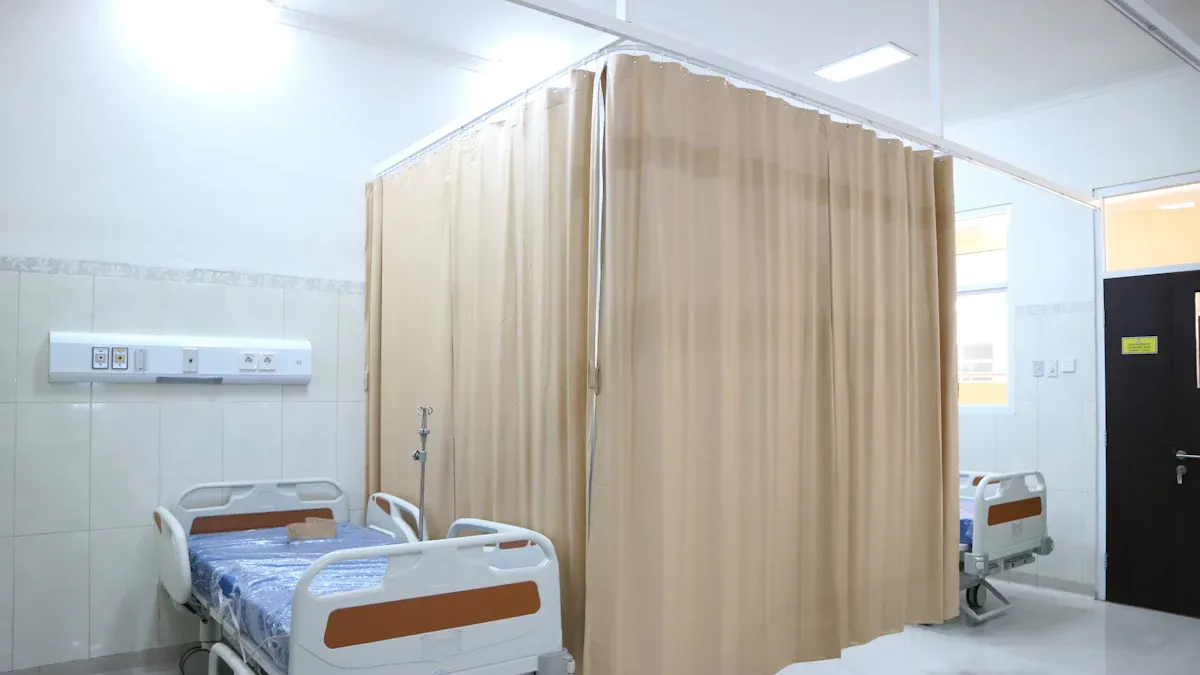
When I choose a disposable hospital curtain, I prioritize hygiene above all else. These curtains use lightweight, non-woven materials that act as a strong barrier against germs. Their single-use design means I can replace them quickly, which limits the risk of cross-contamination between patients. I have seen how this approach supports infection control, especially in high-traffic areas like emergency rooms and intensive care units.
I trust disposable hospital curtains to maintain low bacterial counts, which is essential for reducing hospital-acquired infections. The antimicrobial properties built into these curtains help stop the growth of bacteria, fungi, and other pathogens. This feature gives me peace of mind, knowing that every patient receives care in a clean and safe environment.
I also notice that healthcare staff prefer single-use products because they offer consistent quality and reliable protection. Unlike reusable curtains, which can degrade after many washes, disposable options always provide the same level of safety. This reliability aligns with the strict infection control standards I must uphold in my facility.
Convenience and Efficiency
I value the convenience that disposable hospital curtains bring to my daily workflow. These curtains are easy to install and remove, which saves me time and effort. I can clean them in place without taking them down, eliminating the need for laundry services and reducing labor costs. This process allows me to turn over patient rooms faster, which improves operational efficiency.
- I have used curtain systems that support rapid installation, sometimes in just a few seconds. This feature reduces the time my team spends on maintenance by up to 80%.
- Frequent curtain exchanges become practical, helping me control the spread of pathogens like MRSA and C. diff.
- Disposable curtain panels also reduce the need for large inventories and lower the risk of contamination, since bacteria can survive on reusable textiles even after washing.
These advantages mean I can focus more on patient care and less on managing supplies. I appreciate how disposable hospital curtains streamline my workflow and support a safer, more efficient environment.
Cost-Effectiveness
Cost-effectiveness remains a top concern for me when managing hospital resources. Disposable hospital curtains help me control expenses in several ways. I avoid the ongoing costs of laundering and the labor required to remove, wash, and reinstall traditional curtains. The easy hanging systems save my team valuable time, which translates into lower operational costs.
I have found that the value of disposable hospital curtains extends beyond direct savings. By reducing the risk of infection, I help prevent costly outbreaks and minimize patient downtime. The ability to clean curtains in place or replace them quickly means I can keep rooms available for new patients, which supports the financial health of my facility.
Although a comprehensive cost analysis requires careful evaluation of all factors, I see clear operational advantages. The reduced need for maintenance, combined with longer hang times and fewer replacements, makes disposable hospital curtains a smart investment for hospitals that prioritize both safety and efficiency.
Material and Design Advantages
The material and design of disposable hospital curtains set them apart from traditional options. I rely on curtains that meet international flame-retardant standards, such as NFPA701 and BS 5867: Part 2 Type C. These safety features are critical in healthcare settings, where fire resistance and durability matter.
- Modern disposable hospital curtains use advanced materials that resist abrasion and chemical exposure.
- Some curtains feature antimicrobial vinyl, which does not require laundering and allows for cleaning in place.
- Innovations like the WipeAble curtain system, developed during the COVID-19 pandemic, support quick and effective cleaning in busy hospital units.
I also appreciate that many disposable hospital curtains use fabrics certified under the Global Recycled Standard, which supports my commitment to sustainability. The combination of flame-retardant, antimicrobial, and eco-friendly materials ensures that I provide the highest level of safety and comfort for patients and staff.
The rapid growth of the antimicrobial hospital curtain market reflects the increasing demand for infection control and patient safety. I see these design advantages as essential for delivering quality care in any healthcare environment.
Environmental and Practical Benefits of Disposable Hospital Curtains
Eco-Friendly Materials and Waste Management
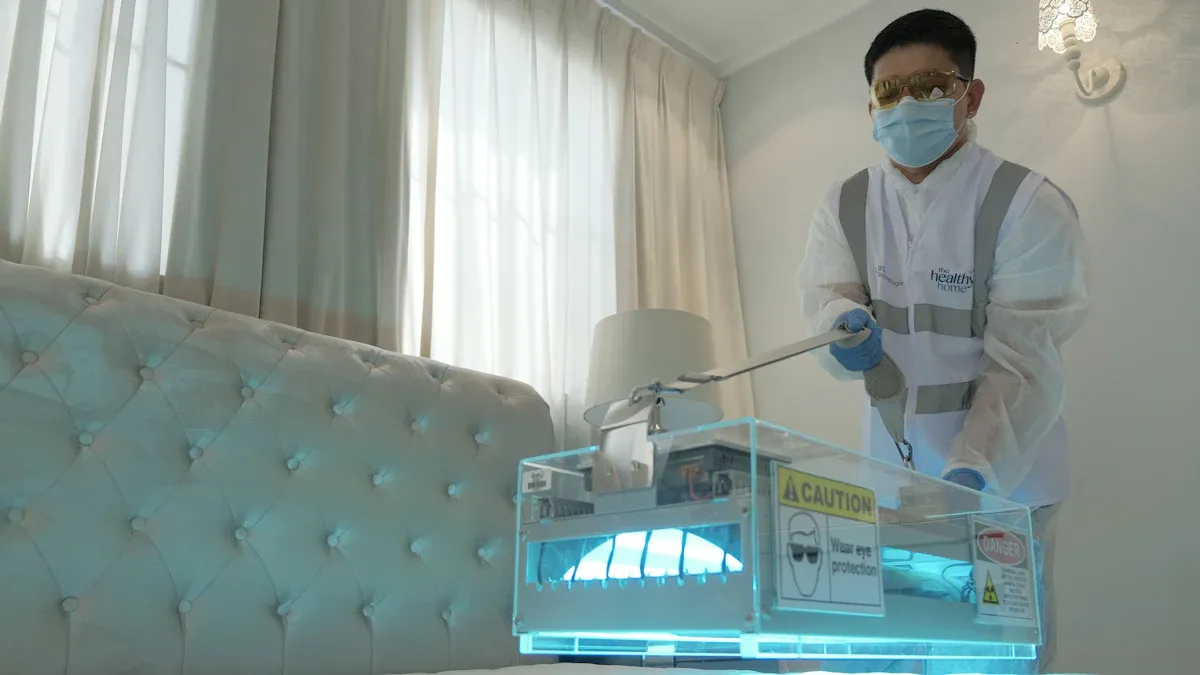
I have seen a growing shift toward sustainability in healthcare, especially when I select a disposable hospital curtain for my facility. Many manufacturers now use recyclable or biodegradable materials, which helps reduce the environmental impact. I work with suppliers who focus on sustainable production and packaging, making procurement more eco-friendly.
- Healthcare teams in my network implement recycling programs for curtains made from recyclable materials.
- Some disposable curtains break down naturally over time, which minimizes landfill waste.
- I have explored waste-to-energy conversion options that turn used curtains into usable energy.
- Staff training programs in my hospital promote responsible disposal and sustainable choices.
- Regional hospital networks I follow have transitioned to biodegradable disposable drapes, supporting environmental goals.
| Aspect | Details |
|---|---|
| Material Advancements | Improved barrier properties, durability, and antimicrobial integration. |
| Sustainability Initiatives | Eco-friendly materials and sustainable manufacturing reduce environmental impact. |
| Market Trends | Demand for recyclable, biodegradable curtains is rising. |
| Significant Developments | Biodegradable curtain lines launched by industry leaders in 2022. |
| Challenges | Efficient waste management and disposal remain priorities. |
| Driving Forces | Innovations in material science and manufacturing improve sustainability and performance. |
I notice that these innovations not only support infection control but also align with my facility’s sustainability targets.
Use Cases and Suitability in Healthcare Settings
I rely on disposable hospital curtains in a wide range of clinical environments. In surgical suites, I have observed a significant reduction in surgical site infections after switching to these curtains. Departments across my hospital benefit from faster cleaning times and increased patient throughput.
| Healthcare Facility | Clinical Setting | Implementation Outcome |
|---|---|---|
| St. Mary’s Hospital | Surgical Suites | Fewer infections, better infection control |
| City Medical Center | Hospital Departments | Streamlined operations, faster cleaning |
| Community Clinic | Resource-limited Clinic | Cost-effective, sustainable hygiene |
| Regional Hospital Network | Multiple Hospitals | Biodegradable drapes, improved sustainability |
| University Medical Center | Surgical Departments | Higher surgeon satisfaction, better patient care |
I have found disposable hospital curtains especially useful in emergency rooms, isolation areas, and intensive care units. Their antimicrobial treatment helps prevent microorganism growth, and the ease of replacement supports strict hygiene protocols. During the pandemic, I depended on these curtains to maintain a safe environment while reducing labor and laundering costs. Their versatility and effectiveness make them a practical choice for any healthcare setting.
I have seen how a disposable hospital curtain transforms patient care. These curtains deliver rapid installation, antimicrobial protection, and cost savings.
- They reduce cross-contamination, support fast room turnover, and meet strict safety standards.
- Many options use recyclable materials, helping me achieve sustainability goals while maintaining operational efficiency.
FAQ
How often should I replace disposable hospital curtains?
I replace curtains after each patient discharge or when visibly soiled. This practice helps me maintain strict infection control and ensures a safe environment for everyone.
Are disposable hospital curtains recyclable?
I choose curtains made from recyclable materials whenever possible. Many suppliers now offer eco-friendly options that support my facility’s sustainability goals.
Can I clean disposable hospital curtains in place?
- I use wipeable disposable curtains for quick cleaning between patients.
- For non-wipeable types, I replace them entirely to maintain hygiene standards.