

 Send Email
 whatsapp


3 Key Benefits of Medical Cubicle Curtains
Medical cubicle curtains play a crucial role in healthcare environments by addressing essential patient needs. They significantly enhance privacy, limit pathogen spread, and efficiently utilize space. Studies reveal that patient care curtains often show MRSA growth within 10 days, underscoring the importance of hygienic solutions like reusable cubicle curtain options.
Key Takeaways
- Medical cubicle curtains help keep patients' privacy safe and secure.
- Cleaning and taking care of these curtains stops germs from spreading.
- These curtains make spaces flexible, helping hospitals meet different patient needs easily.
Enhancing Privacy with Medical Cubicle Curtains

Protecting Patient Confidentiality
Medical Cubicle Curtains play a vital role insafeguarding patient confidentiality. In healthcare settings, maintaining privacy is not just a courtesy—it is a legal and ethical obligation. These curtains create a physical barrier that prevents unauthorized individuals from seeing or overhearing sensitive patient information. Whether in a bustling emergency room or a shared hospital ward, they ensure that personal conversations between patients and caregivers remain private. Proper installation of these curtains also meets F-Tag 460 requirements, guaranteeing full visual privacy for residents in long-term care facilities. By using medical cubicle curtains, you can uphold patient dignity while fostering trust in your healthcare environment.
Creating Comfortable and Private Spaces
Beyond confidentiality, medical cubicle curtains contribute to a more comfortable and personalized patient experience. They offer a flexible way to divide large, open areas into smaller, private spaces, ensuring each patient feels secure and respected. In semi-private rooms, these curtains provide privacy without obstructing caregiver access. Durable and aesthetically pleasing fabrics enhance the overall atmosphere, creating a sense of well-being for patients. Some designs even draw inspiration from nature, adding a homelike touch to long-term care facilities. Additionally, antimicrobial textiles in these curtains address safety concerns by reducing the risk of infection. By choosing the right curtains, you can transform clinical spaces into welcoming environments that prioritize both comfort and safety.
Promoting Infection Control in Healthcare
Acting as a Barrier Against Pathogens
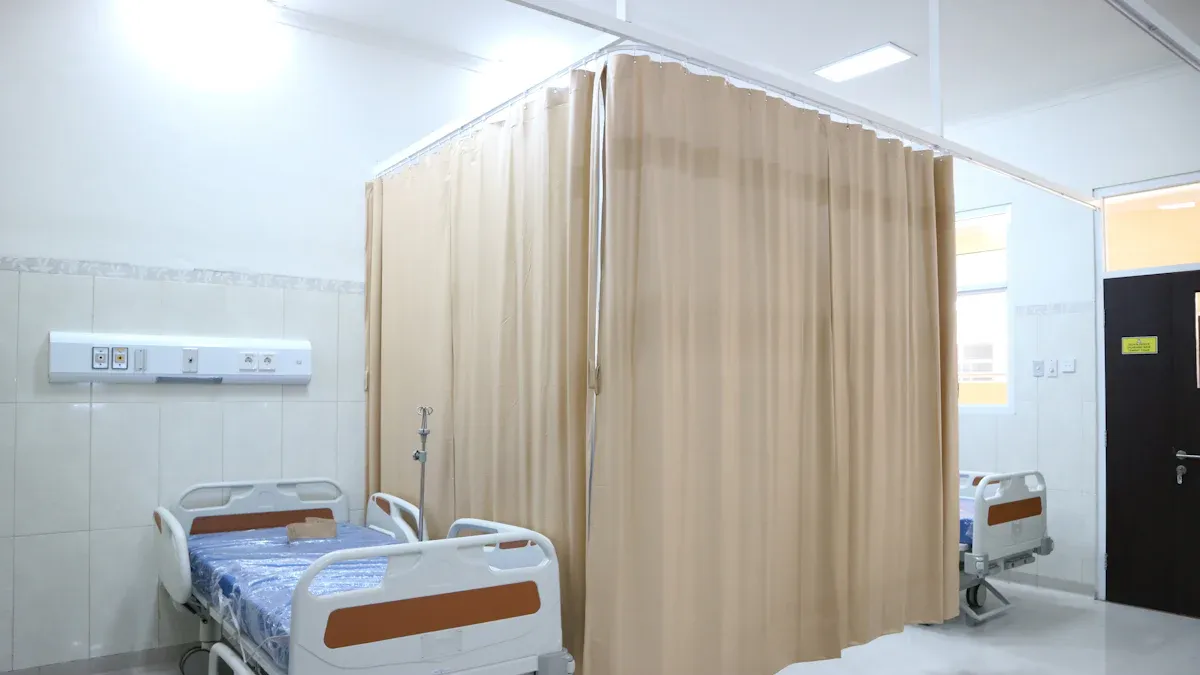
Medical cubicle curtains serve as an essential line of defense in preventing the spread of pathogens within healthcare facilities. By creating a physical barrier, these curtains help limit the transmission of bacteria and viruses between patients and caregivers. However, research highlights the importance of regular cleaning and maintenance to ensure their effectiveness. Studies have shown that privacy curtains can become contaminated with drug-resistant bacteria within just a few days of use. The following table summarizes key findings:
| Study | Findings |
|---|---|
| Hospital privacy curtains are frequently and rapidly contaminated with potentially pathogenic bacteria | Privacy curtains are rapidly contaminated with potentially pathogenic bacteria, indicating they may not effectively prevent pathogen transmission without proper cleaning. |
| Curtains in patients' rooms often rife with drug-resistant germs – study | Privacy curtains have been identified as breeding grounds for bacteria, emphasizing the need for regular cleaning and adherence to hygiene practices. |
| UI study explores the role of hospital privacy curtains in infection control | Despite being used for privacy, these curtains can harbor pathogens after just one week, suggesting they may not serve as effective barriers without maintenance. |
By choosing high-quality, antimicrobial medical cubicle curtains, you can reduce the risk of cross-contamination and create a safer environment for patients.
Easy Maintenance and Cleaning for Hygiene
The design of medical cubicle curtains simplifies cleaning and maintenance, making it easier to uphold hygiene standards. Many modern curtains are crafted from lightweight, breathable, and durable materials like polypropylene non-woven fabric. These materials resist bacterial growth and are easy to replace or sanitize. Disposable options offer an additional layer of convenience, allowing you to replace contaminated curtains quickly without the need for laundering. Regular cleaning schedules and adherence to infection control protocols ensure that these curtains remain effective barriers against pathogens. By prioritizing maintenance, you can enhance patient safety and minimize the risk of healthcare-associated infections.
Optimizing Space with Medical Cubicle Curtains
Flexible Partitioning for Efficient Space Use
Medical cubicle curtains provide a practical solution for dividing healthcare spaces efficiently. Their lightweight design allows you to create temporary partitions that adapt to changing needs. In emergency departments, curtains enable quick access to patients while maintaining privacy. Unlike permanent walls, they offer flexibility without compromising functionality.
Research highlights the importance of balancing privacy and accessibility. For example:
| Study | Findings | Implications |
|---|---|---|
| Barlas et al. (2001) | Patients perceived inadequate visual and auditory privacy with curtains. | Affects patients' ability to describe conditions accurately, impacting treatment decisions. |
| Hartigan et al. (2018) | Patients in obstetric ED reported improved privacy after replacing curtains with walls. | Highlights the importance of privacy in patient care. |
| Hall et al. (2008) | Doors delayed assessment times compared to curtains. | Suggests that while privacy is important, flexibility and quick access are also crucial in EDs. |
These findings demonstrate how medical cubicle curtains strike a balance between privacy and operational efficiency. By using them, you can optimize space without sacrificing patient care quality.
Supporting Multi-Functional Areas
Medical cubicle curtains enhance the versatility of healthcare environments. They allow you to transform single-purpose rooms into multi-functional areas. For instance, you can use curtains to convert a large ward into smaller sections for consultations, recovery, or isolation. This adaptability supports dynamic workflows and maximizes space utilization.
Enhanced privacy curtains also improve sound absorption by 20-30%, creating quieter and more functional spaces. Studies show their effectiveness varies based on room orientation and configuration. While they cannot resolve fundamental acoustical design issues, they significantly enhance the usability of shared spaces.
By incorporating medical cubicle curtains, you can create adaptable environments that meet diverse patient and caregiver needs. Their ability to support multi-functional areas makes them indispensable in modern healthcare facilities.
Medical cubicle curtains are indispensable in healthcare settings. They protect privacy, prevent infections, and optimize space.
A study in the American Journal of Infection Controlrevealed that 92% of hospital curtains were contaminated within a week, emphasizing the need for disposable options to reduce pathogen spread.
| Feature | Benefit |
|---|---|
| Disposable Design | Reduces infection risk |
| Flame-retardant Material | Enhances safety |
| Environmentally Friendly | Made from recyclable materials |
By choosing high-quality curtains, you improve patient care and operational efficiency.
FAQ
What materials are used to make medical cubicle curtains?
Most medical cubicle curtains use lightweight, durable, and breathable materials like polypropylene non-woven fabric. These materials are often recyclable and treated for antimicrobial protection.
How often should medical cubicle curtains be replaced?
Replace curtains based on facility protocols or when visibly soiled. Disposable options simplify this process, ensuring hygiene and reducing the risk of cross-contamination.
Are medical cubicle curtains environmentally friendly?
Yes, many modern curtains are made from recyclable materials. Disposable options often use eco-friendly designs, balancing hygiene needs with environmental responsibility.
Tip: Always check product specifications to ensure compliance with your facility's sustainability goals.