

 Send Email
 whatsapp


Hospital-Grade Cleaning at Home: Benefits of Microfiber Mop

Hospital-Grade Cleaning becomes achievable at home with a micro fiber mop. Recent studies show that a flat mop with a reusable mop pad can remove up to 98% of bacteria—far more than a traditional floor cleaning mop.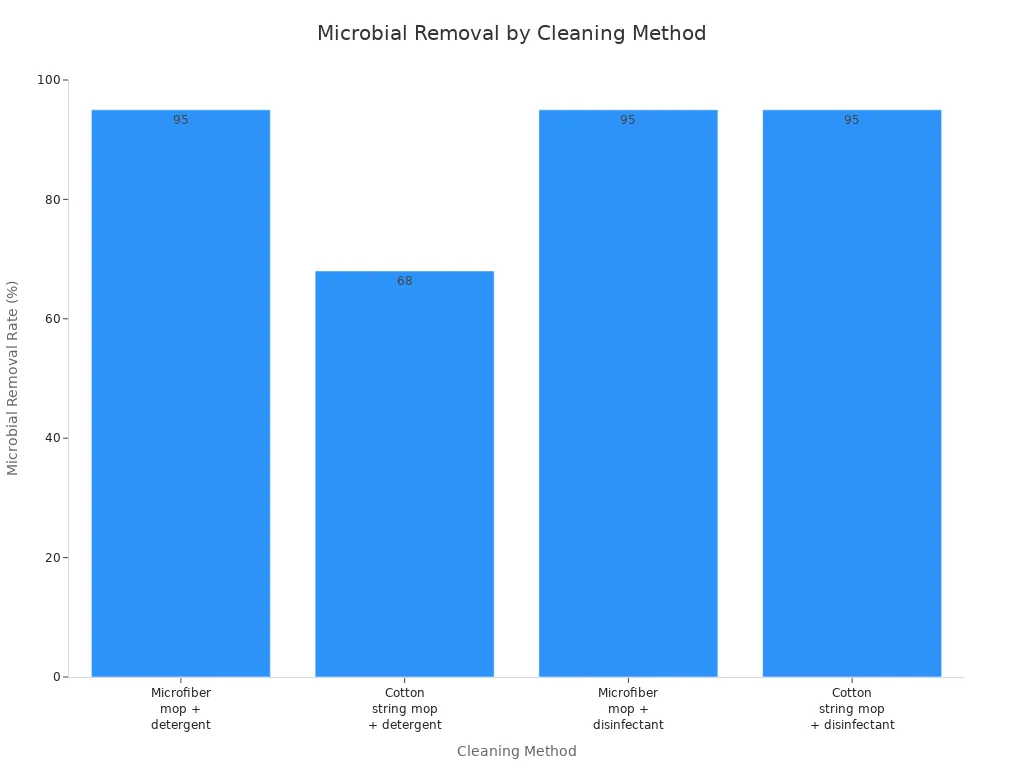
A microfiber mop also reduces chemical use, making it a safe, eco-friendly choice.
Key Takeaways
- Microfiber mops remove up to 98% of bacteria using only water, making them a powerful and eco-friendly choice for home cleaning.
- Hospital-grade cleaning at home helps reduce germs and allergens, creating a healthier environment, especially for vulnerable family members.
- Proper care of microfiber mops, like washing pads after each use and using color-coded heads, keeps them effective and prevents spreading germs.
Hospital-Grade Cleaning: What It Means for Your Home
Definition and Importance
Hospital-Grade Cleaning refers to a set of cleaning practices designed to control infection and maintain a sterile environment. Unlike standard home cleaning, which focuses on visible dirt and general hygiene, hospital-grade protocols aim to eliminate pathogens and prevent disease transmission. The following table highlights the main differences:
| Aspect | Hospital-Grade Cleaning | Standard Home Cleaning |
|---|---|---|
| Purpose | Infection control and sterilization | General cleanliness and appearance |
| Regulatory Standards | Strict guidelines from CDC, EPA, OSHA, NHMRC | No formal regulatory requirements |
| Chemicals Used | Strong antimicrobial agents | General-purpose cleaning agents |
| Cleaning Frequency & Intensity | Frequent, intensive cleaning of high-touch areas | Less frequent, focused on visible cleanliness |
| Training & Certification | Specialized training required | No specialized training |
| Protocols & Procedures | Rigorous, infection-prevention protocols | Basic routines without strict protocols |
Note: Hospital-Grade Cleaning involves specialized tools and procedures, including the use of Microfiber Mops, to achieve high levels of microbial reduction.
Why Hospital-Grade Cleaning Matters at Home
Applying hospital-grade standards at home can help reduce exposure to infectious agents and improve overall hygiene. While studies show that rigorous cleaning does not always correlate with lower illness or allergy rates, maintaining a higher standard of cleanliness can still minimize the risk of microbial contamination. Microfiber mops, when used with proper technique, physically remove more bacteria and allergens than traditional mops. This approach supports a healthier living environment, especially for households with vulnerable individuals. Adopting hospital-grade protocols—such as using designated cleaning tools for different areas and following a systematic cleaning order—can further enhance safety and efficiency at home.
Microfiber Mop Technology and Benefits

How Microfiber Works to Trap Germs and Allergens
Microfiber technology relies on extremely fine synthetic fibers, much thinner than human hair. These fibers create a dense network with millions of contact points, increasing the surface area for cleaning. The split fiber structure forms tiny hooks that physically capture and lock in dirt, dust, and microscopic particles. This mechanical action, combined with adhesive van der Waals forces, enables microfiber mops to trap germs and allergens effectively. Electrostatic attraction further enhances cleaning by drawing negatively charged dust and allergens to the positively charged fibers.
Scientific studies confirm that microfiber materials outperform traditional Cleaning Cloths in removing bacteria, viruses, and spores. For example, microfiber cloths significantly reduce the transfer of Clostridium difficile spores compared to cotton cloths. Filtration research also shows that microfiber’s electrostatic properties help trap airborne bacteria and viruses, although moisture can reduce this effect over time. These combined mechanisms explain why microfiber mops excel in Hospital-Grade Cleaning, physically locking contaminants inside the fibers until washed.
Key Benefits of Microfiber Mops
Microfiber mops offer several advantages that make them a preferred choice for both professional and home cleaning:
- The split fiber structure actively lifts and locks away contaminants, preventing dirt from being pushed around.
- The positive electrostatic charge attracts dust and allergens, improving indoor air quality.
- Microfiber mops absorb up to seven times their weight in water, allowing for efficient cleaning and quick drying.
- Laboratory tests show that microfiber mops can remove up to 98% of bacteria using only water, reducing the need for harsh chemicals.
- The lightweight, lint-free, and non-abrasive fibers protect delicate surfaces and minimize streaks.
- Microfiber Mop Heads last through more than 500 washes, making them durable and cost-effective.
- These mops require less water and cleaning solution, supporting eco-friendly cleaning practices.
- Quick-drying properties prevent mold and bacteria growth, further enhancing hygiene.
- Cleaning industry experts recommend using damp microfiber pads and overlapping strokes for optimal results. Regular rinsing or replacement of pads maintains consistent cleaning performance.
Tip: Microfiber mops are suitable for various floor types, including tile, concrete, and stone. Their hypoallergenic and reusable design makes them ideal for households with children, pets, or allergy sufferers.
Microfiber vs. Traditional Mops
Comparative studies highlight the superior performance of microfiber mops over traditional cotton mops. The following table summarizes key differences:
| Aspect | Microfiber Mop | Cotton Mop |
|---|---|---|
| Cleaning Performance | Removes 95% of microbes (American Journal of Infection Control study) | Removes 68% of microbes |
| Fiber Characteristics | Fine synthetic fibers trap dirt and bacteria | Larger fibers tend to push dirt around |
| Water & Cleaning Solution Use | Requires less water and cleaning solution | Requires more water and cleaning solution |
| Durability | Lasts 150-200 washes | Lasts 15-30 washes |
| Surface Area Coverage | Covers 400-500 sq ft before rinsing | Covers about 100 sq ft before rinsing |
| Environmental Impact | Uses 5 gallons water & $0.50 cleaning solution per 100 rooms | Uses 105 gallons water & $11.55 cleaning solution per 100 rooms |
| Cost | Higher upfront cost but better ROI due to durability and efficiency | Lower upfront cost but higher replacement frequency |
| Ease of Use | Lighter, easier to wring, less strain on workers | Heavier, requires more wringing effort |
| Special Cases | Less effective on large greasy spills | Better for large greasy spills |
| Chemical Resistance | Less resistant to bleach/acidic chemicals | More resistant to bleach/acidic chemicals |
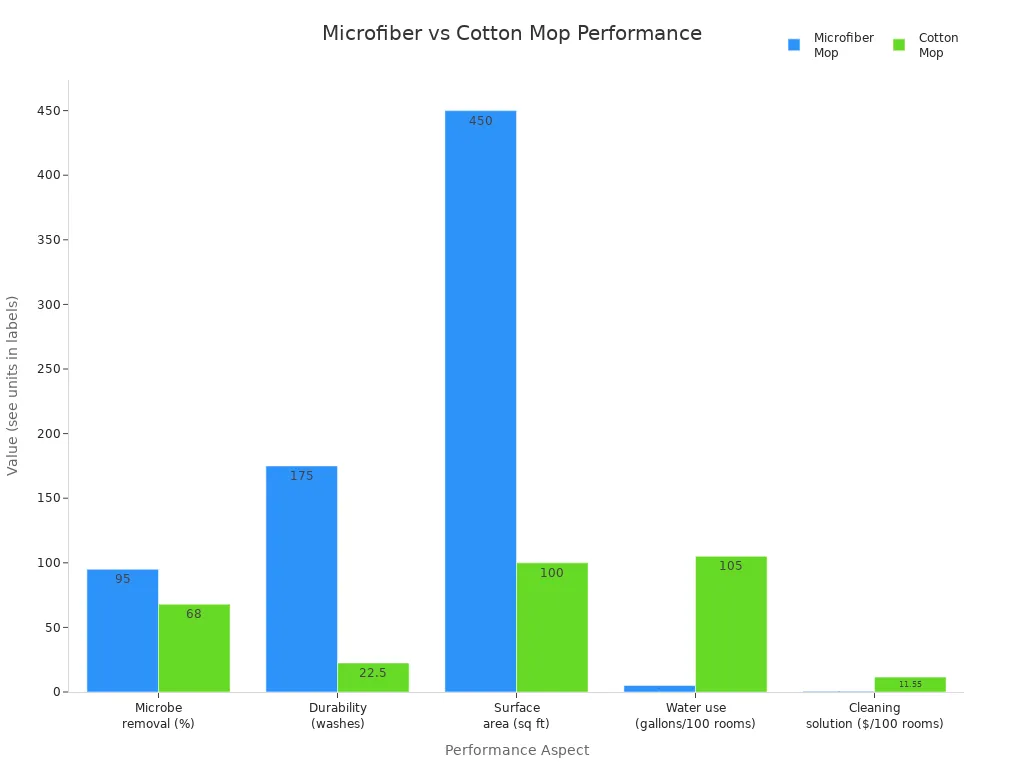
Microfiber mops deliver higher microbial removal rates, require less water and cleaning solution, and last significantly longer than cotton mops. Although the initial investment is higher, the long-term savings and improved cleaning outcomes make microfiber mops the preferred option for Hospital-Grade Cleaning at home. Their eco-friendly design, reduced chemical usage, and superior durability contribute to a healthier and more sustainable living environment.
Getting the Most from Your Microfiber Mop
Choosing the Right Microfiber Mop
Selecting the ideal microfiber mop depends on the cleaning needs of each household. Spin mops feature a built-in spinning mechanism for effortless wringing and round microfiber heads that absorb spills quickly. These mops suit various floor types and offer 360-degree swivel for easy maneuvering. Flat mops, with their rectangular heads, provide excellent contact with floors and reach under furniture with ease. They use less water and cleaning solution, making them eco-friendly. Specialty microfiber mops include smart mops with sensors, steam mops for deep sanitization, and robotic mops for automated cleaning. Each type addresses specific challenges, so users should consider floor type, convenience, and desired features before purchasing.
Best Practices for Use and Care
Proper use and maintenance extend the lifespan and effectiveness of microfiber mops.
- Rinse mop pads immediately after use to remove debris.
- Wash pads in warm water with mild detergent, avoiding bleach and fabric softeners.
- Air dry or use a low-heat dryer setting to protect fibers.
- Wet mop pads before cleaning, ensuring they are damp but not dripping.
- Use systematic cleaning motions, such as a figure 8 pattern, for thorough coverage.
- Store pads completely dry in a well-ventilated area to prevent mildew.
- Inspect pads regularly and replace them when worn.
- Assign color-coded mop heads to different rooms to prevent cross-contamination.
Tip: Always follow manufacturer instructions for washing and storage to maximize mop performance.
Tips for Long-Lasting Hospital-Grade Results
To achieve consistent, high-level cleaning, users should avoid common mistakes. Launder mop pads after every use to prevent dirt buildup. Use the recommended amount of cleaning solution to avoid sticky or streaky floors. Store mops in cool, dry places and hang them to ensure complete drying. Replace mop heads when they lose effectiveness. Ergonomic mop handles and lightweight designs reduce user fatigue and improve cleaning efficiency. Assigning one mop head per room further reduces the risk of spreading contaminants.
Microfiber mops deliver outstanding cleaning results, reduce chemical exposure, and lower long-term costs. Research shows that these mops remove more pathogens, last longer, and require less water.
- Users benefit from improved indoor air quality, fewer injuries, and extended surface life.
- Eco-friendly cleaning supports both health and savings.
FAQ
How often should someone wash microfiber mop pads?
Microfiber mop pads require washing after every use. This practice prevents dirt buildup and maintains cleaning effectiveness. Regular washing also extends the lifespan of each pad.
Can microfiber mops clean without chemicals?
Yes. Microfiber mops remove up to 98% of bacteria using only water. The split fibers trap dirt and germs, reducing the need for harsh cleaning agents.
Are microfiber mops safe for all floor types?
Microfiber mops work safely on hardwood, tile, laminate, and stone floors. The non-abrasive fibers protect surfaces and prevent scratches. Always check manufacturer recommendations for specialty flooring.
