

 Send Email
 whatsapp


Why Microfiber Mops Are the Ultimate Tool for Effective Floor Cleaning
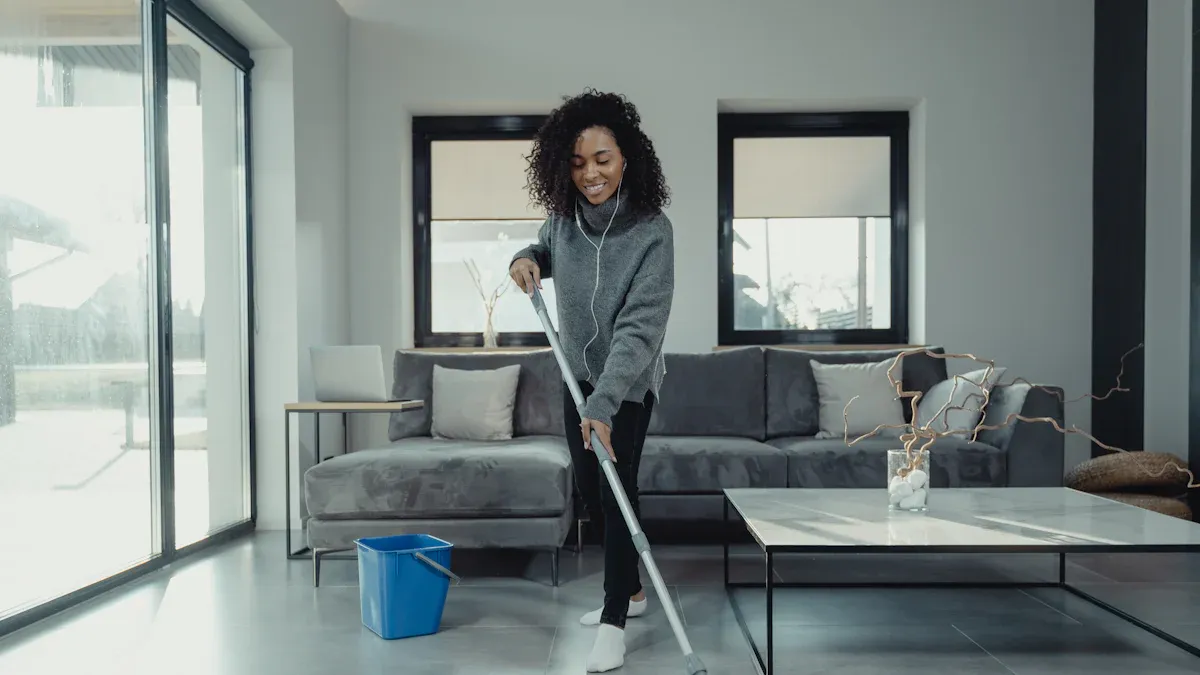
Microfiber Mops deliver superior cleaning results for anyfloor mop task. Research shows a microfiber floor cleaning mop removes more bacteria and dirt than traditional cotton options. The table below highlights the significant improvement in cleaning effectiveness:
| Method | Cleaning Effectiveness (cfu change) |
|---|---|
| Cotton + QUAT | cfu increased after mopping |
| Microfiber + QUAT | cfu decreased after mopping |
| Microfiber + HPD | Significant cfu reduction compared to cotton |
A microfiber mop pad reduces chemical usage, while a reusable mop pad ensures long-term savings.
Key Takeaways
- Microfiber mops clean floors better than traditional cotton mops by trapping up to 98% of dirt and bacteria using tiny fibers that lock contaminants without damaging surfaces.
- These mops reduce the need for harsh chemicals and water, making cleaning safer, faster, and more eco-friendly while saving money over time due to their long-lasting durability.
- Using microfiber mops properly with regular washing and the right technique ensures streak-free, quick-drying floors and helps maintain a healthier, cleaner environment.
Microfiber Mop Technology and How It Works
What Is a Microfiber Mop?
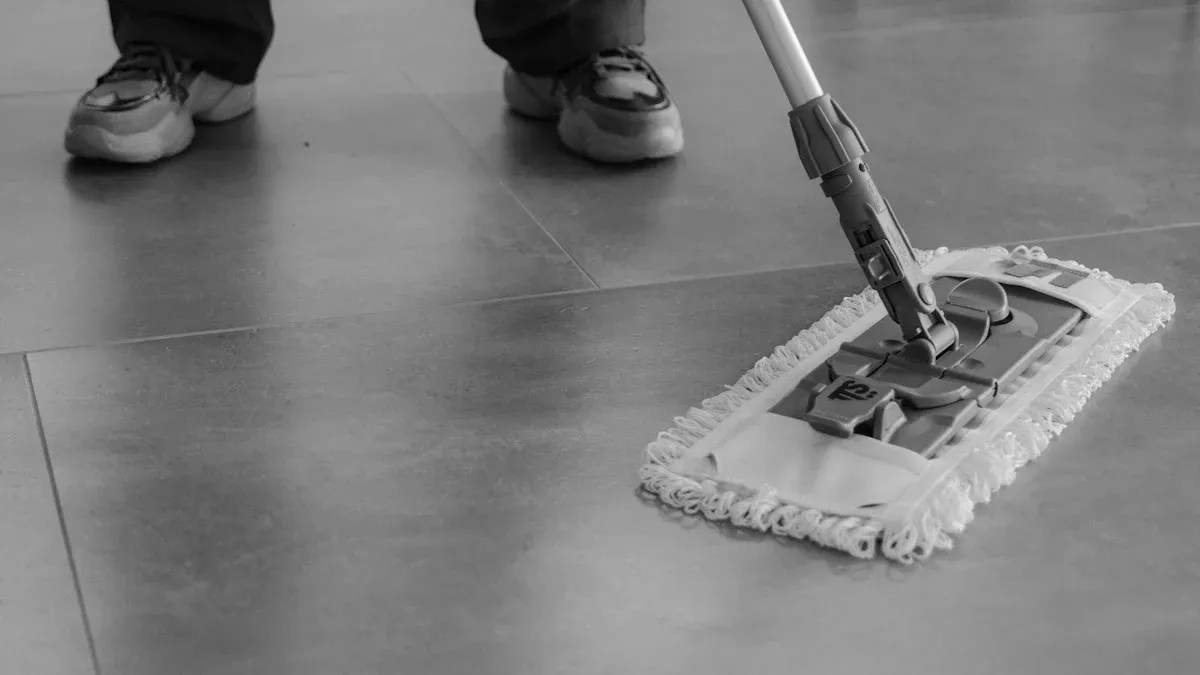
A microfiber mop uses advanced synthetic fibersto deliver superior cleaning performance. Manufacturers blend polyester and polyamide (nylon) to create these fibers. The split fiber design forms millions of tiny hooks, which trap dirt, dust, and bacteria on a microscopic level. Unlike traditional cotton mops, which use thicker natural fibers, a microfiber mop remains lightweight, lint-free, and non-abrasive. This makes it suitable for delicate surfaces such as hardwood or tile. The dense network of fibers increases the surface area, allowing the mop to absorb up to seven times its weight in water. Cleaning industry standards highlight additional features, including hypoallergenic properties, color-coded Mop Heads for hygiene, and antimicrobial additives to inhibit bacterial growth.
Tip: Microfiber mops maintain their shape and effectiveness for over 500 washes, while cotton mops often deteriorate after about 50 washes.
How Microfiber Mops Trap Dirt and Bacteria
Microfiber mops excel at trapping dirt and bacteria due to their unique fiber structure and electrostatic properties. The split fibers create tiny hooks that actively capture and hold dirt, dust, and microscopic particles. Unlike cotton mops, which tend to push dirt around, microfiber mops lift and lock contaminants away from surfaces. Laboratory studies show that microfiber mops can remove up to 98% of bacteria using only water, compared to approximately 30% for cotton mops. The positive electrostatic charge of the fibers attracts negatively charged dust and allergens, enhancing cleaning efficiency. Hospitals and healthcare facilities rely on microfiber mop technology to meet strict hygiene standards, as these mops reduce cross-contamination and outperform traditional cleaning tools.
Key Benefits of Using a Microfiber Mop
Superior Dirt and Bacteria Removal
A microfiber mop delivers exceptional cleaning power by reaching into tiny crevices and trapping dirt, dust, and bacteria. The split fiber technology creates millions of microscopic hooks that lift and lock away contaminants. Professional cleaning organizations report that microfiber mops remove up to 98% of bacteria using only water, far surpassing the performance of traditional cotton mops. This high level of effectiveness reduces the risk of cross-contamination, making microfiber mops a preferred choice in healthcare and food service environments.
Note: Microfiber mops clean without scratching or damaging delicate surfaces, making them suitable for hardwood, tile, and laminate floors.
Reduced Chemical Usage
Microfiber mops require less water and cleaning solution than traditional mops. The advanced fibers attract and hold dirt through static charge, allowing effective cleaning with plain water. This reduces the need for harsh chemicals, which benefits both the environment and indoor air quality. Many facilities have reported a significant reduction in chemical usage, sometimes eliminating chemicals altogether. This shift not only lowers costs but also supports green cleaning initiatives.
- Microfiber mops:
- Use less water and cleaning solution
- Reduce chemical pollution
- Support eco-friendly cleaning practices
Fast Drying and Streak-Free Results
Floors cleaned with a microfiber mop dry quickly and remain streak-free. The high absorbency of microfiber ensures that excess water is removed from the surface, preventing slip hazards and minimizing downtime in busy areas. Quick drying also helps prevent mold and bacteria growth, which is especially important in hygiene-sensitive environments. The Flat Mop design allows for even application of cleaning solution, leaving no residue behind.
Durability and Cost Savings
Microfiber mops offer impressive durability and long-term savings. They withstand hundreds of wash cycles without losing effectiveness, far outlasting cotton or synthetic string mops. The following table highlights the average lifespan of different mop types:
| Mop Type | Average Lifespan / Washes | Notes on Durability and Replacement Indicators |
|---|---|---|
| Microfiber Flat Mop | 500-900 washes (~3 years) | Can last multiple years depending on use and laundering conditions; shows wear by fraying, seam damage, and reduced cleaning efficiency |
| Synthetic String Mop | 30-50 washes | Shorter lifespan than microfiber flat mops; durability and laundry less favorable |
| Cotton String Mop | 7-9 days (depending on use) | Very short lifespan; shows wear by fraying, discoloration, odor, pilling; needs frequent replacement |

A UC Davis study found that switching to microfiber mops resulted in a 60% lifetime cost savings, a 95% reduction in chemical costs, and a 20% labor savings per day. Hospitals and commercial facilities benefit from reduced waste, lower operating costs, and improved supply resilience when using reusable microfiber mop pads.
Versatility for All Floor Types
Manufacturers recommend microfiber mops for a wide range of floor types, especially smooth and sealed surfaces. These mops excel on hardwood, tile, laminate, and other delicate floors. The flat mop design ensures excellent contact with the floor, making it easy to maneuver around obstacles and into corners. Microfiber mops require less water, which helps floors dry faster and reduces the risk of water damage.
- Microfiber mops are compatible with:
- Hardwood
- Tile
- Laminate
- Vinyl
- Other smooth, sealed surfaces
Tip: For rough or heavily textured floors, consider using a microfiber string mop or a mop with looped fringes for better soil removal.
How to Use a Microfiber Mop Effectively
Step-by-Step Cleaning Guide
Cleaning experts recommend a systematic approach for optimal results.
- Gather all necessary supplies, including the microfiber mop, cleaning solution, and extra mop pads.
- Select the correct mop type for the floor surface.
- Sweep or vacuum the area to remove loose debris.
- Pre-moisten the mop head with water or a light cleaning solution.
- Wring out excess liquid to prevent streaks.
- Start mopping from the farthest corner, moving toward the exit.
- Use a figure-eight or back-and-forth motion, overlapping each pass.
- Apply extra pressure on stubborn spots.
- Change or rinse mop pads when they become dirty.
- Allow the floor to dry completely before walking on it.
- Clean the mop head after use to maintain hygiene.
Tip: Use separate mop heads for different rooms to avoid cross-contamination.
Maintenance and Care Tips
Proper care extends the life of a microfiber mop.
- Shake or vacuum the mop head after each use to remove dirt.
- Rinse under warm water to clear detergent residue.
- Machine wash with mild detergent, avoiding fabric softeners and bleach.
- Air dry in a well-ventilated area, away from direct sunlight.
- Store the mop in a clean, dry place.
- Replace mop heads periodically for best performance.
Note: Launder microfiber separately from lint-producing fabrics to prevent contamination.
Recommended Microfiber Mop Products
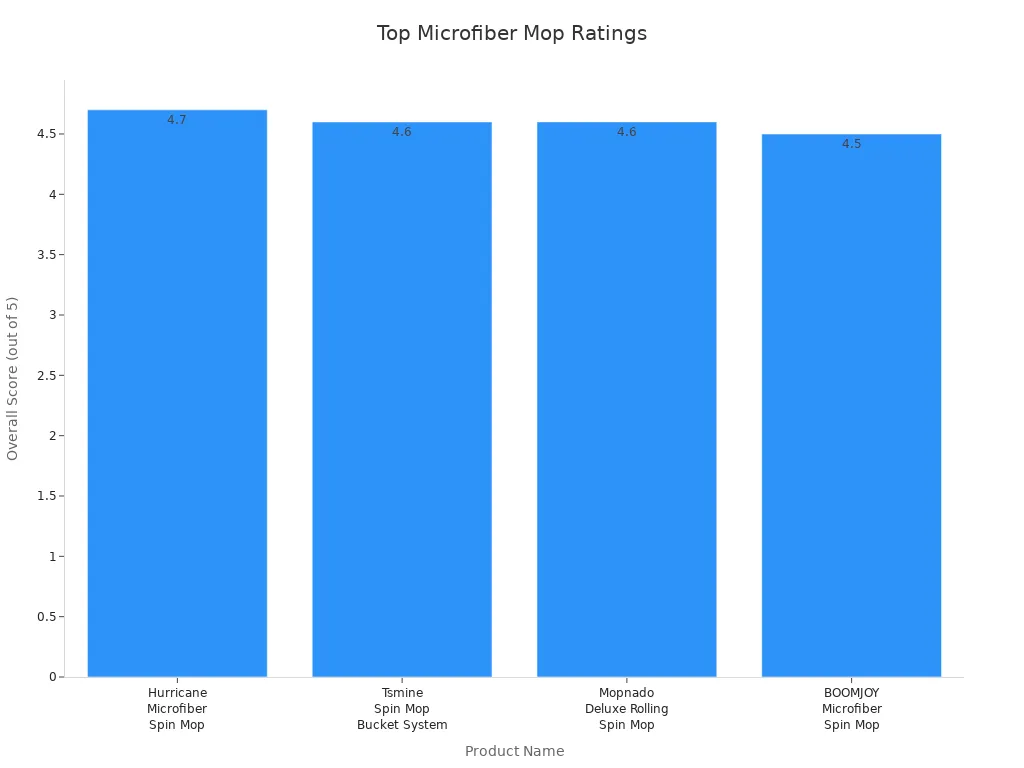
Top-rated microfiber mop products combine durability, cleaning power, and user-friendly features.
| Product Name | Key Features & Pros | Cons & User Feedback | Overall Score |
|---|---|---|---|
| Hurricane Microfiber Spin Mop | Pedal wringing, 360° pivot, lightweight, washable pads | No drainage hole, no extra head, some durability issues | 4.7/5 |
| Tsmine Spin Mop Bucket System | Wheeled bucket, effective on various floors, drainage hole | Unstable during transport, smaller coverage | 4.6/5 |
| Mopnado Deluxe Rolling Spin Mop | Wheeled bucket, adjustable handle, scrub brush, rust-resistant basket | Stiff handle, hard wringing, large bucket | 4.6/5 |
| BOOMJOY Microfiber Spin Mop | Stainless handle, built-in detergent holder, thick microfiber head | Flimsy handle, heavier, no wheeled bucket | 4.5/5 |
For eco-friendly cleaning, the Norwex Microfiber Superior Mop Package stands out, while the Rubbermaid Reveal Microfiber Spray Mop offers long-term durability and ease of use.
A microfiber mop stands out for effective, hygienic, and efficient floor cleaning in homes and businesses.
- It removes dirt and grease, supports reusability, and works with various cleaning agents.
- Microfiber attracts dust and allergens, reduces chemical use, and captures up to 99% of bacteria, promoting healthier environments and long-term savings.
FAQ
How often should someone wash microfiber mop pads?
Experts recommend washing microfiber mop pads after every use. Clean pads maintain optimal performance and prevent bacteria buildup.
Can microfiber mops clean without chemicals?
Yes. Microfiber mops remove most dirt and bacteria using only water. Their advanced fibers trap particles, reducing the need for harsh cleaning agents.
Do microfiber mops work on textured floors?
Microfiber mops clean smooth and lightly textured floors effectively. For heavily textured surfaces, a microfiber string mop or looped fringe design provides better soil removal.
