

 Send Email
 whatsapp


How to Enhance Patient Safety with Disposable Hospital Curtains

Hospital surfaces often host harmful bacteria, making infection control a constant challenge. Studies reveal that healthcare-associated infections (HCAIs) affect up to 7.6% of patients in developed countries and as high as 19.1% in developing regions. Traditional fabric curtains can harbor pathogens like Acinetobacter baumannii for months, increasing risks. Disposable curtains for hospitals simplify hygiene efforts, offering a safer, more reliable way to limit contamination.
Key Takeaways
- Disposable hospital curtains lower infection risks by being cleaner than fabric ones.
- Training staff to replace curtains correctly keeps patients safer.
- Special materials in these curtains stop bacteria, making hospitals cleaner and patients more comfortable.
Common Infection Risks in Hospitals
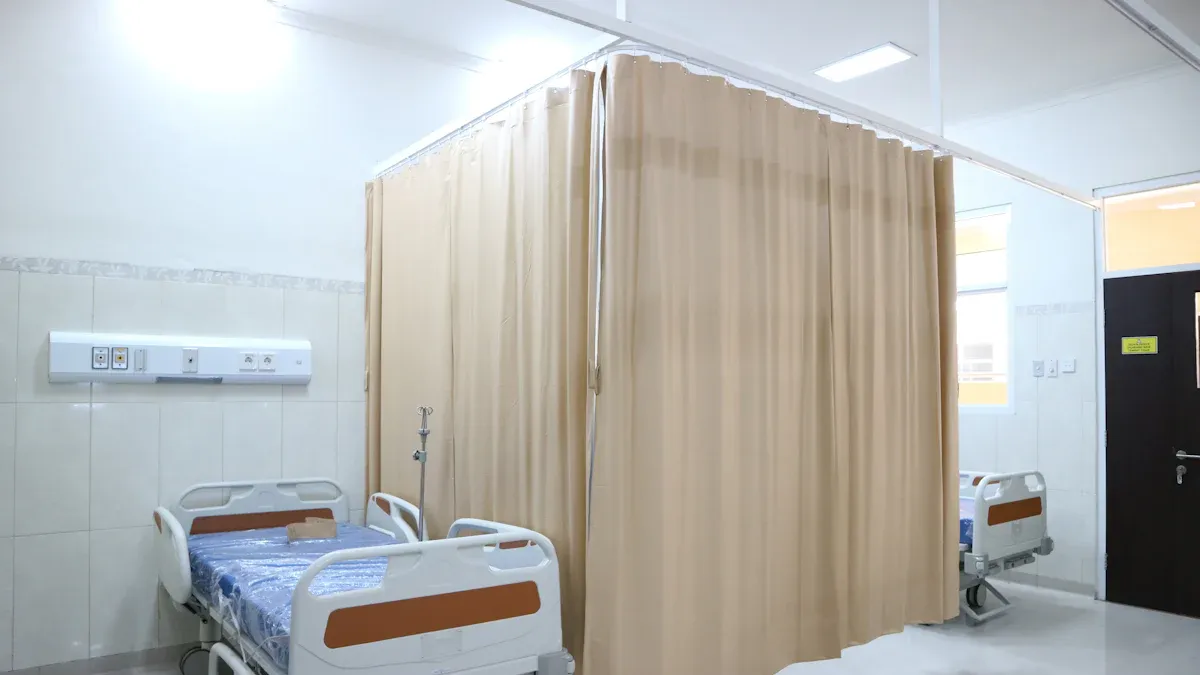
The Role of Contaminated Surfaces in Infection Spread
Hospital environments are filled with high-touch surfaces that can act as reservoirs for harmful pathogens. These surfaces, ranging from bed rails to computer keyboards, often remain contaminated despite routine cleaning. A study published in the American Journal of Infection Control found that bacterial colonies persist on these surfaces, contributing to rising healthcare-associated infection rates.
Pathogens like Clostridium difficile and Hepatitis B virus (HBV) are particularly concerning. C. difficile can survive on surfaces for up to five months, while HBV remains viable for seven days. Commonly affected items include commodes, bedpans, and blood pressure cuffs. In areas near infected patients, contamination rates of C. difficile can reach as high as 58%. This persistence highlights the importance of thorough disinfection protocols.
| Pathogen | Persistence on Surfaces | Commonly Affected Surfaces |
|---|---|---|
| Clostridium difficile | Up to 5 months | Commode, bedpans, blood pressure cuffs, etc. |
| Hepatitis B virus (HBV) | Up to 7 days | Electroencephalographic electrodes, lancets |
High-touch surfaces, such as infusion pump buttons and bedside rails, pose a unique challenge. These areas are frequently used by both patients and healthcare workers, increasing the risk of cross-contamination. Daily disinfection can reduce pathogen acquisition on healthcare workers' hands, but the difficulty of maintaining spotless surfaces in busy hospital settings remains a significant hurdle.
Tip: Single-bed rooms can help reduce infection risks by limiting the number of contaminated surfaces shared between patients.
Why Traditional Curtains Are a Hygiene Concern
Traditional fabric curtains, often overlooked during cleaning routines, can harbor dangerous pathogens. Even when they appear clean, these curtains may contain drug-resistant bacteria like MRSA. The Centers for Disease Control and Prevention (CDC) recommends cleaning curtains when visibly soiled, after spills, and regularly based on contamination risk. However, these guidelines are not always followed due to time constraints or inadequate cleaning protocols.
Hospital-associated infections (HAIs) are increasingly linked to healthcare textiles, including privacy curtains. Studies show that even antimicrobial curtains can become contaminated over time. Invisible contaminants, sometimes referred to as "fecal patina," can lead to insufficient cleaning practices. This makes traditional curtains a potential source of infection, especially in high-risk areas like intensive care units and surgical wards.
Disposable curtains for hospitalsoffer a practical solution to this problem. Unlike fabric curtains, they are designed for easy replacement, ensuring a clean and hygienic environment. By integrating Disposable curtains into hospital hygiene protocols, healthcare facilities can significantly reduce infection risks while enhancing patient safety.
Advantages of Disposable Curtains for Hospitals
Easy Replacement and Maintenance
Disposable curtains simplify the process of maintaining a clean hospital environment. Unlike traditional fabric curtains, which require laundering and lengthy drying times, disposable curtains can be replaced in minutes. This quick turnover is especially beneficial in high-demand areas like emergency wards and isolation rooms.
Hospitals have adopted post-pandemic health protocols that mandate frequent curtain changes, often every 6–12 weeks. Disposable curtains meet these requirements effortlessly, ensuring compliance with infection-prevention mandates. Their lightweight design makes them easy to handle, reducing the physical strain on staff during replacements.
| Evidence Point | Description |
|---|---|
| Healthcare safety protocols | Regular curtain changes are now required, increasing reliance on disposables. |
| Increased patient throughput | Faster room turnover supports growing admission rates. |
| Cost-effectiveness | Lower total cost of ownership compared to reusable curtains. |
Tip: Automated pulley systems can further streamline curtain changes, saving time and labor costs.
Integration into Hospital Hygiene Protocols
Disposable curtains integrate seamlessly into hospital hygiene protocols, enhancing infection control measures. Studies show that 92% of reusable curtains become contaminated with bacteria within a week, posing significant risks. In contrast, antimicrobial disposable curtains maintain a much lower contamination rate, with only 0.56 CFU compared to 32.6 CFU on standard curtains.
Hospitals that have switched to disposable curtains report a 30% reduction in infection rates. This improvement highlights their effectiveness in minimizing cross-contamination. By incorporating disposable curtains into routine cleaning schedules, healthcare facilities can create safer environments for patients and staff.
| Evidence Type | Findings |
|---|---|
| Infection Control | 92% of reusable curtains were contaminated within a week, increasing infection risks. |
| Bacterial Contamination | Antimicrobial curtains showed significantly lower contamination levels than standard curtains. |
| Operational Efficiency | Quick replacement enhances turnover in critical care settings. |
Enhanced Patient Privacy and Comfort
Privacy is a cornerstone of patient care, and disposable curtains excel in providing it. A 2022 survey revealed that 89% of patients consider privacy curtains essential for their comfort and dignity. In shared rooms and emergency departments, these curtains create personal spaces during examinations or treatments, ensuring patients feel secure.
Disposable curtains also contribute to a visually appealing environment. Their fresh, pristine appearance brightens hospital rooms, fostering a sense of calm and satisfaction among patients. The "Printed Colorful Hospital Disposable Curtain" by Esun combines functionality with aesthetics, offering vibrant custom prints that enhance the ambiance of medical settings.
- Patients value privacy curtains for maintaining dignity during consultations.
- Disposable curtains ensure a clean and welcoming atmosphere, boosting patient satisfaction.
- In high-traffic areas, they provide quick and effective solutions for maintaining personal spaces.
Note: Disposable curtains are ideal for short-term stays, such as outpatient clinics, where frequent cleaning is necessary.
Antimicrobial Properties in Disposable Curtains
Preventing Bacterial Growth
Hospitals constantly battle bacterial contamination, especially on high-touch surfaces. Disposable curtains for hospitals with antimicrobial properties offer a powerful solution. These curtains often contain silver or quaternary ammonium chlorides (QACs), which actively fight bacteria. Laboratory tests, such as ISO 20743, show that these curtains can reduce pathogens by up to 99.9%.
Clinical studies highlight their effectiveness in real-world settings. Curtains embedded with QACs significantly lower microbial burdens compared to standard curtains. In fact, hospitals using these curtains have reported a 93% reduction in total microbial contamination. This extended protection means fewer replacements and a safer environment for patients and staff.
- Antimicrobial curtains contain silver and QACs to combat bacteria.
- Laboratory tests confirm a 99.9% reduction in pathogens.
- Clinical settings show a 93% drop in microbial contamination.
Tip: Choosing antimicrobial disposable curtains can help hospitals maintain cleaner spaces with less effort.
Supporting Infection Control Measures
Antimicrobial disposable curtains play a vital role in infection control. Studies comparing bacterial growth on traditional and antimicrobial curtains reveal striking differences. Curtains with antimicrobial properties take longer to get contaminated, reducing the frequency of washing and replacement.
| Study Title | Key Findings |
|---|---|
| Effectiveness of antimicrobial hospital curtains on reducing bacterial contamination | Antimicrobial curtains took longer to get contaminated than conventional curtains, reducing washing frequency. |
| The effectiveness of antibacterial curtains in comparison with standard privacy curtains | Antimicrobial curtains significantly reduce microbial load and contamination levels. |
| Novel hospital curtains with antimicrobial properties: a randomized, controlled trial | Antimicrobial curtains have a lower level of contamination over time compared to traditional curtains. |
By reducing microbial loads, these curtains support hospital hygiene protocols and improve patient safety. Their ability to stay cleaner for longer makes them a cost-effective and practical choice for healthcare facilities.
Collaborative Implementation Strategies
Training Staff on Proper Curtain Replacement
Proper training ensures that hospital staff can replace disposable curtains efficiently and hygienically. Many healthcare workers are unaware of how often curtains should be changed or the correct procedures for doing so. Regular training sessions can bridge this gap. These sessions should focus on teaching staff how to handle curtains without spreading contaminants. Demonstrations can show the correct way to remove used curtains and install new ones without touching sterile areas.
Hospitals can also use visual aids like posters or step-by-step guides in storage areas. These reminders help reinforce best practices. For example, staff should know that disposable curtains for hospitals are designed for quick and easy replacement. This feature minimizes downtime and ensures patient rooms are ready faster.
Tip: Assigning specific team members to oversee curtain replacements can improve accountability and consistency.
Administrative Support for Infection Control Solutions
Strong administrative support plays a key role in maintaining infection control measures. Hospital administrators should prioritize resources for infection prevention, including the adoption of disposable curtains. By allocating budgets for high-quality curtains, they can reduce the risk of healthcare-associated infections (HAIs).
Administrators can also implement policies that encourage frequent curtain changes. For instance, using hydrogen peroxide on cubicle curtains has been shown to reduce pathogens by 98.5%. Disposable curtains simplify this process since they can be replaced immediately after use. Increasing cleaning efforts and replacing curtains more often can significantly lower infection risks.
- Hospitals report fewer HAIs after adopting disposable curtains.
- Disposable curtains are gaining popularity due to their ease of use and effectiveness.
Collaboration between administrators and staff ensures these solutions are practical and sustainable. When everyone works together, hospitals can create safer environments for patients and healthcare workers alike.
Disposable curtains for hospitals are transforming infection control in healthcare. Their antimicrobial features and easy replacement process make them indispensable. Hospitals adopting these curtains create cleaner spaces for patients and staff. By prioritizing hygiene, they reduce risks and improve safety for everyone who walks through their doors.
FAQ
What makes disposable hospital curtains better than traditional fabric curtains?
Disposable curtains are easier to replace, more hygienic, and often include antimicrobial properties. They reduce infection risks and save time for hospital staff.
How often should disposable hospital curtains be replaced?
Hospitals typically replace them every 6–12 weeks or sooner in high-risk areas. Frequent replacement ensures a cleaner, safer environment for patients and staff.
Are Esun’s disposable curtains customizable?
Yes! Esun offers vibrant, printed designs that brighten hospital spaces. These curtains combine functionality with aesthetics, creating a welcoming and cheerful atmosphere for patients.
Tip: Choose antimicrobial options for added protection against bacteria and other pathogens.