

 Send Email
 whatsapp


Understanding Hygiene in Disposable and Reusable Cubicle Curtains

Hygiene is the backbone of patient safety in healthcare settings. Contaminated surfaces, including Cubicle Curtains, can harbor harmful bacteria. For instance, studies show that antimicrobial curtains reduced bacterial colonization from 32.60 CFUs to just 0.56 CFUs, proving their effectiveness. Choosing the right curtain, like a disposable cubicle curtain, can significantly reduce infection risks while simplifying maintenance.
Key Takeaways
- Disposable cubicle curtains work well in high-risk areas. They help stop infections by giving each patient a clean surface. This makes them important for keeping infections under control.
- Reusable cubicle curtains save money and are eco-friendly. They need careful cleaning but cost less over time if cared for properly.
- Both curtain types are useful in healthcare. Think about your facility's needs to pick the best one—disposables for stopping infections and reusables for saving money.
Overview of Disposable and Reusable Cubicle Curtains
Features of Disposable Cubicle Curtains
Disposable cubicle curtains are designed for single-use applications, making them ideal for infection-prone areas. These curtains eliminate the need for laundering, which reduces the risk of cross-contamination. They are lightweight, easy to install, and often come pre-treated with antimicrobial coatings to enhance hygiene. A study revealed that 42% of curtains in healthcare settings were contaminated with VRE, while 22% carried MRSA. Using disposable options can help mitigate these risks effectively.
These curtains are particularly useful in high-risk zones like ICUs, surgical units, and isolation rooms. Their ability to be replaced quickly ensures a clean environment for every patient. This makes them a practical choice for maintaining hygiene in busy healthcare facilities.
Features of Reusable Cubicle Curtains
Reusable cubicle curtains offer durability and long-term cost savings. They are made from robust materials that can withstand repeated laundering. Many reusable curtains feature antimicrobial properties, which help reduce the risk of hospital-acquired infections. Research shows that antimicrobial curtains take 27.6 times longer to become contaminated compared to standard curtains.
Hospitals can also customize reusable curtains with various colors and patterns to create a welcoming atmosphere. These curtains are easy to maintain and comply with regulatory standards, making them a sustainable and versatile option for healthcare environments.
Applications in Healthcare Environments
Both disposable and reusable cubicle curtains serve specific purposes in healthcare settings. Disposable curtains are best suited for areas requiring strict infection control, such as ICUs and surgical units. On the other hand, reusable curtains work well in general patient rooms and lower-risk zones.
A comparative study highlighted that disposable curtains are ideal for reducing bacterial transmission in high-risk areas, while reusable curtains provide a cost-effective and eco-friendly solution for long-term use. Hospitals can choose the appropriate type based on their hygiene needs and operational priorities.
Hygiene and Infection Control
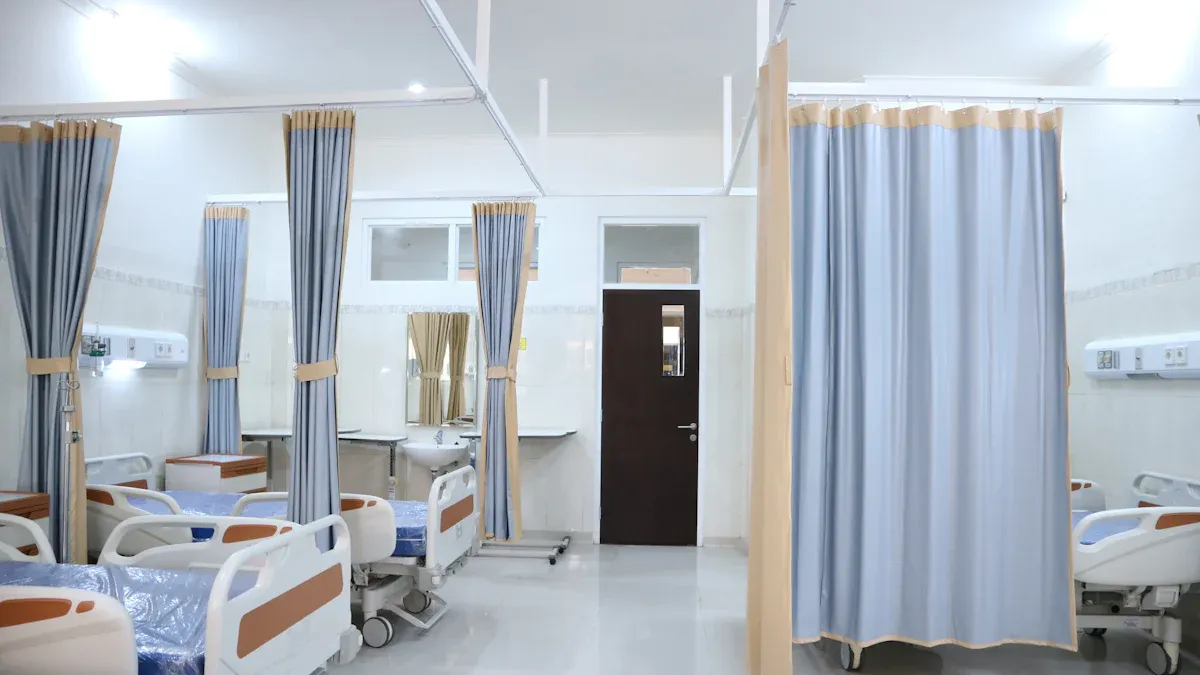
Advantages of Disposable Cubicle Curtains for Hygiene
Disposable cubicle curtains offer a practical solution for maintaining hygiene in healthcare settings. These curtains are designed for single-use, which means they can be replaced entirely when soiled, eliminating the need for cleaning. This feature significantly reduces the risk of cross-contamination, especially in high-risk areas like surgical units and intensive care units.
Clinical studies highlight the effectiveness of disposable curtains in infection control. For example, single-use polyethylene curtains in surgical units lowered cross-contamination risks by 40% during a trial at Massachusetts General Hospital. Their ability to provide a fresh, uncontaminated surface for every patient makes them an essential tool in preventing healthcare-associated infections (HAIs).
Additionally, disposable cubicle curtains often come pre-treated with antimicrobial coatings. These coatings inhibit the growth of bacteria, viruses, and fungi, ensuring a safer environment for patients and staff. The growing use of disposable products in healthcare reflects a shift toward faster turnover and better infection prevention, making them a preferred choice for many facilities.
Challenges in Maintaining Hygiene with Reusable Curtains
Reusable cubicle curtains, while durable and cost-effective, require meticulous maintenance to ensure hygiene standards are met. These curtains are cleaned through hospital laundry systems, which preserve their antimicrobial properties even after multiple washes. However, the process demands time, labor, and strict adherence to cleaning protocols.
Dust accumulation can pose a challenge for reusable curtains. Regular vacuuming is necessary to remove particles that may harbor bacteria. In critical care settings, reusable curtains must be replaced or cleaned frequently to prevent contamination. Unlike disposable options, soiled reusable curtains cannot be discarded, which may increase the risk of infection if cleaning schedules are not strictly followed.
Despite these challenges, reusable curtains remain a sustainable option for infection control. Their ability to withstand repeated laundering makes them suitable for long-term use, provided healthcare facilities implement effective cleaning practices.
Effective Hygiene Practices for Both Curtain Types
Maintaining hygiene for both disposable and reusable cubicle curtains requires a combination of best practices. For disposable curtains, healthcare facilities should replace them promptly when soiled and vacuum them regularly to remove dust. This ensures that the curtains remain effective in reducing cross-contamination risks.
Reusable curtains demand a more rigorous approach. Hospitals should establish strict cleaning schedules and use advanced laundry systems to preserve antimicrobial properties. At Mayo Clinic, replacing traditional curtains with silver-ion-treated versions reduced HAIs by 18% over two years, demonstrating the importance of using antimicrobial fabrics.
Copper-infused fabrics eliminate 99.9% of Staphylococcus aureus within 30 minutes, according to EPA-certified testing.
Healthcare facilities can also adopt innovative solutions like antimicrobial and copper-infused curtains to enhance infection control. These materials provide an added layer of protection against bacteria and viruses, making them ideal for both disposable and reusable options.
By combining these practices, hospitals can create a safer environment for patients and staff, regardless of the curtain type they choose.
Cost Analysis
Upfront Costs of Disposable Curtains
Disposable cubicle curtains often come with a lower initial price tag. Each curtain costs about $25.00, making them an affordable option for healthcare facilities needing quick replacements. For a hospital with 250 curtains, the upfront cost totals $6,250. This price point appeals to facilities prioritizing immediate infection control without a significant initial investment.
However, disposable curtains require frequent replacements. In high-traffic areas, they are typically changed every three months. Over time, these recurring costs can add up, especially in larger facilities. While the upfront expense is manageable, the long-term financial commitment may become a consideration for budget-conscious organizations.
Tip: Facilities can reduce costs by bulk purchasing disposable curtains, ensuring a steady supply while saving on unit prices.
Long-Term Savings with Reusable Curtains
Reusable curtains, while more expensive initially, offer significant savings over time. These curtains are designed to withstand repeated laundering, making them a cost-effective choice for facilities with established cleaning processes. Although the per-curtain laundry rate is $10.00, the overall lifecycle cost of reusable curtains is 70% lower than that of disposables.
Long-term care facilities often prefer reusable curtains due to their budget constraints. Approximately 60% of these facilities have adopted reusable options, benefiting from reduced replacement costs and enhanced sustainability. Over time, the savings from reusables can be redirected toward other critical areas, such as staff training or advanced medical equipment.
Note: Reusable curtains not only save money but also align with eco-friendly practices, making them a win-win for facilities aiming to balance cost and sustainability.
Cost vs Hygiene Trade-offs
When comparing costs, healthcare facilities must weigh financial savings against hygiene priorities. Disposable cubicle curtains excel in infection control, offering a fresh, uncontaminated surface for every patient. Their single-use nature eliminates the risk of improper cleaning, making them ideal for high-risk areas.
Reusable curtains, on the other hand, require strict cleaning protocols to maintain hygiene standards. While they save money in the long run, the added labor and laundry costs can offset some of these savings. Facilities must also consider the staff time required for curtain change-outs, which costs approximately $28.00 per hour.
Ultimately, the choice between disposable and reusable curtains depends on a facility's specific needs. High-risk zones may benefit from the hygiene advantages of disposables, while general patient rooms can leverage the cost savings of reusables. By carefully evaluating these trade-offs, healthcare providers can make informed decisions that balance cost and patient safety.
Environmental Considerations
Sustainability Benefits of Reusable Curtains
Reusable cubicle curtains offer a clear advantage when it comes to sustainability. These curtains are designed to last through multiple cleaning cycles, reducing the need for frequent replacements. By choosing reusable options, healthcare facilities can significantly cut down on waste. This makes them an eco-friendly choice for hospitals aiming to lower their environmental footprint.
Another benefit is the reduced demand for raw materials. Since reusable curtains last longer, fewer resources are needed for production. This helps conserve energy and raw materials, contributing to a more sustainable healthcare system. Facilities that prioritize reusable curtains often align with global efforts to promote greener practices in medical environments.
Waste Management Issues with Disposable Curtains
Disposable curtains, while convenient, create challenges in waste management. Hospitals generate large amounts of waste daily, and Single-use curtains add to this burden. Improper disposal of these curtains can lead to environmental pollution. For example, many disposable curtains end up in landfills, where they take years to decompose.
The environmental impact becomes even more significant when considering the scale of healthcare operations. A reported 30% reduction in hospital-acquired infections after implementing antibacterial solutions highlights the importance of hygiene. However, balancing hygiene with waste management remains a challenge for facilities relying heavily on disposables.
Innovations in Eco-Friendly Curtain Solutions
Innovative solutions are emerging to address these environmental concerns. Manufacturers now offer biodegradable disposable curtains made from eco-friendly materials. These curtains break down faster in landfills, reducing long-term waste.
Some companies are also exploring curtains made from recycled materials. These options combine sustainability with functionality, offering a greener alternative without compromising on quality. By adopting these innovations, healthcare facilities can enhance hygiene while supporting environmental conservation efforts.
Practicality and Maintenance
Ease of Installation for Disposable Curtains
Disposable cubicle curtains are designed for quick and easy installation. Their lightweight material and pre-fabricated hooks make them simple to hang, even in high-pressure environments like emergency rooms. Healthcare staff can replace these curtains in minutes, ensuring minimal disruption to patient care.
A study comparing disposable and reusable curtains highlights their operational efficiency. Disposable curtains excel in infection control and require less frequent maintenance. The table below summarizes key differences:
| Aspect | Disposable Curtains | Reusable Curtains |
|---|---|---|
| Infection Control | More effective in high-risk areas | Requires strict cleaning protocols |
| Maintenance Challenges | Minimal maintenance needed | Regular cleaning required |
| Operational Efficiency | Cost-effective in high-infection areas | Higher costs due to washing needs |
| Contamination Risk | Lower risk of cross-contamination | High risk if not maintained properly |
These features make disposable curtains a practical choice for busy healthcare facilities.
Cleaning and Care for Reusable Curtains
Reusable curtains demand a more hands-on approach to maintenance. Hospitals must follow strict cleaning schedules to prevent contamination. Studies show that bacteria levels on reusable curtains can increase 25-fold within 21 days. Curtains in patient care areas often harbor MRSA, with 50% showing contamination within 10 days.
To maintain hygiene, healthcare facilities should replace or launder reusable curtains every 14 days. Advanced laundry systems help preserve antimicrobial properties, ensuring the curtains remain effective. Regular vacuuming can also reduce dust accumulation, which may harbor bacteria.
| Study Aspect | Findings |
|---|---|
| Mean CFU/cm2 Increase | 25-fold increase among patient care curtains |
| MRSA Growth in Patient Curtains | 50% within 10 days, majority within 14 days |
| Conclusion | Replace curtains after 14 days to minimize contamination risks. |
By adhering to these protocols, hospitals can ensure reusable curtains remain a safe and sustainable option.
Labor and Time Efficiency
Time is a critical factor in healthcare settings. Disposable curtains save time by eliminating the need for laundering. Staff can replace them quickly, allowing more focus on patient care. This efficiency is especially valuable in high-infection areas, where frequent curtain changes are necessary.
Reusable curtains, while cost-effective, require more labor. Cleaning, drying, and rehanging take time and resources. A longitudinal study found that 92% of reusable curtains became contaminated within a week, emphasizing the need for frequent maintenance. This adds to the workload of hospital staff, making disposable curtains a more time-efficient choice in certain scenarios.
Both curtain types have their strengths. Facilities must weigh labor demands against their operational priorities to choose the best option for their needs.
Product Highlight: Printed Colorful Hospital Disposable Curtain
Features and Benefits
The Printed Colorful Hospital Disposable Curtain combines functionality with aesthetic appeal, making it a standout choice for healthcare facilities. These curtains are crafted from 100% recycled materials, ensuring both durability and eco-friendliness. Their antimicrobial properties are highly effective, eliminating over 99.82% of Clostridium difficile spores. This makes them a reliable option for infection control in high-risk areas like ICUs and isolation rooms.
Did you know? These curtains comply with rigorous industry standards, including ISO 9001, ISO 20743:2013, and NFPA701. This ensures they meet the highest hygiene and safety requirements.
Here’s a quick look at their specifications:
| Specification | Details |
|---|---|
| Antimicrobial Properties | Effective against Clostridium difficile spores with over 99.82% efficacy. |
| Material Composition | Made from 100% recycled material. |
| Compliance with Standards | Meets ISO 9001, ISO 20743:2013, BS5867 part 2 type B&C, NFPA701. |
| Cost-Effectiveness | Eliminates laundering costs and labor, making it more economical than traditional curtains. |
| Application Areas | Suitable for intensive care, isolation, and emergency areas in healthcare facilities. |
These features make the Printed Colorful Hospital Disposable Curtain a practical and cost-effective solution for modern healthcare environments.
Enhancing Healthcare Environments with Colorful Designs
A hospital room doesn’t have to feel cold or clinical. The Printed Colorful Hospital Disposable Curtain brings warmth and vibrancy to healthcare spaces. With a variety of colorful patterns, these curtains create a welcoming atmosphere that can help reduce patient anxiety.
Innovations in printing technology allow for intricate designs that cater to diverse preferences. Whether it’s calming blues or cheerful yellows, these curtains can transform a sterile room into a more inviting space. Studies show that aesthetically pleasing environments contribute to better patient experiences and even faster recovery times.
Tip: Bright and cheerful designs not only uplift patients but also boost staff morale, creating a more positive work environment.
Why Choose Printed Colorful Hospital Disposable Curtains?
Healthcare facilities face the dual challenge of maintaining hygiene and creating a comforting environment. The Printed Colorful Hospital Disposable Curtain excels in both areas.
- Hygiene First: These curtains are disposable, allowing for easy replacement and reducing cross-contamination risks. Unlike traditional fabric curtains, they don’t require laundering, saving time and resources.
- Aesthetic Appeal: Customizable patterns and vibrant colors enhance the visual appeal of any medical setting.
- Ease of Use: Lightweight and easy to install, these curtains simplify operations in busy healthcare environments.
The growing focus on infection control has made disposable curtains a preferred choice. Their ability to combine cleanliness with design innovation sets them apart, making them an essential addition to any healthcare facility.
Choosing between disposable and reusable cubicle curtains depends on healthcare priorities. Disposable curtains excel in infection control, while reusable ones offer long-term savings and sustainability. Facilities should assess their needs—high-risk areas benefit from disposables, while general wards suit reusables.
Proper maintenance ensures hygiene. Regular replacement for disposables and strict cleaning schedules for reusables keep environments safe.
Author Information:
Article Author: Esun
Skype: +86-13738916022
X: https://x.com/kocean123
YouTube: https://www.youtube.com/channel/UC4_TVumElHH0Kojz8mjVDGg
LinkedIn: https://www.linkedin.com/showcase/esunesun