

 Send Email
 whatsapp


Microfiber Mop for Wet and Dry Cleaning: One Tool, Dual Power

A microfiber floor cleaning mop offers a practical solution for both dusting and mopping. Ultra-fine fibers capture dust and dirt more effectively than a traditional floor mop. Scientific studies show Microfiber Mops match chemical disinfectants in removing bacteria. Thereusable mop padsupports sustainability, making every Floor Cleaning Mop session efficient.
Key Takeaways
- Microfiber mops clean floors effectively by trapping over 99% of dust, dirt, and bacteria using fine fibers and static charge, making them great for both dry dusting and wet mopping.
- These mops use less water and cleaning chemicals, which protects floors and supports eco-friendly cleaning while saving money over time.
- Choosing a lightweight microfiber mop with reusable, machine-washable pads and ergonomic handles makes cleaning easier, faster, and healthier for your home.
Why Choose a Microfiber Floor Cleaning Mop?

Microfiber Material and Dual Cleaning Power
Microfiber floor cleaning mops stand out due to their advanced material composition. Manufacturers split ultra-fine polyester and polyamide fibers during production, creating a dense fabric with a large surface area. This structure forms microscopic spaces that trap dirt, moisture, and oil. The fibers carry a positive static charge, attracting dust and particles like a magnet. Many premium mops feature dual-sided pads: one side remains soft and smooth for gentle cleaning, while the other side offers a more abrasive texture for scrubbing stubborn grime. This dual-sided design allows users to switch between dry dusting and wet mopping without changing tools, enhancing both versatility and efficiency.
Note: Microfiber’s unique structure enables it to lift and trap over 99% of dirt, dust, and allergens, providing a dust-free, lint-free, and streak-free clean.
How It Works for Dry Cleaning
When used dry, a microfiber floor cleaning mop excels at capturing dust, pet dander, and allergens from various floor surfaces. The fine fibers, up to 100 times thinner than human hair, reach into cracks and crevices that traditional mops often miss. The positive static charge attracts and holds onto dust and microscopic particles, preventing them from becoming airborne. This mechanism not only improves indoor air quality but also reduces the presence of allergens such as pet dander and pollen.
- Microfiber mops remove up to 99% of dust and dirt without the need for polish or cleaners.
- Antimicrobial-treated microfiber pads can lift 99% of bacteria from nonporous surfaces using only water.
- The dense fiber structure ensures that even the smallest particles are trapped, resulting in a healthier environment.
How It Works for Wet Cleaning
In wet cleaning mode, a microfiber floor cleaning mop demonstrates exceptional absorbency and scrubbing power. The mop pad can hold up to seven times its weight in liquid, allowing for efficient spill management and thorough cleaning. The fine synthetic fibers and electrostatic charge enable the mop to trap dirt, dust, bacteria, and even viruses. Scientific studies show that microfiber mops can remove up to 98% of bacteria and 93% of viruses using only water, outperforming traditional cotton mops.
Proper technique enhances scrubbing effectiveness. Users should wet the mop pad thoroughly but avoid oversaturation. Cleaning motions such as a backward stroke with a consistent leading edge or a figure-eight pattern for larger areas optimize dirt and microbial removal. Quick drying properties reduce the risk of watermarks, mold growth, and contamination.
| Aspect | Microfiber Mops | Traditional Cotton Mops |
|---|---|---|
| Cleaning Performance | Captures dirt, dust, microbes effectively due to fine fibers and electrostatic properties. | Pushes dirt around, captures mainly liquids, less effective at removing debris. |
| Water & Solution Usage | Requires less water and cleaning solutions, eco-friendly and less damaging to sensitive floors. | Uses more water and detergent, leaves excess moisture that can damage floors, especially hardwood. |
| Floor Types | Effective on hardwood, tile, laminate; better drying properties and hygiene. | Risk of floor damage due to excess moisture, less suitable for delicate surfaces. |
| Durability | Highly resilient fibers, withstands many washes, cost-effective long-term. | Deteriorates quickly, requires frequent replacement. |
| Ease of Use & Hygiene | Machine-washable heads, lightweight, easy to wring and maneuver, reduces physical strain. | Can become musty, harder to clean, may harbor bacteria if not properly maintained. |
| Environmental Impact | Uses less water and chemicals, reducing carbon footprint. | Higher water and detergent consumption, less eco-friendly. |
| Special Notes | Versatile types like flat and spin mops offer additional convenience and effective cleaning. | More absorbent, may be better for heavy, greasy spills but less efficient overall. |
Key Benefits Over Traditional Mops
Recent market research and consumer reviews highlight several reasons why people prefer a microfiber floor cleaning mop over traditional options:
- Superior dirt-trapping: Advanced fibers capture dirt, dust, and bacteria, improving cleaning quality.
- Environmental benefits: Reduced need for water and chemicals aligns with eco-friendly values.
- Versatility: Suitable for both dry dusting and wet scrubbing on various floor types.
- Durability and cost-effectiveness: Reusable mop heads last longer and reduce waste.
- Enhanced hygiene: Microfiber mops remove up to 99% of germs using only water, supporting a healthier home.
- Ergonomic design: Lightweight construction and adjustable handles reduce physical strain.
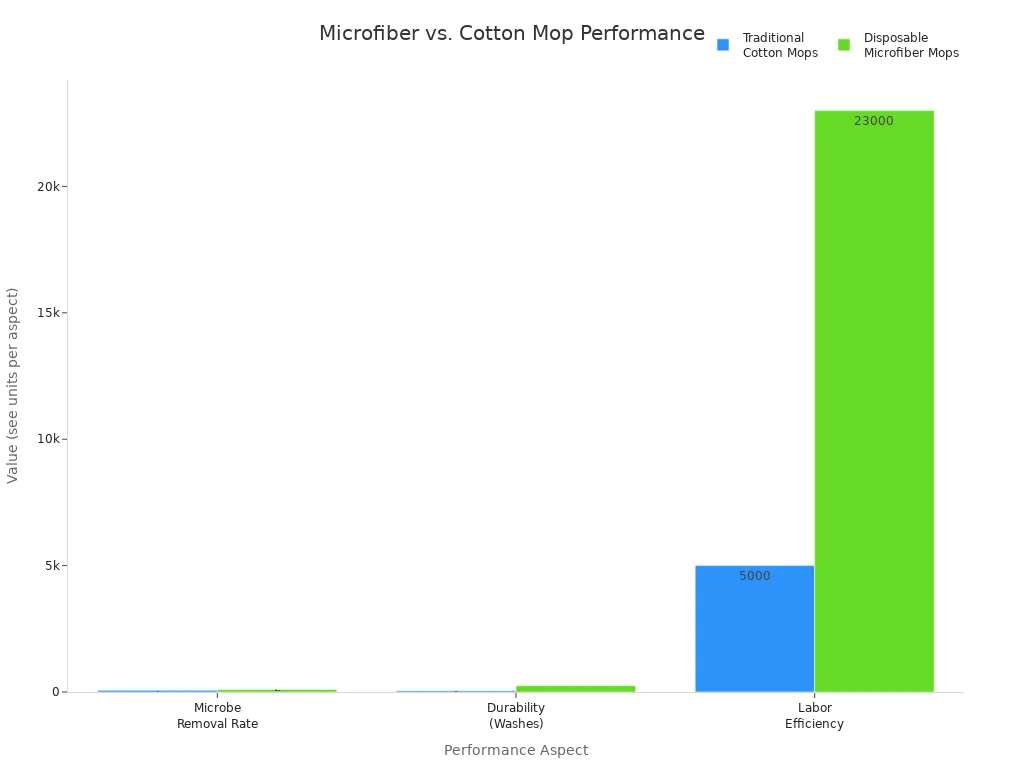
Tip: Microfiber floor cleaning mops require less water and cleaning agents, supporting eco-friendly cleaning and long-term savings.
Getting the Most from Your Microfiber Floor Cleaning Mop
Choosing the Right Features
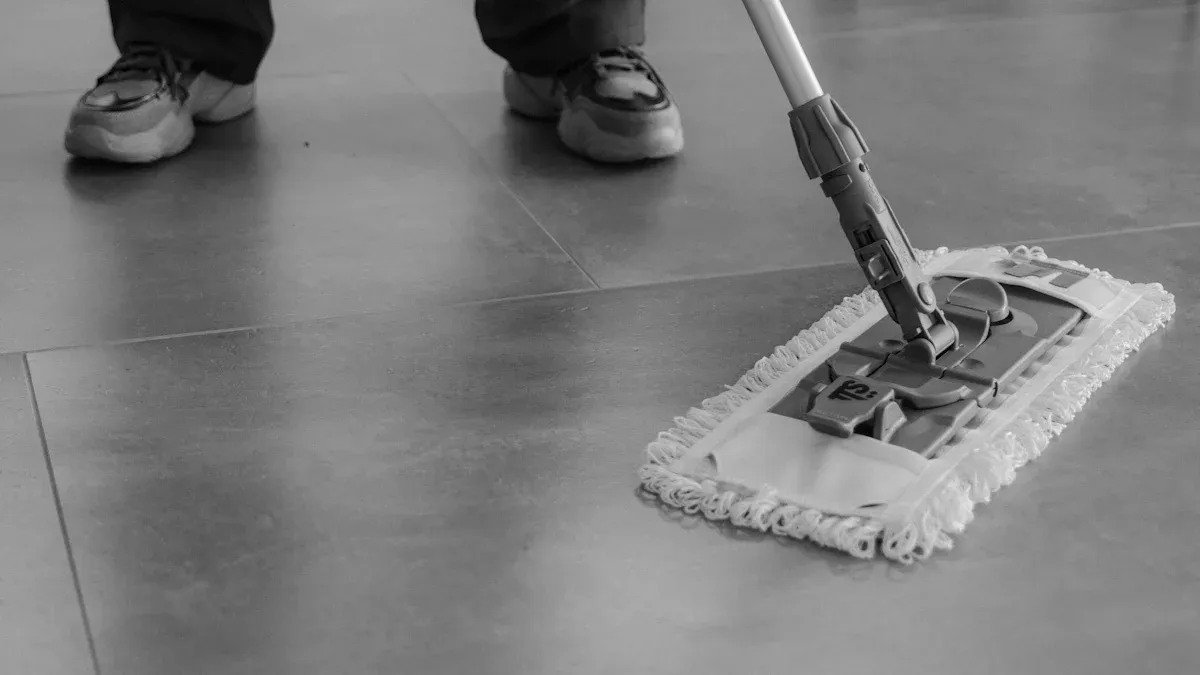
Selecting the best microfiber floor cleaning mop involves more than just picking any model off the shelf. Cleaning experts recommend prioritizing lightweight construction, reusable pads, and ergonomic handles. Flat mops with microfiber pads cover large areas quickly and trap dust without the need for chemical cleaners. Many designs feature plush microfiber loops that wrap around the pad, ensuring thorough cleaning along baseboards and corners. Adjustable handles and a 360° swivel frame help users clean under furniture and reduce physical strain. High-quality mop pads include a thick foam core for wet cleaning and a microfiber fringe for dry dusting. These features make the mop suitable for all hard surface floors, including hardwood and tile.
Tip: Look for machine-washable, durable materials to ensure long-term use and eco-friendly cleaning.
Switching Between Wet and Dry Cleaning
A microfiber floor cleaning mop transitions easily between dry and wet cleaning modes. Start by using the mop dry to collect dust, hair, and debris. Shake or clean the mop head periodically to maintain its effectiveness. When switching to wet cleaning, dampen the mop head—avoid oversaturating to protect floors. Use a figure-eight motion, beginning at the farthest corner and moving toward the exit, to maximize coverage and prevent streaks. Rinse and wring the mop frequently during wet cleaning to avoid spreading dirt. After finishing, wash and dry the mop head thoroughly to prevent bacteria growth.
Maintenance and Care Tips
Proper care extends the life and performance of a microfiber floor cleaning mop. Remove debris from pads before washing. Machine wash mop heads with mild detergent on a warm cycle, avoiding bleach and fabric softeners. Tumble dry on low heat or air dry. Store the mop in a cool, dry place, hanging or standing upright to prevent mold. Regularly inspect mop heads for wear, such as thinning fabric or persistent odors, and replace them as needed. Following these steps helps maintain cleaning effectiveness and supports a healthier environment.
A microfiber floor cleaning mop streamlines cleaning routines and addresses tough challenges like microscopic debris and bacteria. Users report less fatigue, faster results, and lower costs over time. Compared to cotton mops, it uses less water and chemicals, making it gentler on floors and the environment.
| Aspect | Microfiber Mop | Cotton Mop |
|---|---|---|
| Water Use | Low | High |
| Replacement Rate | Low | High |
| Cleaning Speed | Fast | Slow |
FAQ
How often should someone wash microfiber mop pads?
Microfiber mop pads should be washed after every use. Regular washing maintains cleaning performance and prevents bacteria buildup.
Can microfiber mops be used on all floor types?
Yes, microfiber mops work well on hardwood, tile, laminate, and vinyl. They clean gently and do not scratch most surfaces.
What cleaning solutions work best with microfiber mops?
Water alone removes most dirt and bacteria. For tough stains, a mild, pH-neutral floor cleaner enhances results without damaging the microfiber or floor.
