

 Send Email
 whatsapp


Simple Steps to Cleaner Spaces with Disposable Microfiber Mop Pads
Disposable microfiber mop pads deliver exceptional cleaning power. Their ultra-fine fibers trap and remove up to 99.99% of microbes, including viruses, using only water.
- Recent studies show that microfiber disposable mop pads eliminate risks linked to improper laundering, which can cause cross-contamination with reusable mop disposable pads.
Using fresh disposable mop pads supports safer, healthier spaces.
Key Takeaways
- Disposable microfiber mop pads remove up to 99.99% of harmful microbes using only water, making spaces safer and healthier.
- Using a fresh disposable pad for each area prevents cross-contamination and supports strict hygiene standards.
- These pads save time and effort by offering quick replacement, consistent cleaning results, and compatibility with most mop systems.
Benefits of Disposable Microfiber Mop Pads

Superior Cleaning and Disinfection
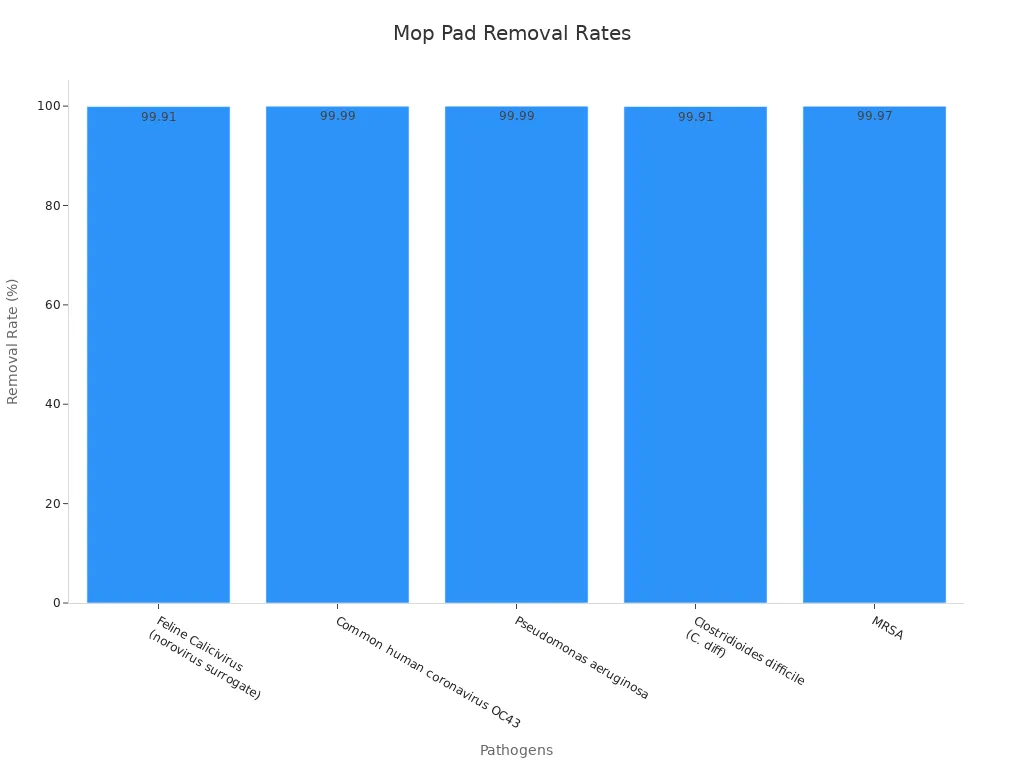
Disposable microfiber mop pads deliver exceptional cleaning results in a wide range of environments. Their ultra-fine fibers create a larger surface area, which attracts and retains dirt, bacteria, and viruses more effectively than traditional mops. Scientific research confirms that these pads remove up to 99.99% of pathogens, including viruses and bacteria, using only water. The table below highlights removal rates for several common pathogens:
| Pathogen | Removal Rate (%) |
|---|---|
| Feline Calicivirus (norovirus surrogate) | 99.91 |
| Common human coronavirus OC43 | 99.99 |
| Pseudomonas aeruginosa | 99.99 |
| Clostridioides difficile (C. diff) | 99.91 |
| Methicillin-resistant Staphylococcus aureus (MRSA) | 99.97 |
Hospitals and healthcare facilities rely on these pads to support infection control protocols. Each pad starts uncontaminated, which helps maintain strict hygiene standards and reduces the risk of healthcare-associated infections.
Preventing Cross-Contamination
Single-use design stands out as a key advantage of disposable microfiber mop pads. Staff members use a fresh pad for each area, which eliminates the risk of transferring pathogens between rooms or surfaces. Microfiber material captures microbes and contaminants more effectively than traditional Mop Heads. Reusable mop textiles often retain bacteria and fungi even after laundering, but disposable pads avoid this issue entirely. This approach supports compliance withinfection control standards and helps protect both staff and occupants.
Convenience and Consistent Results
Disposable microfiber mop pads offer unmatched convenience. Staff members can quickly replace used pads without interrupting their workflow. This efficiency improves cleaning compliance and reduces time spent on laundering. The pads are compatible with most mop hardware and do not neutralize common disinfectants. Facilities benefit from consistent cleaning results and safer environments, especially in settings where hygiene is critical.
How to Use Disposable Microfiber Mop Pads for Cleaner Spaces
Preparing Your Supplies
Proper preparation ensures efficient and hygienic cleaning. Gather all necessary items before starting. These include a mop handle, compatible disposable microfiber mop pads, and the appropriate cleaning solution. For pre-saturated pads, no extra liquid is needed. For dry pads, lightly spray the cleaning solution onto the pad or floor. Color-coded pads help designate specific areas, such as blue for kitchens and red for bathrooms, reducing cross-contamination risks. Always check the manufacturer's instructions for compatibility with cleaning chemicals and floor types.
Tip: Organize supplies in a cleaning cart to streamline workflow and minimize time spent searching for materials.
Attaching the Pad to the Mop
Secure attachment of the mop pad is essential for effective cleaning. Select a pad that fits the mop frame properly. Many modern systems, such as those using microhook technology, allow for a seamless connection between the pad and the mop head. This design maximizes contact with the floor and prevents slippage or bunching during use. Lightly press the pad onto the mop plate, ensuring full adhesion. Avoid touching the dirty side of the pad when removing it to prevent contamination. Dispose of used pads immediately after use.
Dry Mopping Techniques
Dry mopping removes dust, dirt, and debris before wet cleaning. Use straight or figure-eight motions, keeping the mop head flat on the floor. This technique traps particles within the microfiber structure, reducing airborne dust. Replace the pad when it appears visibly dirty to maintain cleaning efficiency. Research shows that dry mopping with disposable microfiber mop pads removes up to 99.99% of harmful microbes, significantly outperforming traditional cotton mops.
| Benefit Aspect | Disposable Microfiber Mop Pads | Traditional Cotton Mops / Reusable Pads |
|---|---|---|
| Microbial Removal Efficiency | Up to 99.99% of harmful microbes removed | ~33% microbial reduction |
| Infection Rate Reduction | 20% reduction in C. difficile infections reported | No comparable reduction reported |
| Cleaning Time (for 10 rooms) | 40 minutes | 90 minutes (including laundering) |
| Labor Efficiency | 23,000 sq ft cleaned per hour | 5,000 sq ft cleaned per hour |
| Bacterial Removal on Bathroom Floors | About 90% bacteria removed | Less than 10% bacteria removed |
Wet Mopping Techniques
Wet mopping targets sticky residues and microbial contamination. Attach a fresh disposable microfiber mop pad, then dip it in the cleaning solution or use a pre-saturated pad. Wring out excess liquid to avoid over-wetting the floor. Mop in small sections using a back-and-forth motion. Replace the pad as soon as it becomes soiled. Studies indicate that these pads can remove up to 98% of bacteria and 93% of viruses using only water, supporting high standards of hygiene.
Note: Always use a new pad for each room or high-risk area to prevent cross-contamination.
Tips for Best Results
- Use a fresh disposable microfiber mop pad for each room or cleaning zone.
- Dispose of pads immediately after use to avoid spreading contaminants.
- Select high-quality pads with higher GSM (grams per square meter) for better cleaning and drying performance.
- Color-code pads to designate specific areas and reduce cross-contamination.
- Follow manufacturer guidelines for cleaning solutions and pad compatibility.
- In high-risk areas, such as isolation rooms, always use single-use pads to maintain sterility.
Pro Tip: Disposable microfiber products help facilities comply with infection control regulations and reduce resource consumption associated with laundering.
Choosing the Right Pad for Your Floor
Selecting the correct pad depends on the floor type and cleaning environment. Microfiber pads outperform cotton or cellulose in dirt and microbial removal. For high-traffic areas, durable reusable microfiber pads may offer cost savings, but disposable microfiber mop pads provide superior decontamination in sensitive zones like patient rooms or operating theaters. Color-coding pads by area enhances hygiene and efficiency. Ensure the pad material is compatible with the cleaning chemicals and floor surface to avoid damage and maintain effectiveness.
| Criteria | Explanation |
|---|---|
| Material | Microfiber removes more dirt and microbes than cotton or cellulose. |
| Durability | High-quality microfiber pads withstand frequent use. |
| Absorption Rate | Effective cleaning depends on fiber size and surface area. |
| Cleaning Performance | Microfiber outperforms traditional mops in tests. |
| Microbial Removal | Disposable pads achieve around 99.58% decontamination efficacy. |
| Cost Considerations | Disposable pads reduce cross-contamination risks in sensitive areas. |
| Compatibility | Ensure pad material matches cleaning solutions and floor type. |
| Usage Recommendations | Use disposables in critical zones; reusables in general areas. |
| Best Practices | Color-coding and proper technique improve results. |
Common Mistakes to Avoid
- Never reuse disposable microfiber mop pads. Single-use design ensures each pad starts uncontaminated, preventing buildup of microbes.
- Avoid mixing microfiber pads with cotton textiles, as cotton fibers can reduce cleaning effectiveness.
- Do not oversaturate pads, which can leave floors slippery and reduce microbial removal.
- Always check for proper attachment to prevent slippage during use.
- Replace pads as soon as they appear dirty to maintain cleaning efficiency.
- Improper sorting or handling can lead to contamination, reduced performance, and increased costs.
Alert: Laundered microfiber mops can increase contamination risks. Disposable microfiber mop pads eliminate this issue by providing a fresh, uncontaminated surface for every use.
Disposable microfiber mop pads deliver consistent cleaning results in both homes and professional settings. Studies show these pads trap dirt and bioburden efficiently, reducing cross-contamination risks. Their ergonomic design and single-use format encourage higher compliance among cleaning staff, leading to safer, healthier spaces for everyone.
FAQ
How often should staff replace disposable microfiber mop pads?
Staff should replace the pad after cleaning each room or area. This practice ensures maximum hygiene and prevents cross-contamination.
Are disposable microfiber mop pads safe for all floor types?
Most disposable microfiber mop pads suit hard surfaces like tile, vinyl, and laminate. Always check manufacturer recommendations for specialty floors.
Can disposable microfiber mop pads be used with disinfectants?
Staff can use most disposable microfiber mop pads with common disinfectants. Refer to the product label for compatibility with specific cleaning solutions.