

 Send Email
 whatsapp


Why Disposable Microfiber Cloths Are a Game-Changer for Cleaning

Cleaning just got smarter with disposable microfiber cloths. These innovative tools remove up to 99.9% of pathogens, compared to only 67% with traditional cloths. That’s a leap in efficiency! Industries like healthcare are embracing them for their ability to reduce infection rates and cross-contamination risks. The shift to safer, more hygienic cleaning has never been this easy.
Key Takeaways
- Disposable Microfiber Cloths get rid of 99.9% of germs. They are safer for cleaning than regular cloths.
- These cloths lower the chance of spreading germs. Since they are single-use, germs won’t move to other surfaces.
- Disposable microfiber cloths save time and money. You don’t need to wash them or use strong chemicals, but they still clean very well.
What Makes Disposable Microfiber Cloths Unique?
The Science Behind Microfiber Technology
Microfiber technology is a marvel of modern cleaning science. These cloths are made from ultra-fine fibers, often a blend of polyester and polyamide, that are split during manufacturing. This process creates multi-stranded fibers with a unique cross-section, allowing them to trap dirt, dust, and even microscopic particles effectively. Unlike traditional fabrics like cotton, microfiber doesn’t leave lint behind, making it ideal for streak-free cleaning.
The structure of microfiber is what sets it apart. Each fiber is smaller than a human hair, giving it a larger surface area for cleaning. This design enables microfiber to absorb liquids quickly and hold up to seven times its weight in water. Non-woven microfiber, commonly used in disposable microfiber cloths, enhances this efficiency by offering a smooth yet highly absorbent surface.
Scientific studies back up these claims. For instance:
- Microfiber cloths can remove harmful microbes, including bacteria, without the need for harsh chemicals.
- When paired with UV-C light, they achieve disinfection levels comparable to chemical wipes, making them a safer and more eco-friendly option.
- Their ability to remove bioburden before UV-C treatment highlights their role in reducing chemical reliance in cleaning routines.
Microscopy studies also reveal fascinating details about microfiber performance. Scanning electron microscopy (SEM) images show how the surface of microfiber changes during use, enhancing its ability to trap particles. Energy-dispersive X-ray spectroscopy (EDS) mapping confirms the presence of functional elements on the microfiber surface, further validating its cleaning power.
Key Advantages Over Traditional Cleaning Tools
Disposable microfiber cloths outperform traditional cleaning tools in several ways. First, they excel in removing dirt and microorganisms mechanically, without relying on chemical detergents. This makes them a safer choice for environments like hospitals, where cleanliness is critical. Unlike cotton cloths, microfiber doesn’t release particles during use, ensuring a higher standard of hygiene.
Cost and efficiency are other key advantages. Microfiber Mops and cloths save time and resources by requiring less water and fewer cleaning agents. Studies show that microfiber mops reduce contamination more effectively than traditional cotton mops, making them a preferred choice in healthcare and food service industries.
Here’s a quick comparison of microfiber advancements documented in research:
| Findings | Authors | Notes |
|---|---|---|
| Recycled polyester sheds more microfibers than virgin polyester | Özkan and Gündoğdu, 2020 | Future research should focus on emerging textile polymers. |
| Yarns with greater % blends of recycled polyester mixed with virgin polyester release less microfibers | Frost et al., 2020 | Further study needed on conflicting results. |
| Switching to continuous filament fibers could reduce microplastic release | - | - |
Disposable microfiber cloths also stand out for their convenience. They eliminate the need for laundering, reducing the risk of cross-contamination. Once used, they can be discarded, making them perfect for high-risk environments like hospitals and laboratories. Their lightweight design and compatibility with existing cleaning systems add to their practicality.
In short, disposable microfiber cloths combine cutting-edge technology with unmatched cleaning efficiency. They’re not just tools; they’re a smarter way to clean.
Benefits of Disposable Microfiber Cloths

Enhanced Cleaning Efficiency and Effectiveness
Disposable microfiber cloths are designed to make cleaning faster and more effective. Their ultra-fine fibers trap dirt, dust, and even microscopic particles that traditional cleaning tools often miss. This unique structure allows them to absorb liquids quickly, making them perfect for cleaning up spills or tackling stubborn stains. Unlike conventional cloths, they don’t leave streaks or lint behind, ensuring surfaces look spotless after every use.
These cloths also reduce the need for harsh chemicals. Their ability to remove over 99.87% of harmful microbes with just water highlights their efficiency. This feature not only saves money on cleaning products but also creates a safer environment by minimizing exposure to chemicals. Whether it’s a kitchen countertop or a delicate electronic screen, disposable microfiber cloths deliver exceptional results every time.
Hygiene Benefits: Reducing Cross-Contamination
One of the biggest advantages of disposable microfiber cloths is their role in preventing cross-contamination. Reusable cleaning tools, like traditional microfiber cloths or mops, can harbor bacteria even after being washed. A 2013 study found that 27% of laundered microfiber mop heads tested positive for pathogens in 11 hospitals. This highlights the risk of spreading germs when using reusable options.
| Evidence Type | Details |
|---|---|
| Study Year | 2013 |
| Findings | 27% of laundered microfiber mop heads tested positive for pathogens in 11 hospitals |
| Implication | Indicates a significant risk of cross-contamination with reusable microfiber cloths, supporting the need for disposable options to enhance sanitation and reduce hospital-acquired infections. |
Disposable microfiber cloths eliminate this risk. Once used, they can be discarded, ensuring germs don’t transfer from one surface to another. This makes them ideal for high-risk environments like hospitals, food service areas, and laboratories. Hygiene audits also confirm their effectiveness. For example, microfiber cloths used with disinfectants achieve a 95% microbial removal rate, compared to just 68% with conventional string mops.
| Cleaning Method | Microbial Removal Rate (%) |
|---|---|
| Microfiber with Detergent | 94 |
| Conventional String Mop | 68 |
| Microfiber with Disinfectant | 95 |
| Conventional String Mop with Disinfectant | 95 |
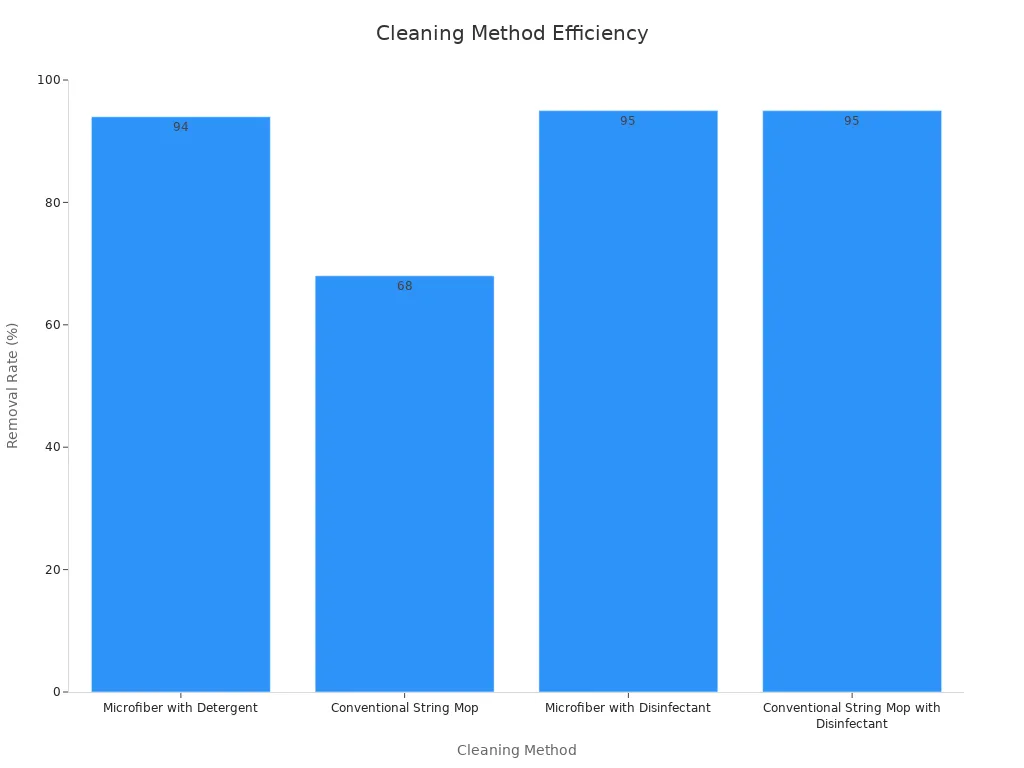
By reducing cross-contamination, disposable microfiber cloths help lower the risk of infections, making them a trusted choice for maintaining cleanliness and safety.
Convenience for Busy Lifestyles
In today’s fast-paced world, convenience matters. Disposable microfiber cloths cater to busy lifestyles by offering a hassle-free cleaning solution. There’s no need to worry about washing or drying them after use. Simply grab a fresh cloth, clean the surface, and toss it away. This saves time and effort, especially for those juggling multiple responsibilities.
Their lightweight design and compact packaging make them easy to store and carry. Whether it’s a quick kitchen cleanup or a deep-cleaning session, these cloths are ready to use whenever needed. They’re also versatile, working well on a variety of surfaces, from glass and stainless steel to wood and plastic. This adaptability makes them a go-to choice for both households and professional settings.
For professionals, disposable microfiber cloths streamline cleaning routines. They’re compatible with most existing cleaning systems, ensuring seamless integration into daily tasks. By combining efficiency, hygiene, and ease of use, these cloths truly simplify the cleaning process.
Addressing Concerns About Disposable Microfiber Cloths
Environmental Impact and Sustainable Practices
Some people worry about the environmental impact of disposable microfiber cloths. It’s a valid concern, but there’s good news. Manufacturers are taking steps to make these products more eco-friendly. Many companies now use recycled materials during production, which helps lower the carbon footprint. Additionally, disposable microfiber mop pads reduce water and chemical use, making them a greener choice for cleaning.
A life cycle assessment (LCA) compared disposable wipes and reusable microfiber cloths. It found that disposable wipes might have a better environmental profile in areas like carbon footprint and solid waste. However, concerns about microfiber shedding and its contribution to ocean pollution remain important.
Efforts to address these issues are underway. For example, ISO/TC 38 subcommittees are working on standards to measure microfiber loss during washing. A shift toward a circular textile economy could also reduce waste by encouraging recycling and reuse. Responsible disposal practices, like participating in recycling programs, are key to minimizing environmental harm.
| Key Points | Description |
|---|---|
| Standards Development | New standards aim to measure microfiber shedding during washing. |
| Circular Economy | Reuse and recycling can reduce waste and mitigate microfiber pollution. |
| Environmental Impact | A linear economy creates waste, but sustainable practices can change that. |
Cost Considerations and Value for Money
Disposable microfiber cloths might seem expensive at first glance, but they offer great value. Their ability to clean effectively with just water saves money on cleaning products. Plus, they reduce the time spent on cleaning tasks, which is a big win for busy households and professionals.
These cloths also eliminate the need for laundering, cutting down on water and energy costs. For businesses, this means fewer resources spent on maintaining reusable cleaning tools. When you consider their durability and efficiency, disposable microfiber cloths prove to be a cost-effective solution for both personal and commercial use.
Disposable microfiber cloths have redefined cleaning by combining efficiency, hygiene, and convenience. They remove up to 99% of bacteria with just water, outperforming traditional materials. Consumers increasingly favor these eco-friendly tools for their ability to reduce chemical use and cross-contamination risks. Their versatility makes them a must-have for modern cleaning routines.
Quick Facts:
- Microfiber mops reduce cross-contamination by up to 80%.
- Consumers love their minimal environmental impact and superior cleaning performance.
| Evidence Type | Description |
|---|---|
| Effectiveness | Removes up to 99% of bacteria, compared to 30% with traditional materials. |
| Cross-contamination Reduction | Microfiber mops can reduce cross-contamination by up to 80%. |
FAQ
What surfaces can disposable microfiber cloths clean?
Disposable microfiber cloths work on almost any surface! Use them on glass, wood, stainless steel, electronics, and more. They’re gentle yet effective for all your cleaning needs.
How do disposable microfiber cloths reduce cross-contamination?
Each cloth is single-use. After cleaning, discard it to prevent germs from spreading between surfaces. This makes them perfect for hospitals, kitchens, and other sensitive areas.
Are disposable microfiber cloths eco-friendly?
Many brands, like Esun, use sustainable practices. They reduce water and chemical use, and some even incorporate recycled materials to lower their environmental impact.