

 Send Email
 whatsapp


Disposable Mop Solutions for Cleanrooms and Controlled Environments
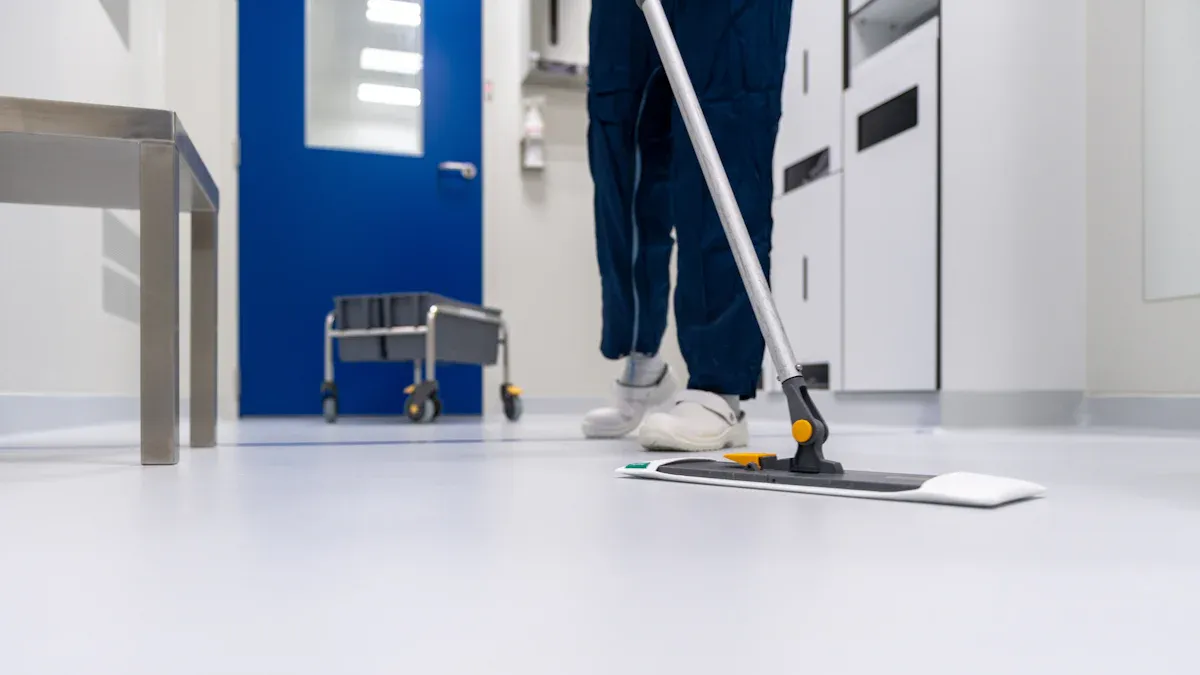
Selecting a disposable mop for cleanrooms involves strict attention to regulatory standards. ISO 14644-18:2023 and EU GMP Annex 1 highlight sterility, chemical compatibility, and low particle release. Facilities often choosemop disposable pads or medical disposable mops to ensure compliance. Disposable mop pads must resist disinfectants and minimize contamination.
Key Takeaways
- Choose Disposable mops made from low-shedding materials likemicrofiber or polyester to reduce contamination and meet cleanroom standards.
- Match mop types and cleaning methods to your cleanroom's ISO classification to maintain proper particle control and comply with regulations.
- Use proper cleaning protocols such as pre-wetting Mop Heads, double-bucket systems, and regular mop replacement to prevent cross-contamination and ensure effective cleaning.
Disposable Mop Selection and Cleanroom Classifications
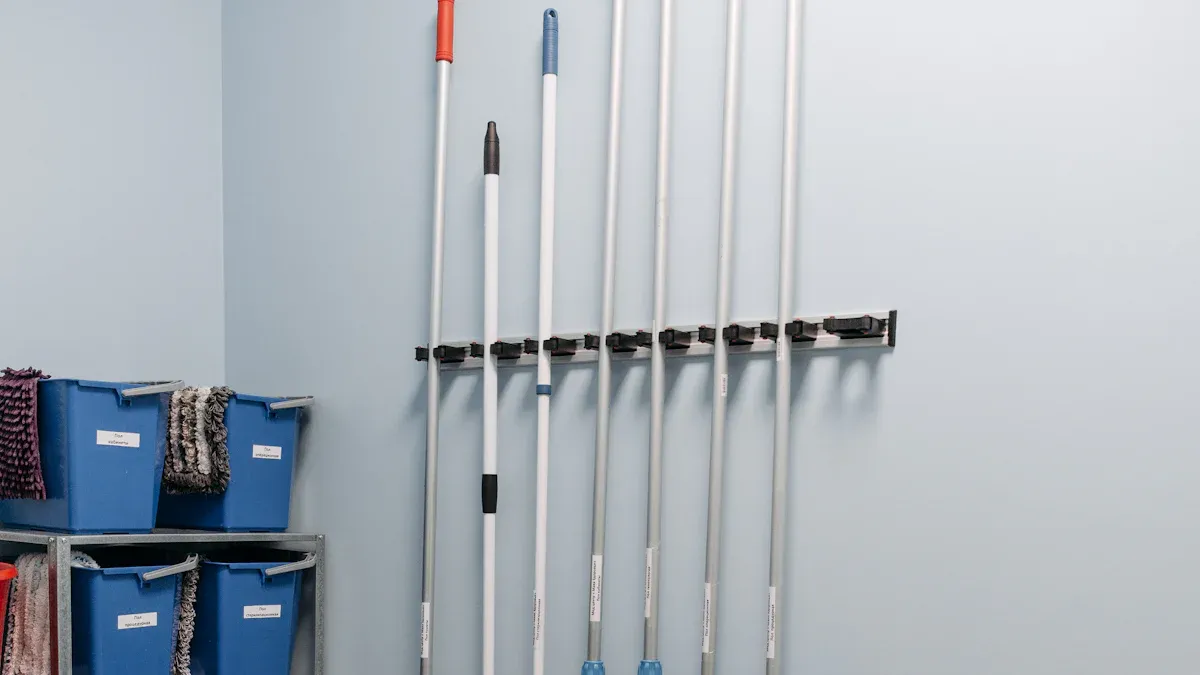
Cleanroom Classes and Their Relevance
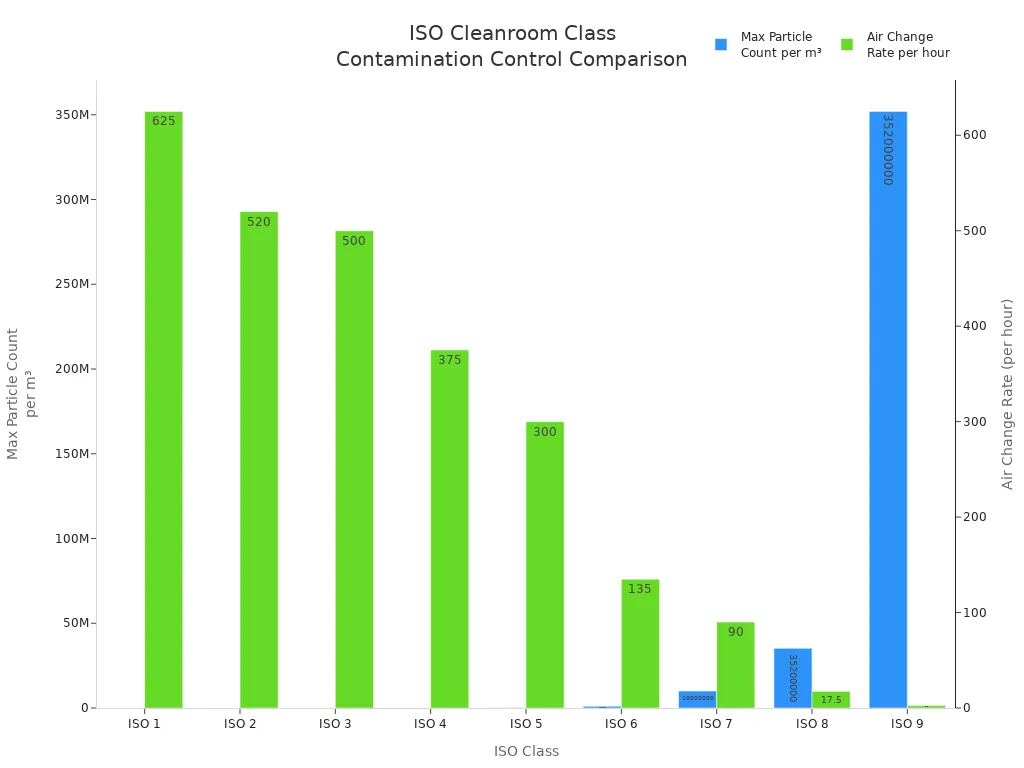
Cleanroom classifications define the maximum allowable airborne particle concentrations and set the standards for contamination control. ISO classes range from ISO 1, which demands the highest level of cleanliness, to ISO 9, which allows the most particles. Lower ISO classes require strict measures, such as frequent air changes and comprehensive gowning protocols. These requirements ensure that environments remain suitable for sensitive manufacturing or research activities.
| ISO Class | Max Particle Count (per m³) | Air Change Rate (per hour) | Airflow Type | Personnel Gowning Requirements |
|---|---|---|---|---|
| ISO 1 | ~10 particles ≥0.1 µm | 500–750+ | Unidirectional (Laminar) | Full suit, goggles, gloves, respirator |
| ISO 2 | ~100 particles ≥0.1 µm | 480–720 | Unidirectional | Full suit, goggles, gloves |
| ISO 3 | ~1,000 particles ≥0.1 µm | 400–600 | Mostly unidirectional | Full gowning, hair cover, gloves |
| ISO 4 | ~10,000 particles ≥0.1 µm | 300–450 | Mixed airflow | Full gowning with coverall and gloves |
| ISO 5 | ~100,000 particles ≥0.1 µm | 240–360 | Mixed with laminar zones | Gown, face mask, hair net, gloves |
| ISO 6 | ~1,000,000 particles ≥0.1 µm | 90–180 | Non-unidirectional | Hair net, lab coat, gloves |
| ISO 7 | ~10,000,000 particles ≥0.5 µm | 60–120 | Non-unidirectional | Smock, shoe covers, hair cover |
| ISO 8 | ~35,200,000 particles ≥0.5 µm | 10–25 | Non-unidirectional | Minimal: hair net, basic lab attire |
| ISO 9 | ~352,000,000 particles ≥0.5 µm | <5 | Standard HVAC | No special gowning |
Impact of Classification on Disposable Mop Choice
Cleanroom classification directly influences the selection of disposable mop solutions. Facilities operating in ISO 7 environments must control airborne particles, limiting counts to 352,000 particles per cubic meter for particles ≥0.5 micrometers. Mop materials such as microfiber or polyester help minimize particle generation due to their low-linting and non-shedding properties. Mop designs should maximize surface contact and minimize airflow disturbance to capture contaminants effectively.
- Mop materials must be compatible with flooring and withstand sterilization or laundering without losing integrity.
- Disposable mop solutions like Texwipe AlphaMop™, HydroFlex Cleanroom MopHead, and Berkshire Cleanroom Mops meet ISO 14644-1 and GMP standards.
- Selection depends on the cleanroom’s particle limits, airflow type, and gowning requirements.
Facilities must match mop solutions to their cleanroom class to maintain compliance and protect product quality.
Key Considerations for Disposable Mop Solutions
Material Compatibility and Particle Shedding
Selecting the right mop material is crucial for maintaining cleanroom integrity. Microfiber, knitted polyester, and nonwoven fabrics shed very few particles, making them ideal for controlled environments. Mop covers made from sterile quilted polyester or micro denier material provide ultra-low particle shedding and meet USP 797 standards. Microfiber mops with heat-sealed edges suit ISO 1-5 cleanrooms, while knitted polyester options work well in ISO 7-8 environments. Static dissipative materials help prevent electrostatic discharge, further reducing particle generation.
| Testing Method | Principle / Description | Sample Preparation & Medium | Particle Measurement Techniques | Relevant Standards / Notes |
|---|---|---|---|---|
| Rolling Barrel Test | Mechanical agitation under dry conditions by rotating material in a stainless steel drum at 10 RPM. | Material placed inside drum; dry conditions. | Laser particle counter connected to sampling tube; airborne particle counting at sizes 0.3 to 5.0 µm. | Also called Helmke Drum Test; IEST-RP-CC003.3 references; particle counts taken at 1-min intervals for 10 min. |
| Biaxial Shake Test | Mechanical agitation by shaking sample side-to-side or up-down in liquid suspension. | Wiper suspended in DI water, surfactant, or IPA/DI water mixture; gentle to aggressive agitation. | Liquid Particle Counter (LPC); optical microscopy; scanning electron microscopy (SEM). | IEST-RP-CC004.2; simulates repetitive motion; surfactants may interfere with LPC due to bubbles. |
| Orbital Shake Test | Circular motion agitation in liquid to simulate aggressive use without splash-over. | Similar to biaxial but uses orbital shaker; surfactant solutions allowed due to filtration before analysis. | LPC, optical particle counting, SEM. | Allows turbulent liquid environment; better for SEM evaluation; surfactant use compatible with filtration. |
| Liquid Particle Counting (LPC) | Enumeration of particles in liquid suspension after agitation. | Liquid sample filtered or directly analyzed post-agitation. | Laser-based particle counters detecting particles >0.5 µm. | Used in conjunction with shake tests; surfactants may cause counting interference. |
| Optical Microscopy | Counting fibers and particles on filters after drying liquid samples. | Fibers captured on gridded filter paper, dried before counting. | Optical microscope for fiber size ranges 20–100 µm and >100 µm. | Texwipe Test Method (TN22); requires uniform particle distribution on filter. |
| Scanning Electron Microscopy (SEM) | High sensitivity particle and fiber counting on filtered samples. | Samples filtered, dried, mounted on SEM stubs; uniformity checked by optical microscopy first. | SEM for detailed particle size categorization and fiber counting. | ASTM E2090-12 standard referenced; allows precise size-differentiated counting. |
Tip: Pre-wetting the mop head with disinfectant reduces particle generation during cleaning and supports contamination control.
Mop Head Design and Surface Coverage
Mop head design directly affects cleaning efficiency and surface coverage. Flat mop heads ensure better contact with floor surfaces, reducing missed spots. Microfiber and polyester materials enhance particle removal and minimize contamination. Ultrasonic welding secures fabric layers, preventing fiber contamination and maintaining sterility. Foam core layers improve soil and residue removal. Adjustable handle lengths reduce operator strain and allow consistent cleaning performance.
| Design Feature | Influence on Surface Coverage and Cleaning Efficiency |
|---|---|
| Flat mop head design | Ensures better contact with floor surfaces, reducing missed spots and improving coverage. |
| Microfiber/polyester materials | Low-linting and non-shedding, minimizing particle contamination and enhancing particle removal. |
| Ultrasonic welding | Prevents fiber contamination by securely bonding fabric layers, maintaining sterility. |
| Foam core layers | Enhance cleaning efficiency by improving soil and residue removal. |
| Adjustable handle length | Reduces operator strain, allowing better control and consistent cleaning performance. |
| Compatibility with flooring | Ensures mop effectiveness on both smooth and textured surfaces, optimizing cleaning. |
| Sterilizability | Allows mop heads to be sterilized or laundered without damage, maintaining cleanroom standards. |
A 360-degree swivel mop head enables access to tight spaces, reducing dead spots. Lightweight, telescoping handles improve cleaning efficiency and reduce fatigue. Mop heads are often gamma irradiated and double-bagged to comply with aseptic processing requirements.
Frame and Handle Compatibility
Frame and handle materials must support both durability and compliance. Stainless steel offers a polished surface, long-term autoclavability, and resistance to disinfectants, making it suitable for sterile environments. Aluminum provides a lightweight, ergonomic option for cleaning walls and ceilings. Plastic frames and handles work well in less stringent cleanrooms due to their abrasion resistance and compatibility with common cleaning chemicals.
| Material | Key Properties & Suitability | Compliance & Standards | Typical Use Case in Controlled Environments |
|---|---|---|---|
| Stainless Steel | Polished surface, long-term autoclavability, resistant to disinfectants | ISO5 Class 100, GMP compliant | Highly suitable for sterile environments, mop frames & handles |
| Aluminum | Lightweight, autoclavable, ergonomic | Suitable for sterile areas | Ideal for cleaning walls and ceilings in sterile areas |
| Plastic | Lightweight, ergonomic, abrasion-resistant, compatible with common cleaning chemicals | ISO6 Class 1000 compliant, limited autoclavability | Suitable for less stringent cleanrooms, mop frames & handles |
Modular and tool-free quick-change systems, such as PurMop, enhance contamination control and ease of use.
Chemical and Disinfectant Resistance
Disposable mop materials must resist degradation from repeated exposure to common cleanroom disinfectants. Polyester-based mop covers and heads maintain their integrity when used with sterile isopropyl alcohol, hydrogen peroxide, bleach, quaternary ammonium compounds, and phenolic solutions. Mop hardware constructed from stainless steel, aluminum, or plastic withstands repeated sterilization and chemical exposure. Gamma-irradiated and individually packaged mop covers help maintain sterility.
Scientific studies show that laundered reusable microfiber mops retain residues of disinfectants and detergents, which can bind or inactivate disinfectant chemicals, especially quaternary ammonium compounds. Disposable microfiber mops made from polyester fibers exhibit minimal quat binding, maintaining disinfectant activity more effectively. Polyester's durability ensures that the mop maintains its structural integrity and cleaning efficacy during use. Disposable mop systems also reduce cross-contamination risks by being single-use and low-linting.
Note: Mop materials should not degrade, shed fibers, or leave residues when exposed to disinfectants. Compatibility with sterilization processes is essential for maintaining a contaminant-free environment.
Special Requirements for Disposable Mop Use
Pharmaceutical cleanrooms and other controlled environments require strict protocols for disposable mop use. Facilities must select mop materials that shed very low particles, such as microfiber or knitted polyester. Mop materials must be compatible with the disinfectants used to avoid degradation and maintain cleaning efficacy. For higher ISO cleanroom classes, mops with heat-sealed edges and double-bagged laundering processes minimize contamination.
- Pre-wetting mop heads with disinfectant solutions reduces particle generation during cleaning.
- Double-bucket systems prevent cross-contamination by separating cleaning and rinsing solutions.
- Mop head size and construction should match cleanroom classification and floor surface type.
- Static dissipative mop frames and materials prevent electrostatic discharge in ESD-sensitive environments.
- Strict laundering protocols, often involving cleanroom laundry services, maintain mop cleanliness and low particle shedding.
- Regular rotation and replacement of mops according to contamination and saturation levels ensure timely disposal.
- Thorough training for cleaning personnel on proper mop selection, use, and disposal promotes consistent contamination control.
- Facilities should regularly evaluate and adapt cleaning protocols to maintain compliance with evolving cleanroom standards.
Callout: Employing directional mopping patterns ensures thorough floor coverage and prevents spreading contaminants.
Cost considerations also play a role. Disposable mop solutions may have higher initial costs but can be more cost-effective over time by reducing laundry expenses, labor hours, and infection-related costs. Bulk purchasing contracts for disposable items can lower per-unit costs and improve inventory management.
Matching Disposable Mop Types to Cleanroom Needs
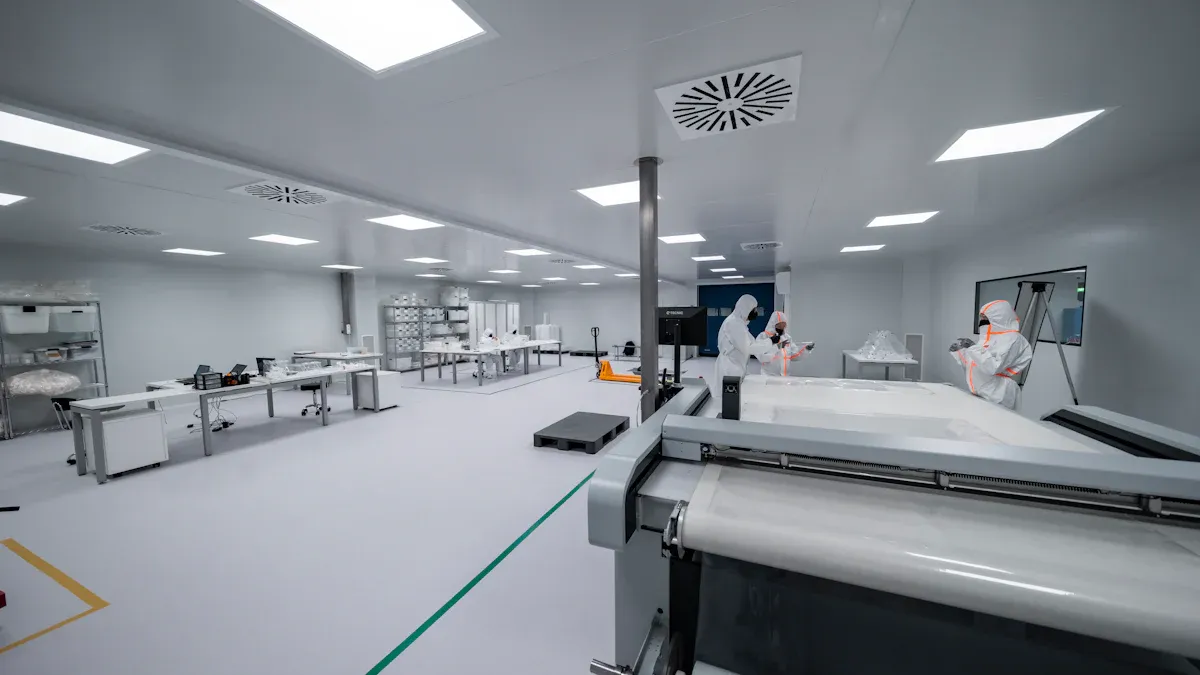
Matching mop solutions to cleanroom requirements reduces contamination risk and supports regulatory compliance. Facilities benefit from sterile mop covers made of non-shedding materials, touchless mopping systems, and hardware designed for cleanroom standards.
- Mop heads matched to cleanroom class and surface type help maintain hygiene.
- Pre-wetting, double-bucket systems, and regular mop rotation prevent cross-contamination.
- Training and protocol reviews ensure consistent compliance.
Regular evaluation of cleaning protocols helps facilities adapt to evolving standards and maintain operational efficiency.
FAQ
What makes a disposable mop suitable for cleanroom use?
A disposable mop must shed minimal particles, resist chemicals, and meet cleanroom standards. Facilities select materials like microfiber or polyester for compliance and contamination control.
Tip: Always check product certifications before purchasing.
How often should facilities replace disposable mop heads?
Facilities replace mop heads after each cleaning session or when visibly soiled. Regular replacement prevents cross-contamination and maintains cleanroom integrity.
| Cleanroom Class | Recommended Replacement Frequency |
|---|---|
| ISO 1–5 | After every use |
| ISO 6–8 | Daily or when soiled |
Can disposable mops be used with all disinfectants?
Most disposable mops work with common disinfectants like isopropyl alcohol, hydrogen peroxide, and quats. Always verify chemical compatibility with manufacturer guidelines.
Note: Incompatible chemicals may degrade mop materials and reduce cleaning effectiveness.
