

 Send Email
 whatsapp


Microfilament Nonwoven: The Next-Level Material for Advanced Wiping Solutions
Microfilament Nonwoven delivers advanced cleaning results through its ultra-fine, long fibers, which trap dirt and pathogens more effectively than traditional materials.
Recent innovations, such as Suominen’s Biolace Zero, highlight the industry’s focus on sustainability and performance.
| Metric | Data/Description |
|---|---|
| Market Size (2023) | USD 1.3 billion |
| Projected Market Size (2032) | USD 2.1 billion |
| CAGR (2023-2032) | 5.4% |
Microfilament Nonwoven Wipes now serve industries seeking superior hygiene, durability, and eco-friendly solutions.
Key Takeaways
- Microfilament nonwoven materials use ultra-fine, long fibers that clean better by trapping dirt and germs more effectively than traditional wipes.
- These materials are strong, durable, and resist chemicals and UV damage, making them ideal for tough cleaning jobs and sensitive environments like healthcare.
- Microfilament nonwoven wipes support sustainability by lasting longer, reducing waste, and often meeting environmental certifications for recyclability and safety.
Microfilament Nonwoven: Structure and Unique Advantages
Ultra-Fine Fiber Structure and Composition
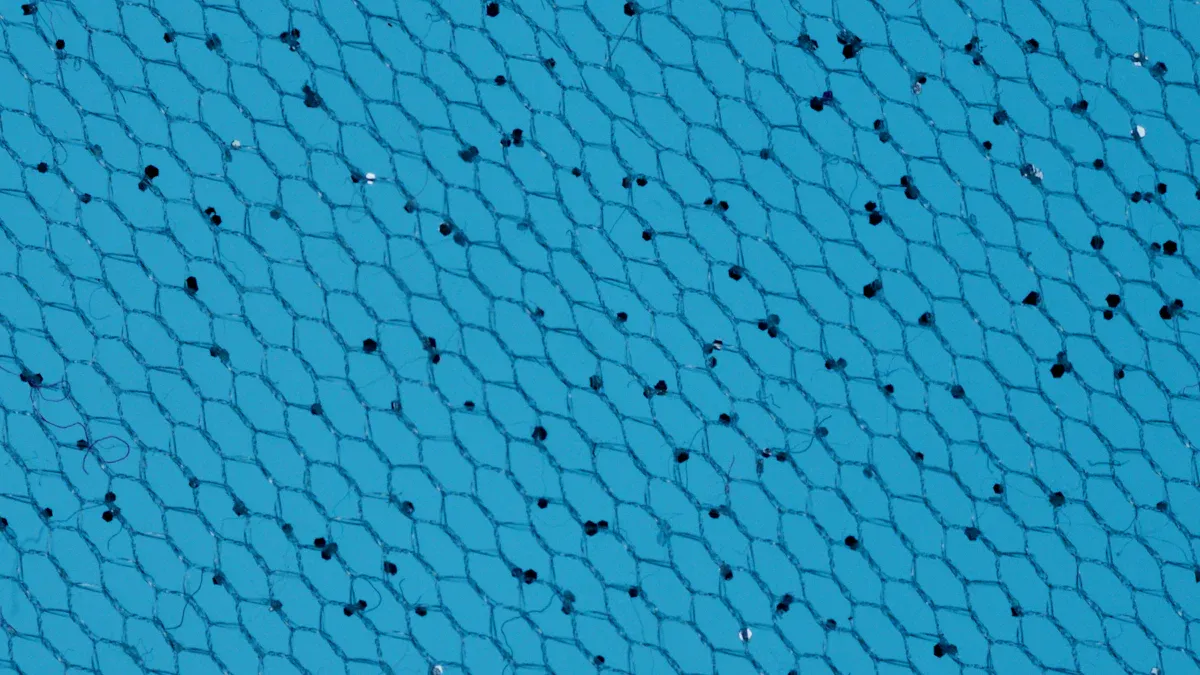
Microfilament Nonwoven stands out due to its ultra-fine fiber structure. Manufacturers produce these materials by splitting bicomponent fibers using advanced extrusion techniques, such as segmented pie or islands-in-the-sea cross sections. The resulting microfilaments can be up to 200 times thinner than a human hair, giving the material a much higher specific surface area than conventional nonwovens. This fine structure increases surface adsorption and filtration performance. Unlike traditional nonwovens, which use larger, randomly oriented fibers, microfilament nonwovens rely on continuous, long fibers that are entangled with high-pressure water jets. This process avoids chemical binders and solvents, resulting in a cleaner and more environmentally friendly product.
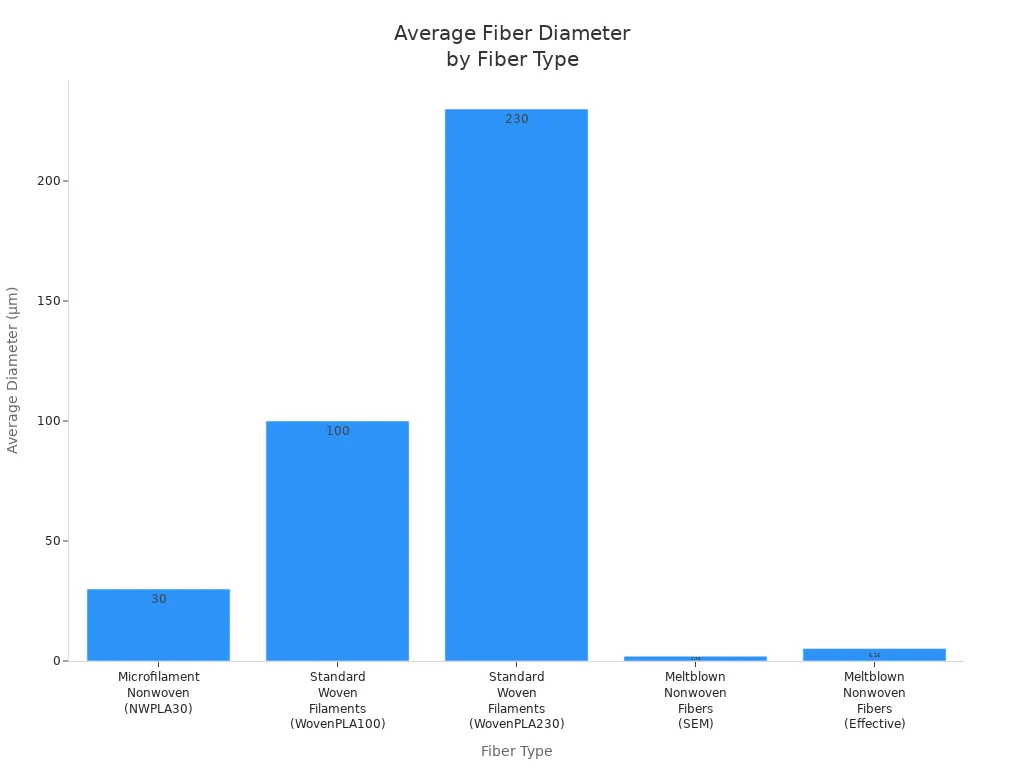
The table below highlights the differences in fiber diameter and surface morphology:
| Fiber Type | Average Diameter (µm) | Surface Morphology | Notes |
|---|---|---|---|
| Microfilament Nonwoven (NWPLA30) | ~30 | Smooth surface (Rq ~3 nm) | Fibers too fine to be woven; processed into nonwoven web via carding and hydro-entanglement |
| Standard Woven Filaments (WovenPLA100) | 100 | Irregular parallel ridges | Processed into woven scaffolds |
| Standard Woven Filaments (WovenPLA230) | 230 | Irregular parallel ridges | Processed into woven scaffolds |
| Meltblown Nonwoven Fibers | ~1.98 (SEM-equivalent) to 5.16 (effective) | Very fine fibers, submicron to low micron range | Difficult to measure optically; SEM used for diameter measurement |
How Microfilament Nonwoven Outperforms Traditional Materials
Microfilament Nonwoven delivers several advantages over traditional materials. Its ultra-fine fibers penetrate microscopic crevices, allowing for superior dirt and pathogen removal. The material adapts to rough surfaces and provides enhanced absorbency, holding up to 500% of its weight in liquid. Users benefit from quick drying and lint-free performance, making it ideal for sensitive surfaces.
Key properties include:
- High resistance to UV degradation and chemicals
- Moisture and abrasion resistance
- Durability in demanding environments such as landfills and energy infrastructure
- Mechanical strength comparable to woven fabrics
Scientific studies show that the composition of microfilament nonwovens, especially when blending synthetic and cotton fibers, can be engineered to balance absorbency and strength. The production process, which uses hydroentangling, further boosts durability and breathability. These features make microfilament nonwovens a preferred choice for advanced wiping solutions in industries that demand both performance and reliability.
Microfilament Nonwoven: Performance, Hygiene, and Sustainability

Superior Cleaning Efficiency and Pathogen Removal
Microfilament Nonwoven delivers outstanding cleaning efficiency due to its ultra-fine fiber structure. The high surface area of these fibers allows them to trap and remove microscopic particles, bacteria, and viruses more effectively than traditional materials. Scientific studies show that microfilament polyester woven fabrics provide strong microbial barrier effects, with efficiency depending on the arrangement of filaments and the construction of the fabric. For example, cotton fabrics treated with natural antimicrobial agents, such as neem seed, have demonstrated 99.5% antibacterial activity against Staphylococcus aureus. This high level of bacterial removal highlights the superior performance of microfilament structures.
Microfiber and nonwoven materials consistently achieve higher filtration efficiencies compared to common household fabrics. Many other materials show median filtration efficiencies below 25%, while microfilament nonwoven fabrics excel in removing bacteria and viruses from both surfaces and air. This makes them a preferred choice in environments where cleanliness and infection control are critical.
Enhanced Hygiene and Safety in Sensitive Environments
Microfilament Nonwoven plays a vital role in maintaining hygiene and safety in sensitive settings such as healthcare, food processing, and cleanrooms. The material’s low particle release and high durability support infection control protocols. Recent innovations, like the integration of antimicrobial technology into nonwoven fabrics, have resulted in products that destroy up to 99.99% of microbial populations within 20 minutes. This advancement marks a significant improvement over conventional nonwoven fabrics, which often retain bio-burden after disposal.
Regulatory compliance remains essential for products used in medical and food environments. Microfilament nonwoven fabrics must meet international standards, including ISO 9073-10:2003 for lint and particle generation, EN 13938-1:2019 for bursting strength, and ISO 10993-5:2009 for biological evaluation. These standards ensure that the materials provide reliable protection, low particle release, and high mechanical strength. Hydrophilic treatments and micro-channel structures further enhance cleaning performance, making these fabrics suitable for the most demanding hygienic applications.
Note: Medical textile products, including microfilament nonwoven, are regulated as medical devices under laws such as the US Food, Drug & Cosmetic Act. Facilities must comply with Good Manufacturing Practice (GMP) and implement strict quality controls to ensure safety and effectiveness.
Cost-Effectiveness, Durability, and Reusability
Organizations that switch to microfilament nonwoven wipes often report significant cost savings and operational benefits. While disposable microfiber mop padshave a lower initial cost, they incur higher ongoing expenses due to frequent replacement. In contrast, reusable microfiber mop pads require a higher upfront investment but last through 150 to 200 cleaning cycles, spreading costs over many uses and reducing the cost per use. Facilities that launder reusable pads in-house can further reduce long-term expenses, including waste disposal costs.
- Organizations using microfilament nonwoven microfiber mops have achieved up to a 60% reduction in lifetime costs.
- Chemical costs decrease by as much as 95% because these materials require less cleaning solution.
- Labor savings reach approximately 20% per day due to improved cleaning efficiency.
- Microfiber mops last between 500 to 900 washes, compared to 7-50 washes for traditional cotton or synthetic mops.
- Reduced material waste and fewer stoppages for roll changes enhance operational efficiency.
Facilities should conduct a total cost of ownership analysis, considering purchase, labor, laundry, and waste disposal before selecting a cleaning system. While disposable pads offer convenience for smaller operations, larger facilities benefit from the long-term savings and sustainability of reusable microfilament nonwoven products.
Environmental Impact and Sustainability Benefits
Microfilament Nonwoven supports sustainability through its durability, recyclability, and compliance with environmental standards. Many nonwoven fabrics, including polypropylene-based ones, are recyclable and reusable, which contributes to a reduced environmental footprint. The biodegradability of nonwoven materials depends on the fiber type, but manufacturers increasingly use recyclable or biodegradable fibers and comply with standards such as ISO and REACH.
Microfilament nonwoven textiles, such as Evolon New Generation, use extremely fine filaments that enhance durability and reduce resource consumption. Their production process avoids solvents and binding agents and uses less water than conventional cotton fabrics, improving their eco balance. This durability extends product life, reducing the need for frequent replacement and supporting sustainability goals.
Environmental certifications further demonstrate the commitment of microfilament nonwoven manufacturers to responsible production:
| Certification | Description |
|---|---|
| ISO 14001:2015 | Environmental Management Systems, demonstrating commitment to minimizing environmental footprint |
| PEFC ST 2002:2020 Chain of Custody Certification | Ensures products are sourced from sustainably managed forests |
| FSC Chain of Custody Certification | Verifies products come from responsibly managed forests with environmental, social, and economic benefits |
| OEKO-TEX | Tests textiles for harmful substances, ensuring product safety |
| TEX6076 Global Recycle Standard 4.0 | Certifies recycled content and responsible social, environmental, and chemical production practices |
Additional certifications include biobased content, biodegradable certification, environmental product declaration verification, and product carbon footprint verification. These certifications help organizations select materials that align with their sustainability objectives.
Microfilament Nonwoven continues to transform industries with its advanced cleaning, hygiene, and sustainability benefits.
- Healthcare facilities use it for surgical gowns, wound care, and sterile packaging.
- Manufacturers rely on it for automotive components and technical textiles.
Ongoing innovations in recyclable and biodegradable materials support cleaner, safer practices.
FAQ
What industries benefit most from microfilament nonwoven wipes?
Healthcare, food processing, automotive, and cleanroom industries gain the most from microfilament nonwoven wipes due to their superior cleaning, hygiene, and durability.
How does microfilament nonwoven support sustainability goals?
Manufacturers design microfilament nonwoven for durability and recyclability. Many products meet environmental certifications, helping organizations reduce waste and support eco-friendly initiatives.
Can microfilament nonwoven wipes be reused safely?
Yes. Microfilament nonwoven wipes withstand repeated laundering. They maintain cleaning performance and hygiene standards, making them suitable for multiple uses in demanding environments.
