

 Send Email
 whatsapp


What Makes Microfilament Nonwoven Fabrics Superior in Cleaning Applications?

Microfilament Nonwoven fabrics lead innovation in cleaning by using ultra-fine, continuous filaments that resist fraying. Companies like Asterion expand their reach asMicrofilament Nonwoven Wipes challenge traditional rags and Disposable Microfiber Wipes. A Microfilament Cleaning Cloth or Single Use Non-woven Fabric delivers unmatched durability and performance for demanding environments.
Key Takeaways
- Microfilament nonwoven fabrics use ultra-fine fibers that capture more dirt, dust, and moisture than traditional cloths, making cleaning faster and more effective.
- These fabrics conform closely to surfaces and absorb liquids quickly, helping remove grime from hard-to-reach spots while drying fast to prevent bacteria growth.
- They are durable, lint-free, and safe for delicate surfaces, offering long-lasting use and cost savings when cared for properly with mild detergent and air drying.
Microfilament Nonwoven Cleaning Performance

Ultra-Fine Fibers for Superior Dirt and Dust Capture
Microfilament Nonwoven fabricsexcel in cleaning because of their ultra-fine fiber structure. Traditional woven fabrics use yarns with diameters ranging from 20 microns to 1,000 microns, making them much coarser than modern cleaning materials. Microfiber Fabrics, often used in cleaning, feature split fibers finer than a human hair, which helps lift and trap debris. However, Microfilament Nonwoven fabrics push this advantage further. Manufacturers produce these fabrics using fibers around 0.15 Dtex, several times finer than standard microfibers. This ultra-fine construction allows the fabric to reach into microscopic crevices and lift dust, dirt, and even bacteria that coarser fabrics leave behind. The result is a cleaning cloth that removes more contaminants in a single pass, reducing the need for repeated wiping and minimizing the spread of particles.
Enhanced Surface Contact for Thorough Cleaning
The cleaning power of Microfilament Nonwoven fabrics also comes from their ability to maximize surface contact. Studies show that these fabrics conform closely to rough and uneven surfaces, thanks to their flexible and soft fiber structure. When the fabric contacts a surface, it adapts to the topography, reaching into valleys and grooves where dirt often hides. In situ optical microscopy confirms that flexible fibers in nonwoven wipes capture particles in areas that traditional materials miss. This increased contact area leads to more effective cleaning, especially on textured or irregular surfaces.
Tip: For cleaning professionals, using Microfilament Nonwoven wipes ensures that even the most stubborn grime in grooves and crevices gets removed, improving overall hygiene.
In real-world applications, the enhanced surface contact translates to better cleaning results. Microfilament Nonwoven fabrics with oval cross-sections and grooved surfaces increase the specific surface area and create capillary networks. These features reduce the water contact angle, making the fabric more hydrophilic and improving water absorption. The wicking effect is remarkable, with some fabrics transferring moisture up to 6 cm in just three minutes. This rapid moisture movement, combined with increased surface roughness and capillary action, enables efficient wetting, penetration, and removal of dirt.
High Absorbency and Quick Drying
Absorbency and drying speed are critical for cleaning efficiency. Microfilament Nonwoven fabrics stand out in both areas. The unique manufacturing process bonds extremely fine fibers into a compact, random pattern, creating a structure that holds liquids effectively. Recent technological advancements have further improved these properties. For example, some fabrics can absorb up to 500% of their weight in liquid and dry quickly after use. This high absorbency ensures that spills, stains, and moisture get picked up in one swipe, while the quick-drying nature prevents the growth of bacteria and mold.
A table below summarizes some of the latest advancements in Microfilament Nonwoven technology:
| Feature | Benefit for Cleaning Applications |
|---|---|
| Infinite microfilaments | Enhanced dirt and moisture capture |
| Water-needled bonding | Uniform, durable, and lint-free fabric |
| High absorption (up to 500%) | Efficient spill and moisture removal |
| Quick drying | Reduces bacteria growth and improves reusability |
| Lint-free | Prevents contamination, ideal for sensitive surfaces |
These properties make Microfilament Nonwoven fabrics the preferred choice in professional cleaning industries, including healthcare, food service, and manufacturing. Their superior absorbency and rapid drying help maintain cleanliness and safety in demanding environments.
Microfilament Nonwoven Practical Advantages

Exceptional Durability and Reusability
Microfilament Nonwoven fabrics deliver impressive durability in demanding cleaning environments. Facilities often compare the longevity of cleaning textiles by the number of wash cycles they withstand before losing effectiveness. The table below highlights the durability of microfiber and cotton fabrics:
| Fabric Type | Wash Cycles Without Bleach | Wash Cycles With Bleach | Notes on Cleaning Effectiveness |
|---|---|---|---|
| Microfiber Pads | 500 - 600 | 250 - 300 | Can be washed 5-10 times more than cotton before losing effectiveness |
| Microfiber Damp Mops | ~500 | N/A | Significantly more durable than cotton damp mops |
| Cotton Damp Mops | ~50 | N/A | Much lower durability and cleaning efficiency |
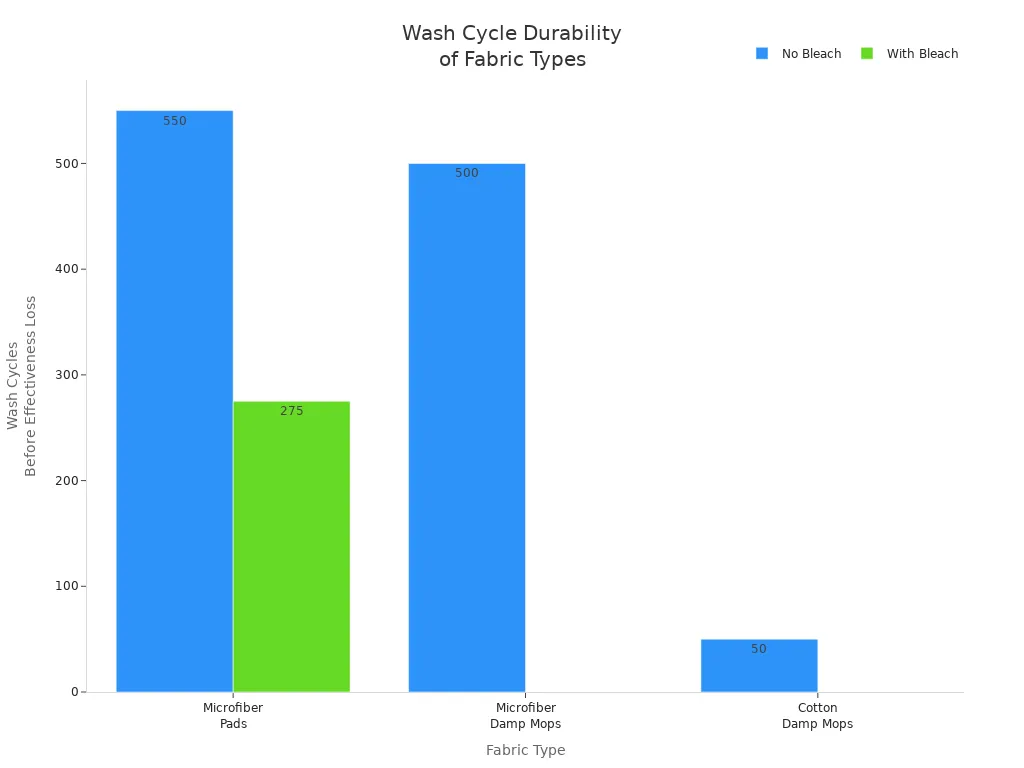
Although specific data for Microfilament Nonwoven fabrics is limited, proper care—such as using mild detergents, avoiding bleach, and air drying—extends their lifespan. Users should replace cloths when fraying or reduced absorbency appears.
Safe for All Surfaces and Lint-Free
Microfilament Nonwoven fabrics protect sensitive surfaces during cleaning. Laboratories confirm their lint-free performance through rigorous tests, including:
- Minimal stress and shake tests (IEST RP-CC-004.X)
- Liquid particle counting
- Scanning electron microscope enumeration
- Airborne particulate counting
- Inductively Coupled Plasma Mass Spectrometry (ICP-MS)
These tests ensure the fabric leaves no residue, making it ideal for cleanrooms, electronics, and healthcare settings. The fabric’s structure also prevents scratches, supporting safe use on glass, stainless steel, and delicate equipment.
Note: Regular laundering with mild detergent and storage in clean pouches help maintain lint-free performance and hygiene.
Cost-Effective and Environmentally Friendly
Facilities seeking long-term value benefit from reusable Microfilament Nonwoven products. While disposable pads offer lower initial costs, they require frequent replacement, increasing ongoing expenses and waste. Reusable microfiber and microfilament pads last for hundreds of cycles, spreading costs over many uses and reducing landfill impact. In-house laundering further lowers total expenses. This approach supports both budget goals and sustainability initiatives.
Microfilament Nonwoven fabrics set the standard for cleaning with advanced performance and versatility.
- The global market expects strong growth, reaching USD 2.5 billion by 2033.
- Demand rises for eco-friendly, high-performance materials.
- Innovations in fiber technology and sustainability drive adoption across cleaning sectors.
FAQ
What makes microfilament nonwoven fabrics different from regular microfiber cloths?
Microfilament nonwoven fabrics use finer, continuous fibers. These fibers capture more dirt and moisture. They also resist fraying and deliver higher durability than standard microfiber cloths.
Can microfilament nonwoven fabrics be used on sensitive surfaces?
Yes. These fabrics leave no lint and do not scratch surfaces. Laboratories confirm their safety for glass, electronics, and medical equipment.
How should users care for microfilament nonwoven cleaning cloths?
Wash with mild detergent. Avoid bleach. Air dry for best results. Replace cloths when absorbency drops or fraying appears.
